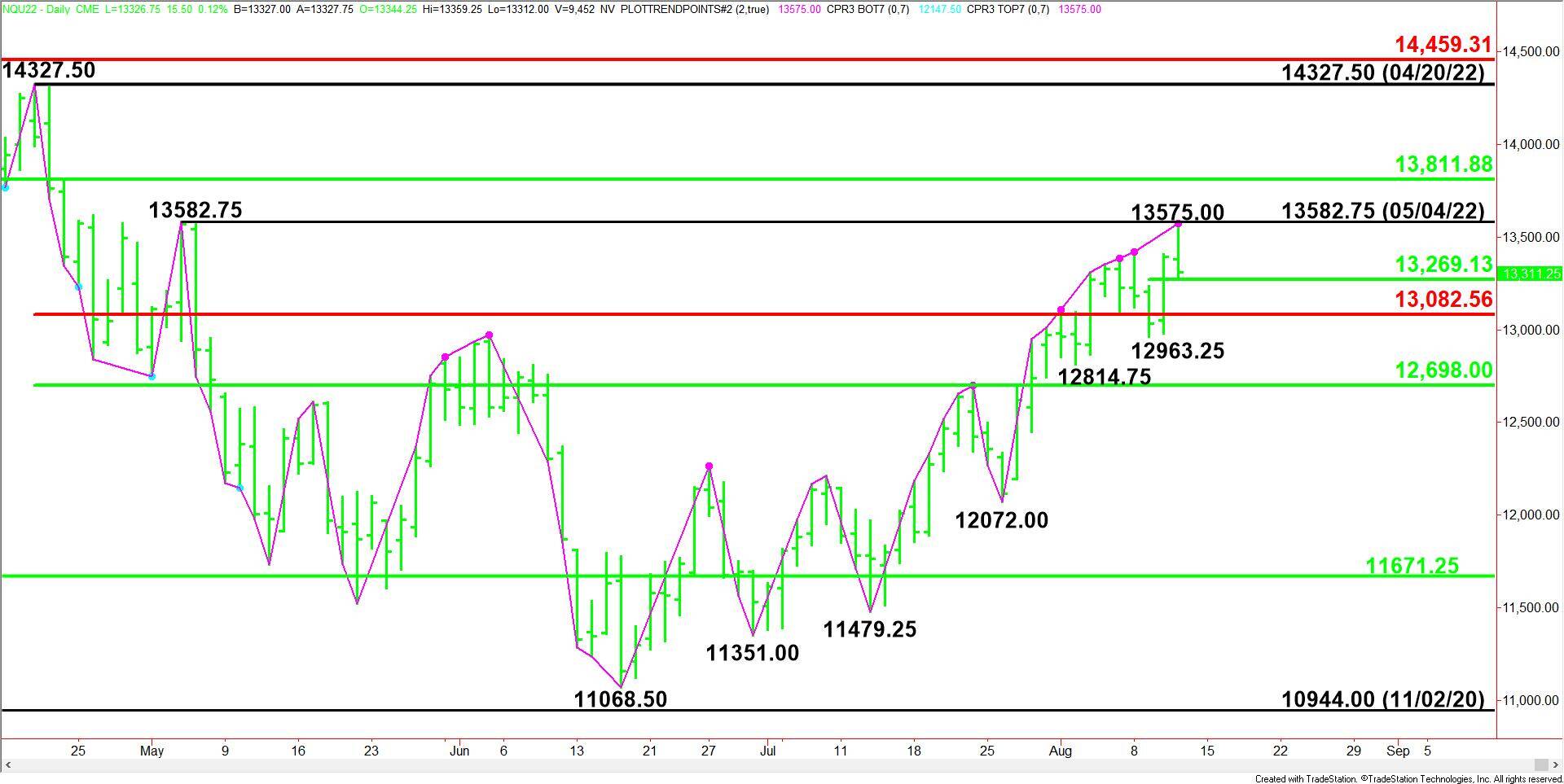
The E-mini Nasdaq 100 futures contract symbol is NQ (traded on the Chicago Mercantile Exchange / CME Group), representing a benchmark index of 100 of the largest non-financial companies listed on the Nasdaq stock market. Understanding this symbol, along with its specific month codes and contract specifications, is essential for execution, clearing, and risk management.
Introduction to E-Mini Nasdaq 100 Futures
The E-mini Nasdaq 100 futures contract has long served as one of the most actively traded equity index derivatives in global financial markets. Launched by the Chicago Mercantile Exchange (CME) in 1999, the contract was designed to offer retail and institutional investors a smaller, more accessible alternative to the standard, full-sized Nasdaq 100 futures contract. Today, the foundational ticker symbol for this instrument is NQ.
Navigating financial markets requires absolute precision in symbology. Entering an incorrect character or misinterpreting a delivery month code can result in a rejected order, unintended exposure, or execution in an entirely different asset class. This guide breaks down the anatomy of the E-mini Nasdaq 100 futures symbol, how contract months are designated, where and how the product trades, and the practical mechanical details every market participant must master before placing a trade.
Decoding the Ticker Symbol: Root and Month Codes
Every standardized futures contract symbol on electronic exchanges like the CME Globex platform consists of two primary components: a root symbol that identifies the underlying asset, and a suffix code that designates the expiration month and year.
The Root Symbol: NQ
The root symbol for the standard E-mini Nasdaq 100 futures contract is NQ. When traders input "NQ" into an electronic trading platform like TradingView, NinjaTrader, or thinkorswim, they are pointing toward the entire futures complex for this index. However, because futures contracts have finite lifespans—unlike equities that trade perpetually under a single ticker—the root symbol alone is insufficient for placing an order.
The Expiration Month Codes
Futures contracts expire on specific quarterly cycles. To distinguish between a contract expiring in March versus one expiring in December, standard single-letter month codes are appended to the root symbol. The E-mini Nasdaq 100 follows the standard quarterly cycle, utilizing four primary delivery months:
- H – March (The third Friday of March)
- M – June (The third Friday of June)
- U – September (The third Friday of September)
- Z – December (The third Friday of December)
The Year Code
Following the month letter, the final component of the symbol is a single digit (or two digits, depending on the platform) representing the expiration year. For example, the December 2026 contract is typically represented as NQZ6 or NQZ26.
Putting it all together:
- NQH6: E-mini Nasdaq 100 futures expiring in March 2026.
- NQM6: E-mini Nasdaq 100 futures expiring in June 2026.
- NQU6: E-mini Nasdaq 100 futures expiring in September 2026.
- NQZ6: E-mini Nasdaq 100 futures expiring in December 2026.
Contract Specifications and Multipliers
Knowing the symbol is only the first step; understanding the underlying financial commitment of the contract is vital for proper risk management. The E-mini contract is a fractionalized version of the old standard contract, designed to democratize access.
The Multiplier and Point Value
The E-mini Nasdaq 100 futures contract has a multiplier of $20 per index point. If the Nasdaq 100 Index moves from 18,000 to 18,010, a single E-mini contract gains or loses 10 points. Multiplied by $20, that represents a $200 change in account equity per contract (excluding commissions and fees).
Micro E-Mini Nasdaq 100 Variant (MNQ)
In addition to the standard E-mini, the CME Group offers the Micro E-mini Nasdaq 100, which trades under the symbol MNQ.
- Root Symbol: MNQ
- Multiplier: $2 per index point (one-tenth the size of the standard E-mini).
- Month Codes: Utilizes the exact same expiration suffix codes (e.g., MNQH6, MNQZ6).
The table below summarizes the key structural differences between the standard E-mini and its micro counterpart to help market participants select the appropriate vehicle.
| Contract Feature | E-mini Nasdaq 100 | Micro E-mini Nasdaq 100 |
|---|---|---|
| Ticker Root | NQ | MNQ |
| Index Multiplier | $20 per index point | $2 per index point |
| Trading Platform | CME Globex | CME Globex |
| Expiration Cycle | Quarterly (H, M, U, Z) | Quarterly (H, M, U, Z) |
| Settlement Type | Cash-settled | Cash-settled |
| Trading Hours | Nearly 23 hours/day (Sun–Fri) | Nearly 23 hours/day (Sun–Fri) |
Contract Roll Dates and Front-Month Liquidity
Because E-mini Nasdaq 100 futures expire every quarter, market participants must manage "rolls"—the process of closing an expiring position in the current front-month contract and opening a new position in the subsequent quarterly contract.
Identifying the Front Month
At any given time, the "front month" is the contract closest to expiration that possesses the highest trading volume and deepest market liquidity. While contracts exist further out on the curve (such as one or two years away), trading activity is heavily concentrated in the active delivery month.
The Roll Period
Liquidity typically shifts from the expiring contract to the next quarterly contract during the week leading up to expiration day. For instance, in March (H), traders roll their positions from NQH to NQM a few days prior to the third Friday of the month. Failing to roll positions manually before expiration can result in automatic cash settlement by the clearing firm, depending on broker policies and margin requirements.
Trading Hours and Access
The E-mini Nasdaq 100 futures symbol (NQ) is traded electronically on the CME Globex platform, providing extensive market access across global time zones.
- Regular Trading Hours (RTH): 8:30 AM to 3:00 PM Central Time (CT), aligning with the standard trading hours of the New York equity markets.
- Electronic Trading Hours (ETH): Sunday 5:00 PM to Friday 4:15 PM CT, with a daily maintenance pause from 4:15 PM to 5:00 PM CT.
This near 23-hour availability allows participants to react to overnight macroeconomic news, international earnings releases, and geopolitical developments instantly using the standard NQ or MNQ ticker format.
Common Mistakes and Troubleshooting
Traders frequently encounter operational hurdles when dealing with futures symbols for the first time. Avoiding these pitfalls ensures smooth order execution.
- Using Expired Symbols: Entering a symbol for a contract month that has already passed will result in an order rejection or an error message from your brokerage platform. Always verify that your charting software and order ticket reference the current front-month contract.
- Confusing NQ with QQQ: The ticker QQQ represents an Exchange-Traded Fund (ETF) that tracks the Nasdaq-100 Index on the Nasdaq stock exchange, whereas NQ represents the futures contract traded on the CME. They have different margin requirements, tax treatments, and expiration mechanics.
- Ignoring Margin Requirements: Futures rely on leverage. Intraday margins are set by individual brokerages, while overnight (maintenance) margins are set by the exchange. Overleveraging an NQ position relative to account size can trigger rapid margin calls.
Frequently Asked Questions
What does the ticker symbol NQ stand for in futures trading?
NQ stands for Nasdaq Futures (specifically referencing the E-mini Nasdaq 100 index futures contract). It serves as the foundational root identifier on the CME Globex electronic trading platform.
How do I know which month code to trade?
You should trade the "front-month" contract, which is the contract closest to its expiration date that currently holds the highest daily trading volume and liquidity. Most trading platforms automatically default to the front-month contract when you type the root symbol NQ.
What is the difference between NQ and MNQ?
NQ is the standard E-mini Nasdaq 100 futures contract with a multiplier of $20 per index point. MNQ is the Micro E-mini Nasdaq 100 contract with a multiplier of $2, making it one-tenth the size and suitable for accounts with smaller capital allocations.
Are E-mini Nasdaq 100 futures cash-settled or physically delivered?
E-mini Nasdaq 100 futures are cash-settled contracts. Upon expiration, no physical shares of stock change hands; instead, profits and losses are debited or credited directly in cash based on the final settlement price of the underlying index.
Can I trade NQ futures outside of normal stock market hours?
Yes. NQ futures trade nearly 23 hours a day on the CME Globex platform, beginning Sunday evening at 5:00 PM CT and running through Friday afternoon at 4:15 PM CT, with a brief daily maintenance halt.
Conclusion and Next Actions
Mastering the E-mini Nasdaq 100 futures symbol—NQ—and its associated delivery month suffixes is a foundational requirement for navigating equity index derivatives. Always confirm that your order tickets reflect the correct active front-month contract (such as NQH or NQZ), verify your account's margin parameters, and distinguish between standard E-mini (NQ) and Micro E-mini (MNQ) sizing. Before executing live orders, practice navigating your broker’s symbology search tools to ensure accurate execution.