Determining the net worth threshold for personal security is not a matter of a single fixed number, but experts generally suggest that individuals with a net worth exceeding $10 million should conduct a formal risk assessment. High-profile visibility, industry controversy, and geographic location often dictate the need for protection more than the balance sheet alone.
In 2026, the concept of personal security has evolved far beyond the traditional image of a bodyguard in a dark suit. As global wealth becomes more transparent through digital footprints and social media, the "target" on high-net-worth individuals (HNWIs) has shifted. Security is now a multidimensional discipline encompassing physical protection, residential fortification, and sophisticated cybersecurity. While a quiet investor with $50 million might live comfortably with only an advanced home alarm system, a tech CEO with a public profile and $10 million in assets may require a full-time executive protection detail.
The Relationship Between Net Worth and Risk
Net worth serves as a proxy for the potential reward for a criminal actor. As your assets grow, so does your liability and the cost of a potential security breach, whether that be physical kidnapping, extortion, or corporate espionage. However, the "need" for security is rarely triggered by crossing a specific financial line like $10 million or $50 million; rather, it is triggered by the intersection of wealth and visibility.
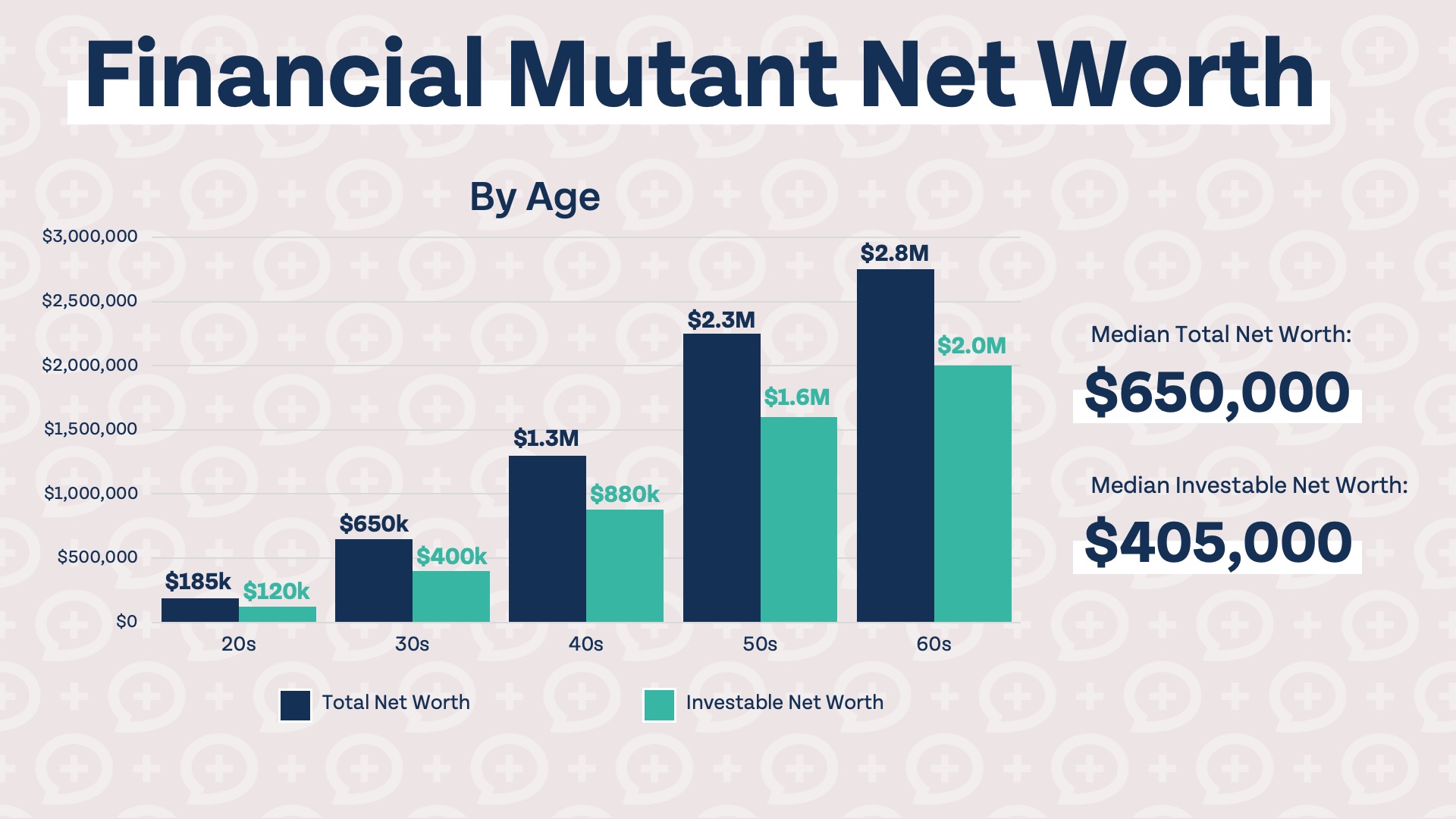
Individuals in the "Mass Affluent" category—those with $1 million to $5 million in liquid assets—rarely require physical security unless they are involved in high-stakes legal battles or domestic disputes. At this level, the primary threats are digital. Once an individual moves into the High-Net-Worth (HNWI) bracket ($5 million to $30 million), the risk profile shifts toward residential security and secure transportation.
For Ultra-High-Net-Worth Individuals (UHNWIs)—those with more than $30 million in assets—security often becomes a standardized part of the family office structure. At this level, the individual often becomes a "Key Person" for a corporation or a family enterprise, meaning their safety is a matter of fiduciary responsibility.
Key Triggers for Personal Security in 2026
If you are evaluating your need for protection, consider these five primary triggers that necessitate a security budget, regardless of your exact net worth.
1. Public Visibility and Social Media Presence
In 2026, privacy is more valuable than ever. Individuals who are frequently mentioned in the media, lead public companies, or maintain a high-following social media presence are at a significantly higher risk. Activists, "stalker" fans, and politically motivated actors use public information to track movements. If your face is recognizable to the average person on the street, your net worth becomes a secondary consideration to your visibility.
2. Industry and Corporate Affiliation
Certain industries carry inherent risks. Executives in oil and gas, pharmaceuticals, high-tech AI development, and defense often face threats from corporate competitors or radicalized groups. If your wealth is derived from a sector that is currently experiencing social or political backlash, your need for security increases exponentially.
3. Geographic Location and Travel Habits
A $20 million net worth in a safe, gated community in the Midwest requires a different security posture than the same net worth in a high-crime international hub or a developing nation. Individuals who travel frequently to "Red Zone" countries for business or leisure must prioritize Executive Protection (EP) to mitigate risks of kidnapping for ransom (K&R).
4. Direct Threats and Harassment
Any history of credible threats, "doxing" (the leaking of private home addresses), or stalking should be met with immediate professional intervention. In these cases, security is not a preventative luxury but a reactive necessity.
5. Family and Household Staff
The safety of children is often the primary driver for HNWIs to hire security. This often manifests as "nanny-guards" or specialized security for school transport. Additionally, the more household staff you employ (chefs, housekeepers, pilots), the higher the "insider threat" risk, necessitating background checks and residential surveillance.
Tiers of Personal Security and Estimated Costs
Understanding the market for protection in 2026 requires a breakdown of service levels. Security is rarely "all or nothing"; it is a tiered approach tailored to the specific threat environment.
| Security Tier | Typical Net Worth Range | Core Services Included | Estimated Annual Cost |
|---|---|---|---|
| Tier 1: Foundational | $1M - $10M | Cyber-hygiene, advanced home automation, encrypted comms. | $5,000 - $20,000 |
| Tier 2: Enhanced | $10M - $50M | Secure drivers, part-time EP, residential estate agents. | $50,000 - $150,000 |
| Tier 3: Comprehensive | $50M - $250M | 24/7 Executive Protection, safe rooms, surveillance detection. | $250,000 - $750,000 |
| Tier 4: Enterprise | $250M+ | Full Global Security Operations Center (GSOC), K&R insurance. | $1M - $5M+ |
Foundational Security (Tier 1)
For the majority of HNWIs, security starts with Cyber-hygiene. This involves removing home addresses from public databases, using obscured LLCs to purchase real estate, and employing advanced encryption for all personal devices. In 2026, AI-driven phishing and deepfake voice scams are the most common threats to this demographic.
Enhanced Security (Tier 2)
At this level, the focus moves to physical transitions. Most security incidents occur when an individual is entering or exiting a vehicle. Hiring a "security-trained driver"—someone who is trained in evasive maneuvers and surveillance detection—is often the first step into physical protection. This provides safety without the intrusive nature of a 24/7 bodyguard.
Comprehensive and Enterprise Security (Tiers 3 & 4)
This level is reserved for the world’s wealthiest or most targeted individuals. It involves a "Close Protection" team that operates in shifts to provide 24/7 coverage. This team handles everything from "advancing" a restaurant (checking exits and staff before the client arrives) to managing the technical surveillance counter-measures (TSCM) to ensure no listening devices are present in meeting rooms.
The Hidden Cost: Privacy vs. Protection
One of the most significant factors HNWIs must weigh when deciding to hire security is the loss of personal privacy. Having a detail means you are rarely alone. Professional security firms in 2026 emphasize "low-profile" protection, where agents blend into the background, but the presence of an extra person in your private life is unavoidable.
Effective security professionals operate on the principle of the "Grey Man." Instead of drawing attention with flashy suits and earpieces, they dress like your associates or friends. This "low-signature" approach is often more effective as it avoids identifying the individual as a high-value target to casual observers.
Digital Security: The Invisible Front Line
In 2026, your net worth is more likely to be attacked through a server than a front door. For any individual with a net worth over $5 million, digital security is non-negotiable. This includes:
- Identity Hardening: Removing personal data from data brokers.
- Hardware Security Keys: Using physical keys (like YubiKeys) for all financial accounts.
- Private Connectivity: Avoiding public Wi-Fi and using high-end, dedicated VPNs or private cellular networks.
- Social Engineering Defense: Training family members and staff to recognize sophisticated AI-generated impersonation attempts.
Organizations like the FBI’s Internet Crime Complaint Center (IC3) consistently report that high-net-worth individuals are primary targets for "Business Email Compromise" (BEC) and investment fraud, which can result in losses far exceeding the cost of a physical security detail.
How to Vet and Hire a Security Firm
If you have determined that your net worth or profile requires professional protection, do not start with a "local guard company." Executive protection is a specialized field.
- Look for Specialized Backgrounds: The most reputable firms are staffed by former members of elite military units (e.g., SEALS, SAS) or government protection details (e.g., Secret Service, Diplomatic Security Service).
- Request a Threat Assessment: A professional firm will not start by selling you guards. They will start with a comprehensive Threat, Vulnerability, and Risk Assessment (TVRA). This document identifies where you are actually at risk.
- Check Licensing and Insurance: Ensure the firm carries high-limit liability insurance and is licensed specifically for executive protection in your jurisdiction.
- Evaluate Chemistry: Your security lead will be in your personal space. If you do not trust them or if their personality clashes with your lifestyle, the arrangement will fail.
Frequently Asked Questions
Does my homeowners insurance cover personal security?
Standard homeowners policies do not cover the cost of a personal security detail. However, many "High-Value Home" policies or specialized HNWI insurance providers (such as Chubb or Pure) offer credits for installing advanced security systems. Some may also offer "Kidnap, Ransom, and Extortion" (K&R) riders that include the cost of professional crisis responders.
Is a bodyguard the same as an Executive Protection (EP) agent?
No. A "bodyguard" is often a reactive, physical presence. An Executive Protection agent is a proactive specialist focused on risk mitigation. EP agents spend 90% of their time on "advance work"—planning routes, checking hospital locations, and vetting venues—to ensure the client never encounters a threat in the first place.
At what point should I get a "Security Driver"?
If your net worth is over $10 million and you live in a major metropolitan area with high traffic or rising crime rates, a security driver is a wise investment. This individual provides a secure environment for you to work while in transit and ensures you are never a "sitting duck" in a parking lot or driveway.
Can my company pay for my personal security?
If you are a CEO or a "Key Person" in a publicly-traded company, the board may authorize the company to pay for your security as a business expense. According to SEC filings, major tech companies often spend millions annually on the personal security of their top executives, arguing that the loss of the executive would be a material hit to the company’s valuation.
What is a "Safe Room" and do I need one?
A safe room (or panic room) is a fortified space within a residence designed to protect occupants during a home invasion or high-level threat. While not necessary for everyone with a high net worth, they are recommended for individuals in the $50M+ range or those with high public visibility. Modern safe rooms are integrated into the home’s design and include independent communication lines and air filtration.
Final Recommendation
If your net worth has surpassed the $10 million mark, or if your public profile has grown to the point where you feel "exposed," the first step is not to hire a bodyguard, but to commission a Professional Threat Assessment. This objective analysis will highlight whether your primary risks are digital, residential, or physical. For most, a blend of enhanced digital privacy and a secure residential perimeter is the most effective and least intrusive starting point. In 2026, being "invisible" is the ultimate form of security.