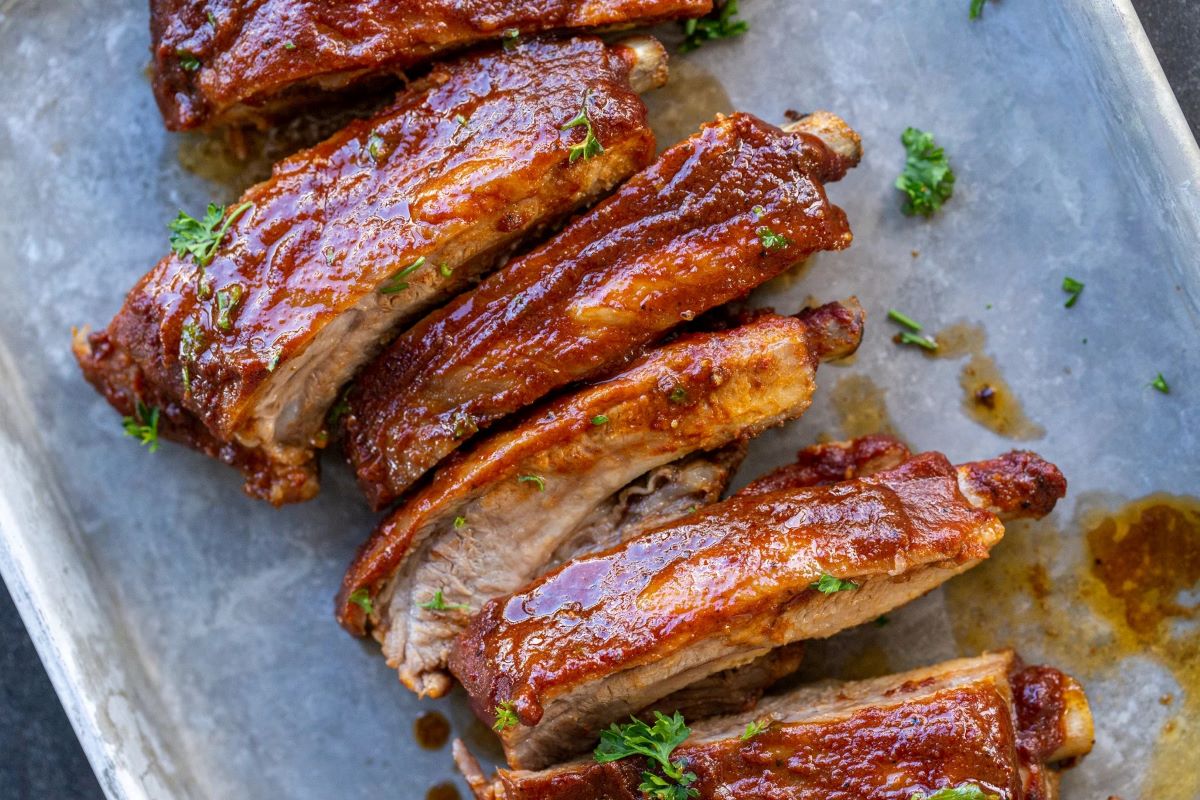
Pork ribs are considered food-safe at an internal temperature of 145°F (63°C), but they are not truly "done" for eating at this stage. For optimal tenderness and flavor, pork ribs should be cooked to an internal temperature between 195°F (90°C) and 205°F (96°C), which allows the tough connective tissues to fully break down.
Achieving the perfect rack of ribs is a journey through thermodynamics and meat science. While a standard pork chop is juicy and tender at 145°F, a pork rib at that same temperature is rubbery, tough, and nearly impossible to pull from the bone. This discrepancy exists because of the high concentration of collagen and connective tissue found in the rib area. To transform a tough cut of meat into a succulent BBQ masterpiece, you must understand the relationship between heat, time, and the chemical breakdown of proteins.
The Science of Doneness: Safety vs. Palatability
When discussing the ideal temperature for pork ribs, we must distinguish between biological safety and culinary "doneness." The United States Department of Agriculture (USDA) updated its guidelines years ago to state that pork is safe to consume at 145°F followed by a three-minute rest. While this is scientifically accurate for killing pathogens, it is a poor guideline for secondary cuts like ribs.
The Role of Collagen and Gelatin
Pork ribs are structurally complex. They consist of muscle fibers interspersed with thick layers of fat and, most importantly, collagen. Collagen is a structural protein that holds the muscle to the bone. At lower temperatures, collagen is incredibly tough.
The magic of BBQ happens when collagen undergoes a phase transition. This process begins slowly at 160°F but accelerates significantly once the internal temperature of the meat reaches 180°F to 190°F. During this window, the triple-helix structure of the collagen denatures and dissolves into gelatin. Gelatin is a liquid that coats the muscle fibers, providing the "moist" mouthfeel that we associate with high-quality ribs, even if the actual water content of the meat has decreased during the long cook.
Why 203°F is the "Magic Number"
In the 2026 BBQ circuit, many pitmasters point to 203°F (95°C) as the ultimate target. At this specific temperature, the majority of the internal fat has rendered, and the collagen-to-gelatin conversion is largely complete. However, the exact "pull" temperature can vary slightly depending on the specific rack of ribs and the cooking environment.
Temperature Targets by Rib Type
Not all ribs are created equal. The two most common cuts—Baby Back ribs and Spare ribs—have different fat contents and thicknesses, which influences their target finish temperature.
Baby Back Ribs
Baby back ribs come from the top of the rib cage near the backbone. They are leaner and smaller than spare ribs. Because they have less fat, they are more prone to drying out if overcooked.
- Target Temperature: 195°F to 200°F.
- Texture Goal: "Tender-to-the-bite," where the meat comes off the bone cleanly when bitten but does not fall off the bone when you pick up the rack.
Spare Ribs and St. Louis Style
Spare ribs come from the belly side of the pig. They are flatter, fattier, and contain more connective tissue than baby backs. St. Louis style ribs are simply spare ribs with the cartilage-heavy "tips" trimmed off into a rectangular shape.
- Target Temperature: 200°F to 205°F.
- Texture Goal: These can handle a slightly higher temperature because the extra fat provides a buffer against dryness. Many prefer these to be "fall-off-the-bone" tender.
| Rib Feature | Baby Back Ribs | Spare Ribs / St. Louis Style |
|---|---|---|
| Source Location | Near the spine (top of cage) | Near the belly (bottom of cage) |
| Fat Content | Moderate to Low | High |
| Connective Tissue | Moderate | High |
| Ideal Pull Temp | 198°F | 203°F |
| Typical Cook Time | 3–5 Hours | 5–7 Hours |
| Texture Profile | Lean, meaty, tender | Rich, fatty, succulent |
Measuring Temperature Accurately
The greatest challenge in determining if pork ribs are done is the bone itself. Bones conduct heat differently than meat. If your thermometer probe touches the bone, you will get a false high reading. Conversely, if you are in a cold pocket of fat, the reading may be too low.
Tool Selection
In 2026, the industry standard remains the instant-read digital thermometer. These devices provide a reading in under two seconds, which is vital for maintaining the internal temperature of your smoker or oven.
- Leave-in Probes: These are excellent for monitoring the "ambient" temperature of the cooker, but they can be tricky with ribs because the meat is too thin to hold a probe securely away from the bone for several hours.
- The "Feel" Test: As you insert the probe, you should pay attention to the resistance. An instant-read thermometer should slide into the meat like it is sliding into warm butter. If you feel resistance or a "tight" sensation, the collagen has not yet fully melted.
Probe Placement
To get an accurate reading, insert the probe into the thickest part of the meat between two bones. Ensure the tip is centered in the muscle and not resting against the bone or the fat cap. Take multiple readings across the rack, as the ends of the rack usually cook faster than the center.
Physical Indicators of Doneness
While temperature is the most scientific method, experienced cooks use physical tests to confirm that the ribs are ready to be pulled. These tests account for the "feel" of the meat, which a thermometer cannot always capture.
The Bend Test
Pick up the rack of ribs with a pair of tongs, grabbing them about one-third of the way down the rack. Lift the rack and let the long end hang down. If the ribs are done, the rack will bend significantly, and the surface of the meat (the "bark") will begin to crack or tear under its own weight. If the rack stays relatively straight or only bends slightly, the connective tissues are still holding it too tightly.
The Bone Pull (Retraction)
As ribs cook, the meat shrinks. Look for the tips of the rib bones to "peek out" from the meat. Generally, when 1/4 to 1/2 inch of bone is exposed, the ribs are approaching doneness. However, be cautious: this can also happen if the ribs are cooked at too high a temperature too quickly, leading to "shriveled" meat rather than tender meat.
The Toothpick Test
Take a standard wooden toothpick and poke it into the meat between the bones. If it slides in and out with zero resistance, the ribs are done. This is essentially a low-tech version of the probe-resistance test.
The "Stall" and Why Patience is Mandatory
If you are monitoring the temperature of your ribs, you will likely encounter "the stall." This is a phenomenon where the internal temperature of the meat plateaus—usually around 160°F to 170°F—and stays there for an hour or more.
The stall is caused by evaporative cooling. As the meat heats up, moisture is forced to the surface, where it evaporates and cools the meat, much like sweat cools a human. Many beginners panic during the stall and raise the heat, which can toughen the meat.
To overcome the stall, you have two choices:
- Wait it out: This results in a superior, crunchy "bark" but takes much longer.
- The Texas Crutch: Wrap the ribs in heavy-duty aluminum foil or peach butcher paper. This traps the moisture, stops the evaporative cooling, and powers the meat through the stall quickly.
The Importance of the Rest Period
Once the ribs reach your target temperature (e.g., 203°F), the cooking process is not technically over. Carryover cooking will continue to raise the internal temperature by another 2 to 5 degrees. More importantly, resting allows the muscle fibers to reabsorb some of the rendered fats and juices.
For the best results in 2026 standards, wrap the ribs in foil (if they aren't already) and then wrap them in a heavy towel. Place the bundle in an empty room-temperature cooler for 30 to 60 minutes. This slow decline in temperature helps the gelatin set slightly, ensuring that when you slice the ribs, the juices stay in the meat rather than running out onto the cutting board.
Common Mistakes in Temperature Management
Even with a high-quality thermometer, several common errors can ruin a rack of ribs.
- Relying on Time Alone: You will often see "3-2-1" or "2-2-1" methods (hours smoked, hours wrapped, hours glazed). While these are good starting points, every pig is different. Use time as a guide but temperature and feel as the final word.
- Ignoring the Glaze: If you apply BBQ sauce or a sugary glaze too early, the sugars will burn before the internal meat temperature reaches 200°F. Apply glazes only in the final 20–30 minutes of the cook.
- Cooking Too Fast: Using high heat (above 300°F) to reach the target temperature can result in meat that is technically at 203°F but still tough. The collagen needs time to melt. Low and slow (225°F to 250°F) is the reliable path to success.
Frequently Asked Questions
Can you overcook pork ribs?
Yes. While it is difficult to overcook ribs to the point of being unsafe, you can certainly ruin the texture. If ribs reach 210°F or higher, the fibers will lose all structural integrity, becoming mushy or "shredded" rather than tender. The meat will lose its signature "bite" and become difficult to slice.
Why are my ribs still tough at 145°F?
At 145°F, the muscle fibers have tightened and released their moisture, but the collagen has not yet begun to transform into gelatin. This leaves the meat in a "purgatory" state—safe to eat but physically very difficult to chew. You must continue cooking to reach the 195°F–205°F range to dissolve that toughness.
Should I use a different temperature for the oven vs. the smoker?
The target internal temperature for the meat remains the same regardless of the heat source. Whether you are using a pellet smoker, an offset wood burner, or a kitchen oven, you are aiming for that 195°F–205°F window. The only difference is the flavor profile and the development of the "smoke ring."
Is the pink color near the bone a sign of undercooking?
Not necessarily. In smoked ribs, a pink "smoke ring" is a chemical reaction between the meat's myoglobin and the nitrogen dioxide/carbon monoxide in the wood smoke. Additionally, young pork bones can leach pigment into the surrounding meat. Always rely on your thermometer rather than the color of the meat to determine doneness.
How do I check the temperature of rib tips?
Rib tips contain a lot of cartilage. It is very difficult to get an accurate temperature reading on them because the probe will constantly hit hard cartilage. For rib tips, the "toothpick test" or simply the "feel" of the meat is often more reliable than a digital thermometer.
Summary Recommendation
For the best results in 2026, target an internal temperature of 203°F for a standard rack of ribs. Use an instant-read thermometer to verify this in the thickest part of the meat, avoiding the bone. Once reached, perform the bend test to ensure the meat is yielding. Finally, allow the ribs to rest for at least 30 minutes before slicing to ensure maximum succulence and flavor retention.