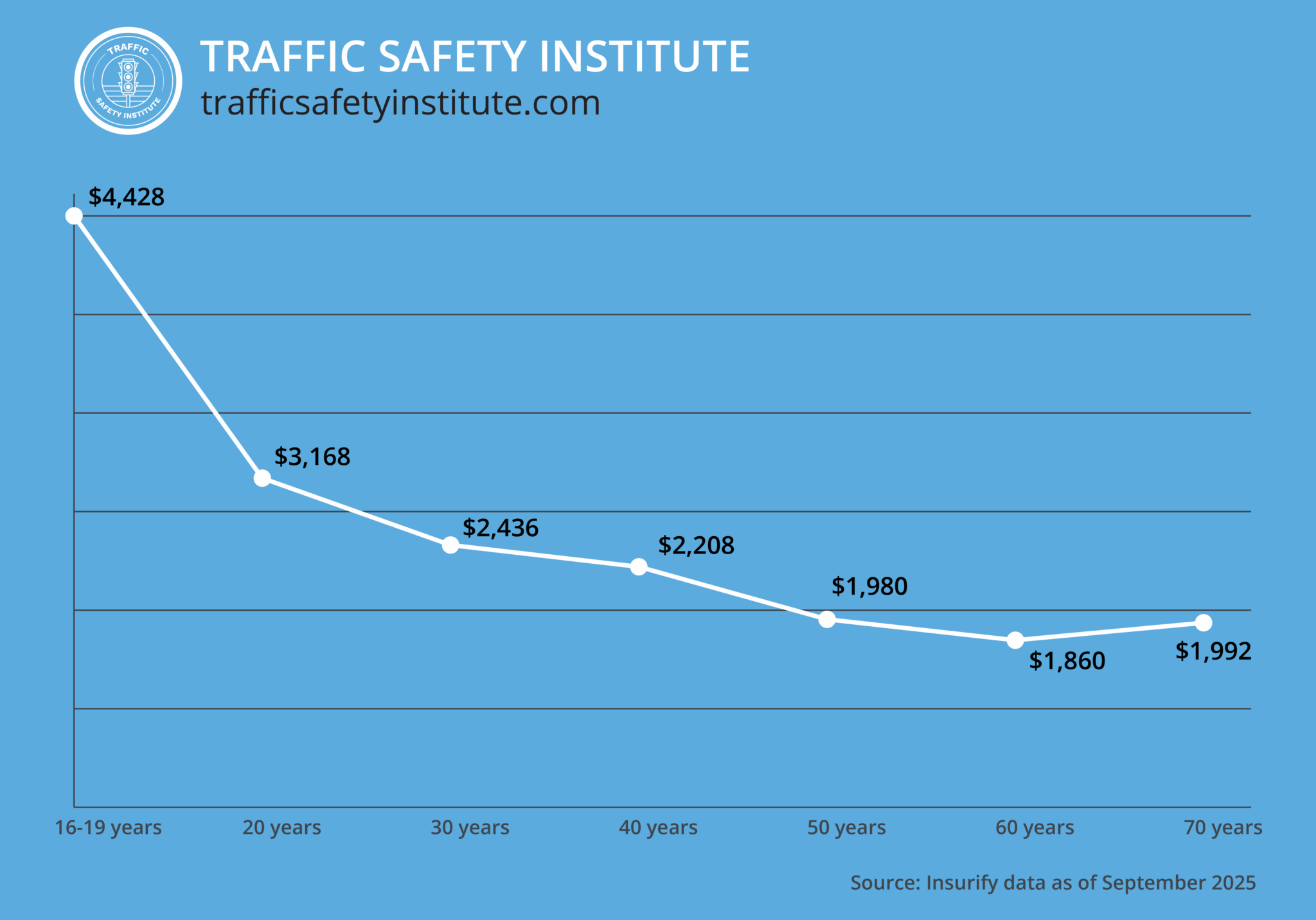
For most women, auto insurance rates begin to decrease significantly at age 25. While incremental price drops often occur annually starting at age 21, the 25th birthday marks a major actuarial shift where insurers reclassify drivers from "high-risk" to "experienced," leading to substantial premium reductions of 15% to 20% or more.
The relationship between age, gender, and insurance premiums is a cornerstone of the automotive insurance industry. In 2026, insurance providers rely more than ever on sophisticated data analytics to determine risk. For women, this data typically paints a more favorable picture than it does for their male counterparts, particularly in the younger demographic. However, reaching specific age milestones is only part of the equation. Understanding the nuances of how and when these rates drop requires a deep dive into actuarial risk assessments, regional legal frameworks, and the behavioral data that influences 2026 insurance modeling.
The Milestone of 25: Why This Age Matters
The age of 25 has long been considered the "magic number" in the insurance industry. From an actuarial standpoint, a 25-year-old woman is statistically far less likely to be involved in a high-speed collision or a fatal accident than a teenager or a woman in her early 20s. By this age, most drivers have nearly a decade of experience behind the wheel, which correlates with better decision-making and improved hazard recognition.
In 2026, insurers use real-time data to confirm that the "prefrontal cortex development" theory—suggesting that the part of the brain responsible for impulse control matures around age 25—holds true in driving behavior. Consequently, when a woman turns 25, she often moves from a high-risk rating tier into a standard or preferred tier. This transition can result in the single largest premium drop of a driver’s lifetime, provided her driving record remains clean.
Incremental Decreases Before Age 25
While 25 is the primary threshold, women do not have to wait a full decade after getting their license to see price improvements. Insurance companies typically review policyholder risk profiles during every renewal period (usually every six months).
The 18 to 21 Window
Between the ages of 16 and 19, women pay some of the highest rates because they lack "road hours." However, by age 18, if a woman has maintained a clean record for two years, she may see a small reduction. The next noticeable shift occurs at 21. This age is often associated with a decrease in the "youthful driver" surcharge, as three to five years of driving experience suggests the driver has survived the most dangerous learning phase.
The 21 to 24 Progression
From 21 to 24, premiums tend to "stair-step" downward. Each year of claim-free driving serves as proof of reliability. During this period, women might see annual decreases of 3% to 5%. These small wins lead up to the major adjustment at 25.
Gender Differences in Insurance Pricing
In jurisdictions where gender-based pricing is permitted, women generally pay less for auto insurance than men during their younger years. This is rooted in historical and current data provided by organizations like the Insurance Institute for Highway Safety (IIHS), which consistently shows that men tend to engage in more "risk-taking" behaviors, such as extreme speeding and driving under the influence.
Why Women Often Pay Less
Statistical evidence suggests that female drivers are involved in fewer "total loss" accidents. While women may have a similar or slightly higher frequency of low-speed "fender benders," these claims are significantly less expensive for insurance companies to settle than the high-impact collisions more commonly associated with young male drivers. Because the "severity" of claims is lower for women, their base premiums are often lower from the start.
The 2026 Gender Parity Trend
By 2026, the gap between male and female insurance rates has narrowed in some brackets. As telematics and "pay-how-you-drive" programs become standard, insurers are focusing more on individual behavior than group statistics. If a woman drives aggressively, her gender will not protect her from high rates. Conversely, a safe male driver using a telematics device may pay less than a woman who does not use one.
State Regulations: Where Gender and Age Impact Differently
It is crucial to note that the answer to "when does insurance go down for women" depends heavily on where you live. As of 2026, several states have banned the use of gender as a rating factor in auto insurance. In these states, women and men of the same age and driving history will theoretically pay the same premium.
Currently, states that prohibit gender-based auto insurance pricing include:
- California
- Hawaii
- Massachusetts
- Michigan
- Montana
- North Carolina
- Pennsylvania
In these states, the age-related drop at 25 still occurs, but the benefit is not gender-specific. The reduction is based purely on the "years of experience" and "age-related risk" metrics.
When Do Rates Go Up Again? The Senior Shift
The downward trend in insurance costs for women does not last forever. After the significant drop at 25, rates typically remain stable and at their lowest point between the ages of 30 and 60. This is often referred to as the "Golden Age" of insurance, where experience is high and physical health is generally robust.
However, around age 65 or 70, women may see their premiums begin to climb again. This is due to several factors:
- Fragility: Older drivers are more likely to be seriously injured in minor accidents, leading to higher medical claim costs.
- Reaction Times: Natural changes in vision and cognitive processing speed can increase the frequency of accidents at intersections or during merging.
- Frequency of Claims: Data from the National Highway Traffic Safety Administration (NHTSA) indicates that while seniors drive fewer miles, their accident rate per mile driven begins to increase after age 75.
| Age Bracket | Premium Trend | Primary Reason for Change |
|---|---|---|
| 16 - 19 | Highest Peak | Lack of experience; high statistical risk. |
| 20 - 24 | Gradual Decline | Accrued years of driving without incidents. |
| 25 - 30 | Significant Drop | Shift to "Experienced Driver" actuarial pool. |
| 31 - 60 | Lowest/Stable | Peak physical and cognitive driving years. |
| 65 - 75 | Slight Increase | Increased physical vulnerability and medical costs. |
| 75+ | Moderate Increase | Changes in reaction time and vision. |
Factors That Can Override the Age-Related Drop
Even if a woman reaches the age of 25, she may not see her rates go down if other negative factors are present. Insurance companies look at a "total risk profile." In 2026, the following factors are heavily weighted:
Driving History
A single at-fault accident or a major moving violation (like a DUI or reckless driving charge) can wipe out any age-related savings. Most insurers look back at the last three to five years of a driving record. If you have a speeding ticket at age 24, your rate drop at 25 will likely be deferred or significantly muted.
Credit-Based Insurance Scores
In most states, insurers use credit information to help predict the likelihood of a policyholder filing a claim. A woman with a "Poor" credit score may pay significantly more for insurance than a 20-year-old with "Excellent" credit, regardless of her age.
Location and Urban Density
If a woman moves from a rural area to a high-density city at age 25, her rates might actually go up. Increased traffic density, higher rates of vehicle theft, and more frequent claims in urban centers can overshadow the age discount.
Coverage Levels and Deductibles
As women grow older and their net worth increases, they often opt for higher liability limits to protect their assets. Moving from state-minimum coverage to a 100/300/100 policy will increase the premium, even if the "base rate" for their age has decreased.
Strategies to Lower Rates at Any Age
Regardless of whether you are 19 or 45, there are proactive steps women can take in 2026 to ensure they are paying the lowest possible premium.
1. Leverage Telematics
Most major insurers now offer apps or plug-in devices that monitor driving habits. For women who drive safely, follow speed limits, and avoid hard braking, these programs can offer discounts of 10% to 40%, often bypassing the traditional age-based pricing models.
2. Seek Out Professional Discounts
Women in certain professions—such as educators, scientists, engineers, and healthcare workers—often qualify for affinity discounts. Insurers view these professions as being correlated with lower risk-taking behavior.
3. Maintain Continuous Coverage
Insurance companies penalize "gaps" in coverage. Even if you don’t own a car for a period, maintaining a "non-owner" policy can help you qualify for lower rates when you eventually purchase a vehicle, as it proves you are a responsible, long-term policyholder.
4. Optimize the Deductible
If you have reached age 25 and have an emergency fund, increasing your deductible from $500 to $1,000 can reduce your comprehensive and collision premiums by another 15% to 30%.
Common Questions Regarding Women's Auto Insurance
Does getting married lower a woman's insurance rates?
Yes, in many cases. Statistically, married drivers are involved in fewer accidents than single drivers. When a woman gets married, she is often viewed as more "stable" by insurance algorithms. Combining policies with a spouse can also lead to multi-car and multi-policy discounts, further reducing the individual cost.
Why did my insurance go up at 25 instead of down?
If your rates increased at 25, it is usually due to external factors rather than your age. Common reasons include a recent accident, a move to a more expensive ZIP code, a general rate increase by the insurance company to account for inflation/repair costs, or a change in the vehicle you are insuring.
Do women really pay less than men for car insurance?
On average, yes—specifically between the ages of 16 and 30. According to the National Association of Insurance Commissioners (NAIC), young men are statistically more likely to engage in "total loss" behaviors. However, after age 35, the price difference between genders becomes negligible and, in some cases, women may pay slightly more as they enter their 50s and 60s, depending on the specific insurer's data.
Does the type of car matter more than my age?
The vehicle is a massive factor. A 25-year-old woman driving a high-performance sports car will likely pay more than a 21-year-old woman driving a sedan with high safety ratings. Age provides the "driver risk" component, while the vehicle provides the "asset risk" component. Both must be favorable for the lowest rates.
Can taking a defensive driving course help?
Absolutely. Many insurers offer a "Voluntary Driver Improvement" discount. For women under 25 or over 65, completing a certified course can result in a 5% to 10% discount that lasts for three years, helping to bridge the gap until the next major age milestone.
Final Recommendations for Female Drivers
To capitalize on the age-related insurance drops, women should focus on maintaining a clean driving record and a strong credit score in the years leading up to age 25. Once you hit that milestone, it is the ideal time to shop around and compare quotes. Your current insurer may not automatically apply the maximum "experienced driver" discount, and competitors may offer significantly better rates for your new risk profile.
Furthermore, consider using 2026’s advanced telematics tools to prove your individual safety. By letting data speak for your specific driving habits, you can often secure "age-25 rates" even earlier or maintain those low rates well into your senior years.