Teaching the modern atom in the classroom requires transitioning from the simplified Bohr "planetary" model to the Quantum Mechanical Model, which focuses on electron probability clouds and wave-particle duality. In 2026, this shift is facilitated by advanced visualization software, augmented reality (AR) tools, and inquiry-based curricula that prioritize conceptual understanding of subatomic behavior over historical approximations.
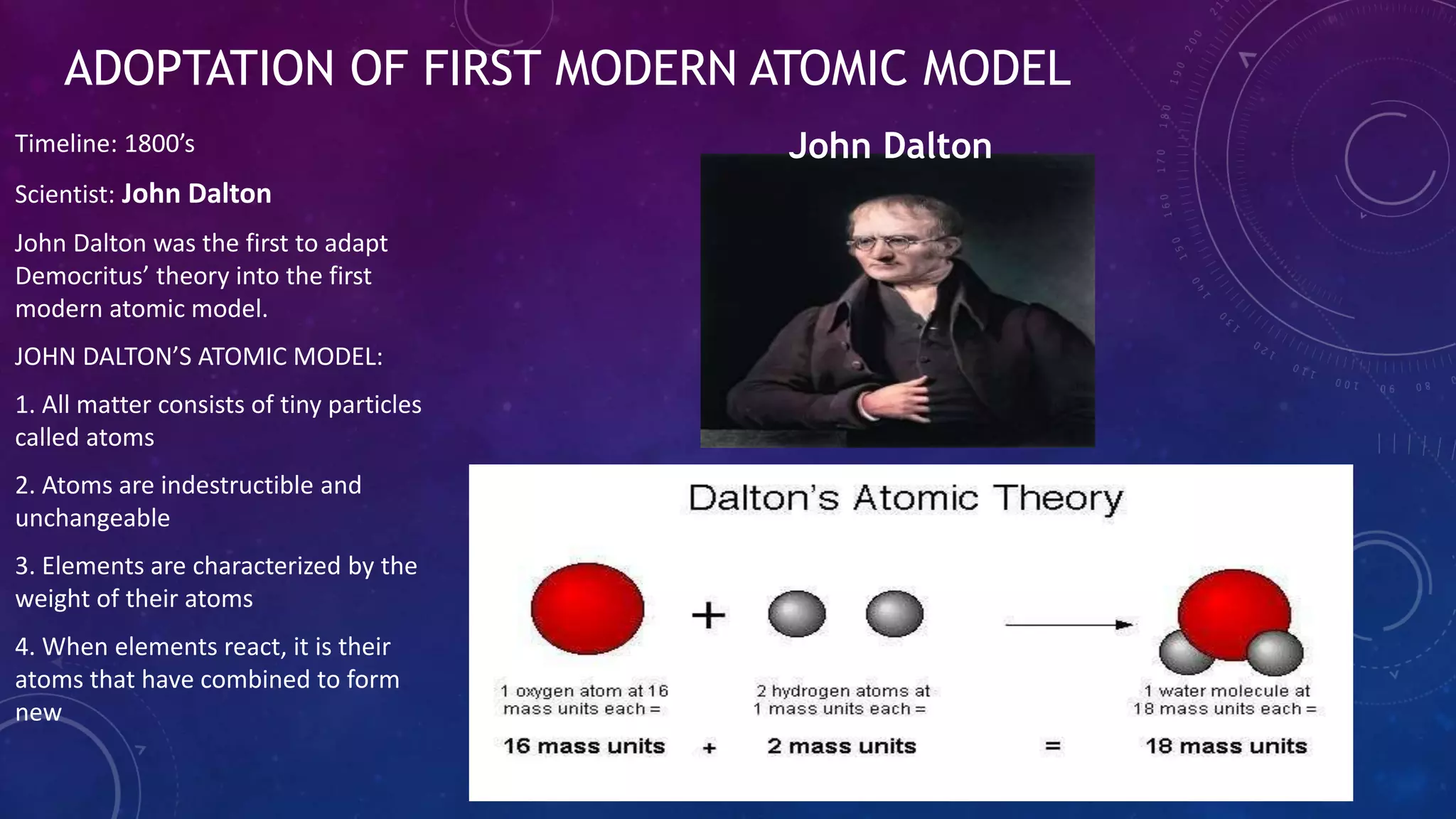
The challenge of teaching atomic structure has historically been rooted in the "ladder of lies"—a pedagogical approach where teachers introduce simplified models (like Dalton or Bohr) only to tell students later that those models are fundamentally incorrect. While scaffolding is necessary, the 2026 science curriculum increasingly favors introducing modern atomic theory earlier to prevent the formation of deeply rooted misconceptions. By focusing on the "modern atom," educators provide students with the framework necessary to understand complex chemical bonding, spectroscopy, and the behavior of advanced materials.
The Evolutionary Path of Atomic Instruction
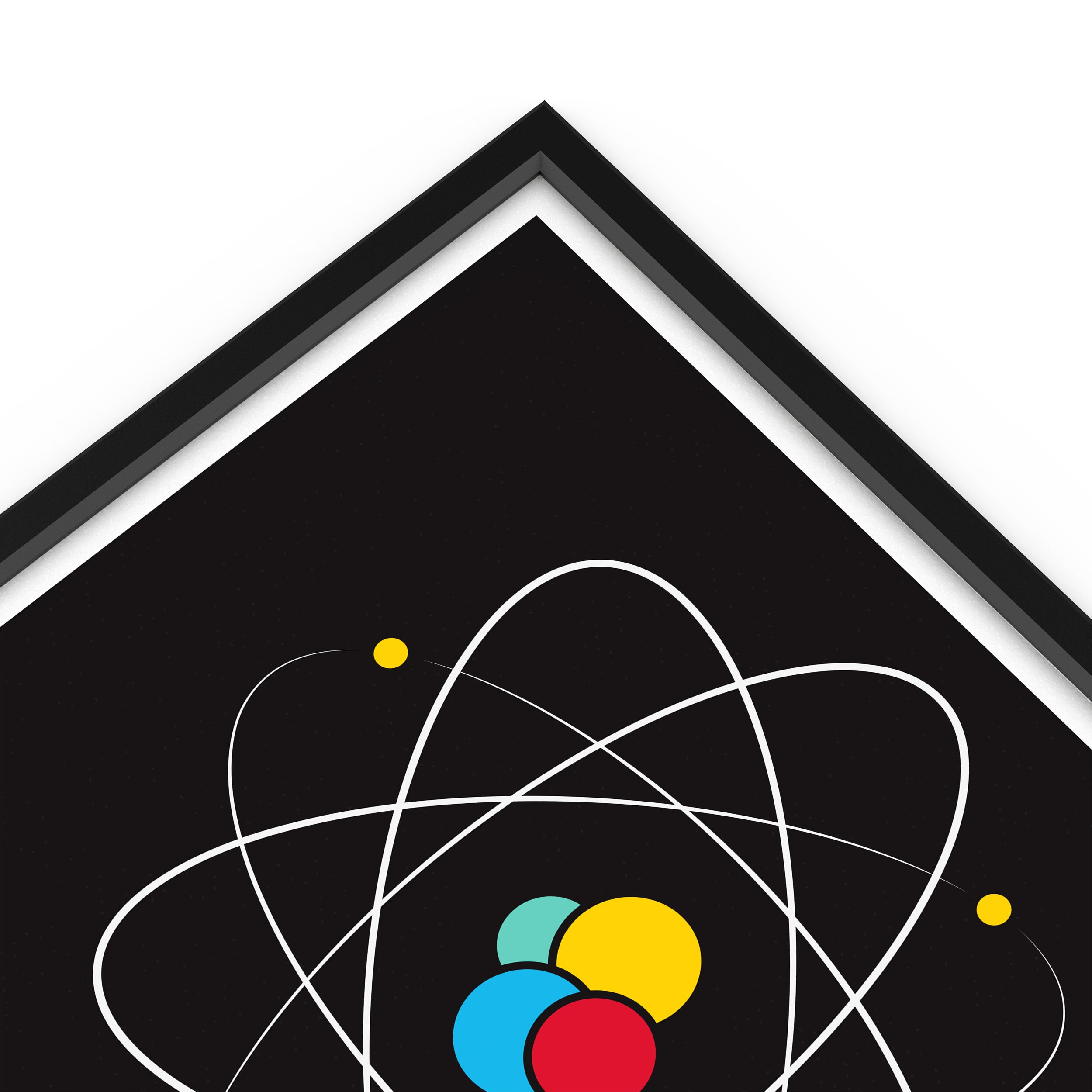
To understand how to teach the modern atom, one must first recognize the shift from deterministic models to probabilistic ones. For decades, the Bohr model dominated the classroom because it was easy to draw and intuitive to understand. It presented electrons as tiny planets orbiting a central sun (the nucleus). However, this model fails to explain the behavior of atoms larger than hydrogen and ignores the fundamental principles of quantum mechanics.
In the modern classroom, the narrative has shifted toward the Schrödinger and Heisenberg models. These models represent the atom not as a physical machine with moving parts, but as a system of energy states. The transition involves three major conceptual hurdles:
- From Orbits to Orbitals: Moving away from the idea of fixed paths to 3D regions of space where there is a high probability (usually 90%) of finding an electron.
- From Particles to Waves: Introducing the concept that electrons exhibit wave-like properties, which determines their energy levels and spatial distribution.
- From Certainty to Probability: Accepting that we cannot know both the exact position and momentum of an electron simultaneously (The Heisenberg Uncertainty Principle).
By framing the atom through these modern lenses, students develop a more accurate mental map of how matter interacts at the smallest scales.
Core Pillars of the Modern Atomic Curriculum
Effective instruction in 2026 focuses on four primary pillars that define the modern atom. These pillars provide the technical depth required for high school and introductory college chemistry while remaining accessible through visual and mathematical modeling.
1. Quantum Numbers and Electron Configuration
Rather than simply filling shells (2, 8, 18), students now engage with the four quantum numbers ($n, l, m_l, m_s$) as the "address" of an electron. This depth allows students to understand why the periodic table is shaped the way it is. The $s, p, d, f$ blocks are no longer just labels; they represent the physical shapes of the electron clouds.
2. Wave-Particle Duality
The modern atom cannot be understood without the de Broglie hypothesis. In the classroom, this is often demonstrated through "PhET" style simulations or interference pattern experiments. Understanding that an electron's "wavelength" must fit perfectly into an orbital to exist (standing waves) explains why energy levels are quantized.
3. The Role of the Nucleus and Quarks
While the "modern atom" often focuses on electrons, 2026 standards also include the standard model of particle physics at a high level. Students learn that protons and neutrons are not fundamental particles but are composed of quarks (up and down) held together by gluons. This provides a more complete picture of the "modern" understanding of matter.
4. Probability Density and Radial Distribution
The "cloud" is the defining visual of the modern atom. Teachers use "dot density" diagrams to show where electrons are likely to be. Advanced curricula introduce radial distribution functions, showing that while an electron is most likely to be found at a certain distance (coinciding with the Bohr radius for hydrogen), it can technically be anywhere.
Digital Visualization Tools for 2026
The abstract nature of quantum mechanics makes it notoriously difficult to teach using only a whiteboard. In 2026, the classroom toolkit has expanded to include immersive technologies that make the invisible visible.
- Virtual Reality (VR) Atomic Labs: Students can "shrink" to the size of a nucleus and walk through $p$-orbitals or $d$-orbitals. This spatial experience helps them understand the 3D nature of $p_x, p_y,$ and $p_z$ orientations, which are often confused when viewed on a 2D page.
- AI-Driven Molecular Modeling: Tools like modern versions of Avogadro or specialized educational AI can predict and visualize electron density shifts during chemical reactions in real-time. This connects the "static" atom to "dynamic" chemistry.
- Augmented Reality (AR) Flashcards: When viewed through a tablet or AR glasses, a standard 2D periodic table can "pop" into life, showing the oscillating probability clouds of each element.
| Feature | Bohr Model (Traditional) | Quantum Mechanical Model (Modern) |
|---|---|---|
| Electron Path | Defined circular orbits | Probabilistic orbitals (clouds) |
| Electron Nature | Treated as a discrete particle | Treated as a wave-particle duality |
| Energy Levels | Fixed rings ($n=1, 2, 3$) | Complex sublevels ($s, p, d, f$) |
| Predictive Power | Only accurate for Hydrogen | Accurate for all elements |
| Visual Representation | Solar system analogy | Electron density/probability maps |
| Key Math | Basic algebra | Differential equations (simplified for class) |
Pedagogical Strategies for Complex Concepts
To prevent students from feeling overwhelmed by the complexity of modern atomic theory, educators employ specific pedagogical strategies that scaffold the information without introducing inaccuracies.
The 5E Instructional Model
The 5E Model (Engage, Explore, Explain, Elaborate, Evaluate) is particularly effective for the modern atom.
- Engage: Start with a phenomenon, such as the line emission spectrum of various gases.
- Explore: Have students use simulations to try and build an atom that produces those specific light patterns.
- Explain: Introduce the formal definitions of orbitals and energy quantization.
- Elaborate: Apply the model to explain the periodic trends (electronegativity, atomic radius).
- Evaluate: Assess understanding through modeling rather than just multiple-choice questions.
Modeling-Based Instruction (MBI)
MBI encourages students to develop their own "mental models" and then refine them as they encounter new evidence. For example, a student might start with a "pudding" model, then perform a simulated Gold Foil experiment to "discover" the nucleus, and finally use spectral data to "discover" quantized energy levels. This mimics the historical scientific process and builds a deeper appreciation for why the modern model exists.
Overcoming Common Classroom Misconceptions
Even with the best tools, students often cling to classical ideas. Addressing these directly is a requirement for a modern curriculum.
Misconception: Electrons "move" around the nucleus like a fly in a jar. Correction: In the modern model, we don't describe the "movement" or "velocity" in a classical sense. The electron is essentially "smeared" across the orbital as a wave of probability. It doesn't travel from Point A to Point B; it exists at all points within the orbital simultaneously until measured.
Misconception: Orbitals are physical shells or containers. Correction: Teachers must emphasize that orbitals are mathematical descriptions of space. There is no physical "wall" to an orbital. It is a boundary where we have a high statistical likelihood of locating an electron.
Misconception: The "Cloud" is a solid fog. Correction: The term "cloud" is a metaphor for probability density. It doesn't mean the electron is broken into pieces or that the space is filled with a gaseous substance.
Integrating Modern Atomic Theory with Standards
In 2026, educational standards like the Next Generation Science Standards (NGSS) emphasize "Systems and System Models." The modern atom is the ultimate system model. Curricula are now designed to ensure that atomic theory is not taught in a vacuum.
- Connection to Periodicity: Modern atomic theory explains the "blocks" of the periodic table. Understanding the $f$-block, for instance, becomes a lesson in orbital energy overlap.
- Connection to Bonding: Covalent bonding is taught as "orbital overlap" rather than just "sharing dots." This sets the stage for understanding molecular geometry (VSEPR theory) and hybridization ($sp^3, sp^2$, etc.).
- Connection to Physics: The modern atom serves as the bridge between chemistry and quantum physics, introducing students to the fundamental forces (Strong, Weak, Electromagnetic).
Frequently Asked Questions
Why shouldn't we just teach the Bohr model first?
While the Bohr model is simpler, it creates a "mental block" that makes it harder for students to accept the Quantum Mechanical Model later. By starting with a simplified "probability" approach—sometimes called the "Cloud-First" method—students avoid learning "rules" that they will eventually have to unlearn.
Is the math of modern atomic theory too hard for high school?
The underlying calculus (Schrödinger’s Equation) is certainly too advanced, but the conclusions of that math are not. Students can understand the shapes of orbitals and the rules of electron occupancy (Pauli Exclusion Principle, Hund’s Rule) without needing to solve second-order differential equations.
How do I assess a student's understanding of a "cloud"?
Assessment in 2026 has moved toward drawing and modeling. Instead of asking for the number of electrons in a shell, ask a student to sketch a $p$-orbital and shade it to represent where an electron is most likely to be found. Use "Predict-Observe-Explain" tasks using digital simulations.
Are there any specific 2026 safety guidelines for atomic labs?
Most modern atomic instruction involves simulations or low-energy spectral analysis (flame tests). For flame tests, 2026 guidelines emphasize the use of micro-scale chemistry to minimize waste and the transition to digital spectrometers to avoid the subjective nature of human color perception.
Does "Modern Atom" include sub-atomic particles like Higgs Boson?
In a general chemistry classroom, these are usually treated as "extensions." However, for advanced placement or IB levels in 2026, the existence of the Higgs Field is often introduced as the mechanism by which subatomic particles acquire mass, providing a more "modern" answer to the question "What is an atom made of?"
Recommendations for Educators
To successfully implement modern atomic theory in the classroom, educators should prioritize visual literacy. Because the modern atom cannot be seen, the ability to interpret graphs, probability maps, and 3D models is the most critical skill a student can develop.
Start the unit not with a history lesson, but with a discrepant event—something that the Bohr model cannot explain, such as the splitting of spectral lines in a magnetic field (the Zeeman Effect) or the specific shapes of complex molecules like $SF_6$. This creates a "need to know" in the student, making the transition to the more complex modern model a solution to a problem rather than an arbitrary increase in difficulty. Finally, ensure that professional development focuses on the use of AR/VR integration, as these tools are the most effective way to bridge the gap between abstract quantum math and student intuition.