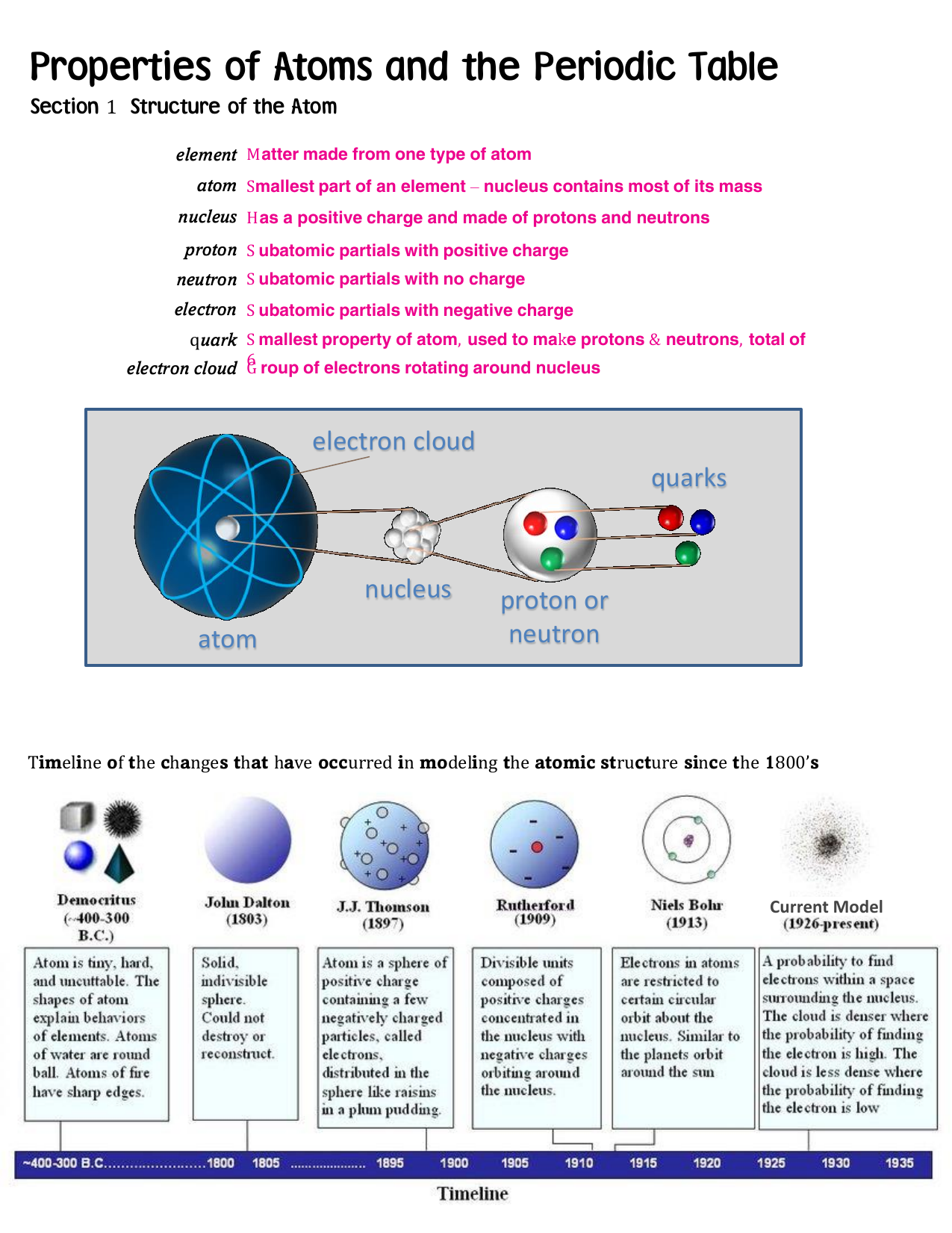
Atoms are the fundamental units of matter, consisting of a dense central nucleus composed of protons and neutrons, surrounded by a cloud of orbiting electrons. These subatomic particles, governed by the laws of quantum mechanics, determine the chemical identity, stability, and physical properties of every element in the universe.
The study of atomic structure has evolved from simple spheres to complex quantum probability clouds. As of 2026, our understanding of the atom remains centered on the Standard Model of particle physics, which classifies the most basic constituents of the universe. To understand how the world functions at a macroscopic level, one must first master the intricate relationships between the particles that reside within the microscopic domain of the atom.
The Core Architecture: Nucleus and Electron Shells
Every atom is characterized by its internal organization. At the center lies the nucleus, a tiny, incredibly dense region that contains more than 99.9% of the atom’s mass. Despite its mass, the nucleus occupies only about 1/100,000th of the atom's total volume. This disparity highlights one of the most striking facts about matter: atoms are mostly empty space.
Surrounding the nucleus is the electron cloud. In older models, such as the Bohr model, electrons were depicted as planets orbiting a sun. However, modern physics describes these regions as orbitals—mathematical probability zones where an electron is most likely to be found. The interaction between the positively charged nucleus and the negatively charged electrons is facilitated by the electromagnetic force, which keeps the atom bound together.
The Role of the Proton
The proton is a subatomic particle with a positive elementary charge of +1. The number of protons in the nucleus is known as the atomic number (Z), and it is the defining characteristic of an chemical element. For example, any atom with exactly six protons is carbon, regardless of how many neutrons or electrons it possesses. Protons have a rest mass of approximately 1.007276 atomic mass units (amu).
The Role of the Neutron
Neutrons are slightly more massive than protons, with a rest mass of about 1.008665 amu. They carry no net electric charge, making them neutral. Their primary function within the nucleus is to act as a "buffer" between the positively charged protons. Because like charges repel each other via the electromagnetic force, a nucleus full of protons would fly apart without the strong nuclear force provided by the presence of neutrons. Atoms of the same element with different numbers of neutrons are called isotopes.
The Role of the Electron
Electrons are significantly smaller than nucleons (protons and neutrons), with a mass approximately 1/1836th that of a proton. They carry a negative elementary charge of -1. Electrons are responsible for the chemical behavior of atoms. When atoms interact to form molecules, it is the valence electrons—those in the outermost shells—that are shared or transferred. In a neutral atom, the number of electrons exactly equals the number of protons.
Beyond Protons and Neutrons: The Standard Model
While protons, neutrons, and electrons are the "fundamental" particles of basic chemistry, particle physics reveals that protons and neutrons are not elementary. They are composed of even smaller entities called quarks. The Standard Model, which is the theoretical framework describing three of the four known fundamental forces, categorizes all known subatomic particles into two main groups: fermions and bosons.
Quarks: The Components of Nucleons
Quarks are elementary particles that combine to form hadrons, the most stable of which are protons and neutrons. There are six "flavors" of quarks: up, down, charm, strange, top, and bottom.
- Protons consist of two "up" quarks and one "down" quark (uud).
- Neutrons consist of one "up" quark and two "down" quarks (udd).
Quarks are unique because they carry fractional electric charges. An "up" quark has a charge of +2/3, while a "down" quark has a charge of -1/3. When combined, these charges result in the integer charges we observe in nucleons (+1 for protons, 0 for neutrons). Quarks are held together by the exchange of particles called gluons, which mediate the strong nuclear force.
Leptons: Truly Fundamental Particles
Unlike protons and neutrons, electrons belong to a class of particles called leptons, which are believed to be truly elementary (meaning they cannot be broken down further). There are six leptons in total, arranged in three generations:
- The Electron and the Electron Neutrino
- The Muon and the Muon Neutrino
- The Tau and the Tau Neutrino
The electron is the most stable and common lepton in the universe. The others are typically produced in high-energy environments, such as cosmic ray collisions or particle accelerators, and decay rapidly.
Fundamental Forces and Gauge Bosons
The particles within an atom do not simply exist side-by-side; they interact through fundamental forces. These forces are mediated by "force-carrier" particles known as gauge bosons.
| Particle | Force Mediated | Role in the Atom |
|---|---|---|
| Photon | Electromagnetic Force | Binds electrons to the nucleus; governs chemical bonding. |
| Gluon | Strong Nuclear Force | Binds quarks together and holds the nucleus together. |
| W and Z Bosons | Weak Nuclear Force | Responsible for radioactive decay (beta decay). |
| Graviton (Theoretical) | Gravity | Negligible at the atomic scale; affects massive bodies. |
| Higgs Boson | Higgs Field | Grants mass to elementary particles like quarks and electrons. |
The Strong Force and Color Charge
The strong force is the most powerful of the four forces but acts over a very short range (roughly the diameter of a nucleus). It is governed by a property called color charge. Quarks constantly exchange gluons, which "glue" them together so tightly that a single quark has never been observed in isolation—a phenomenon known as color confinement.
The Weak Force and Atomic Decay
The weak nuclear force is responsible for the transformation of one type of subatomic particle into another. For instance, in beta decay, a neutron can change into a proton by emitting a W boson, which then decays into an electron and an antineutrino. This process is essential for the fusion reactions that power stars like our sun.
Atomic Properties and Classifications
Understanding the particles allows us to categorize atoms into various states based on their composition. This classification is vital for both theoretical physics and practical chemistry.
Isotopes and Nuclear Stability
An isotope is defined by having the same number of protons but a different number of neutrons. Some isotopes are stable, while others are unstable (radioactive). The stability of a nucleus depends on the ratio of neutrons to protons. For lighter elements, a 1:1 ratio is typically stable, but as atoms get heavier, more neutrons are required to counteract the increasing electromagnetic repulsion between protons.
When the nucleus becomes too large or the ratio becomes unbalanced, the atom undergoes radioactive decay to reach a more stable state, emitting alpha particles, beta particles, or gamma radiation in the process. More information on isotope data can be found through the National Institute of Standards and Technology (NIST).
Ions and Electric Charge
An atom becomes an ion when the number of electrons does not equal the number of protons.
- Cations: Atoms that lose electrons and become positively charged.
- Anions: Atoms that gain electrons and become negatively charged.
Ionization is a critical process in plasma physics, electronics, and biological systems, where moving ions create electrical signals in nerves and muscles.
Mass Defect and Binding Energy
A fascinating aspect of atomic particles is that the mass of an intact nucleus is always slightly less than the sum of the individual masses of its constituent protons and neutrons. This "missing mass" is known as the mass defect. According to Einstein’s equation $E=mc^2$, this mass is converted into binding energy, the energy required to disassemble the nucleus. This principle is the foundation of nuclear energy, both in fission (splitting heavy nuclei) and fusion (joining light nuclei).
Quantum Mechanics: The Wave-Particle Duality
At the scale of fundamental particles, the classical laws of physics—those we observe in everyday life—cease to apply. Instead, we use quantum mechanics. One of the most important concepts is wave-particle duality, which states that particles like electrons exhibit properties of both discrete particles and continuous waves.
The Heisenberg Uncertainty Principle further complicates our view by stating that we cannot simultaneously know the exact position and the exact momentum of a particle. This is why we describe electrons in terms of "probability clouds." These clouds define the shapes of the s, p, d, and f orbitals that dictate the structure of the periodic table.
Spin: An Intrinsic Property
In addition to mass and charge, all fundamental particles possess an intrinsic form of angular momentum called spin. Fermions (quarks and leptons) have half-integer spin (1/2), which means they obey the Pauli Exclusion Principle. This principle states that no two fermions can occupy the exact same quantum state simultaneously. This is why electrons stack into different energy levels rather than all collapsing into the lowest orbit, directly enabling the existence of complex chemistry.
Practical Applications of Atomic Knowledge
The study of atoms and their fundamental particles is not merely academic. It has led to some of the most significant technological advancements of the 21st century.
- Medical Imaging: Positron Emission Tomography (PET) scans utilize antimatter (positrons) created during the decay of specific isotopes to create detailed images of the human body.
- Semiconductors: The modern computer industry relies on our understanding of how electrons move through crystalline structures, a field known as solid-state physics.
- Nuclear Medicine: Targeted alpha therapy uses the high energy of decaying nuclei to destroy cancer cells with minimal damage to surrounding healthy tissue.
- Quantum Computing: Researchers are currently leveraging the spin and superposition states of individual atoms and particles to build computers capable of solving problems that are impossible for classical machines.
For those interested in the latest experimental data regarding subatomic particles, the CERN (European Organization for Nuclear Research) website provides updates on high-energy physics experiments conducted at the Large Hadron Collider.
Frequently Asked Questions
What is the difference between a fundamental particle and a subatomic particle?
A subatomic particle is any particle smaller than an atom, including protons, neutrons, and electrons. A fundamental (or elementary) particle is one that is not known to have any substructure. Therefore, electrons and quarks are fundamental, while protons and neutrons are subatomic but not fundamental because they are made of quarks.
Are there particles smaller than quarks?
As of 2026, there is no experimental evidence that quarks are composed of even smaller particles. They are treated as point-like entities in the Standard Model. Some theoretical frameworks, like String Theory, suggest that all particles are actually tiny vibrating strings of energy, but this remains unproven.
How do we know atoms exist if we cannot see them with light?
While atoms are smaller than the wavelength of visible light, we can "see" them using tools like Scanning Tunneling Microscopes (STM) and Atomic Force Microscopes (AFM). These devices use a physical probe or electron beams to map the electron density of surfaces, allowing us to visualize and even manipulate individual atoms.
What is antimatter in relation to atomic particles?
For every fundamental particle, there is a corresponding antiparticle with the same mass but opposite electric charge. For example, the antiparticle of the electron is the positron (+1 charge). When a particle and its antiparticle meet, they annihilate each other, converting their entire mass into pure energy (photons).
Why doesn't the nucleus fly apart if protons repel each other?
The nucleus is held together by the strong nuclear force, which is approximately 137 times stronger than the electromagnetic force. This force acts between all nucleons (protons and neutrons) and overcomes the electrostatic repulsion between the positively charged protons, provided they are within a very short distance of each other.
Next Steps for Learning
To deepen your understanding of atomic structure, it is recommended to study the Periodic Table of Elements through the lens of electron configurations. Understanding how electrons fill shells—following the Aufbau principle, Hund's rule, and the Pauli Exclusion Principle—will provide a clear bridge between the physics of subatomic particles and the practical reality of chemical reactions. For those interested in the mathematical side, exploring the Schrödinger Wave Equation offers a gateway into the quantum mechanics that governs particle behavior.