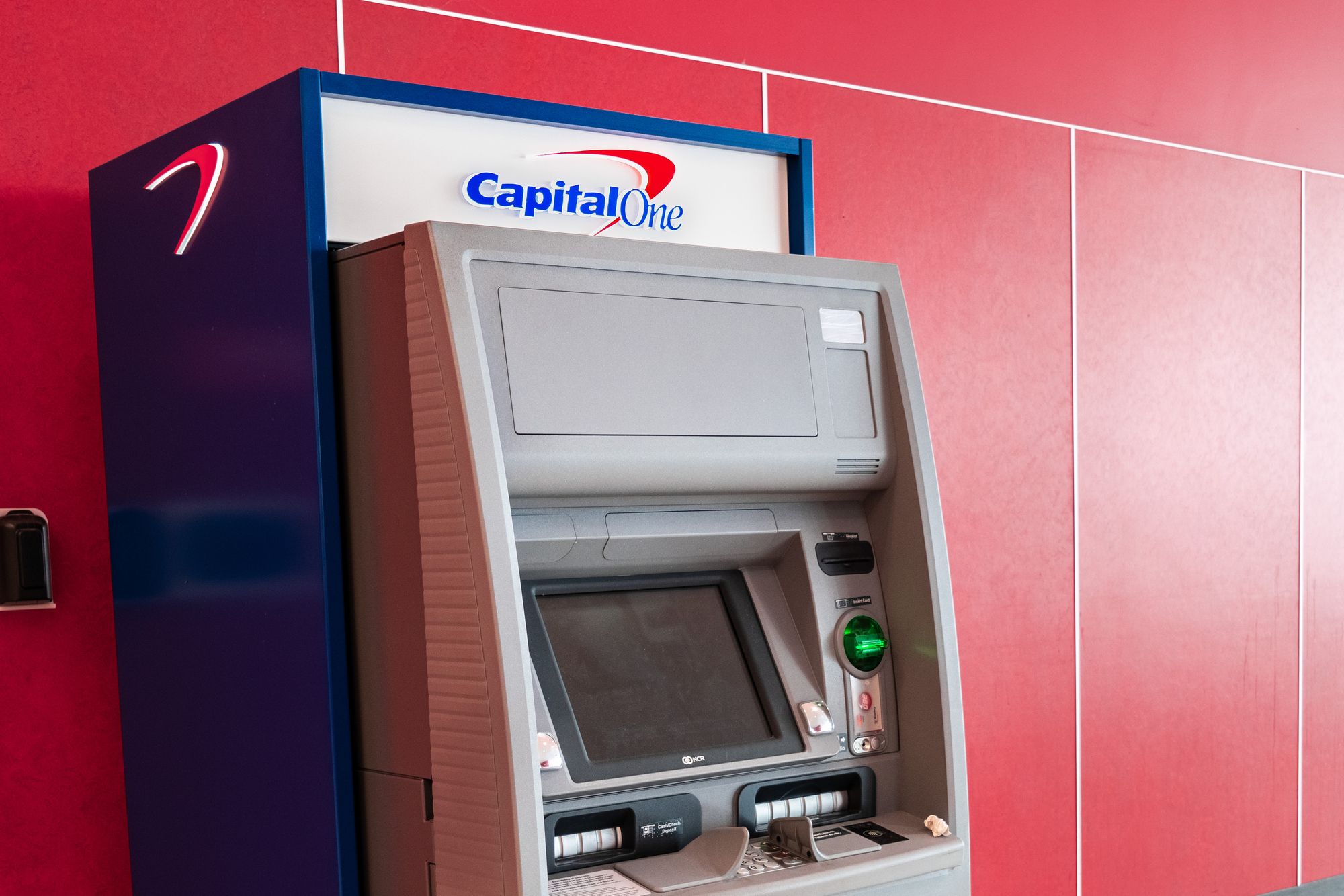
Finding an ATM that accepts cash deposits is a critical requirement for many banking customers in the United States, especially as the financial landscape continues to shift toward digital-first interactions. Most major national banks, including JP Morgan Chase, Bank of America, and Wells Fargo, provide extensive networks of "Smart ATMs" that allow for envelope-free cash deposits. Additionally, independent networks like Allpoint+ have expanded to serve customers of online-only neobanks, providing thousands of physical touchpoints for cash intake at major retail locations.
The Evolution of Cash Deposit Technology in the US
The ability to deposit cash at an ATM has evolved significantly over the last decade. In 2026, the standard for cash-accepting ATMs is "intelligent deposit" or "image-based" technology. This hardware utilizes high-speed optical scanners and currency validators to count bills individually as they are fed into the machine. This is a major departure from the older, envelope-based systems where a customer would insert cash into a paper envelope, which then required manual verification by a bank employee the following business day.
Intelligent deposit machines offer several advantages. First, they provide an immediate, itemized receipt that often includes images of the deposited currency or a breakdown of the denominations. Second, they significantly reduce the "float" time, often making the first $200 to $500 of a deposit available for immediate use, with the remainder clearing by the next business cycle. These machines are also equipped with sophisticated counterfeit detection sensors, ensuring that the bank can verify the legitimacy of the currency in real-time.
Major National Banks with Cash Deposit ATMs
If you hold an account with a traditional "Brick and Mortar" institution, finding a cash-accepting ATM is relatively straightforward. Most of these banks have upgraded their entire fleet to handle high-volume cash intake.
JP Morgan Chase
Chase maintains one of the largest ATM networks in the United States, with over 15,000 machines. Nearly all Chase-branded ATMs located at branch vestibules or "drive-up" kiosks accept cash. A standout feature of Chase ATMs in 2026 is the integration of NFC (Near Field Communication), allowing customers to deposit cash using a digital wallet on their smartphone rather than a physical debit card. Chase typically allows deposits of up to 30 to 50 bills at a time, depending on the specific machine model.
Bank of America
Bank of America has been a pioneer in "ATM with Teller Assist" technology. While their standard ATMs accept cash deposits 24/7, many locations also offer machines where you can interact with a live teller via video during extended business hours. This is particularly useful for depositing larger amounts of cash that might exceed standard automated limits. Their machines are widely praised for their "No Envelope" interface, which allows you to feed a stack of bills in any orientation.
Wells Fargo
Wells Fargo provides a massive footprint across the South and West. Their ATMs are designed for speed, offering "Express" deposit options for customers who frequently deposit cash. Wells Fargo ATMs are also integrated with their mobile app, providing "One-Time Access Codes" that allow for cash deposits even if you have lost your physical card.
PNC Bank and U.S. Bank
Both PNC and U.S. Bank have focused on regional density. PNC’s "DepositEasy" ATMs allow customers to deposit cash and checks in a single transaction. These machines are commonly found in high-traffic areas and within retail partnerships, expanding their reach beyond traditional branch locations.
Cash Deposits for Online-Only Banks and Neobanks
One of the biggest challenges for users of online banks (such as Chime, Ally, or Monzo) has historically been the inability to deposit physical cash. As of 2026, this problem has been largely solved through third-party ATM networks and retail partnerships.
The Allpoint+ Network
Allpoint+ is the premium tier of the standard Allpoint network. While standard Allpoint ATMs are for withdrawals only, Allpoint+ machines are specifically designed to accept cash deposits. These are typically found in major retail chains such as:
- CVS Pharmacy
- Walgreens
- Target
- Speedway
Users of participating fintech apps can use the app’s locator to find an Allpoint+ machine, scan a QR code or insert their debit card, and deposit cash directly into their digital account.
Retail "Reload" Services
While not strictly an ATM in the traditional sense, many retail locations offer "Add Cash" services at the point-of-sale (POS) register that function identically to an ATM deposit. Through services like Green Dot (MoneyPak) or Vanilla Direct, a customer can hand cash to a cashier at a 7-Eleven or Dollar General, who then swipes the customer's debit card to load the funds. While effective, these services often carry a fee ranging from $3.95 to $4.95 per transaction, unlike traditional bank ATMs which are usually free for account holders.
Credit Unions and the CO-OP Shared Branching Network
Credit union members have a unique advantage through the CO-OP Financial Services network. Many credit unions participate in "Shared Branching," which allows a member of one credit union to use the ATM or teller services of another participating credit union as if they were at their own home branch.
In 2026, thousands of CO-OP ATMs across the US accept cash deposits for members of any participating credit union. This network is vital for travelers or individuals who move to a state where their specific credit union does not have a physical presence. When using a CO-OP ATM for a deposit, it is important to look for the "CO-OP Share Branch" logo on the machine to ensure it is equipped for inter-institution deposits.
Limits, Fees, and Availability
Understanding the constraints of ATM deposits is essential for managing your finances effectively. While the technology has improved, there are still physical and institutional limits in place.
| Feature | Large National Banks (Chase, BofA) | Neobanks (via Allpoint+) | Credit Unions (CO-OP) |
|---|---|---|---|
| Deposit Fee | $0 for customers | Usually $0 (varies by bank) | $0 for members |
| Daily Limit | $3,000 - $10,000+ | $1,000 - $2,500 | Varies by Credit Union |
| Availability | Mostly 24/7 | Retail store hours | 24/7 (if outdoor) |
| Technology | Image-based/Envelope-free | Image-based/Envelope-free | Mixed (Image-based preferred) |
| Funds Access | Partial immediate / Rest next day | Often immediate | Varies (1-2 business days) |
Transactional and Daily Limits
Most ATMs have a physical limit on how many bills can be inserted at once (usually 30-50). However, there is also a secondary "Daily Deposit Limit" set by your bank for security reasons. For most personal accounts, this ranges from $3,000 to $5,000. If you need to deposit $20,000 in cash, an ATM is generally not the appropriate venue; you would need to visit a branch teller to comply with Bank Secrecy Act (BSA) reporting requirements for transactions over $10,000.
Fee Structures
Depositing cash at your own bank's ATM is almost always free. However, depositing cash at a "foreign" ATM (one not owned by your bank) is usually impossible unless that ATM is part of a specific shared network like Allpoint+ or CO-OP. If you attempt to use a random independent ATM (like those found in bars or small convenience stores), you will likely find that they only support cash withdrawals and balance inquiries.
How to Deposit Cash at an ATM: Step-by-Step
To ensure your deposit is processed correctly and to avoid machine malfunctions, follow these standard procedures:
- Verify the ATM Type: Ensure the machine explicitly states it accepts deposits. Look for a "Deposit" slot or an "Insert Cash/Check" light.
- Prepare Your Currency: Straighten all bills. Remove paper clips, staples, or rubber bands. Modern scanners are sensitive; folded or torn corners can cause the machine to reject the bill or, worse, jam.
- Authentication: Insert your debit card and enter your PIN. In 2026, many machines allow you to tap your smartphone if you have your card loaded into Apple Pay, Google Pay, or a proprietary bank app.
- Select Deposit: Choose the "Deposit" option on the screen and then select "Cash."
- Insert Bills: Most modern machines allow you to insert a "stack" of bills. Feed them into the designated slot. The machine will whir as it counts and validates each bill.
- Confirm Amount: The screen will display the total amount counted, often broken down by denomination (e.g., 5 x $20, 2 x $50). If this matches your count, select "Confirm."
- Choose Receipt: Always opt for a printed receipt. In the rare event of a machine error or a discrepancy in the count, the receipt is your primary evidence for a bank claim.
Troubleshooting Common Issues
Despite the technological advancements of 2026, ATM deposits can occasionally go wrong. Here is how to handle the most common complications:
- The Machine Jams: If the ATM jams while your cash is inside, do not leave the machine. Immediately look for an ATM ID number (usually printed on a sticker on the machine) and call the customer service number displayed on the screen.
- The Count is Wrong: If the ATM displays an amount lower than what you inserted, do not confirm the transaction. There is usually a "Cancel" or "Return Cash" button. If the machine refuses to return the cash, confirm the transaction so it is recorded, then immediately file a "Regulation E" dispute with your bank.
- The Deposit Isn't Showing: Most cash deposits show up as "Pending" immediately. If your balance hasn't updated within two hours, contact your bank. Keep your receipt handy as it contains the transaction sequence number required for an investigation.
Security Considerations for Cash Deposits
Depositing cash at an ATM involves physical risks that digital transactions do not. To stay safe:
- Time and Location: Prefer ATMs located inside bank lobbies or well-lit retail stores. Avoid standalone kiosks in dark or isolated areas, especially at night.
- Survey the Area: Before approaching the machine, check for individuals loitering nearby.
- Check for Skimmers: Even in 2026, physical card skimming remains a threat. Wiggle the card reader before inserting your card; if it feels loose or appears bulky, do not use it.
- Privacy: Use your body to shield the keypad while entering your PIN. Even if no one is behind you, hidden cameras can be used to record keystrokes.
- Discretion: Do not count large stacks of cash in public view before reaching the ATM. Have your money ready and organized in your pocket or wallet beforehand.
FAQ
Can I deposit cash at an ATM that doesn't belong to my bank?
Generally, no. Most traditional banks do not allow non-customers to deposit cash at their ATMs. The exception is if your bank is part of a shared network, such as the CO-OP network for credit unions or the Allpoint+ network for certain digital banks.
How much cash can I deposit at an ATM at once?
Most "Smart ATMs" can handle between 30 and 50 bills per individual insertion. If you have 100 bills, you may need to perform multiple transactions or feed them in smaller batches as prompted by the screen.
Are ATM cash deposits available immediately?
In most cases, a portion of the cash deposit (often the first $200–$500) is available immediately for use with your debit card or for transfers. The remaining balance typically clears by the next business day (Monday through Friday, excluding federal holidays).
What happens if the ATM eats my money?
If the machine malfunctions and does not credit your account, you must file a "Notice of Error" with your financial institution. Under the Electronic Fund Transfer Act (Regulation E), the bank is required to investigate the claim and typically provides a provisional credit while the investigation is ongoing.
Can I deposit coins at an ATM?
No, the vast majority of ATMs in the US do not accept coins. They are designed exclusively for paper currency. To deposit coins, you will need to use a coin-counting machine (like Coinstar) and then deposit the resulting voucher or cash, or visit a bank branch that provides coin-counting services for members.
Final Recommendation
For the most reliable experience, users should prioritize ATMs located at their own bank’s physical branches. These machines offer the highest deposit limits and the fastest funds availability. If you use an online-only bank, your best option is to use the bank’s mobile app to locate a verified Allpoint+ terminal or a retail partner that offers "Add Cash" services. Always ensure you receive a physical or digital receipt for every cash transaction to protect yourself against mechanical errors.