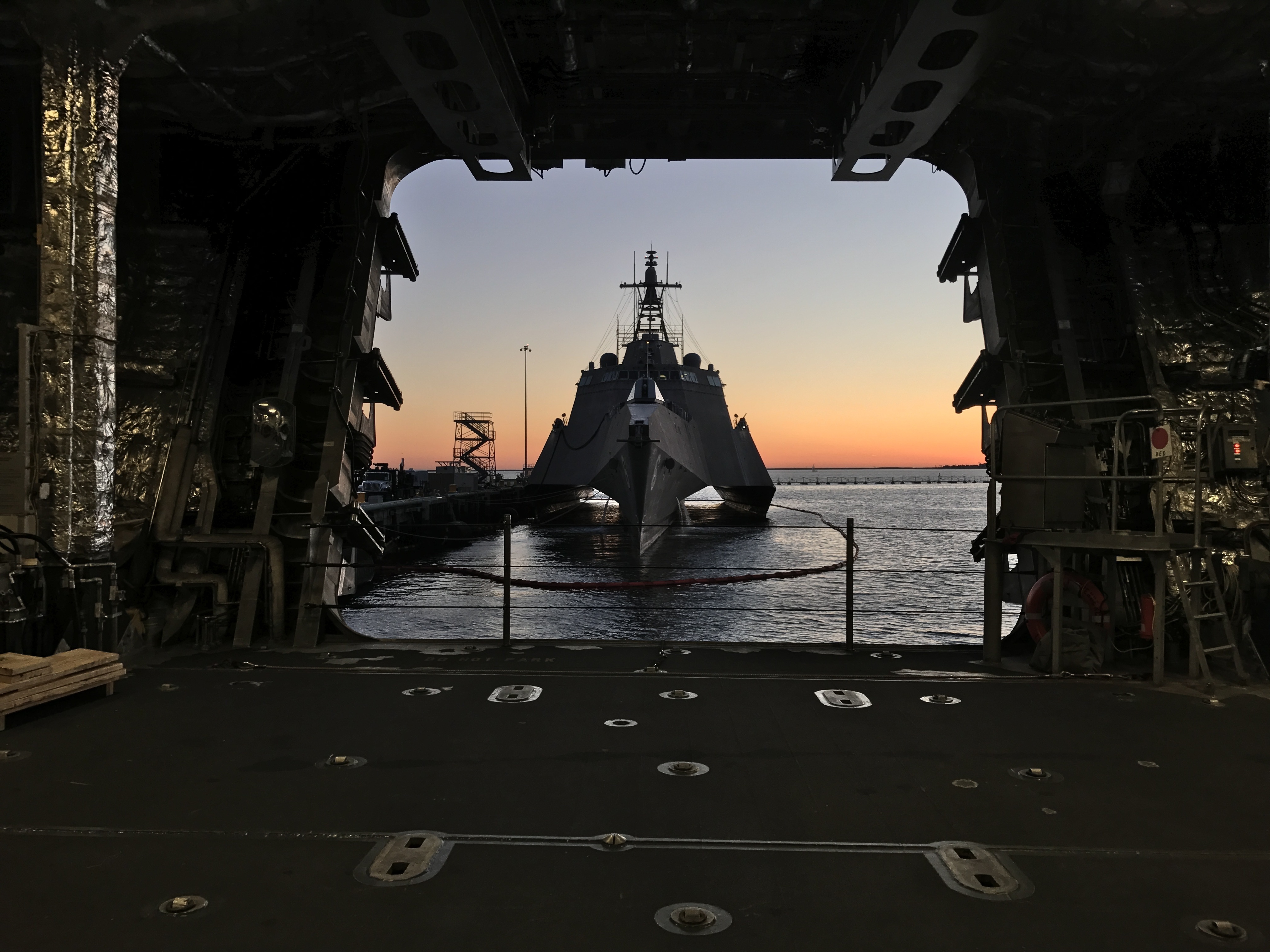
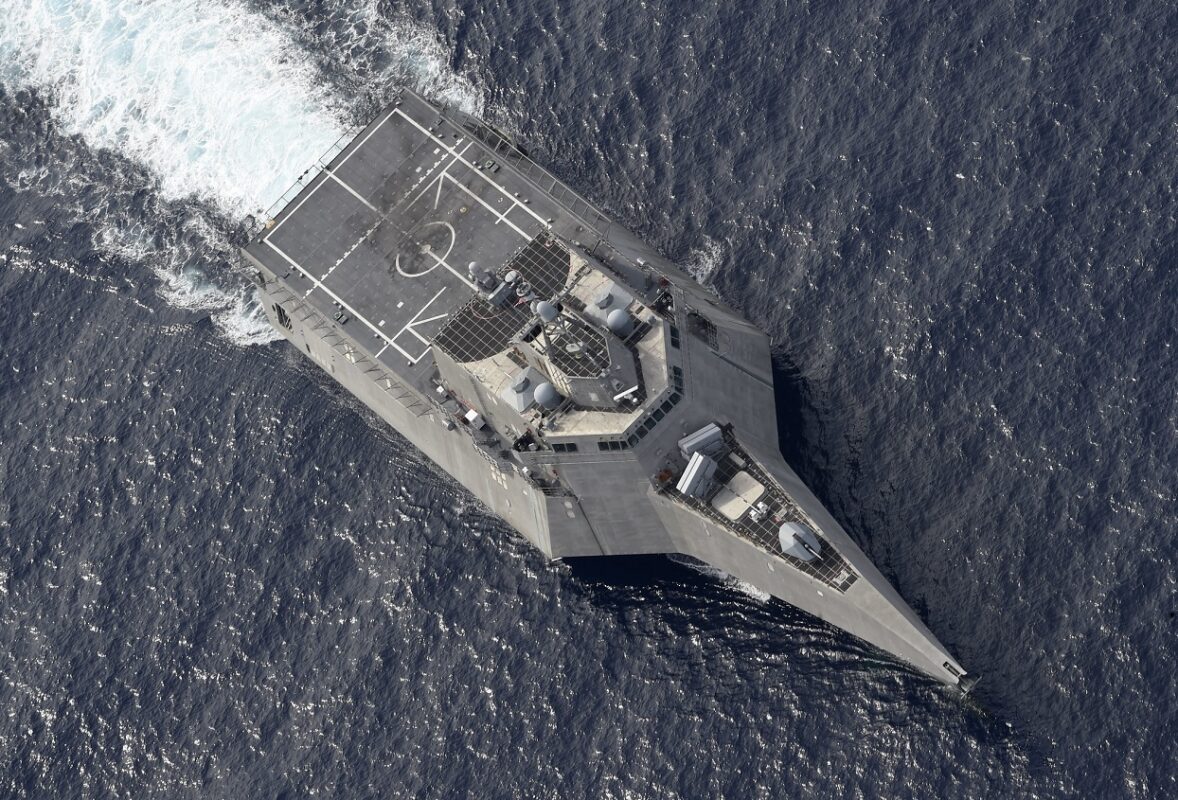
The United States Navy officially cancelled the Anti-Submarine Warfare (ASW) mission package for the Littoral Combat Ship (LCS) due to significant technical failures of the Raytheon AN/SQS-62 Variable Depth Sonar (VDS) and a strategic shift toward the Constellation-class (FFG-62) frigate. Persistent reliability issues and the inability of the modular sonar system to meet performance milestones led the Navy to abandon the package in 2022 to prioritize more survivable, purpose-built platforms.
The Vision of Modularity: The LCS Concept and ASW
The Littoral Combat Ship program was conceived as a modular, high-speed vessel capable of swapping "mission packages" to address three distinct threats: Surface Warfare (SUW), Mine Countermeasures (MCM), and Anti-Submarine Warfare (ASW). The goal was to create a flexible fleet where a single hull could transition from a mine hunter to a submarine chaser within days by swapping containerized equipment and specialized personnel.
The ASW mission package was intended to be the crown jewel of this modular strategy. It was designed to provide the Navy with a "detect-to-engage" capability against quiet diesel-electric submarines in shallow, "littoral" waters—environments where traditional deep-water destroyers often struggle with acoustic interference. The heart of this package was the Variable Depth Sonar (VDS), a system that could be lowered to different water depths to bypass thermal layers that typically hide submarines from surface-mounted sensors.
However, as of 2026, the LCS fleet has been forced to redefine its role. The modular dream proved more difficult to engineer than to imagine. While the SUW and MCM packages eventually achieved operational status, the ASW component faced insurmountable hurdles that ultimately rendered it a "sunk cost" in the eyes of Pentagon planners and Congressional oversight committees.
The AN/SQS-62 Failure: Technical and Engineering Barriers
The primary technical catalyst for dropping the ASW mission package was the failure of the Raytheon AN/SQS-62 Variable Depth Sonar. The AN/SQS-62 was a custom-designed, lightweight VDS intended to fit the weight and space constraints of both the Freedom and Independence LCS variants.
Hydrodynamic Instability and Reliability
During rigorous testing, the AN/SQS-62 demonstrated significant hydrodynamic instability. A VDS must remain stable as it is towed behind a ship to maintain a clear "acoustic picture." If the sonar body (the "fish") pitches or yaws excessively, the data it returns is garbled or useless. The Raytheon system struggled to maintain the necessary stability at the operational speeds required for LCS missions.
Furthermore, the system suffered from frequent mechanical failures during deployment and retrieval. The complex winch and handling systems, designed to be modular and mobile, lacked the robustness of permanent, hull-integrated systems. These reliability issues led to a series of failed "milestones," causing the Navy to pause and eventually terminate the program when it became clear that the engineering fixes would be too costly and time-consuming.
Weight and Space Constraints
The LCS was designed with a strictly limited weight allowance. To keep the ships fast (capable of speeds exceeding 40 knots), the mission packages had to be relatively light. Engineering a high-powered sonar that was also lightweight proved to be an exercise in diminishing returns. The trade-off between acoustic power and weight meant that the AN/SQS-62 often lacked the range of heavier, more established sonar systems used by international partners and the Navy’s own larger combatants.
Strategic Realignment: The Rise of the Constellation-Class Frigate
As the technical failures of the LCS ASW package mounted, the geopolitical landscape changed. The US Navy shifted its focus from "littoral" operations (coastal patrols and counter-insurgency support) to Great Power Competition, specifically focusing on the potential for high-end maritime conflict in the Indo-Pacific.
The Shift to Purpose-Built Platforms
In this new strategic context, the Navy realized that a modular, aluminum-heavy ship like the LCS might not survive in a "contested environment" against a peer adversary. The need for a more survivable ship led to the procurement of the Constellation-class (FFG-62) frigate.
The FFG-62 is designed from the keel up for multi-mission capability, with a primary focus on ASW. Unlike the LCS, which tried to "bolt on" its sonar, the Constellation-class integrates the CAPTAS-4 (AN/SQS-62 successor equivalent) sonar system. The CAPTAS-4, developed by Thales, is a proven, off-the-shelf technology used by several NATO navies. By moving the ASW mission to a dedicated frigate, the Navy could leverage a system that already worked, rather than continuing to fund the troubled developmental AN/SQS-62.
Cost-Benefit Analysis
By early 2022, the Navy determined that the cost of fixing the LCS ASW package was no longer justifiable. The U.S. Naval Institute (USNI) reported that the Navy intended to decommission several of the Freedom-class ships early and cancel the ASW package to save billions in future procurement and maintenance costs. These funds were redirected toward the Constellation-class frigate and the development of unmanned underwater vehicles (UUVs).
Mechanical Reliability and the Freedom-Class Woes
Beyond the sonar itself, the ships intended to carry the ASW package—specifically the Freedom-class variant—suffered from a catastrophic design flaw in their combining gear. The combining gear is a complex transmission system that links the ship’s gas turbines and diesel engines to its waterjets.
A series of high-profile propulsion failures across the Freedom fleet led to a "class-wide" fix requirement. For several years, these ships were restricted in their operations. The Navy faced a difficult choice: spend billions fixing the propulsion systems and billions more trying to fix a failing sonar system, or cut losses on the ASW mission entirely.
The decision to drop the package was, in many ways, a vote of no confidence in the Freedom-class hull as a viable ASW platform. As of 2026, many of the oldest Freedom hulls have been retired or designated for foreign military sale, while the remaining ships focus primarily on surface warfare in lower-threat environments.
Comparison: LCS ASW Aspirations vs. Reality
| Feature | Original LCS ASW Goal | Actual Outcome (2022-2026) | FFG-62 (Constellation) Replacement |
|---|---|---|---|
| Primary Sonar | Raytheon AN/SQS-62 (VDS) | Cancelled due to instability | CAPTAS-4 (VDS) |
| Modularity | "Plug and Play" in 72 hours | Failed; required permanent install | Integrated (Organic) |
| Max Speed | 40+ Knots | Achieved, but damaged gear | ~26-30 Knots |
| Survivability | Low (Minimal armor/redundancy) | Deemed unsuitable for high-end ASW | High (Frigate standards) |
| Towed Array | Multi-Function Towed Array (MFTA) | Partially integrated into SUW/MCM | Fully integrated AN/SQR-20 |
Filling the Capability Gap: The Navy's Current ASW Strategy
The cancellation of the LCS ASW mission package left a temporary "gap" in the Navy's ability to hunt submarines in shallow water. To mitigate this, the Navy has pivoted toward a multi-layered approach that does not rely on a single modular ship.
- Increased P-8A Poseidon Operations: The Navy has leaned heavily on its fleet of Boeing P-8A aircraft. These planes use advanced sonobuoys and multi-static processing to detect submarines from the air, covering more ground than an LCS ever could.
- Arleigh Burke-Class Upgrades: Existing DDG-51 destroyers have received "ASW 5.0" software updates and improved towed arrays to enhance their performance in littoral zones.
- The SURTASS LHA Program: The Navy is utilizing specialized surveillance ships equipped with the Surveillance Towed Array Sensor System (SURTASS) to provide long-range detection that feeds data to strike groups.
- Unmanned Systems: As of 2026, the Navy is increasingly deploying "extra-large" unmanned underwater vehicles (XLUUVs) and unmanned surface vessels (USVs) equipped with dipping sonars to act as force multipliers for the manned fleet.
Frequently Asked Questions
Why did the Raytheon VDS fail while other VDS systems work?
The Raytheon AN/SQS-62 was a "developmental" system designed specifically to be light enough for the LCS. Other systems, like the Thales CAPTAS-4, are much heavier and larger. The physics of towing a lightweight body at high speeds created stability issues that the AN/SQS-62 could not overcome without increasing its weight beyond what the LCS could safely carry.
Can the LCS still defend itself against submarines?
While the dedicated ASW mission package was dropped, LCS vessels still carry some basic defensive measures. They are equipped with the MH-60R Seahawk helicopter, which is a premier ASW platform. The helicopter can deploy its own dipping sonar and torpedoes, providing the ship with a "stand-off" ASW capability, though the ship itself lacks the deep-search sensors originally planned.
Are all Littoral Combat Ships being retired?
No. The Navy has moved to a "divest to invest" strategy. While older Freedom-class hulls have been decommissioned early, the Independence-class ships (the trimaran variant) are being heavily utilized for Mine Countermeasures (MCM) and Surface Warfare in the Pacific. The ASW role has simply been removed from their requirements.
Was the cost of the mission package the main factor?
Cost was a major factor, but it was secondary to performance. If the AN/SQS-62 had worked perfectly, the Navy likely would have found the funding. The decision to "drop" the package occurred only after it became clear that the technical risks were too high to justify continued investment in a ship hull that was also facing mechanical reliability issues.
How does this affect US Naval presence in the South China Sea?
The absence of LCS ASW ships means the US relies more on its nuclear-powered attack submarines (SSNs) and P-8A aircraft for sub-surface dominance in the region. The Constellation-class frigates are expected to take over the primary surface-based ASW role in the Pacific as they enter the fleet in the late 2020s.
Final Recommendation for Maritime Analysts
For those tracking naval procurement, the lesson of the LCS ASW mission package is one of "complexity creep." The attempt to force modularity onto a weight-sensitive, high-speed hull created engineering challenges that modern physics could not easily solve.
Moving forward, analysts should monitor the integration of the CAPTAS-4 sonar onto the Constellation-class frigates. This move represents a return to "proven technology" and "purpose-built" design. For stakeholders interested in LCS capabilities, the focus should remain on the Mine Countermeasures (MCM) package, which has shown significantly more promise and is now the primary justification for the continued operation of the Independence-class fleet in 2026 and beyond.