The Air Resources Laboratory (ARL) is a primary research division within the National Oceanic and Atmospheric Administration (NOAA) dedicated to studying the physical and chemical processes occurring in the Earth's atmosphere. It provides critical scientific data, modeling tools, and expert analysis focused on air quality, atmospheric dispersion, climate change, and the exchange of energy between the land surface and the atmosphere.
As of 2026, the ARL remains a cornerstone of the federal scientific infrastructure, bridging the gap between theoretical atmospheric research and operational public safety. By maintaining world-class expertise in the planetary boundary layer—the lowest part of the atmosphere where human activity occurs—ARL ensures that policymakers, emergency managers, and the public have access to accurate forecasts and environmental assessments.
The Mission and Strategic Role of ARL
The Air Resources Laboratory operates under the NOAA Office of Oceanic and Atmospheric Research (OAR). Its core mission is to provide the nation with the highest quality atmospheric science to protect human health, the environment, and the economy. Unlike some research bodies that focus purely on long-term climate cycles, ARL’s work often has immediate, life-saving applications, particularly in the realm of emergency response and toxic plume tracking.
ARL functions as a hub for interdisciplinary science. It integrates meteorology, chemistry, and physics to solve complex environmental challenges. This involves everything from developing sophisticated numerical models to maintaining long-term monitoring stations that track how the climate is changing at a granular level. The laboratory's work is essential for the National Weather Service (NWS) and the Environmental Protection Agency (EPA), providing the underlying science that fuels daily air quality indices and emergency dispersion warnings.
Key Research Themes and Core Competencies
ARL’s research portfolio is organized into several high-impact areas. Each of these themes addresses a specific need within the federal government’s environmental mandate.
Atmospheric Dispersion and Boundary Layer Physics
The "boundary layer" is the portion of the atmosphere directly influenced by the Earth's surface. Most of the pollutants humans breathe are trapped here. ARL is a global leader in boundary layer physics, studying how turbulence, wind shear, and temperature gradients affect the movement of air.
This research is the foundation of atmospheric dispersion modeling. When a wildfire breaks out, a chemical plant leaks, or a volcanic eruption occurs, ARL tools predict where the resulting smoke, toxins, or ash will travel. This isn't just about horizontal movement; it involves understanding vertical mixing and how pollutants settle back to the ground (dry deposition) or are washed out by rain (wet deposition).
Air Quality and Atmospheric Chemistry
ARL conducts extensive research into the chemical composition of the atmosphere. This includes monitoring "criteria pollutants" like ozone ($O_3$) and fine particulate matter ($PM_{2.5}$). As of 2026, the lab continues to refine the Community Multiscale Air Quality (CMAQ) model in partnership with the EPA.
Research in this area focuses on:
- Source Attribution: Identifying whether pollutants are coming from local industrial sources, vehicular traffic, or long-range transport from other continents.
- Chemical Transformations: Understanding how sunlight and humidity turn primary emissions into more dangerous secondary pollutants.
- Health Impacts: Providing the data necessary for health officials to issue "Code Red" air quality alerts for sensitive populations.
Climate and Surface-Atmosphere Exchange
Climate change is not just a global phenomenon; it happens at the interface of the land and the sky. ARL tracks how heat, moisture, and carbon dioxide move between the soil, vegetation, and the atmosphere. This is known as "flux" research. By measuring these exchanges, ARL helps improve the accuracy of global climate models. If a forest absorbs less carbon than expected due to drought, ARL’s instruments are the ones that quantify that shift.
Flagship Technologies: The HYSPLIT Model
Perhaps the most famous contribution of the ARL is the Hybrid Single-Particle Lagrangian Integrated Trajectory (HYSPLIT) model. HYSPLIT is one of the most widely used systems in the atmospheric sciences for calculating air parcel trajectories and the dispersion or deposition of atmospheric pollutants.
How HYSPLIT Functions
HYSPLIT uses a hybrid approach, combining the "Lagrangian" framework (which follows a parcel of air as it moves) and the "Eulerian" framework (which calculates concentrations on a fixed grid). This dual capability allows it to be incredibly versatile. In 2026, HYSPLIT remains the gold standard for:
- Back-Trajectory Analysis: Determining the origin of an air mass (e.g., "Where did this specific plume of smoke come from?").
- Forward-Dispersion Modeling: Predicting where a release will go (e.g., "If this chemical tank fails, which neighborhoods need to evacuate?").
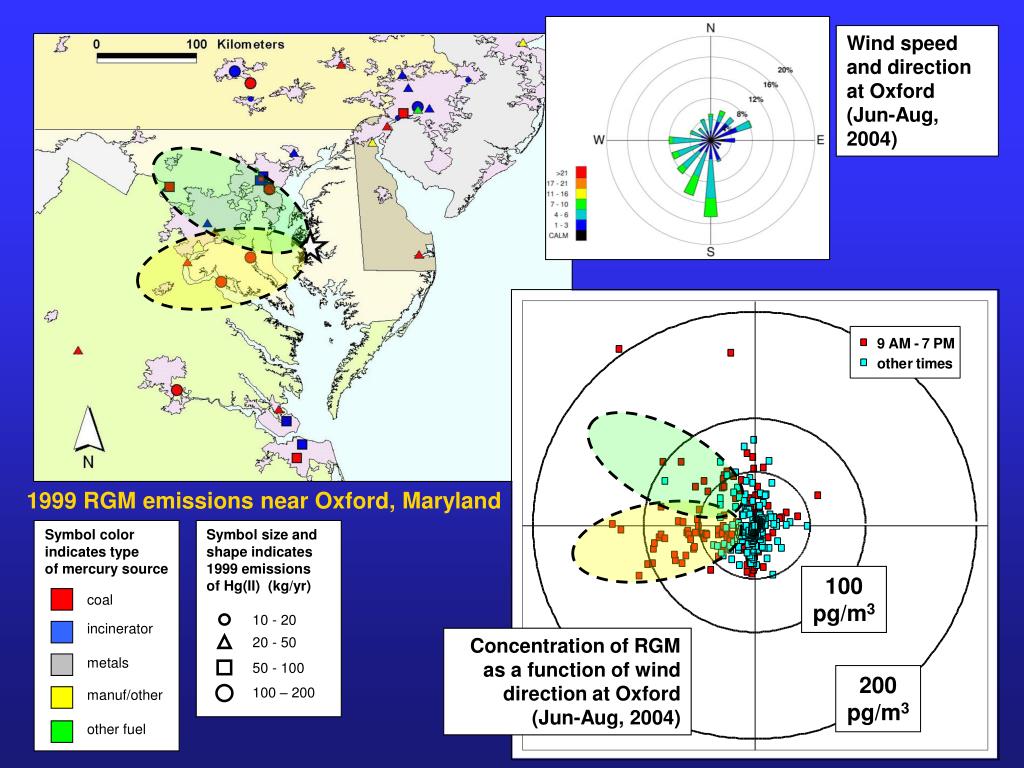
- Deposition Mapping: Estimating how much mercury or lead is falling into specific watersheds.
The model is accessible to the public via the READY (Real-time Environmental Applications and Display sYstem) platform, allowing researchers and emergency responders worldwide to run simulations using NOAA’s meteorological data.
Organizational Structure and Geographic Divisions
ARL is not a single building but a decentralized network of specialized divisions. Each site focuses on a unique aspect of atmospheric science, often dictated by its geographic location and proximity to specific environmental challenges.
| Division | Location | Primary Focus | Key Contributions |
|---|---|---|---|
| Headquarters | College Park, MD | Leadership & Modeling | Development of HYSPLIT; policy coordination with NOAA/NWS. |
| Atmospheric Turbulence & Diffusion Division (ATDD) | Oak Ridge, TN | Instrumentation & Flux | Management of the US Climate Reference Network (USCRN). |
| Field Research Division (FRD) | Idaho Falls, ID | Field Experiments | Complex terrain dispersion; unmanned aerial system (UAS) research. |
| Special Operations & Research Division (SORD) | Las Vegas, NV | Nuclear & Emergency Support | Meteorological support for the Nevada National Security Site (NNSS). |
Atmospheric Turbulence and Diffusion Division (ATDD)
Located in Tennessee, ATDD is the hardware and engineering heart of ARL. They design and maintain the instruments used in the US Climate Reference Network (USCRN), which consists of over 100 stations across the United States. These stations provide "pristine" data, free from the "urban heat island" effect, serving as the official record for long-term temperature and precipitation trends in the U.S.
Field Research Division (FRD)
Based in Idaho, the FRD excels in "real-world" testing. They conduct large-scale tracer experiments where harmless gases are released to see exactly how they move through valleys or over mountains. This data is used to validate and "truth" the computer models developed at headquarters. Recently, the FRD has led the way in using drones to measure the boundary layer in areas too dangerous or difficult for piloted aircraft.
Special Operations and Research Division (SORD)
SORD provides specialized meteorological services to the Department of Energy. Their expertise is rooted in the history of nuclear testing, where understanding wind patterns was a matter of national security. Today, they apply that expertise to radiological safety, emergency management, and boundary layer research in desert environments.
Public Impact and Emergency Response Applications
The value of the ARL is most visible during environmental crises. The lab’s "Always On" status ensures that its scientific products are available 24/7 for critical decision-making.
Wildfires and Smoke Management
As wildfire seasons have become more intense, ARL’s role in smoke forecasting has expanded. Smoke contains fine particulate matter that can travel thousands of miles. ARL’s models help the National Weather Service provide "Smoke Outlooks," which schools use to decide whether students should stay indoors and hospitals use to prepare for a surge in respiratory admissions.
Volcanic Ash and Aviation Safety
Aviation relies heavily on ARL data. Volcanic ash can destroy jet engines in mid-air. ARL works with Volcanic Ash Advisory Centers (VAACs) to run HYSPLIT simulations the moment a volcano erupts. These "ash-cloud" maps define the "no-fly zones" that keep global air travel safe.
National Security and Chemical Releases
In the event of an accidental or intentional release of hazardous materials (HAZMAT), ARL provides the "plume modeling" that emergency managers use to establish evacuation perimeters. The speed and accuracy of these models are essential during the first hour of a crisis.
Collaboration and Data Accessibility
ARL operates on a philosophy of "Open Science." Most of its data, models, and research findings are available to the public and the global scientific community. This transparency is crucial for peer review and for fostering international cooperation on issues like mercury deposition and transboundary air pollution.
The READY (Real-time Environmental Applications and Display sYstem) website is the primary portal for this data. It allows users to:
- Generate wind rose plots and meteograms.
- Access archival meteorological data for past events.
- Run HYSPLIT trajectories for non-commercial research.
By providing these tools, ARL empowers local meteorologists and university researchers to perform high-level atmospheric analysis without needing their own supercomputing clusters.
Frequently Asked Questions (FAQ)
What is the primary difference between ARL and the National Weather Service?
While the National Weather Service (NWS) focuses on operational daily weather forecasting, the Air Resources Laboratory (ARL) provides the fundamental research and modeling tools that make those forecasts possible. ARL "builds the engine," and the NWS "drives the car." ARL focuses specifically on the boundary layer and the chemistry of the air, whereas the NWS covers the entire troposphere and stratosphere for general weather patterns.
Can anyone use the HYSPLIT model for research?
Yes, NOAA makes the HYSPLIT model available for use by the general public, academics, and government agencies. There is a web-based version (HYSPLIT-WEB) for simple trajectory and dispersion runs, as well as a downloadable version for more complex, customized simulations. Some advanced features or high-resolution data access may require registration, but the core tool is accessible to ensure transparency in environmental modeling.
How does ARL contribute to our understanding of climate change?
ARL manages the US Climate Reference Network (USCRN), which is the most accurate set of weather stations in the world for tracking long-term trends. By placing stations in locations that will remain rural and undeveloped for decades, ARL ensures that the temperature increases recorded are due to global climate shifts rather than local urbanization. They also study how different land types (forests, grasslands, farms) absorb or release greenhouse gases.
Does ARL monitor indoor air quality?
No, ARL's mandate is focused on the outdoor (ambient) atmosphere. Indoor air quality is typically the jurisdiction of the EPA or local health departments. However, ARL research into how outdoor pollutants (like wildfire smoke or smog) penetrate urban areas can indirectly inform indoor air quality guidelines.
What role does ARL play in nuclear safety?
ARL’s Special Operations and Research Division (SORD) provides critical meteorological support to the Department of Energy. In the event of a radiological release, ARL’s dispersion models are used to track the "invisible" radioactive plume, predicting where it will travel and where the fallout will be most concentrated. This work is a legacy of the lab's decades-long history in nuclear test monitoring.
Practical Recommendation for Users
For those looking to utilize ARL resources in 2026, the best starting point is the ARL READY platform. Whether you are an emergency manager needing to understand a local chemical spill or a student studying air currents, the READY system provides an intuitive interface for the HYSPLIT model.
If you are a policy professional or a member of the public concerned about local air quality trends, you should reference the US Climate Reference Network (USCRN) reports. These provide the most "noise-free" data available regarding how the American climate is changing. For technical users, engaging with the ARL’s published research on boundary layer turbulence can provide the necessary context for interpreting why certain weather patterns—like temperature inversions—lead to poor air quality in specific regions.