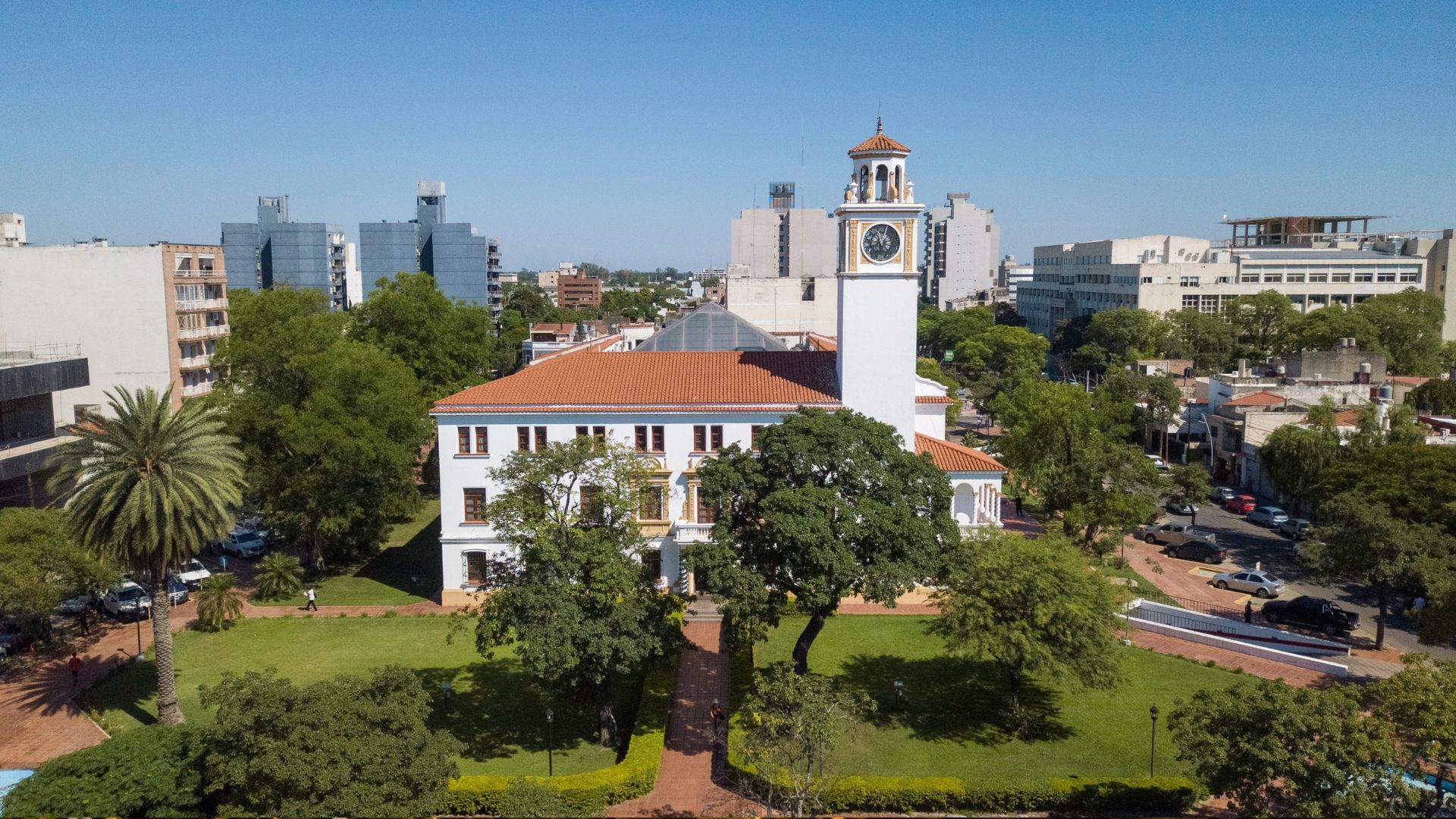
Santiago del Estero is the oldest continuously inhabited city in Argentina, serving as the capital of the province that shares its name. Located in the north-central region, it is known as the "Mother of Cities" because it was the starting point for Spanish expeditions that founded other major Argentine cities like Córdoba, Tucumán, and Salta.
Founded in 1553, Santiago del Estero remains a foundational pillar of Argentine identity, characterized by its profound historical roots, a unique linguistic heritage featuring Quichua influences, and a reputation as the "cradle of folklore." While it may not share the cosmopolitan glitter of Buenos Aires, its significance in 2026 lies in its role as a cultural guardian and a growing hub for sports tourism, particularly through the world-class facilities in nearby Termas de Río Hondo. For visitors and researchers alike, understanding this region requires looking beyond its arid climate to find a community defined by resilience, music, and tradition.
Historical Significance: The "Madre de Ciudades"
The history of Santiago del Estero is inextricably linked to the early Spanish colonization of South America. Although the region was inhabited by indigenous groups such as the Juríes and Tonocotés long before the arrival of Europeans, the official Spanish foundation occurred on July 25, 1553, by Francisco de Aguirre. This makes it the oldest city in the territory of modern Argentina that has remained in its original location (or nearly so, after early relocations).
Throughout the 16th and 17th centuries, the city functioned as the administrative and ecclesiastical center of the Tucumán Governorate. It was the site of the first cathedral and the first bishopric in Argentina. Because it served as the base for the expansion of Spanish influence throughout the Southern Cone, it earned the title Madre de Ciudades (Mother of Cities). Many of the expeditions that led to the founding of San Miguel de Tucumán (1565), Esteco (1567), Córdoba (1573), Salta (1582), La Rioja (1591), and San Salvador de Jujuy (1593) originated here.
In 2026, the city honors this legacy through its preserved colonial layout and its museums. However, the harsh climate and historical flooding of the Dulce River meant that much of the very early colonial architecture was lost or rebuilt. The Centro Cultural del Bicentenario, housed in the historic Government House, is the primary repository for this history, featuring archaeological, historical, and fine arts museums that trace the lineage of the region from pre-Hispanic times to the modern era.
Cultural Identity and the Heart of Argentine Folklore
If Buenos Aires is the home of Tango, Santiago del Estero is the indisputable heart of Folklore, specifically the Chacarera. This musical genre and its accompanying dance are central to the identity of every Santiagueño. Unlike other regions where traditional music might be relegated to festivals, in Santiago, it is a living, daily practice.
The Influence of the Carabajal Family
One cannot discuss the culture of this province without mentioning the Carabajal family. For decades, this dynasty of musicians has exported the sounds of the Chacarera, Zamba, and Gato to the rest of the world. Each August, the city celebrates "The Grandmother's Birthday" (El Cumpleaños de la Abuela), an event that draws thousands of pilgrims to the La Banda neighborhood to participate in a massive, spontaneous musical celebration.
The Quichua Language
One of the most distinctive aspects of Santiago del Estero is the persistence of the Quichua Santiagueño, a local dialect of the Quechua language family. While Quechua is common in the Andean highlands of Peru and Bolivia, its presence in the plains of Santiago is a historical anomaly resulting from the movement of indigenous populations during the colonial period. Even today, in the rural interior of the province, thousands of people remain bilingual, and the language heavily influences the local Spanish accent and vocabulary.
The Bombo Legüero
The city is also the production center for the bombo legüero, a traditional Argentine drum made from a hollowed-out tree trunk and animal skins. The name "legüero" refers to the fact that the sound of the drum can be heard a league away (una legua). The "Patio del Indio Froilán" is a world-renowned workshop and cultural space where visitors can witness the artisanal construction of these instruments and participate in Sunday peñas (folk music gatherings).
Geography and the Challenge of the Climate
The province of Santiago del Estero is situated in the Gran Chaco region, characterized by a vast, flat plain with a gentle slope toward the southeast. The landscape is dominated by xerophytic forests—plants adapted to dry conditions—such as the Quebracho Colorado, Algarrobo, and Mistol.
The climate is one of the most significant factors defining life in the region. It is classified as subtropical with a dry season, but it is colloquially known for having some of the highest temperatures in South America. During the summer months, temperatures frequently exceed 45°C (113°F). This extreme heat has dictated the local lifestyle, including the sacred tradition of the siesta. Between 1:00 PM and 5:00 PM, the city effectively shuts down, with shops closing and streets emptying as residents seek shelter from the sun.
The hydrography of the province is dominated by two major rivers: the Río Dulce and the Río Salado. These rivers are vital for irrigation and human consumption, but they have historically been prone to dramatic fluctuations, causing both droughts and devastating floods. In recent years, environmental concerns regarding deforestation in the Chaco forest have become a priority for local authorities and NGOs, as the removal of native trees impacts soil stability and local weather patterns.
Termas de Río Hondo: A Specialized Tourism Hub
Located approximately 65 kilometers from the provincial capital, Termas de Río Hondo is Argentina’s most important "spa city." Built entirely over a vast underground reservoir of thermal waters, almost every hotel in the city offers its own thermal baths. These waters, rich in minerals like salt, sulfur, and calcium, are prized for their therapeutic properties.
In the last decade, and continuing into 2026, Termas de Río Hondo has successfully diversified its appeal beyond health tourism. The construction of the Autódromo Internacional Termas de Río Hondo has placed the city on the global map.
- MotoGP: The circuit is the perennial host of the Argentine motorcycle Grand Prix, attracting international crowds and significant foreign investment.
- Golf: The Termas de Río Hondo Golf Club, designed by Robert Trent Jones II, is considered one of the best in Latin America, attracting high-end tourism to the region.
- Infrastructure: To support this growth, the city features an international airport (RHD) and a high concentration of four- and five-star hotels, making it a distinct entity from the more traditional and administrative capital city.
Comparison: Santiago del Estero vs. Termas de Río Hondo
For travelers and business entities, it is important to distinguish between the two primary hubs of the province.
| Feature | Santiago del Estero (Capital) | Termas de Río Hondo |
|---|---|---|
| Primary Function | Government, History, Education | Tourism, Wellness, Sports |
| Main Attraction | Bicentenario Cultural Center, Cathedral | Thermal Spas, MotoGP Circuit |
| Atmosphere | Traditional, Busy, Authentic | Resort-style, Seasonal, International |
| Key Event | City Anniversary (July 25) | Argentine MotoGP (April/May) |
| Language/Culture | Strong Quichua & Folk roots | Cosmopolitan, service-oriented |
| Typical Stay | 1-2 days (Cultural) | 3-5 days (Leisure/Sport) |
Economic Landscape and 2026 Outlook
The economy of Santiago del Estero has historically been based on agriculture and forestry. The province is a major producer of cotton, soybeans, corn, and sunflowers. Livestock, particularly cattle and goats, also plays a crucial role in the rural economy.
As of 2026, the province has focused on several key development areas:
- Renewable Energy: Exploiting the high solar radiation levels in the region to develop solar farms.
- Digital Infrastructure: Efforts to bridge the digital divide in rural areas have led to increased connectivity for agricultural technology (AgTech) firms.
- Value-Added Agriculture: Moving away from bulk exports to processed food products, such as specialized goat cheeses and premium honey.
However, challenges remain. The province historically reports lower GDP per capita than the national average, and infrastructure projects are often dependent on federal funding. The 2026 provincial budget prioritizes water management and road connectivity between the productive "interior" and the export hubs of Santa Fe and Buenos Aires. For more information on national economic statistics, the Instituto Nacional de Estadística y Censos (INDEC) provides periodic updates.
Travel Logistics: Reaching the Region
Accessing "Argentina Santiago" requires careful planning due to the distances involved.
- By Air: The Vicecomodoro Ángel de la Paz Aragonés Airport (SDE) serves the capital with daily flights from Buenos Aires. Travelers heading specifically for the races or spas may prefer the Termas de Río Hondo International Airport (RHD).
- By Bus: Argentina has an extensive long-distance bus network. Buses to Santiago del Estero depart regularly from the Retiro station in Buenos Aires, a journey of approximately 12 to 14 hours.
- By Car: The city is a major crossroads. National Route 9 connects it to Córdoba and Tucumán, while National Route 34 is a vital artery for freight moving toward the northern border with Bolivia.
Disambiguation: Santiago de Chile
It is a common error for international travelers to confuse Santiago del Estero with Santiago de Chile. While they share a name, they are separated by the Andes Mountains. If your intent is to travel between the two capitals, the primary land crossing is via Mendoza (Christ the Redeemer Tunnel). Direct flights between Santiago de Chile and Buenos Aires are frequent, but there is currently no direct commercial flight between the Chilean capital and Santiago del Estero.
Practical Advice for Visitors
- Timing the Visit: Avoid the peak of summer (December to February) unless you are comfortable with extreme heat. The best time to visit is during the winter months (May to September), when the weather is dry and mild, and the city’s anniversary festivities take place in July.
- Culinary Must-Trys: Santiago is famous for its empanadas, which are traditionally juicier than those in other provinces and often contain cumin and boiled eggs. Also, try rosquete, a sweet, anise-flavored ringed pastry covered in white meringue.
- The Siesta: Respect the local schedule. Do not expect to conduct business or find many open shops between 1:30 PM and 5:30 PM. Use this time for rest or quiet indoor activities.
- Safety: Santiago del Estero is generally safer than the larger metropolitan areas of Buenos Aires or Rosario. However, standard precautions should be taken in crowded areas and at night.
FAQ: Frequently Asked Questions
Is Santiago del Estero the oldest city in Argentina?
Yes, it is officially recognized as the oldest city founded by Spanish settlers that has been continuously inhabited since its foundation in 1553. While other settlements were attempted earlier (such as the first foundation of Buenos Aires in 1536), they were abandoned and later refounded.
Why is the province so hot?
The province lies in a low-altitude plain within the South American subtropics, far from the cooling influence of the ocean. The presence of the Andes to the west can also cause "Zonda-like" heating effects, and the lack of significant elevation means there is little relief from the solar radiation.
Can I speak English in Santiago del Estero?
English proficiency is generally low compared to Buenos Aires or Mendoza. In the capital and rural areas, Spanish is essential. However, in the high-end hotels of Termas de Río Hondo and during international events like MotoGP, you will find English-speaking staff.
What is the significance of the "Patio del Indio Froilán"?
It is one of the most important cultural sites in northern Argentina. It is a workshop where the bombo legüero is made, but it serves as a community hub where traditional music, dance, and food are shared every Sunday. It represents the authentic, non-commercialized heart of Argentine folklore.
How do I get from Santiago del Estero to Termas de Río Hondo?
The two cities are connected by National Route 9. The drive takes about an hour. There are frequent "combis" (shared vans) and regular bus services running between the two bus terminals throughout the day.
Next Steps for Planning Your Visit
If you are planning a trip for late 2026, start by checking the official MotoGP 2026 calendar if you wish to attend (or avoid) the racing crowds. For cultural immersion, book your accommodation at least three months in advance for the July anniversary festivities. Travelers interested in historical research should contact the Archivo Histórico de la Provincia to verify access to colonial records.