Applying for a home loan typically triggers a hard credit inquiry, which may cause a temporary dip in your credit score, usually by fewer than five points. However, credit scoring models provide a "rate shopping" window where multiple inquiries for a mortgage are treated as a single event to protect your score.
Buying a home is one of the most significant financial milestones an individual can achieve. In 2026, the mortgage landscape remains competitive, and understanding the nuances of how credit scoring operates is essential for any prospective borrower. While many fear that checking their credit or applying with multiple lenders will "ruin" their score, the reality is more nuanced and generally more favorable to the consumer than popular myths suggest.
Understanding the Mechanics: Hard vs. Soft Credit Inquiries
To understand how a home loan application impacts your credit, you must first distinguish between the two primary types of credit pulls: soft inquiries and hard inquiries.
The Nature of Soft Inquiries
A soft inquiry occurs when your credit report is checked for reasons not related to a formal lending decision. Common examples include a background check by a potential employer, an existing creditor checking your account, or when you check your own score through a monitoring service. Soft inquiries have absolutely no impact on your credit score. They are not visible to potential lenders and serve only as a record for you to see who has viewed your file.
The Role of Hard Inquiries
A hard inquiry, also known as a "hard pull," occurs when a financial institution, such as a mortgage lender, reviews your credit report to make a lending decision. This happens after you have submitted a formal application for a home loan. Unlike soft pulls, hard inquiries are recorded on your credit report and can stay there for up to two years. Because a hard inquiry signals that you are seeking new debt, credit scoring models like FICO and VantageScore view this as a potential increase in credit risk, leading to a minor, temporary reduction in your score.
The Immediate Impact on Your Credit Score
When you officially apply for a mortgage, the immediate impact is usually minimal. For most borrowers, a single hard inquiry will result in a decrease of fewer than five points. If you have a long, healthy credit history and few other recent inquiries, you might not see any change at all.
The reason the impact is so low is that mortgage debt is considered "good debt" compared to revolving credit like credit cards. Lenders and scoring models recognize that a consumer looking for a home loan is making a planned, long-term financial commitment rather than seeking emergency funds. However, the impact can be more pronounced if you have a "thin" credit file (limited history) or if you have applied for several different types of credit—such as auto loans and credit cards—in a short period.
The "Rate Shopping" Window Explained
One of the most important protections for homebuyers in 2026 is the "rate shopping" or "deduplication" window. Credit scoring agencies understand that savvy consumers should shop around to find the best interest rates and loan terms. To avoid penalizing borrowers for doing their due diligence, scoring models group multiple mortgage-related inquiries into one single event.
FICO vs. VantageScore Windows
Different scoring models have different windows of time for this grouping:
- FICO Scores: Most FICO versions used in mortgage lending (including FICO 2, 4, and 5) provide a 14-day or 45-day window. In 2026, newer models like FICO 10 and 10T are increasingly common, and they generally honor the 45-day window.
- VantageScore: This model typically uses a 14-day rolling window. Any mortgage inquiries made within that period are treated as a single inquiry, regardless of how many lenders you contact.
This means that if you apply with five different mortgage lenders within a two-week period, your credit score will only be affected as if you had applied with one. This allows you to compare Annual Percentage Rates (APRs) and closing costs without fear of cumulative damage to your credit health.
Beyond the Inquiry: Long-Term Impacts of a Home Loan
The initial inquiry is only the first step in the credit journey of a home loan. Once you are approved and the loan is funded, your credit profile will undergo more significant changes.
Average Age of Accounts
A significant portion of your credit score is determined by the length of your credit history. When you take out a new home loan, you are adding a brand-new account with a zero-month history. This effectively lowers the "average age" of your accounts. Depending on how many other accounts you have and how old they are, this could cause a secondary, slightly more persistent dip in your score shortly after closing.
Credit Mix and Installment Debt
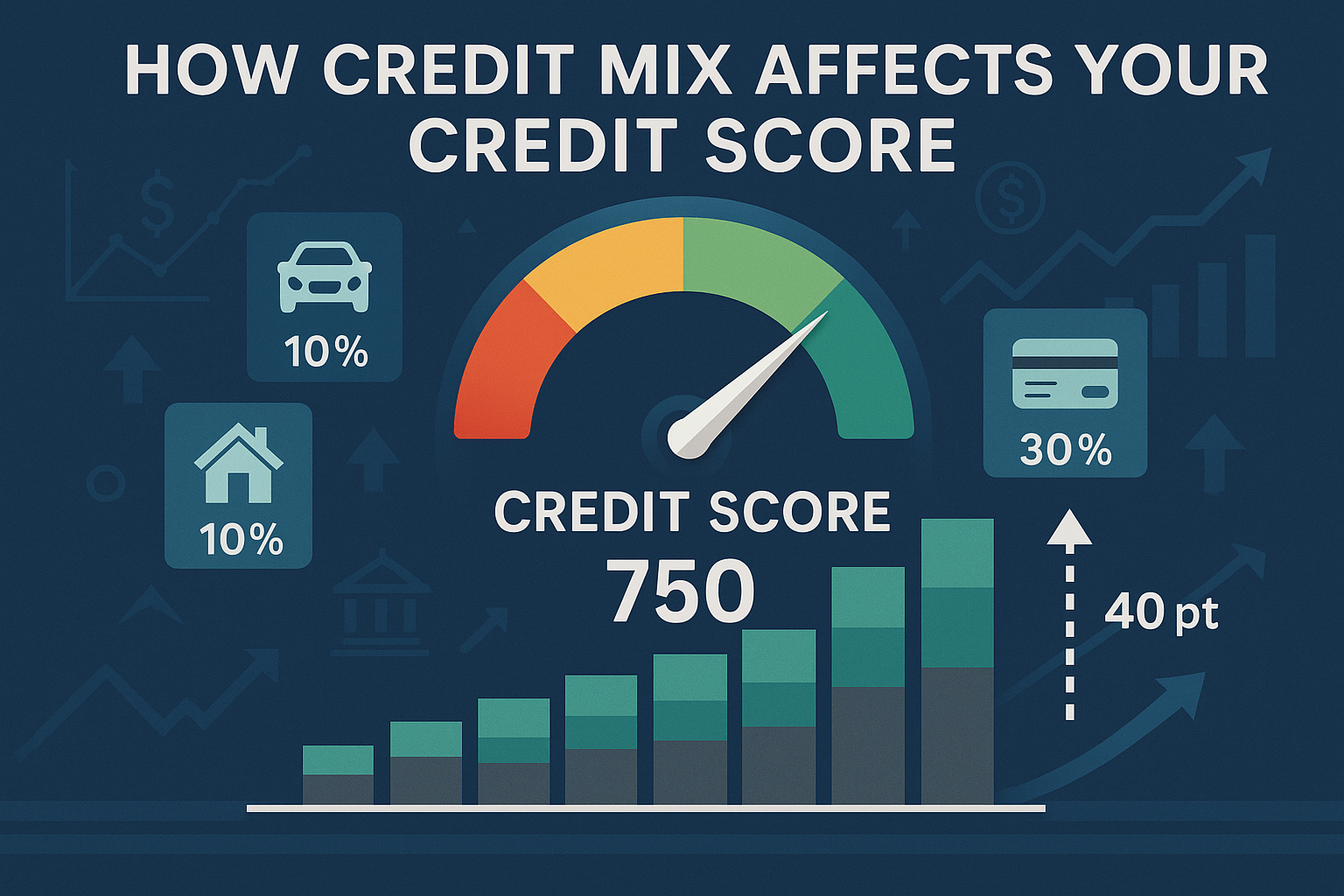
On the positive side, a mortgage adds to your "credit mix." Scoring models reward consumers who can successfully manage different types of credit, such as revolving accounts (credit cards) and installment accounts (loans with fixed payments). A mortgage is the ultimate installment account. As you make consistent, on-time payments, the mortgage will become a powerful engine for building a high credit score over the long term.
Debt-to-Income (DTI) Ratio
While not a direct component of your credit score, your Debt-to-Income ratio is a critical factor in mortgage approval. When you apply for a loan, the lender looks at your total monthly debt obligations relative to your gross monthly income. Taking on a large mortgage increases this ratio, which may affect your ability to qualify for other loans (like an auto loan) immediately after buying a home.
Summary of Credit Impact by Stage
The following table outlines the typical lifecycle of a home loan application and its corresponding effect on a consumer's credit profile.
| Stage of Process | Inquiry Type | Estimated Score Impact | Duration of Impact |
|---|---|---|---|
| Pre-Qualification | Soft Inquiry | None (0 points) | N/A |
| Official Application | Hard Inquiry | Minor (-1 to -5 points) | Temporary (usually 1 year) |
| Rate Shopping | Hard Inquiry | Treated as a single pull | Temporary (usually 1 year) |
| Loan Approval/Closing | New Account | Moderate (-5 to -15 points) | Medium-term (6-12 months) |
| Ongoing Repayment | Monthly Reporting | Significant Positive | Long-term (Life of the loan) |
Common Pitfalls to Avoid During the Application Process
Maintaining credit stability is paramount from the moment you apply until the moment you sign the final closing documents. Many borrowers unknowingly jeopardize their mortgage approval by making credit-related mistakes during this sensitive window.
Opening New Lines of Credit
Do not apply for new credit cards, auto loans, or personal loans while your mortgage is in underwriting. Each new application triggers another hard inquiry and, more importantly, changes your debt profile. Lenders often pull your credit one last time just before closing; if they see a new debt or a drop in your score, they may revoke the loan approval.
Closing Existing Accounts
You might think closing an unused credit card will make your profile "cleaner," but it actually does the opposite. Closing an account reduces your total available credit and can shorten your average age of accounts, both of which can cause your score to drop unexpectedly.
Large Purchases on Existing Credit
Avoid making large purchases (like new furniture or appliances for the home) on your credit cards before you have the keys in hand. High credit utilization—the ratio of your balance to your limit—is one of the fastest ways to lower a credit score. Keep your utilization below 10% during the home-buying process.
Strategic Advice for Homebuyers
To minimize the negative effects of applying for a home loan, follow a structured approach. Start by pulling your own credit reports from AnnualCreditReport.com to ensure there are no errors. Under the Fair Credit Reporting Act, you have the right to dispute any inaccuracies that could artificially lower your score before a lender sees it.
Once you are ready to shop, condense your applications into a 14-day window. This ensures that you stay well within the "rate shopping" protections of every major scoring model. If a lender asks to "pre-qualify" you, clarify whether they are doing a soft or hard pull. Many modern lenders in 2026 use soft pulls for initial pre-qualification, which allows you to see potential rates without any impact on your score at all.
FAQ
How many points does a mortgage inquiry take off? A single mortgage inquiry typically reduces a FICO score by fewer than five points. For many borrowers with strong credit, the impact may be zero or negligible. The score usually recovers within a few months as long as no other new debts are taken on.
Does getting pre-approved for a home loan hurt my credit? It depends on the lender's process. A "pre-qualification" often uses a soft credit pull, which does not affect your score. However, a formal "pre-approval" usually involves a hard credit pull, which will have a minor, temporary impact. Always ask the lender which type of inquiry they will perform.
How long do mortgage inquiries stay on my credit report? Hard inquiries remain on your credit report for 24 months. However, FICO scores only consider inquiries from the last 12 months when calculating your score. After one year, the inquiry will have no effect on your credit score, even though it is still visible on the report.
Can I shop for a mortgage with multiple lenders without hurting my score? Yes, provided you do so within a specific timeframe. Most scoring models will treat all mortgage inquiries made within a 14-to-45-day window as a single inquiry. This "rate shopping" protection is designed specifically to encourage consumers to compare loan offers.
What should I do if my credit score drops after I get my mortgage? A slight drop after closing is normal due to the new account and the reduction in the average age of your accounts. The best course of action is to make all mortgage payments on time. Over the next 6 to 12 months, the positive payment history will likely more than offset the initial drop, eventually leading to a higher score than you had before the purchase.
Will a rejected home loan application hurt my score more than an approved one? No. A credit report shows that an inquiry was made, but it does not indicate whether the application was approved or denied. The impact on your score is based solely on the fact that you applied for credit, not the lender's ultimate decision.
Practical Next Steps
Before you submit your first application, take 30 days to optimize your credit. Pay down revolving credit card balances to under 10% utilization and ensure no late payments are pending. Once you begin the process, choose a two-week window to speak with at least three different lenders—including a national bank, a local credit union, and an independent mortgage broker. This strategy ensures you find the most competitive rate in the 2026 market while utilizing the rate-shopping window to protect your credit score.