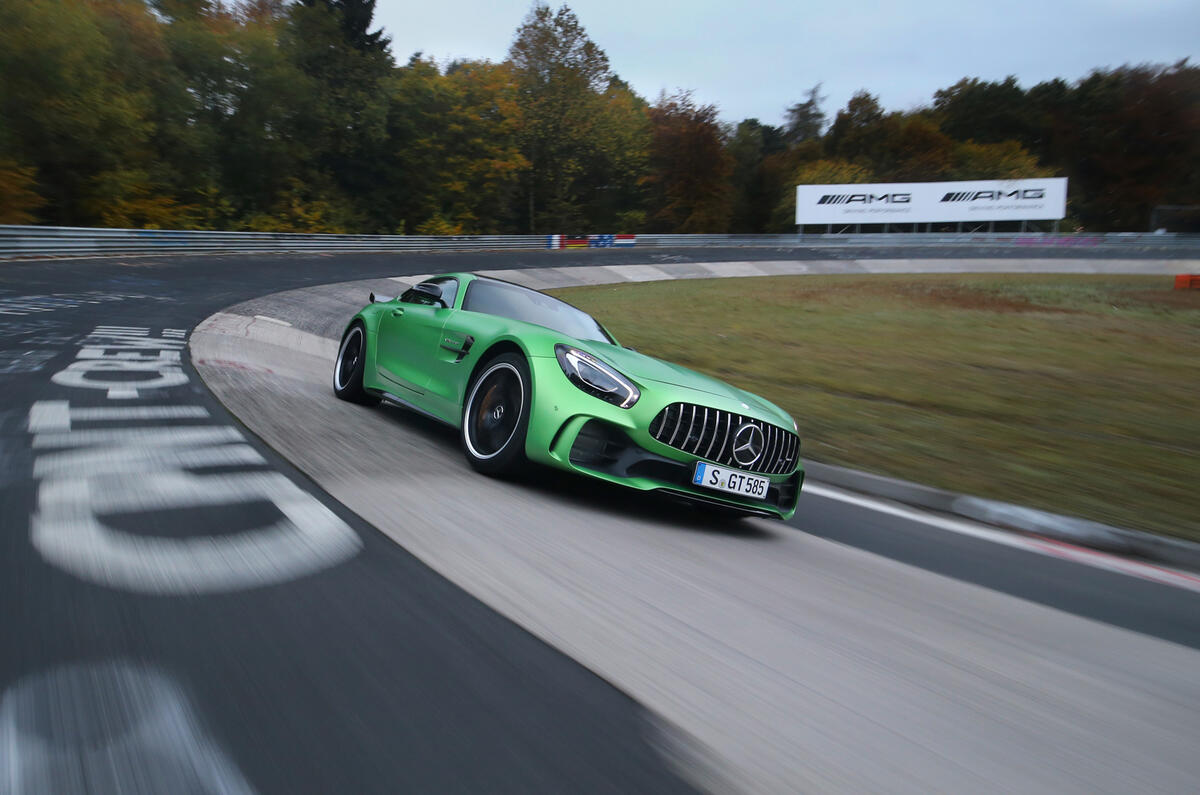
The Mercedes-AMG GT R achieved a lap time of 7:10.92 at the Nürburgring Nordschleife in 2018. This time, set by German magazine sport auto editor Christian Gebhardt, serves as a significant performance benchmark, demonstrating the car's advanced aerodynamics, active rear-wheel steering, and race-derived suspension geometry on one of the world's most demanding circuits.
The Significance of the Nürburgring Nordschleife
The Nürburgring Nordschleife, often referred to as "The Green Hell," is the ultimate proving ground for high-performance automotive manufacturers. Spanning over 20 kilometers with more than 150 corners and significant elevation changes, it tests the limits of chassis balance, engine cooling, tire grip, and driver focus. When a manufacturer or publication records a lap time here, it is not merely for marketing prestige; it provides a standardized metric to compare a vehicle’s lateral grip, power-to-weight ratio, and thermal management against its competitors.
For the Mercedes-AMG GT R, the 7:10.92 time represented a pivotal milestone. It placed the car firmly within the upper echelon of rear-wheel-drive production sports cars of its era. Unlike all-wheel-drive hypercars or hybrid-assisted track weapons, the GT R relied on a front-mid-engine layout, which adds a layer of complexity to handling the immense torque delivered by the 4.0-liter twin-turbocharged V8 engine.
Decoding the Mercedes-AMG GT R Technical Specs
To understand how the GT R achieved this specific lap time, one must analyze the engineering choices that distinguish it from the standard AMG GT. The "R" variant was designed with a clear directive: maximize track performance without compromising the underlying architecture.
Aerodynamics and Downforce
The GT R features an active aerodynamic profile. Beneath the front bumper lies a carbon fiber element that lowers automatically as the car reaches specific speeds, creating a Venturi effect that sucks the car toward the pavement. This reduces front-end lift significantly during high-speed cornering. Simultaneously, the large rear wing provides the necessary downforce to keep the rear axle planted during mid-corner transitions. These elements combined allowed the driver to maintain higher entry speeds in sections like the Carousel or the rapid kinks of the Fuchsröhre.
Chassis and Suspension Dynamics
Perhaps the most crucial component in the GT R's performance is the active rear-wheel steering system. At speeds below 100 km/h, the rear wheels steer in the opposite direction to the front wheels, effectively shortening the wheelbase and allowing for sharper turn-in. Above 100 km/h, they steer in the same direction, extending the wheelbase for high-speed stability. On the Nordschleife, where corners range from tight, technical hairpins to flat-out sweepers, this system was instrumental in shaving seconds off the total time.
Tire Strategy
The lap was achieved on street-legal Michelin Pilot Sport Cup 2 ZP tires. These tires are formulated with a high-grip rubber compound that requires significant thermal input to reach peak operating temperature. A critical part of any Nürburgring run is the "warm-up" phase; the GT R’s ability to manage tire temperatures throughout the 20.8-kilometer lap—preventing the compound from overheating—is a testament to its refined suspension damping, which limits excessive scrubbing or sliding.
Comparison Table: Performance Metrics of the AMG GT Series
| Feature | AMG GT | AMG GT S | AMG GT R |
|---|---|---|---|
| Engine | 4.0L V8 Biturbo | 4.0L V8 Biturbo | 4.0L V8 Biturbo |
| Horsepower | 462 hp | 515 hp | 577 hp |
| Rear Steering | No | No | Yes |
| Weight (Approx) | 1,615 kg | 1,645 kg | 1,555 kg |
| Circuit Focus | Street/Grand Tourer | Mixed | Track-Oriented |
Note: Data reflects typical factory specifications; actual track performance may vary based on environmental conditions and individual vehicle configurations.
The Role of the Driver in Lap Times
It is a common misconception that lap times are solely a product of horsepower. On a circuit as complex as the Nordschleife, the driver’s familiarity with the track’s "line"—the most efficient path through a corner—is paramount. In the case of the 7:10.92 time set by sport auto, the driver's ability to trust the car’s electronic stability control (AMG Traction Control, which offers nine levels of intervention) allowed them to push the car to the absolute limit of adhesion.
When explaining the "why" behind the time, we must account for the difference between a manufacturer-led "factory record" and a magazine-led "independent test." Factory records often utilize professional racing drivers with days of track preparation and weather optimization. The 7:10.92 time by sport auto is widely respected in the enthusiast community because it represents a professional driver operating under realistic, non-exclusive track conditions.
Factors Influencing Nürburgring Lap Times
Several external and internal variables can influence a lap time on any given day. Readers often inquire why different sources record different times for the same vehicle.
- Track Configuration: The Nürburgring has had various configurations over the years, specifically concerning the "Bridge to Gantry" section versus the full "Nordschleife" length. Discrepancies in times often arise from where the timer starts and stops.
- Environmental Conditions: Ambient air temperature, track surface temperature, and humidity directly affect engine performance (intercooler efficiency) and tire grip. A 10-degree Celsius difference in track temperature can change a lap time by several seconds.
- Traffic and Track Status: During Industry Pool days, the track is crowded with other manufacturers testing prototypes. Clearing a perfect, unobstructed lap is rare and difficult, requiring immense patience and a specific window of opportunity.
- Vehicle Setup: Tire pressures are rarely static. A technician adjusting pressures by even 0.2 bar can fundamentally change the car's balance through high-speed sections like the Schwedenkreuz.
Troubleshooting Performance Inconsistencies
If a driver is attempting to replicate performance close to the AMG GT R's benchmarks on their own track days, they may encounter common limitations. If the car feels sluggish or "loose" on the track, consider the following:
- Brake Fluid Degradation: The Nürburgring is punishing on brakes. Ensure high-boiling-point racing brake fluid is used to prevent pedal fade during long, multi-corner descents.
- Tire Pressure Management: Always monitor hot tire pressures. If the tires exceed their optimal working temperature range (often noted by the manufacturer or the tire supplier), grip levels will drop significantly, leading to understeer.
- Active Aerodynamics Calibration: Ensure the active front splitter is free of debris. If the mechanism is obstructed or malfunctioning, the car will lack the front-end downforce required for high-speed stability, leading to a loss of confidence in fast corners.
Frequently Asked Questions
Why is the AMG GT R considered a benchmark car? The AMG GT R is considered a benchmark because it successfully bridges the gap between a high-end luxury vehicle and a dedicated track car. Its use of race-grade aerodynamics and active rear-wheel steering in a rear-wheel-drive package makes it a pure handling machine, serving as a standard against which other sports cars are measured for cornering speed and chassis communication.
Does the 7:10.92 time apply to all AMG GT R models? No, this time is specific to the standard AMG GT R. Later iterations, such as the AMG GT R Pro or the Black Series, featured further refinements in suspension, weight reduction, and aerodynamic downforce, which allowed for even faster lap times. The 7:10.92 remains the baseline for the specific generation and trim tested by the publication.
Can a regular driver achieve this lap time? It is highly unlikely. Achieving a sub-7:15 time on the Nürburgring requires an intimate knowledge of the track's elevation changes, blind corners, and surface bumps. A professional racing driver who spends hundreds of hours on the Nordschleife is required to extract the full potential of a car like the GT R.
What is the "Bridge to Gantry" measurement? The "Bridge to Gantry" measurement is a partial lap length of the Nordschleife, excluding the main straight (Döttinger Höhe), which is often closed during public tourist sessions for safety reasons. When comparing times, ensure you are comparing a "Full Lap" (20.8 km) against a "Full Lap," or a "B2G" against a "B2G."
Does the AMG GT R require special maintenance after track use? Yes. High-performance track driving accelerates the wear of consumables. Post-track maintenance should include inspecting brake pad thickness, checking for signs of uneven tire wear, and potentially changing engine oil or transmission fluid if the vehicle has been subjected to extreme heat cycles.
Next Steps for Enthusiasts
If you are analyzing these times to evaluate the AMG GT R as a potential acquisition, focus on your intended use. If you plan to visit the Nürburgring or other high-speed circuits regularly, look for examples that have been meticulously maintained, specifically checking the records for cooling system services and suspension bushings. For the best experience, engage with an AMG-certified technician to review the vehicle's electronic data logs, which can reveal how hard the engine was pushed in previous ownerships. The AMG GT R remains one of the most rewarding driver-focused machines produced in its decade, and understanding its performance at the Nürburgring is the first step toward mastering its capabilities.