Amica Mutual Insurance and AAA (American Automobile Association) are distinct organizations that operate under fundamentally different business models, structures, and service philosophies. While both provide essential automotive coverage, they are not the same; Amica functions as a traditional, customer-focused mutual insurance carrier, whereas AAA is a federation of motor clubs that acts as both an insurance agency and a provider of emergency roadside services. Understanding these structural differences is vital for policyholders when deciding where to place their trust and capital for vehicle protection in 2026.
The Organizational Structure: Mutual vs. Membership
The most significant divergence between these two entities lies in their core identity. Amica is a mutual insurance company. This means that, in theory, the company is owned by its policyholders rather than outside shareholders. Because there are no shareholders demanding quarterly dividend growth, mutual companies like Amica often prioritize long-term stability and customer satisfaction. Their primary objective is to maintain financial health to pay claims and provide service to their member-owners.
AAA, by contrast, is a federation of regional motor clubs. If you purchase insurance through AAA, you are typically becoming a member of your local club first. The motor club’s primary purpose is providing roadside assistance, travel planning, and consumer advocacy. When you buy a "AAA auto insurance policy," you are often purchasing a policy underwritten by one of their various insurance subsidiaries or a third-party partner carrier, depending on the state in which you reside. In many cases, the AAA brand on your insurance card is a distribution channel rather than the direct underwriting entity.
Underwriting and Service Delivery
When you file a claim, the difference between these two becomes practical. Amica manages its own claims department directly. Because they are the underwriter, the person handling your claim is an employee of the company that issued your policy. This often creates a more streamlined communication path between the policyholder, the agent, and the claims adjuster.
AAA’s structure is more variable. Depending on your region, AAA might underwrite your policy through its own insurance company, or it might act as an agent for a different national carrier. This means your experience could differ significantly based on your geography. In some states, the "AAA insurance" you buy is actually a policy from a partner company with a specialized contract for AAA members. While these partners are vetted, the claims process involves navigating the structure of the specific underwriting entity rather than a single, unified corporate claims department.
Assessing the Cost and Coverage Landscape
In 2026, premium costs remain highly volatile due to rising repair costs and advancements in automotive technology. When comparing Amica and AAA, you must consider the "hidden" costs of membership.
- Amica Pricing: As a direct writer, Amica prices its premiums based on actuarial data, vehicle safety profiles, and your individual driving history. They do not require a separate membership fee to access their insurance products.
- AAA Pricing: To access AAA insurance products, you must maintain an active membership with your local motor club. While the membership fee—often ranging from $60 to $150 per year depending on the tier—provides tangible benefits like roadside assistance and travel discounts, it must be calculated as part of your total "cost of ownership" for the insurance.
The following table summarizes the primary operational differences between these two providers to help clarify their distinct roles:
| Feature | Amica Mutual Insurance | AAA (American Automobile Association) |
|---|---|---|
| Business Model | Mutual Insurance Company | Federation of Regional Motor Clubs |
| Ownership | Owned by Policyholders | Owned by Regional Club Members |
| Roadside Assistance | Offered as a policy add-on | Core membership benefit (often separate) |
| Primary Focus | Risk protection and claims service | Membership services, travel, and advocacy |
| Policy Underwriting | Direct underwriter | Varies by region (internal or partner) |
| Membership Requirement | None | Mandatory for primary services |
The Role of Roadside Assistance
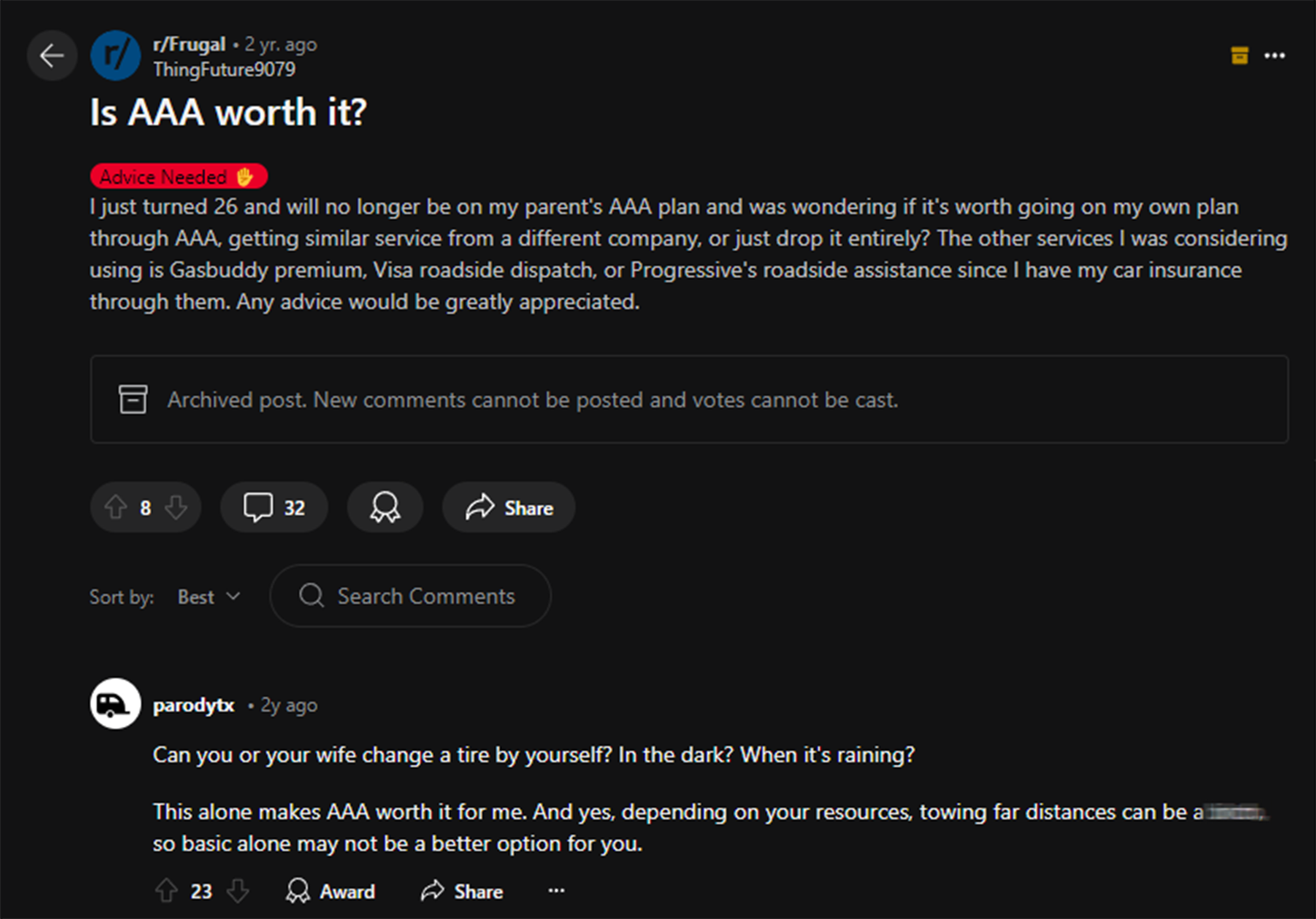
For many consumers, the decision comes down to the "AAA experience." AAA is famous for its emergency roadside assistance—towing, lockout services, and battery jumps. This service is a standard, deeply ingrained part of the AAA membership. It is often why people choose AAA; they want the security of a service truck arriving regardless of what their insurance policy says about towing coverage.
Amica offers roadside assistance as an optional coverage endorsement on their auto policies. This is a crucial distinction. With Amica, your roadside service is tied to your insurance contract. If you use it, it is processed as a component of your insurance experience. With AAA, the roadside service is a membership perk. You can keep your AAA membership for roadside assistance even if you choose to purchase your insurance coverage elsewhere. Some drivers find that carrying a separate AAA membership for the utility of the service while using a company like Amica for the core insurance policy provides the best of both worlds.
Factors Influencing Eligibility and Regional Availability
Insurance regulation in the United States is governed at the state level. Because AAA is a collection of regional clubs, their coverage offerings are fragmented. A resident in California may have a completely different insurance underwriting experience than a resident in New York. You must check with your local AAA branch to see which insurance carrier they represent in your specific zip code.
Amica, while also subject to state-level regulations, operates as a more unified corporate entity. Their products—such as their Platinum Choice Auto—are generally consistent across the regions where they are licensed to do business. This uniformity can make it easier to understand exactly what you are purchasing, especially if you move across state lines frequently.
Common Misconceptions
A common error is assuming that "AAA insurance" is a single product nationwide. Because of the decentralized nature of AAA clubs, it is entirely possible for a neighbor to have a "AAA policy" that is underwritten by a different carrier than your "AAA policy."
Another misconception is that the quality of service is identical. Since Amica focuses exclusively on insurance and financial products, they invest heavily in their internal customer service and claims handling infrastructure. AAA’s focus is split between travel, retail, advocacy, and insurance. While AAA’s customer service for travel and roadside assistance is often rated highly, the insurance-specific customer service department may not have the same singular focus on the insurance claims cycle as a dedicated carrier like Amica.
Making the Right Choice for Your Needs
Choosing between these two depends on what you value most in your provider.
- Choose Amica if: You prefer a consistent, direct-to-consumer insurance experience, you value the mutual company structure, and you want to bundle your auto, home, and umbrella coverage through a single carrier with a unified claims system.
- Choose AAA if: You highly value the emergency roadside assistance and travel-related discounts provided by the motor club, you appreciate the convenience of handling your insurance through a local branch, and you have vetted the specific underwriting partner currently operating in your region.
Frequently Asked Questions
Does having a AAA membership automatically make my insurance cheaper? Not necessarily. While some insurance carriers offer discounts for AAA members, having the membership is a separate cost. You must weigh the savings from a potential discount against the annual cost of the AAA membership fee to see if it is financially beneficial.
Can I get roadside assistance from Amica that matches AAA’s level of service? Amica offers "Towing and Labor" coverage as an endorsement. While it is designed to handle common emergencies, it is an insurance-based coverage. It functions differently than a motor club membership, which is a service-based contract. If you want the specific benefits of a motor club, it is usually better to maintain that membership separately.
Are Amica and AAA regulated the same way? Both are regulated by state insurance commissioners regarding their insurance products. However, AAA’s motor club services—the roadside assistance portion—are often governed by different state statutes than insurance contracts, as they are considered service contracts rather than insurance policies.
Is it possible to switch from AAA to Amica easily? Yes, you can switch providers at any time. If you decide to move your insurance to Amica, you are not required to cancel your AAA membership. Many people choose to maintain their AAA membership for the travel and roadside perks while moving their primary auto insurance to a company like Amica to simplify their policy structure.
How do I verify who underwrites my AAA insurance policy? You should review the "Declarations Page" of your insurance policy document. This page is required by law to state the name of the insurance company that is legally responsible for the underwriting and payment of claims. If the name on the page is not "AAA" or a direct AAA subsidiary, you are being insured by a third-party partner.
Final Recommendation
The "not the same" distinction is a matter of business architecture. When shopping for coverage in 2026, treat the insurance component and the roadside assistance component as two separate decisions. First, identify your insurance needs and compare quotes from carriers like Amica based on price, coverage limits, and reputation for claims handling. Second, evaluate whether the retail and service benefits of a AAA membership are worth the annual dues to you personally. By decoupling these two, you can ensure that you are paying for the services you actually use rather than assuming that the AAA brand and an insurance policy are inherently one and the same.