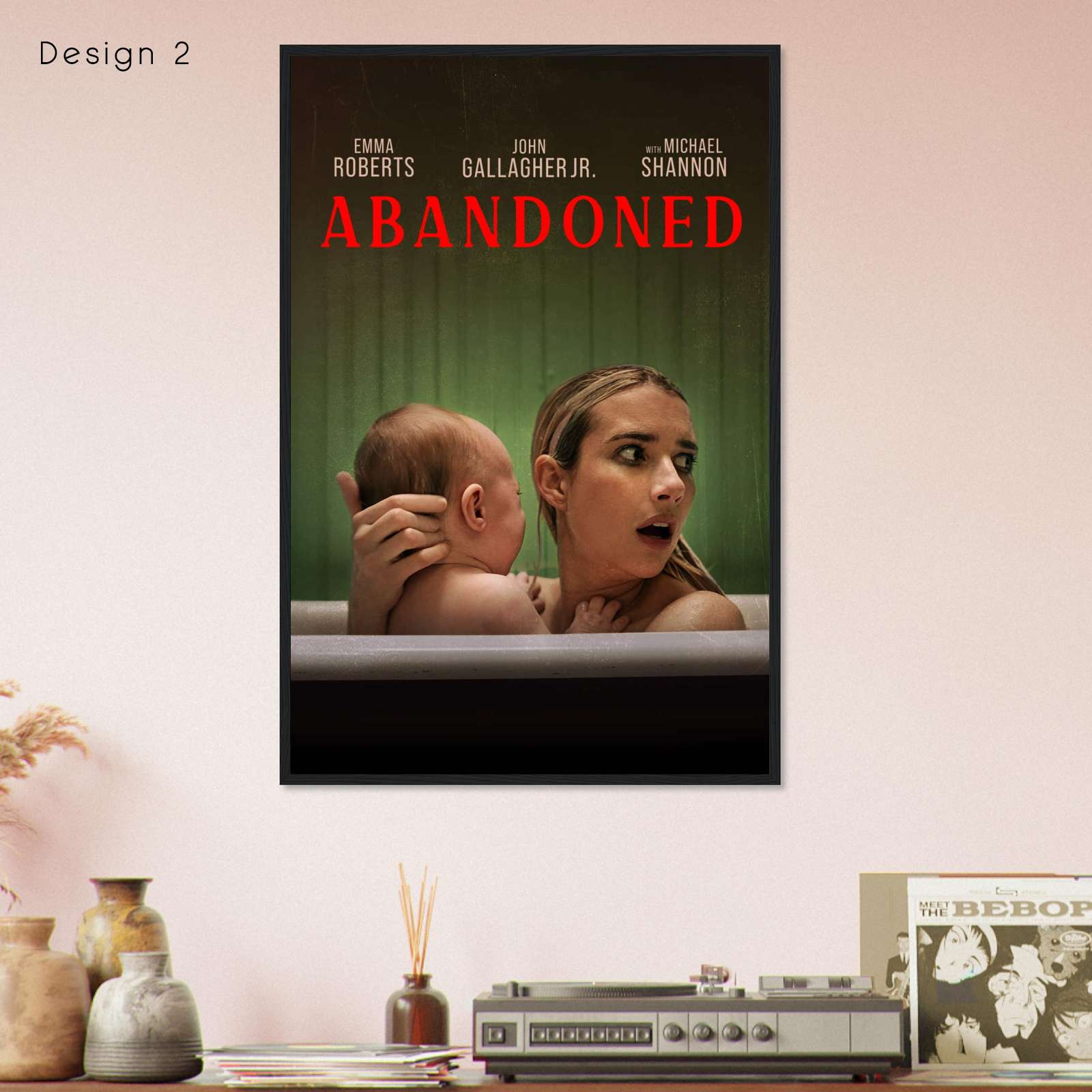
In the 2022 horror-thriller Abandoned, the ending reveals that the "ghosts" Sara sees are a manifestation of both her postpartum psychosis and the house's actual violent history. Sara finds healing by confronting the physical remnants of the Solomon family's trauma—burning the hair of the captive daughter—symbolically purging her own intrusive thoughts and reclaiming her role as a mother.
The film Abandoned, directed by Spencer Squire, serves as a dual-layered narrative. On the surface, it is a traditional "haunted house" story about a young couple, Sara (Emma Roberts) and Alex (John Gallagher Jr.), who move into a remote farmhouse with their infant son, Liam. Below the surface, however, the film is a grueling exploration of postpartum depression (PPD) and psychosis. As of 2026, the film continues to be a point of discussion for its unique, if polarizing, blend of psychological realism and gothic horror tropes.
To understand the ending, one must first dissect the layers of the Solomon family history, the role of the neighbor Chris (Michael Shannon), and the blurred lines between Sara's mental health struggles and the supernatural events occurring within the walls of the farmhouse.
The Psychological Foundation: Sara’s Postpartum Struggle
The primary conflict of Abandoned is not the house itself, but Sara’s internal state. Having recently given birth to Liam, Sara is struggling with severe postpartum depression. The film establishes early on that she has a history of mental health issues, making her an "unreliable narrator" in the eyes of her husband and the audience.
Alex, a veterinarian, is often away from home, leaving Sara isolated in a vast, creaky house. This isolation exacerbates her condition. She experiences intrusive thoughts—common in postpartum psychosis—where she fears she might harm her child or that the child is in constant danger. The "ghosts" she begins to see, specifically the children and the malevolent presence of a father figure, mirror her own fears of parental inadequacy and the potential for inherited trauma.
The film uses the house as a metaphor for the mind. The locked rooms, the scratching behind the walls, and the hidden spaces represent the repressed emotions and "dark" thoughts Sara is trying to keep at bay. When she finally breaks into the locked room upstairs, it signifies her inability to contain her psychological distress any longer.
The Solomon Family History and Chris’s Role
The supernatural element of the film is rooted in the Solomon family, the previous residents of the farmhouse. Through her interactions with the enigmatic neighbor Chris, Sara learns the horrifying truth of what happened in the house decades prior.
Chris is the son of the man who owned the house. It is revealed that his father committed heinous acts, including keeping a daughter (Chris’s sister) locked in a small room in the wardrobe. The girl was a product of incest, and the father’s obsession with "purity" and control led to a life of imprisonment for her. Eventually, this cycle of violence ended in a murder-suicide, leaving the house "stained" by the events.
Chris serves as a bridge between the past and the present. He is a survivor of the house’s trauma, living nearby but unable to fully move on. His presence provides the factual evidence that the house is actually haunted, or at least carries a heavy historical weight, which validates that Sara isn't "just" imagining things. However, the film intentionally keeps the nature of the hauntings ambiguous. Are they literal spirits, or are they "echoes" triggered by Sara’s own fragile mental state?
The Ending Breakdown: The Confrontation in the Wardrobe
The climax of the film occurs when Sara, pushed to the brink by her visions and the crying of her baby, discovers the hidden room behind the wardrobe. Inside, she finds the physical evidence of the Solomon girl's captivity: a small bed, scratch marks on the walls, and several braided locks of hair.
In this moment, the film shifts into a surrealist space. Sara encounters the manifestations of the Solomon children. Unlike previous scenes where she was terrified, she begins to feel a sense of kinship with the captive girl. She recognizes a shared experience of being "trapped" and "abandoned" by those who were supposed to care for them.
The "father" figure (the spirit of the elder Solomon) appears, representing the ultimate source of domestic terror and control. Sara’s confrontation with him is the turning point. By standing her ground, she is not just fighting a ghost; she is fighting the voice in her head that tells her she is a bad mother or that she is a victim of her own biology.
The Symbolic Act of Burning
The most significant action in the ending is Sara’s decision to burn the braids of hair she found in the room. In many folklore traditions, hair is a symbol of strength, identity, and a connection to the physical world. By burning the hair, Sara performs a ritual of purification.
- For the House: It releases the energy of the Solomon daughter, effectively "ending" the haunting by acknowledging and then destroying the remnants of her suffering.
- For Sara: It represents the destruction of her intrusive thoughts. The fire acts as a "cauterization" of her psychological wounds. She chooses to destroy the past to protect her son’s future.
After the fire, the atmosphere of the house changes. The oppressive darkness lifts, and Sara is shown in a much more stable, peaceful state.
Interpreting the Final Scene: Recovery or Delusion?
The final scene shows Alex returning home to find a calm Sara. The house feels lighter, and she seems to have bonded with Liam in a way that was impossible earlier in the film. Chris is seen watching from a distance, acknowledging that the cycle of trauma has finally been broken.
There are two primary ways to interpret this resolution:
- The Optimistic Interpretation: Sara has successfully navigated the "dark night of the soul." By confronting the literal and metaphorical ghosts of the house, she has processed her postpartum psychosis and emerged stronger. The house is no longer a place of fear but a home.
- The Ambiguous Interpretation: Some viewers argue that Sara’s sudden calm is "too perfect," suggesting she may have completely retreated into a dissociative state. However, the presence of Chris—who remains grounded in reality—watching with a sense of peace suggests that the resolution is intended to be genuine.
Comparison of Real-World Elements vs. Supernatural Elements
| Element | Real-World Explanation (Psychological) | Supernatural Explanation (Gothic) |
|---|---|---|
| The Crying | Auditory hallucinations common in PPD. | The spirits of the Solomon children. |
| The Locked Room | A metaphor for repressed trauma. | A literal crime scene holding "echoes." |
| The Father Figure | Sara's fear of patriarchal control/harm. | The malevolent spirit of the elder Solomon. |
| The Hair | A physical trigger for Sara's empathy. | A "talisman" linking the ghosts to the house. |
| The Fire | A symbolic "cleansing" of the mind. | An exorcism of the physical premises. |
Why Did They Stay in the House?
One of the most common questions regarding the ending of Abandoned is why the family remains in a house with such a dark history. In most horror films, the resolution involves the family fleeing.
In Abandoned, staying is a thematic choice. To flee would be to suggest that Sara’s mental illness is something she can run away from. By staying and "fixing" the house, the film posits that trauma can be integrated and overcome. It suggests that the "abandoned" parts of ourselves—the parts we are ashamed of or frightened by—can be reclaimed. Alex’s support (though often misguided) and Sara’s eventual self-actualization turn the house from a prison into a sanctuary.
Frequently Asked Questions
Was the baby Liam ever in real danger?
In the context of the film’s supernatural elements, the "ghosts" seemed to want to take or harm the baby to replicate the Solomon family’s tragic cycle. However, in the psychological context, the danger was Sara’s potential for self-harm or accidental harm during a psychotic break. The ending clarifies that by the time the credits roll, Liam is safe because Sara has regained her mental equilibrium.
What was the significance of the "Braids" Sara found?
The braids belonged to the daughter that the elder Solomon kept locked away. In the film, these braids represent the physical manifestation of the girl's stolen life. For Sara, finding them was the "proof" she needed that her feelings of being trapped were valid, and burning them was her way of ensuring no one else would be "trapped" in that house again.
Is Chris (Michael Shannon) a ghost?
No, Chris is a living person. He is the son of the original owner and the brother of the girl kept in the wardrobe. He lives in the neighboring house and acts as a guardian/observer of the property. His character is essential because he confirms that the horrors Sara "sees" actually happened, which prevents the movie from being a purely "it was all in her head" narrative.
What happened to the Solomon father?
As revealed through Chris’s dialogue and the newspaper clippings Sara finds, the father committed a murder-suicide years prior. He killed his family and himself because of his twisted beliefs regarding "purity" and his fear of the outside world discovering his crimes. His spirit represents the "toxic patriarch" that Sara must overcome to protect her own child.
Why is the movie titled "Abandoned"?
The title has multiple meanings. It refers to the "abandoned" farmhouse the couple buys. It also refers to Sara’s feeling of being "abandoned" by her husband while he works, and by the medical system that failed to prepare her for the severity of postpartum depression. Finally, it refers to the Solomon children, who were literally abandoned by society and their own father.
Final Practical Takeaway
The ending of Abandoned (2022) serves as a reminder that the most terrifying "monsters" are often the ones created by isolation and mental health struggles. For viewers, the film highlights the importance of the "Fourth Trimester"—the period after birth where maternal mental health is most vulnerable.
If you or someone you know is experiencing symptoms similar to those portrayed in the film—such as intrusive thoughts, severe anxiety, or a feeling of detachment from a newborn—it is crucial to seek professional help. Postpartum depression and psychosis are medical conditions that require clinical intervention, not just "staying strong" or "cleaning the house."
For those interested in more films that explore the intersection of motherhood and horror, The Babadook (2014) and Under the Shadow (2016) offer excellent thematic companions to Abandoned, further illustrating how the genre can be used to discuss complex psychological realities.