The 2014 Toyota Sienna requires routine maintenance every 5,000 miles or 6 months—whichever comes first—alternating between minor oil and filter changes, comprehensive safety inspections, tire rotations, and major fluid replacements like coolant and spark plug swaps at higher mileage milestones.
Maintaining a third-generation 2014 Toyota Sienna is essential for preserving the longevity, safety, and reliability of this popular family vehicle. Powered by a robust 3.5-liter V6 engine (2GR-FE) matched to a six-speed automatic transmission, the 2014 Sienna is engineered to rack up hundreds of thousands of miles, provided it receives disciplined, timely service. Whether you own a front-wheel-drive base model, a sporty SE, or an All-Wheel Drive (AWD) variant, understanding the factory-recommended maintenance schedule allows owners to prevent premature component wear, avoid costly unexpected breakdowns, and maintain optimal fuel economy.
This guide outlines the complete factory maintenance schedule for the 2014 Toyota Sienna, breaking down service intervals by mileage and time, detailing specific fluid and hardware requirements, exploring operational conditions, and providing troubleshooting advice for common high-mileage wear items.
Understanding Toyota's Maintenance Intervals
Toyota structures its vehicle maintenance around a dual metric: mileage or time elapsed, whichever arrives first. For the 2014 Sienna, the base interval is every 5,000 miles or 6 months.
Standard Service vs. Special Operating Conditions
The standard maintenance schedule assumes normal driving habits. However, many owners operate their minivans under "Special Operating Conditions" (severe service), which accelerates wear on fluids, filters, and mechanical components. You should follow the severe service schedule if your 2014 Sienna frequently experiences any of the following:
- Short trips: Driving on trips less than five miles in freezing temperatures, where the engine never reaches full operating temperature.
- Idling or low-speed operation: Extensive idling or heavy stop-and-go city traffic, common in rideshare or large family driving duties.
- Dusty or unpaved roads: Driving on dirt, gravel, or dusty roads, which clogs air and cabin filters rapidly.
- Towing or roof loading: Towing a trailer (up to the 3,500-pound maximum capacity when properly equipped) or carrying heavy loads on a roof rack.
Failing to adjust your maintenance intervals when operating under these conditions can lead to oil breakdown, varnish accumulation inside the 3.5L V6 engine, and premature suspension or brake wear.
Master Maintenance Schedule Breakdown
The following schedule consolidates Toyota’s factory recommendations, mapping out what service needs to be performed at each specific mileage and time milestone.
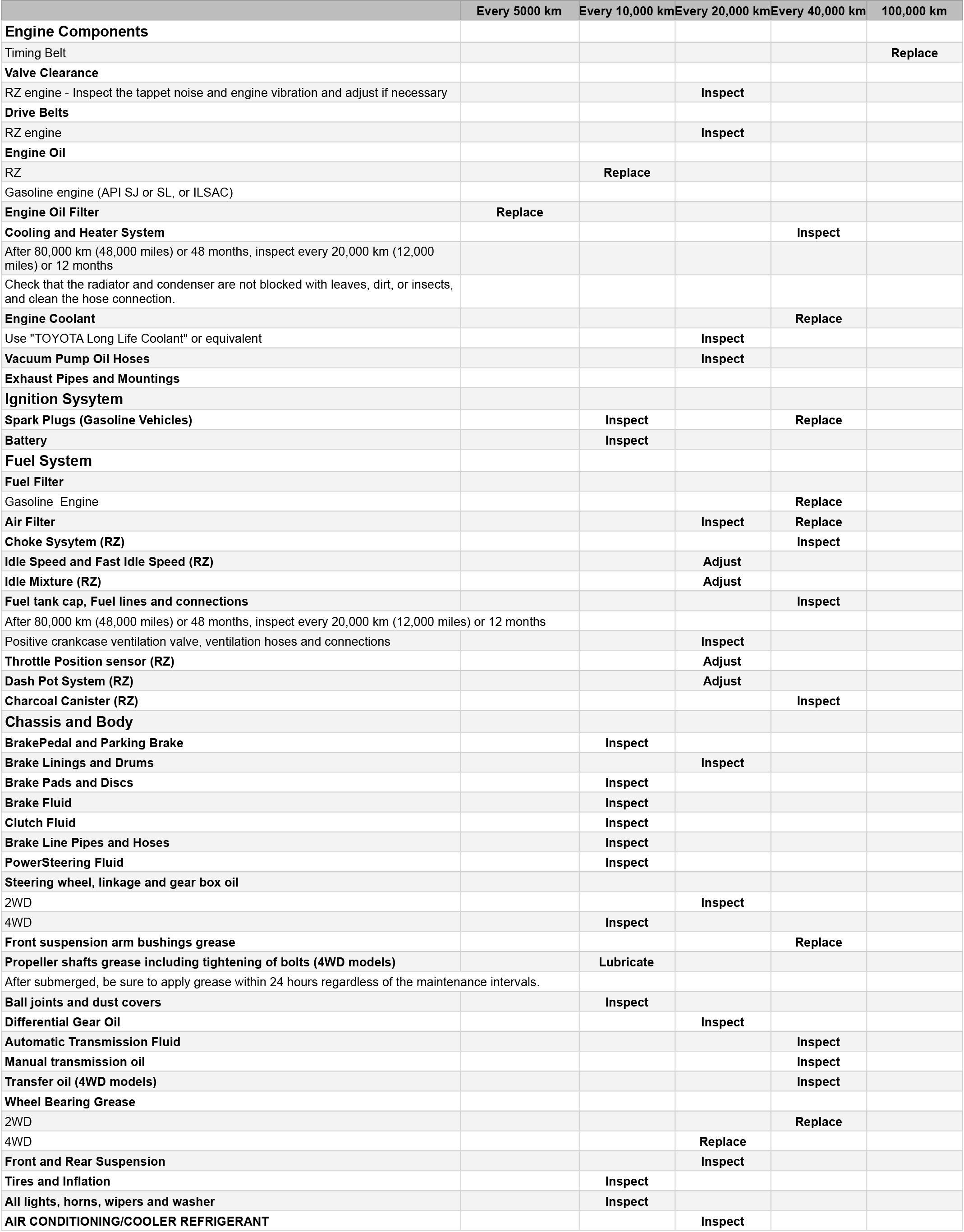
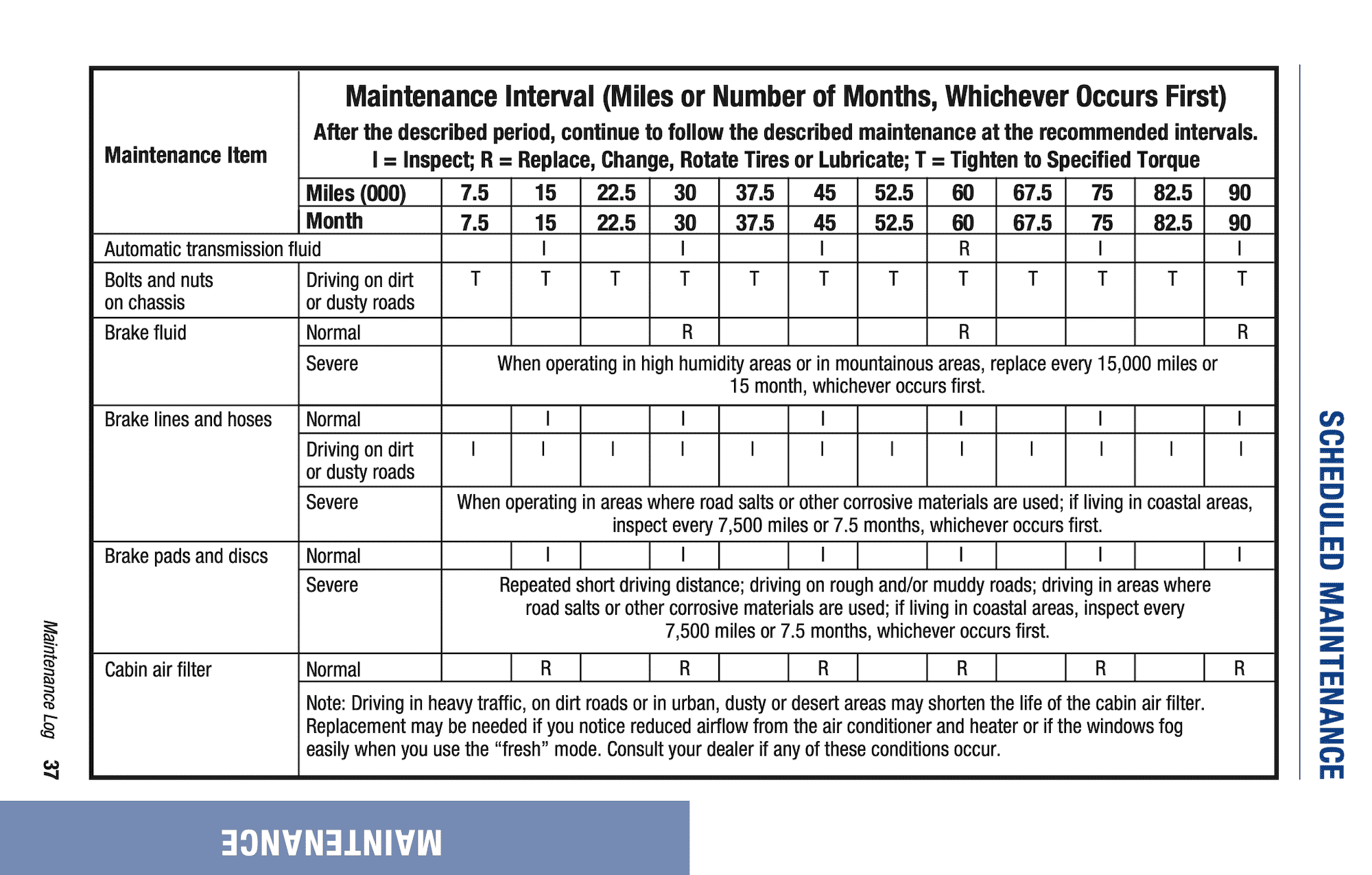
| Interval (Miles) | Interval (Months) | Core Services Required | Key Inspection Points |
|---|---|---|---|
| 5,000 miles | 6 months | Tire rotation, oil & filter change (if severe) | Brake pads, rotors, fluid levels, wiper blades |
| 10,000 miles | 12 months | Synthetic oil change, tire rotation | Wipers, cabin air filter, steering linkage |
| 15,000 miles | 18 months | Tire rotation, minor inspection | Ball joints, dust covers, exhaust system, brake lines |
| 20,000 miles | 24 months | Oil change, tire rotation, cabin filter replacement | Fuel lines, fuel tank vapor vent system, battery |
| 30,000 miles | 36 months | Oil change, tire rotation, engine & cabin air filters | Brake fluid flush, transfer case oil (AWD models) |
| 60,000 miles | 72 months | Major service: Spark plugs, filters, brake fluid, drive belt | Comprehensive drivetrain and suspension check |
| 120,000 miles | 144 months | Coolant replacement, major spark plug & fluid service | Serpentine belt, hoses, water pump, transmission fluid check |
Short-Term Milestones: Every 5,000 to 15,000 Miles
Establishing a reliable rhythm for early-stage maintenance ensures that minor issues—such as uneven tire wear or loose wiper blades—do not compound into major safety hazards.
The 5,000-Mile / 6-Month Service
This is the foundational check-in for your 2014 Sienna.
- Tire Rotation: Because front-wheel-drive and AWD Siennas place heavier steering and braking loads on the front tires, regular rotation (every 5,000 miles) is vital to ensure even tread wear across all four corners.
- Visual Inspections: Technicians must inspect the wiper blades, check and adjust all fluid levels (including windshield washer and brake fluid), and visually inspect the brake linings and rotors for scoring or excessive wear.
The 10,000-Mile / 12-Month Service
At this milestone, assuming you use synthetic oil (which Toyota officially mandates for modern model years to maintain optimal lubrication and efficiency), your engine oil and filter are due for replacement.
- Oil Specification: Use 0W-20 API-certified synthetic motor oil for the 3.5L V6 engine, paired with a high-quality OEM or equivalent oil filter.
- Cabin Air Filter: Inspect the cabin air filter located behind the glove box. If you live in an urban environment or dusty area, this filter will likely be choked with debris, reducing HVAC airflow.
The 15,000-Mile / 18-Month Service
This service mirrors the 5,000-mile inspection but introduces a more rigorous look at the chassis.
- Suspension & Steering: Inspect ball joints, dust covers, steering gear box boots, and drive shaft boots for cracking, tearing, or grease leaks.
- Exhaust System: Check exhaust pipes and mountings for corrosion, loose hangers, or exhaust leaks.
Mid-Range Milestones: 30,000 to 60,000 Miles
As the vehicle crosses mid-life thresholds, consumable fluids and filtration elements require systematic replacement to maintain engine efficiency and emission control.
The 30,000-Mile / 36-Month Service
This is the first major service milestone requiring a deeper investment in preventive maintenance.
- Engine Air Filter: Replace the engine air filter to maintain proper airflow and fuel combustion efficiency.
- Brake Fluid Flush: Brake fluid is hygroscopic, meaning it absorbs moisture from the atmosphere over time. Moisture lowers the boiling point of the fluid, which can lead to a spongy brake pedal during heavy braking or long descents. Flush and replace the brake fluid with DOT 3 fluid.
- AWD Transfer Case Fluid (If Applicable): If your 2014 Sienna is equipped with All-Wheel Drive, the transfer case gear oil should be drained and refilled to protect internal ring and pinion gears from metal-on-metal wear.
The 60,000-Mile / 72-Month Service
At 60,000 miles, the Sienna requires a repeat of the 30,000-mile items, alongside targeted component inspections.
- Drive Belts: Inspect the serpentine drive belt for fraying, cracking along the ribs, or glazing. A snapped serpentine belt disables the alternator, power steering pump, and air conditioning compressor instantly.
- Cooling System Check: Inspect the radiator hoses, clamps, and radiator core for leaks or crusty coolant residue.
Major Milestones: 100,000 Miles and Beyond
Reaching six digits does not mean your 2014 Toyota Sienna is nearing the end of its life; rather, it marks the entry into its second operational phase. Proper care here dictates whether the van runs smoothly up to 200,000 miles and beyond.
Spark Plug Replacement at 120,000 Miles
The 3.5L V6 engine utilizes iridium-tipped spark plugs designed for exceptional longevity. By 120,000 miles, the gap between the center and ground electrodes widens due to electrical erosion.
- Symptoms of Worn Plugs: Engine misfires, rough idling, hesitation during acceleration, and decreased fuel economy.
- Replacement Note: Replacing spark plugs on the rear bank of the transverse-mounted V6 requires removing the intake plenum. Use genuine OEM Denso or NGK spark plugs matching factory specifications.
Engine Coolant Replacement
Toyota Super Long Life Coolant comes pre-diluted (50/50 pink formula).
- Interval: The initial replacement is scheduled at 100,000 miles or 120 months, with subsequent replacements occurring every 50,000 miles or 60 months.
- Function: Fresh coolant prevents internal engine block corrosion, lubricates the water pump seal, and protects against freezing and boiling.
Fluid Specifications and Capacities
Using the correct fluids prevents premature mechanical failure and ensures warranty or component compliance. Always verify capacities with your owner's manual before completing a DIY service.
- Engine Oil (3.5L V6): 6.4 US quarts (with filter change) of SAE 0W-20 synthetic oil.
- Automatic Transmission Fluid (U660E / U760E 6-speed): Toyota Genuine ATF WS (World Standard). Note that the transmission is a sealed unit without a traditional dipstick; fluid level checks require monitoring pan temperature via an OBD-II scanner or jumper wire method.
- AWD Transfer Case Oil: Hypoid gear oil SAE 85W-90 (approximately 0.6 quarts).
- AWD Rear Differential Oil: Hypoid gear oil API GL-5, SAE 80W-90 (approximately 0.7 quarts).
- Coolant (Super Long Life Coolant): Approximately 10.1 US quarts for front-wheel-drive models (slightly more for AWD due to rear heater lines).
Common Wear Items and Troubleshooting
Even with meticulous adherence to the maintenance schedule, certain components on the 2014 Toyota Sienna experience common wear patterns due to the vehicle's weight and family-hauling duties.
Sliding Door Actuators and Track Maintenance
Electric sliding doors are a staple of the Sienna lineup, but over time, dust and grime accumulate in the lower door tracks, placing strain on the electric motors and latch actuators.
- Maintenance Tip: Clean the lower metal door tracks semi-annually with a mild degreaser, wipe them dry, and apply a light coat of dry PTFE lubricant or silicone spray. Avoid heavy grease, which attracts dirt and grit.
Suspension Struts and Control Arm Bushings
Weighing over 4,300 pounds empty, the Sienna places significant vertical and lateral load on its MacPherson strut front suspension and rear torsion beam setup.
- Troubleshooting: Listen for clunking noises over speed bumps or vibrations in the steering wheel at highway speeds. Front lower control arm bushings typically show tearing or rubber degradation around 90,000 to 120,000 miles, requiring arm assembly replacement.
Brake Rotor Warping
Due to the vehicle's heft, front brake rotors can warp prematurely if subjected to heavy braking down mountain passes or aggressive city driving, resulting in a pulsing brake pedal.
- Troubleshooting: Inspect brake pad thickness during every tire rotation. When replacing pads, ensure rotors are machined or replaced, and guide pins are thoroughly cleaned and lubricated with high-temperature silicone brake grease.
Professional Advice and Best Practices
When servicing your 2014 Toyota Sienna, consider these practical tips to maximize efficiency and minimize long-term repair expenses:
- Keep Detailed Records: Maintain a physical folder or digital log of all oil changes, tire rotations, and major repairs. Documented maintenance history significantly preserves resale value when trading or selling the minivan.
- Prioritize OEM Filters: While aftermarket filters are readily available, OEM Toyota oil, engine air, and cabin air filters offer superior fitment and filtration efficiency, protecting sensitive mass airflow (MAF) sensors and internal engine components.
- Inspect the Water Pump: The water pump on the 2nd-generation and 3rd-generation Sienna V6 engines can occasionally develop slow coolant leaks around 100,000 miles. Always inspect the weep hole beneath the water pump during coolant or drive belt services.
Conclusion
Sticking to the 2014 Toyota Sienna maintenance schedule is the single most effective strategy to ensure your minivan achieves trouble-free service well past the 200,000-mile mark. By balancing routine 5,000-mile oil and tire rotations with major fluid, spark plug, and filter replacements, you safeguard your investment and maintain the dependable performance families rely upon. Always tailor your service intervals to your specific driving habits, choosing severe-service schedules when operating under heavy load, short-trip, or dusty environments.