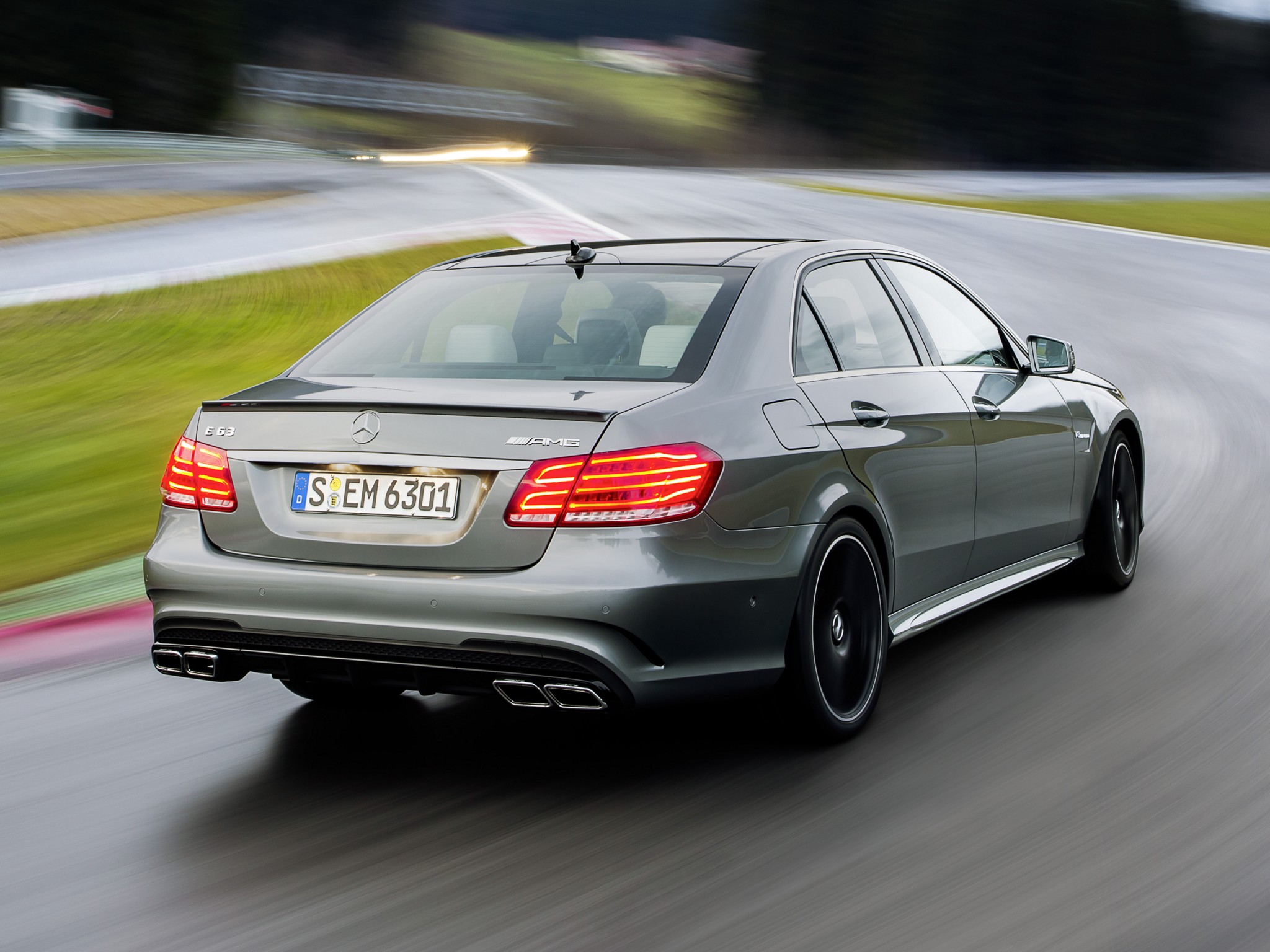
The 2013 Mercedes-Benz E63 AMG represents a pivotal moment in the history of high-performance luxury sedans, serving as a bridge between raw atmospheric power and the sophisticated forced induction of the modern era. Defined by its M157 5.5-liter biturbo V8 engine, it offers 518 to 550 horsepower, delivering a driving experience that remains competitive and visceral even from the perspective of 2026.
The Engineering Philosophy of the W212 E63 AMG
To understand the 2013 Mercedes-Benz E63 AMG, one must look at the W212 chassis generation during its mid-cycle maturity. By 2013, Mercedes-AMG had fully transitioned away from the legendary 6.2-liter naturally aspirated M156 V8 in favor of the M157 biturbo engine. This shift was not merely a reaction to tightening emissions standards; it was a deliberate move to redefine the "Executive Express."
The 2013 model year is particularly significant because it was the final year of the "pre-facelift" aesthetic in the United States and the last year the E63 was primarily offered with a rear-wheel-drive bias before the 2014 4MATIC (all-wheel drive) standard became the norm for the E-Class AMG lineup. This makes the 2013 version a purist’s choice in 2026—a car that combines modern twin-turbo torque with the classic, tail-happy dynamics of a rear-driven German muscle car.
The engineering focus was on "efficiency through performance." While the previous 6.2-liter engine required high revs to find its soul, the 5.5-liter biturbo provided a massive wall of torque starting as low as 1,750 RPM. This changed the E63's character from a high-string screamer to an effortless, locomotive-like cruiser capable of erasing highway distances in seconds.
The M157 Biturbo V8: The Heart of the Evolution
The center of the 2013 E63 AMG’s identity is the M157 engine. This 5,461cc V8 features twin turbochargers, piezo-electric direct injection, and an all-aluminum crankcase. In its standard configuration, it produced 518 horsepower and 516 lb-ft of torque. However, the highly sought-after AMG Performance Package (Code P30/P31) bumped those figures to 550 horsepower and 590 lb-ft of torque by increasing the turbo boost pressure from 1.0 to 1.3 bar.
Performance and Tuning Potential
Even in 2026, the M157 engine is regarded as one of the most robust and "tunable" platforms AMG ever produced. While the factory numbers were impressive, the over-engineered nature of the block allowed for significant aftermarket gains. In the current market, many 2013 E63s have been maintained with mild ECU tunes that safely push the car beyond 600 horsepower, rivaling the performance of much newer vehicles.
The AMG Speedshift MCT 7-Speed Transmission
Unlike a traditional torque-converter automatic, the 2013 E63 AMG utilized the AMG Speedshift MCT (Multi-Clutch Technology). This transmission replaced the torque converter with a compact wet start-off clutch. The result was a direct connection between the engine and the wheels, providing lightning-fast shifts in "Manual" and "Sport Plus" modes while maintaining smoothness in "Controlled Efficiency" (C) mode. This transmission also featured a rev-matching function on downshifts, which, paired with the M157's exhaust note, provided a theatrical driving experience that remains a benchmark for the E-Class.
Driving Dynamics and Suspension Technology
The 2013 E63 AMG featured the AMG Ride Control sports suspension. This system utilized a sophisticated hybrid setup: traditional steel springs at the front for precise steering feel and air suspension (Airmatic) at the rear with an automatic leveling system.
Handling Modes
The driver could select between "Comfort," "Sport," and "Sport Plus" damping modes. In 2026, enthusiasts still praise the 2013 model for its "Sport" setting, which manages to mask the vehicle's nearly 4,300-lb curb weight through clever electronic valve adjustment in the shocks. The steering is a speed-sensitive rack-and-pinion system with a constant mechanical ratio, offering a more communicative feel than some of the fully electric systems found in later W213 or W214 generations.
Braking Performance
Stopping power was equally formidable. The standard brakes featured 14.2-inch perforated and ventilated discs. However, 2013 was a year where the AMG Carbon Ceramic braking system became a more frequent option. These brakes not only reduced unsprung weight by 40% but also provided fade-free performance that, if well-maintained, remains top-tier by today’s standards.
Interior Craftsmanship and Technology from a 2026 Perspective
Steering inside a 2013 E63 AMG in 2026 offers a masterclass in "old-world" luxury combined with the dawn of the digital age. This was before the era of "Hyperscreens" and all-touch interfaces, which many collectors now find refreshing.
- Tactile Controls: The dashboard is dominated by high-quality physical buttons and the COMAND rotary controller. For a driver in 2026 who is fatigued by touch-sensitive sliders, the tactile click of the E63’s climate control and media buttons represents a high point in ergonomic design.
- Materials: Nappa leather, Alcantara-swathed steering wheels, and genuine carbon fiber or black ash wood trim were standard. The build quality of the W212 era is often cited as superior to later models, with fewer "creaks" and a heavier, more solid door-thud.
- Seating: The AMG sports seats feature active side bolsters that "hug" the driver during cornering—a feature that remains a highlight of the Mercedes-AMG experience.
Comparing the 2013 E63 AMG to the Modern Era
As we look back from 2026, the 2013 E63 AMG occupies a "sweet spot" in the evolution of the performance sedan.
| Feature | 2013 E63 AMG (W212) | 2024+ E63 AMG (Modern Context) |
|---|---|---|
| Engine Type | 5.5L V8 Biturbo (M157) | 2.0L I4 or 3.0L I6 Hybrid Systems |
| Drivetrain | Rear-Wheel Drive (Standard in US) | All-Wheel Drive (4MATIC+) |
| Peak Torque | Up to 590 lb-ft | 600+ lb-ft (Electric Assisted) |
| Weight | ~4,200 - 4,300 lbs | ~4,800 - 5,200 lbs (Battery Weight) |
| Interface | Analog Gauges / Physical Buttons | Full Digital / Touch / Voice |
| Sound Profile | Deep, Natural V8 Rumble | Synthetic/Enhanced Exhaust Notes |
The 2013 model is significantly lighter than the hybrid-heavy performance sedans of the mid-2020s. This lower mass translates to a more tossable feel and less wear on tires and brakes during spirited driving. While newer models are objectively faster in a 0-60 mph sprint due to AWD traction and instant electric torque, the 2013 E63 offers a more rewarding "struggle" for traction that enthusiasts crave.
Maintenance and Reliability: What to Watch for in 2026
When purchasing or maintaining a 2013 E63 AMG today, owners must be aware of specific technical areas that require attention. The "decade of evolution" has revealed the long-term strengths and weaknesses of the M157 platform.
1. Oil in the Wiring Harness
A known issue with the M157 involves the camshaft position sensors and solenoids. Over time, oil can leak through the electrical connectors and travel (wick) down the wiring harness into the Engine Control Unit (ECU). In 2026, most surviving examples have either had the "pigtail" harness extensions installed or have had the sensors replaced with updated parts to prevent this costly failure.
2. Camshaft Adjusters and Timing Chains
Upon cold start, a rattling sound that lasts for several seconds can indicate worn camshaft adjusters or a stretched timing chain. While the M157 is generally robust, these are wear items that typically require replacement between 80,000 and 120,000 miles.
3. Airmatic Rear Suspension
The rear air bags are prone to leaking after 10+ years of service. If the car "squats" after being parked overnight, the bags or the compressor need attention. Aftermarket solutions from companies like Arnott have made this a manageable and affordable repair compared to the early years of the W212.
4. Turbo Coolant Lines
The plastic coolant lines feeding the twin turbochargers become brittle due to the immense heat generated in the "V" of the engine. Proactive owners in 2026 often replace these with aluminum or reinforced silicone lines to prevent sudden coolant loss.
Market Value and Investment Potential
In 2026, the 2013 Mercedes-Benz E63 AMG has moved past its steepest depreciation curve. It is currently viewed as a "value-driven" performance icon.
- Driver-Quality Examples: High-mileage cars (100k+ miles) can be found for $18,000 to $24,000. These are excellent candidates for those who want a daily-driveable V8.
- Collector Examples: Low-mileage (under 50k miles) cars, especially those with the AMG Performance Package and rare "Designo" paint options, command prices between $35,000 and $45,000.
- The Wagon Factor: The E63 AMG Wagon (S212) remains a unicorn. Because of its rarity and "sleeper" status, 2013 wagons often fetch a 30-50% premium over the sedan equivalent.
As the automotive industry moves further into electrification, the raw, mechanical nature of the 2013 M157 powered E-Class is seeing a resurgence in interest, suggesting that well-maintained examples may begin to appreciate in the coming years.
Frequently Asked Questions
Is the 2013 E63 AMG all-wheel drive?
In the United States, the 2013 E63 AMG was primarily rear-wheel drive. All-wheel drive (4MATIC) became standard for the E63 in the 2014 facelift model year. Some international markets had different configurations, but the 2013 RWD model is specifically prized for its traditional burnout capability and steering purity.
How many turbochargers does the 2013 E63 AMG have?
The 2013 E63 AMG features two turbochargers (biturbo) mounted in a "hot-V" configuration. This setup helps reduce turbo lag and makes the engine more compact, though it does generate significant heat under the hood.
What is the difference between the 2012 and 2013 E63 AMG?
Mechanically, the 2012 and 2013 models are nearly identical, as both use the M157 5.5L biturbo V8. The 2013 model benefited from minor software updates to the COMAND infotainment system and some small adjustments to interior trim options. Both years are considered the "golden era" of the pre-facelift W212.
Is the 2013 E63 AMG reliable for daily driving?
Yes, provided the maintenance history is documented. The engine and transmission are capable of exceeding 200,000 miles. However, the cost of consumables (brakes, tires, and premium fuel) is significantly higher than a standard E-Class. Owners should set aside a "maintenance fund" for specialized AMG parts.
What gas mileage does the 2013 E63 AMG get?
While fuel economy was an engineering goal, it remains a high-performance V8. You can expect approximately 15-16 MPG in the city and up to 23-24 MPG on the highway when driven in "Controlled Efficiency" mode. Aggressive driving will quickly drop these numbers into the low teens.
Final Recommendation for Buyers
The 2013 Mercedes-Benz E63 AMG is a masterclass in balance. It offers enough modern technology to be comfortable and safe in 2026 traffic, yet retains a mechanical soul that is becoming increasingly rare. For the best experience, seek out a model with the AMG Performance Package (P30/P31) to ensure you have the highest factory output and the limited-slip differential. Prioritize vehicles with a documented history of spark plug and ignition coil replacements, as well as verification that the camshaft position sensors are dry. In an era of increasing automation, the 2013 E63 AMG stands as a loud, proud reminder of what a high-performance executive sedan should be.