Yes, humans are biologically classified as animals. From a taxonomic perspective, humans belong to the kingdom Animalia, the phylum Chordata, the class Mammalia, and the order Primates. While humans possess unique cognitive abilities, complex linguistic capabilities, and sophisticated cultural structures that distinguish them from other species, these traits do not remove us from the biological category of animals.
The Biological Classification of Humanity
The classification of organisms is governed by the science of taxonomy, which organizes life into a hierarchical structure based on shared evolutionary characteristics. This system, originally developed by Carl Linnaeus in the 18th century and refined through modern genetics, provides the framework for determining an organism's place in the natural world.
Humans occupy the following specific biological slots:
- Domain: Eukarya (organisms with complex cells containing a nucleus).
- Kingdom: Animalia (multicellular, heterotrophic organisms that move and ingest nutrients).
- Phylum: Chordata (organisms that possess a notochord at some stage in their development).
- Class: Mammalia (vertebrates that possess mammary glands, fur or hair, and a neocortex).
- Order: Primates (mammals characterized by large brains, stereoscopic vision, and opposable thumbs).
- Family: Hominidae (the "great apes," including chimpanzees, gorillas, and orangutans).
- Genus: Homo (humans and closely related extinct ancestors).
- Species: Homo sapiens.
Being an animal is not a pejorative term; rather, it is a definitive biological designation. As animals, humans share fundamental physiological requirements with other creatures, such as the need to consume organic compounds for energy, the reliance on oxygen for cellular respiration, and the capacity for reproduction and environmental interaction.
Defining the Kingdom Animalia
To understand why humans are classified as animals, one must examine the defining characteristics of the kingdom Animalia. Members of this kingdom share several key traits that differentiate them from plants, fungi, and single-celled microorganisms.
Multicellularity and Cellular Structure
Unlike bacteria or protists, animals are multicellular organisms. Every human body is composed of trillions of specialized cells that work in concert to maintain homeostasis. These cells do not have the rigid cell walls found in plants or fungi, which allows for the flexibility and movement essential to animal life.
Heterotrophy
Plants are autotrophs, meaning they produce their own energy through photosynthesis. Animals, including humans, are heterotrophs. We cannot synthesize our own food from sunlight; we must obtain organic carbon by consuming other organisms. This reliance on external food sources is a hallmark of the animal kingdom.
Motility
At some stage in their life cycle, nearly all animals exhibit some form of mobility. While humans are highly mobile, the requirement for motility in the kingdom also covers organisms like sponges that move only in their larval stage. Our muscular and skeletal systems are specialized tools evolved for locomotion, foraging, and environmental manipulation.
What Distinguishes Humans from Other Animals?
While humans are definitively animals, we do possess specific traits that are exceptionally developed compared to other species. Recognizing these differences is often the root of the "are people animals" debate, as many people equate "animal" with "beast" or "unintelligent."
Advanced Cognitive Function
Humans have an exceptionally high encephalization quotient, which is a measure of relative brain size compared to body mass. Our prefrontal cortex, the area of the brain responsible for higher-order executive functions—such as impulse control, planning, moral reasoning, and abstract thought—is highly developed. This allows for long-term goal setting and complex problem-solving that is rarely observed to the same degree in other members of the animal kingdom.
Language and Symbolic Representation
While many animals communicate through sound, scent, and body language, human communication is unique in its capacity for displacement—the ability to discuss things not currently present, including the past, the future, and entirely abstract concepts. We utilize symbolic representation, meaning we attach meaning to arbitrary sounds and symbols (like words and mathematical equations) to transmit culture and knowledge across generations.
Cumulative Culture
Other animals exhibit culture, such as chimpanzees learning to use tools or whales developing localized song patterns. However, humans possess "cumulative culture." We stand on the shoulders of our ancestors; because we can record and communicate information so effectively, each generation does not need to "reinvent the wheel." We build upon existing technologies and philosophies, leading to exponential progress in science and society.
Evolutionary Relationships: The Great Apes
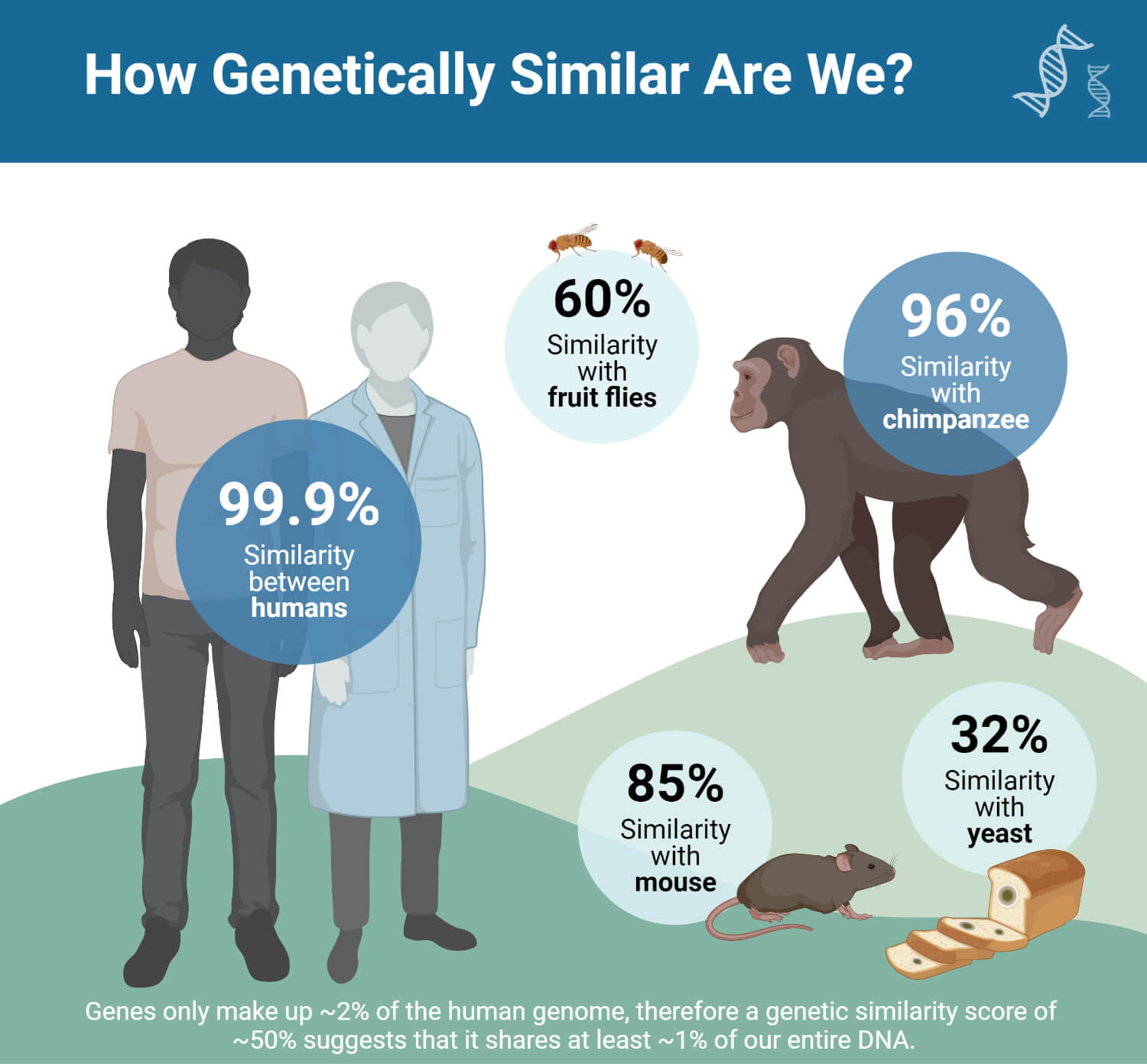
Humanity’s closest living relatives are the chimpanzees and bonobos (Pan genus). Genetic studies, including the mapping of the human genome, demonstrate that humans share approximately 98% to 99% of their DNA with these primates. This proximity underscores our status as a branch of the primate evolutionary tree.
Table 1: Biological Characteristics of Selected Primates
| Characteristic | Human | Chimpanzee | Gorilla |
|---|---|---|---|
| Family | Hominidae | Hominidae | Hominidae |
| Locomotion | Bipedal | Knuckle-walking | Knuckle-walking |
| Diet | Omnivorous | Omnivorous | Herbivorous |
| Tool Use | High/Complex | Basic/Observed | Basic/Observed |
| Social Structure | Complex/Global | Community/Group | Troop/Harem |
The differences observed in the table do not move humans into a non-animal category; rather, they highlight the specific evolutionary adaptations that allowed the Homo genus to thrive in diverse environments. Bipedalism, for example, freed the hands for tool usage, which in turn influenced our brain development over millions of years.
Common Misconceptions
The reluctance to label humans as animals often stems from psychological or philosophical discomfort rather than biological evidence. Addressing these misconceptions clarifies the scientific standing of humanity.
The "Higher Being" Argument
Some suggest that because humans possess moral awareness or a belief in the divine, we are categorically superior to the rest of the animal kingdom. Science does not address the existence of the soul or the divine; it focuses on observable, measurable phenomena. Biological classification relies on physical and genetic traits. Whether a species possesses morality or spirituality does not change its classification as an animal.
The Problem of "Animal Instinct"
There is a common, though imprecise, distinction made between "human reason" and "animal instinct." In reality, humans retain many vestigial and active instincts. Our fight-or-flight response, our drive to reproduce, and our attraction to calorie-dense foods are all deeply ingrained biological "instincts" that have served our species throughout our evolutionary history. Humans are not immune to instinct; we are simply better at overriding them with conscious thought.
Philosophical and Ethical Implications
Recognizing that we are animals has significant ethical implications for how we treat the natural world and other species. If we view ourselves as a distinct category separate from nature, we may feel justified in exploiting ecosystems without regard for the interconnectedness of life.
Conversely, accepting our position within the animal kingdom fosters a sense of stewardship. It highlights our shared vulnerability and our reliance on the same biosphere that supports all other animal life. Many ethical frameworks, such as animal rights or environmental ethics, argue that because humans share sentience and biological needs with other animals, we have a moral obligation to minimize the suffering of other species and protect the integrity of the ecosystems we inhabit.
FAQ: Understanding Humanity’s Biological Status
Are humans considered mammals?
Yes. Humans possess all the defining characteristics of mammals: we are endothermic (warm-blooded), we have hair or fur, we possess mammary glands to nourish our young, and we have a specialized middle ear structure.
Does being an animal make humans less "special"?
Not at all. Science provides a method for categorization, not for assigning value. Recognizing that humans are animals does not negate our unique achievements in art, technology, philosophy, or medicine. Instead, it provides a fascinating context for how such a remarkable species emerged through evolutionary processes.
If humans are animals, are we also apes?
Yes. Taxonomically, humans are categorized within the family Hominidae, which is commonly referred to as the "great apes." This includes humans, chimpanzees, bonobos, gorillas, and orangutans.
Is the term "human animal" scientifically accurate?
Yes, it is scientifically accurate. It is frequently used in biology and anthropology to emphasize that humans are subject to the same ecological and evolutionary principles as every other animal species on Earth.
Do all animals have a brain?
No. While humans and most complex animals have a central nervous system and a brain, some simple animals, such as jellyfish and sponges, lack a brain entirely. They rely on nerve nets or simple cell-to-cell signaling to respond to their environment.
Next Steps for Further Learning
To further explore the biological nature of humanity, consider examining resources focused on evolutionary anthropology and primatology. Institutions like the Smithsonian National Museum of Natural History offer extensive online documentation on human evolution, detailing how our species transitioned from early hominids to the Homo sapiens of the 21st century. Engaging with these resources provides a grounded understanding of the historical and biological path that led to the development of human cognition, society, and our unique place within the animal kingdom.