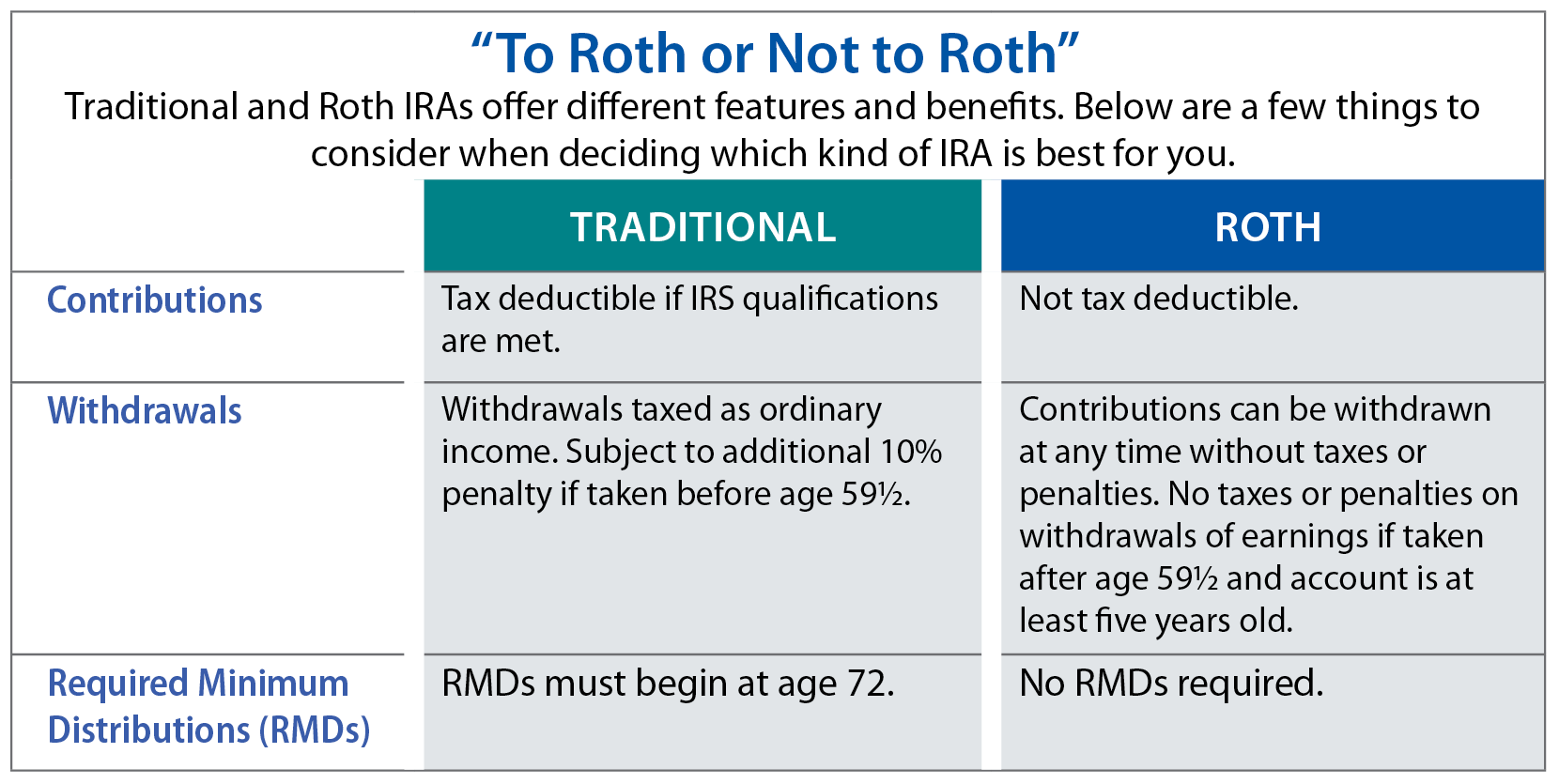
Whether employer contributions to a Roth 401(k) are taxable depends on how your employer structures the contribution and what election you make. Historically, all employer matching and non-elective contributions were made on a pre-tax basis into a traditional 401(k) account, meaning they were not taxable in the year contributed but are taxed upon withdrawal in retirement. However, under Section 604 of the SECURE 2.0 Act, employers may now allow employees to receive fully vested employer contributions as Roth contributions. If you elect this option, the employer contribution is included in your taxable income for the year it is deposited, but qualified future withdrawals—including all growth—will be completely tax-free.
The Core Rule: Pre-Tax Default vs. Roth Election
To determine the exact tax status of your employer match or profit-sharing contribution, you must distinguish between your personal deferrals and your employer’s contributions.
When you participate in a workplace retirement plan, your contributions and your employer's contributions follow specific tax classifications governed by the Internal Revenue Code (IRC):
- Employee Roth Contributions: You make these contributions using after-tax dollars. You pay income tax on the money up front, but earnings grow tax-free, and qualified distributions in retirement incur zero federal or state income tax.
- Traditional Employer Match (Pre-Tax Default): Historically, federal tax law required all employer contributions—even matching contributions triggered by employee Roth deferrals—to be placed into a pre-tax account. You pay no income tax on these contributions when they enter your account, but you will pay ordinary income tax on both the principal and earnings when you withdraw them in retirement.
- Designated Roth Employer Match (SECURE 2.0 Option): If your plan offers optional Roth employer contributions under Section 604 of the SECURE 2.0 Act, you can elect to have matching or non-elective employer funds placed directly into your Roth account. Choosing this option renders the employer contribution taxable as ordinary income in the year it is allocated to your account.
Disclaimer: Tax laws are complex and subject to individual circumstances. This guide provides educational information based on IRS rules, including SECURE 2.0 guidelines and IRS Notice 2024-2. Consult a certified financial planner (CFP) or qualified tax professional for advice specific to your financial situation.
How Employer Matching Worked Historically
Prior to the passage of the SECURE 2.0 Act in late 2022, tax regulations did not permit employers to deposit tax-free matching dollars directly into a Roth account.
If an employee elected to contribute 6% of their salary to a Roth 401(k), the employee’s 6% was deducted after income taxes were withheld. If the employer matched that contribution dollar-for-dollar up to 6%, the employer’s matching funds were directed into a separate pre-tax traditional 401(k) account within the same plan infrastructure.
As a result, many retirement plan participants holding a "Roth 401(k)" actually held a hybrid account:
- A Roth sub-account containing the employee’s post-tax contributions and tax-free growth.
- A Traditional sub-account containing the employer’s pre-tax contributions and tax-deferred growth.
When reaching retirement age (age 59½ or older, assuming the 5-year holding rule is met), distributions from the Roth sub-account were tax-free, while distributions from the traditional sub-account were taxed at standard ordinary income rates. This setup preserved tax deferral for employers, who claimed tax deductions for business expenses in the year contributions were paid.
How the SECURE 2.0 Act Changed Employer Roth Contributions
Section 604 of the SECURE 2.0 Act established a major structural shift in workplace retirement plans by permitting employers to offer employees designated Roth matching and non-elective contributions.
Key Provisions of Section 604
- Optional Implementation: Employers are not required to offer Roth matching contributions. It is an optional plan feature that employers can choose to adopt by updating their plan documents.
- Employee Election: Where offered, receiving employer matching funds as Roth dollars is voluntary. Employees must formally elect to receive employer contributions on a Roth basis.
- Vesting Requirement: Under IRC rules, employer contributions designated as Roth contributions must be 100% vested immediately at the time the contribution is made. Employers cannot apply a multi-year vesting schedule (such as a 3-year cliff or 6-year graded schedule) to Roth employer matching funds.
- Taxable Event: The amount of the designated Roth employer contribution is included in the employee’s gross income for the tax year in which the contribution is allocated to the participant's account.
Guidance from IRS Notice 2024-2
To clarify operational mechanics, the IRS issued Notice 2024-2, which outlined specific reporting and administrative rules for designated Roth employer contributions:
- Taxable Year Allocation: Designated Roth matching or non-elective contributions are taxable to the employee in the tax year in which the contribution is actually allocated to the account, even if deposited shortly after year-end.
- Withholding Rules: Designated Roth employer contributions are not subject to federal income tax withholding at the time of deposit. However, because the contribution increases gross income, employees who elect this option may face a higher tax bill at tax filing time or need to adjust their W-4 wage withholding to compensate.
- FICA and FUTA Exemption: Employer matching contributions designated as Roth are generally not subject to Social Security (FICA), Medicare, or Federal Unemployment (FUTA) taxes, preserving the traditional tax treatment of employer matches regarding payroll taxes.
Pre-Tax vs. Designated Roth Employer Match Comparison
The following table summarizes how pre-tax employer matching contributions compare to designated Roth employer matching contributions.
| Feature | Traditional Pre-Tax Employer Match | Designated Roth Employer Match |
|---|---|---|
| Tax Status at Contribution | Tax-free (not included in gross income) | Taxable (included in gross income) |
| Federal Income Tax Withholding | None required | None withheld by employer; employee owes tax |
| Vesting Requirements | Subject to plan's vesting schedule (0–6 years) | Must be 100% immediately vested |
| Tax Status of Growth | Tax-deferred until distribution | Tax-free (upon qualified distribution) |
| Tax Status at Withdrawal | Taxed as ordinary income | Tax-free (if 5-year rule and age 59½ met) |
| Plan Availability | Mandatory baseline for all matching plans | Optional plan design feature chosen by employer |
| Form 1099-R Reporting | Reported only upon withdrawal | Reported on Form 1099-R in the year allocated |
| Impact on Overall Contribution Limits | Counts toward IRC Section 415(c) limit | Counts toward IRC Section 415(c) limit |
Contribution Limits and Tax Calculations
Understanding how employer contributions interact with annual IRS limits is essential for effective retirement planning.
Employee Deferral Limit vs. Section 415(c) Overall Limit
The IRS places two distinct caps on 401(k) plan contributions:
- Elective Deferral Limit (IRC Section 402(g)): This limit applies solely to employee contributions (whether traditional pre-tax or Roth). For example, the annual employee limit applies to the sum of all traditional and Roth deferrals made by the employee during the calendar year. Catch-up contributions for employees aged 50 and older provide additional capacity above this threshold.
- Overall Plan Limit (IRC Section 415(c)): This limit applies to the combined total of all contributions made to an employee’s account, including employee elective deferrals, employer matching contributions, and employer non-elective (profit-sharing) contributions.
Designating an employer match as a Roth contribution does not lower your individual employee deferral limit. Employer contributions count toward the total Section 415(c) limit regardless of whether they are made on a pre-tax or Roth basis.
Numerical Example of Tax Impact
Consider an employee earning $100,000 annually who contributes 6% ($6,000) of their salary to a Roth 401(k), and receives a 100% dollar-for-dollar employer match ($6,000).
Scenario A: Standard Pre-Tax Match
- Employee contribution: $6,000 (after-tax; added to Roth account).
- Employer match: $6,000 (pre-tax; added to Traditional account).
- Taxable Income Adjustment: Employee pays income tax on their $100,000 salary. The $6,000 employer match creates no taxable income event in the current year.
- Future Growth: The $6,000 match and its earnings will be taxed as ordinary income when withdrawn in retirement.
Scenario B: Designated Roth Employer Match
- Employee contribution: $6,000 (after-tax; added to Roth account).
- Employer match: $6,000 (designated Roth; added to Roth account).
- Taxable Income Adjustment: The $6,000 employer match is included as gross income. The employee pays tax on $106,000 of income for the year.
- Tax Due: If the employee is in a 22% marginal federal income tax bracket, the employee owes an additional $1,320 ($6,000 × 22%) in federal income tax for the year.
- Future Growth: The entire $6,000 match, along with all investment earnings, accumulates 100% tax-free and can be withdrawn tax-free in retirement.
Tax Reporting and Account Administration
Because designated Roth employer contributions are taxable in the year they are allocated, the IRS established administrative mechanics for how employers must report these amounts.
Form 1099-R Reporting
Unlike standard payroll wages, which are reported in Box 1 of Form W-2, designated Roth employer contributions are typically reported on Form 1099-R (Distributions From Pensions, Annuities, Retirement or Profit-Sharing Plans, IRAs, Insurance Contracts, etc.) for the tax year in which the contribution is allocated to the account.
- Box 1 (Gross distribution): Shows the total dollar value of the employer Roth contribution.
- Box 2a (Taxable amount): Shows the taxable amount of the employer contribution.
- Distribution Code: Indicates a designated Roth employer contribution per IRS guidance.
Because employers do not withhold income tax directly from the employer matching funds, employees who opt into designated Roth matches must actively manage their tax withholdings. If you do not increase your standard Form W-2 tax withholding or make estimated quarterly tax payments, you may owe a tax balance—and potential underpayment penalties—when filing your federal and state tax returns.
The 5-Year Holding Period Rule
To withdraw earnings from a Roth 401(k) completely tax-free, the distribution must satisfy two primary criteria:
- The distribution occurs on or after the participant reaches age 59½ (or due to disability or death).
- The distribution occurs after the 5-taxable-year period of participation.
The 5-year clock begins on January 1 of the tax year in which you make your first contribution to the designated Roth account in that specific employer's plan. Employer Roth contributions share this same Roth sub-account clock. Once the 5-year requirement and age threshold are met, all employee deferrals, employer matches, and associated growth can be withdrawn without tax or penalty.
Should You Elect Roth Employer Contributions?
Choosing between pre-tax and Roth employer contributions involves evaluating your current financial position against your expected tax burden in retirement.
When Designated Roth Match Makes Sense
- You are in a lower tax bracket today: If you are early in your career or currently in a lower marginal income tax bracket (e.g., 10% or 12%), paying tax on the match now lock in a low tax rate on funds that could compound over decades.
- You expect tax rates to rise: If you anticipate that federal or state tax rates will be higher when you retire, paying income tax up front protects your savings from future rate increases.
- You want maximum tax-free income in retirement: Holding substantial tax-free Roth assets provides flexibility in retirement, allowing you to take large distributions without pushing yourself into higher tax brackets or triggering higher Medicare Part B/D premiums (IRMAA).
- You are fully vested immediately: If your employer's standard matching plan uses a long vesting schedule and you plan to leave the company soon, electing a Roth match forces immediate 100% vesting of those matched dollars.
When Pre-Tax Employer Match Makes Sense
- You are in your peak earning years: If you are currently in a high marginal tax bracket (e.g., 24%, 32%, or higher), paying income tax on employer matches today can create a significant immediate tax burden.
- You cannot afford the extra tax liability: Because employers do not automatically withhold tax from the designated Roth match, electing Roth matches reduces your net take-home pay if you adjust your W-4, or results in a tax bill at tax time.
- You plan to retire in a lower tax bracket: If you expect your income and tax rate to drop significantly in retirement, delaying taxes via traditional pre-tax employer matching is mathematically advantageous.
Common Mistakes to Avoid
- Assuming your employer automatically offers Roth matching: Section 604 of SECURE 2.0 allows employers to offer this feature, but does not force them to do so. Check with your HR department or plan administrator to verify whether your plan document has been amended to permit designated Roth employer contributions.
- Forgetting to budget for the tax bill: Because tax is not withheld from the matching deposit, employees electing Roth matches often face surprise tax liabilities at year-end. Calculate the marginal tax owed on the expected match and adjust your W-4 withholding accordingly.
- Confusing employee deferral caps with employer matching rules: Electing a Roth match does not reduce your annual individual contribution limit under IRC Section 402(g).
- Ignoring state tax implications: State tax laws do not always automatically conform to federal tax changes immediately. Verify how your state treats designated Roth employer contributions to ensure proper state income tax reporting.
Frequently Asked Questions
Are employer matching contributions to a Roth 401(k) automatically tax-free?
No. Employer matching contributions are never automatically tax-free. By default, employer contributions are made on a pre-tax basis into a traditional account, meaning they are tax-deferred when contributed and taxed as ordinary income upon withdrawal. If your plan allows you to elect designated Roth employer contributions, the contribution is taxed as ordinary income in the year it is made, allowing future qualified withdrawals to be tax-free.
Can an employer force me to receive my match as a Roth contribution?
No. Under SECURE 2.0 regulations, designated Roth employer contributions must be optional. Employees must be given the opportunity to choose whether to receive employer matching or non-elective contributions on a pre-tax or Roth basis.
How do I pay the taxes on an employer Roth contribution?
Employers do not withhold income tax from the match itself when depositing it into your account. The taxable amount is reported on Form 1099-R. To cover the tax burden, you must either increase your regular paycheck tax withholding by updating your IRS Form W-4 or make estimated tax payments to the IRS and your state tax authority.
Are employer Roth contributions subject to immediate vesting?
Yes. Under IRS rules established by SECURE 2.0, any employer matching or non-elective contribution designated as a Roth contribution must be 100% fully vested at the time it is allocated to the employee's account.
Does an employer Roth contribution count against my annual 401(k) limit?
No, it does not count against your individual employee elective deferral limit under IRC Section 402(g). However, it does count toward the overall combined limit (employee + employer contributions) under IRC Section 415(c).
Next Steps and Practical Recommendations
- Review Your Plan Documents: Contact your HR or benefits department to determine if your company’s 401(k) plan supports SECURE 2.0 Section 604 designated Roth employer contributions.
- Assess Your Current Tax Bracket: Compare your current marginal tax rate against your projected tax rate in retirement to decide whether paying tax on employer matches today is advantageous.
- Adjust Your Payroll Withholdings: If you elect to receive designated Roth employer contributions, update your IRS Form W-4 to increase federal and state income tax withholding. This prevents unexpected tax bills and potential underpayment penalties when you file your tax return.
- Consult a Tax Professional: Work with a Certified Public Accountant (CPA) or financial adviser to model the long-term impact of pre-tax versus Roth employer contributions on your overall retirement portfolio and lifetime tax liability.