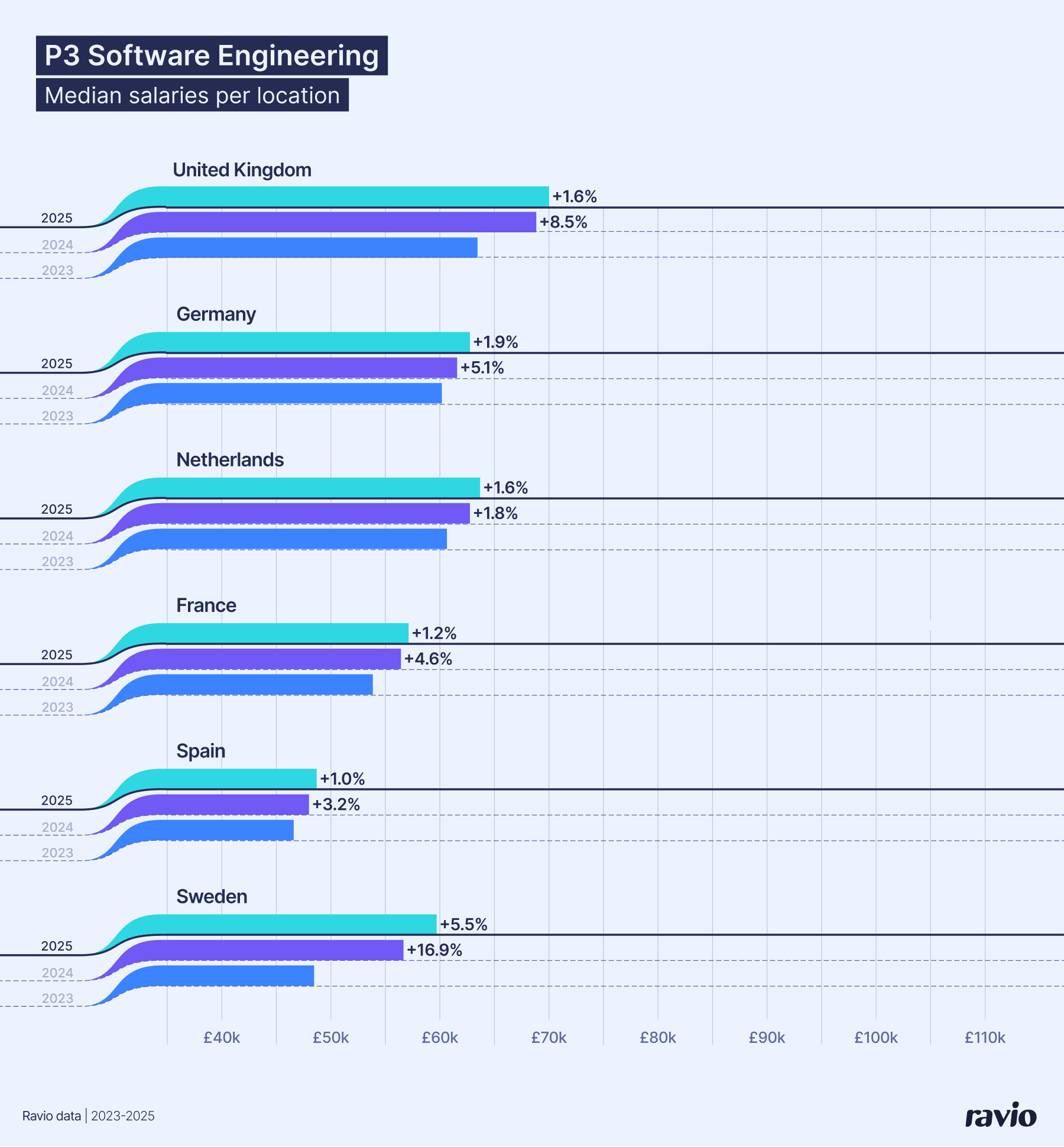
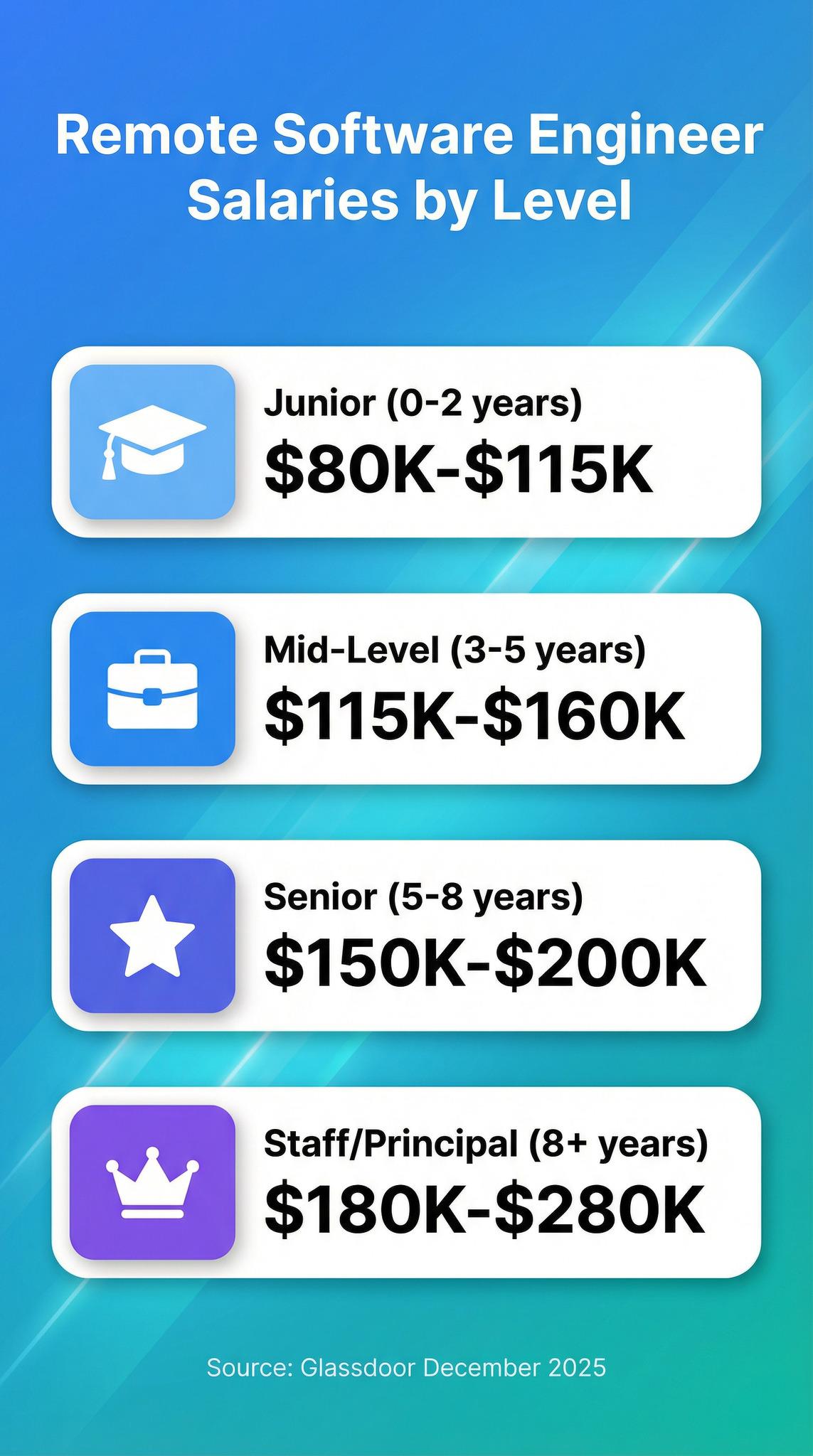
In 2026, the average annual salary for a software engineer typically ranges from $115,000 to $195,000, depending on location, specialization, and experience. While entry-level roles often begin near $85,000, senior-level specialists in high-demand fields like artificial intelligence and cloud architecture frequently command total compensation packages exceeding $300,000 in major technology hubs.
Understanding Total Compensation (TC) in 2026
When evaluating the annual salary of a software engineer, it is essential to distinguish between "base salary" and "total compensation" (TC). In the current 2026 labor market, the base salary is merely the foundation of a developer’s earnings. Total compensation encompasses several distinct financial components that can significantly alter the "take-home" value of a position.
Base Salary
The base salary represents the guaranteed cash an employer pays out over a 12-month period. This is the figure typically used to calculate raises, 401(k) matches, and life insurance benefits. In 2026, base salaries have stabilized following the volatility of the mid-2020s, reflecting a more mature tech economy that prioritizes sustainable growth over hyper-expansion.
Equity and Stock Options
For engineers at publicly traded companies (often referred to as "Big Tech" or the "MAMAA" group), a substantial portion of annual income arrives in the form of Restricted Stock Units (RSUs). In 2026, many firms have shifted away from the traditional four-year vesting schedule with a one-year "cliff" toward more frequent monthly or quarterly vesting cycles. This change reflects a commitment to talent retention in a competitive landscape. For startups, equity often comes as stock options, which carry higher risk but the potential for significant wealth creation upon a liquidity event.
Performance Bonuses and Signing Incentives
Annual bonuses are typically calculated as a percentage of the base salary, ranging from 5% to 20% for individual contributors. Furthermore, signing bonuses remain a common tool for attracting top-tier talent. These one-time payments are often used to offset "unvested equity" that a candidate might be leaving behind at a previous employer.
Salary Breakdown by Experience Level
Experience remains the most significant predictor of an engineer's annual salary. In 2026, the industry continues to use standardized leveling systems, though the specific titles may vary between organizations.
Junior/Entry-Level (L3/E3 Equivalent)
Entry-level engineers—those with zero to two years of experience—focus primarily on executing defined tasks and learning the codebase. As of 2026, the global average for entry-level roles sits between $85,000 and $120,000. In high-cost areas like San Francisco or New York, this can climb to $140,000 when including relocation assistance and signing bonuses.
Mid-Level (L4/E4 Equivalent)
With two to five years of experience, mid-level engineers are expected to work independently and contribute to system design. This tier sees a significant jump in compensation, with annual salaries typically ranging from $130,000 to $175,000. At this stage, the equity portion of the compensation package begins to represent a larger percentage of the total earnings.
Senior and Staff Levels (L5/L6+)
Senior engineers (5+ years) and Staff engineers (8+ years) are the strategic pillars of technical organizations. They manage complex architectural decisions and mentor junior staff. For these roles, base salaries often exceed $180,000, and total compensation can easily reach $250,000 to $450,000 at top-tier firms. Staff and Principal engineers are currently in high demand as companies seek to "do more with less," relying on highly experienced individuals to oversee automated systems.
The Geographic Impact on Software Engineering Pay
While remote work remains a fixture of the 2026 professional landscape, geography continues to play a vital role in determining annual salary. Most global technology firms now utilize "Geographic Pay Bands" to adjust compensation based on the local cost of living and labor market competition.
Tier 1 Markets (The Hubs)
Cities such as San Francisco, San Jose, New York, and Seattle remain the highest-paying regions. In these areas, the high cost of housing is partially offset by salaries that are often 20% to 40% higher than the national average. In 2026, a Senior Software Engineer in San Francisco may earn a base of $210,000, whereas the same role in a Tier 3 city might pay $155,000.
Emerging Tech Hubs
In 2026, we have seen the continued rise of "secondary" hubs like Austin, Denver, Raleigh-Durham, and Berlin. These cities offer a balance between high-quality engineering culture and a relatively lower cost of living compared to traditional hubs. Salaries here are competitive, often matching Tier 1 base pay while offering lower equity components.
Remote Work Adjustments
For engineers working fully remotely, compensation strategies have diverged. Some companies offer "location-agnostic" pay, providing the same salary regardless of the engineer's physical location. However, the majority of large employers in 2026 have moved toward a "Zone-Based" model. If an engineer moves from a high-cost area (Zone A) to a lower-cost area (Zone C), they may see a reduction in their annual salary, though their purchasing power often increases due to lower local expenses.
High-Paying Specializations and Tech Stacks
In 2026, not all programming languages or specializations are rewarded equally. The "AI Gold Rush" that defined the mid-2020s has matured into a sustained demand for specific technical expertise.
Artificial Intelligence and Machine Learning
Engineers specialized in Large Language Models (LLMs), Generative AI, and Machine Learning Operations (MLOps) command the highest premiums in 2026. Because these roles require a deep understanding of both high-level mathematics and scalable infrastructure, annual salaries for AI specialists often start 25% higher than those for generalist full-stack developers.
Cloud Infrastructure and Cybersecurity
As organizations continue to migrate to multi-cloud environments, Cloud Engineers and DevOps specialists remain essential. Similarly, the increasing complexity of global cyber threats has made Cybersecurity Engineering one of the most stable and high-paying niches. Engineers capable of securing distributed systems can expect annual salaries in the $160,000 to $220,000 range for mid-to-senior levels.
The Specialized Table: Salary by Role (2026 Estimates)
| Specialization | Entry-Level (TC) | Mid-Level (TC) | Senior-Level (TC) |
|---|---|---|---|
| AI/Machine Learning | $125,000 | $190,000 | $310,000+ |
| Cloud/DevOps | $105,000 | $165,000 | $260,000 |
| Full-Stack (Generalist) | $95,000 | $145,000 | $220,000 |
| Cybersecurity | $110,000 | $175,000 | $275,000 |
| Mobile (iOS/Android) | $100,000 | $150,000 | $230,000 |
| Embedded Systems | $98,000 | $155,000 | $240,000 |
Factors Influencing Salary Beyond Experience
While experience and location are the primary drivers of annual salary for software engineers, several other factors can influence the final offer.
- Educational Background: While "self-taught" engineers and bootcamp graduates remain common, a Master’s degree or PhD in Computer Science or specialized fields (like Data Science or Cryptography) still commands a premium in R&D-heavy organizations.
- Industry Vertical: Finance (FinTech), Defense, and Healthcare often pay higher base salaries to compensate for stricter regulatory environments and potentially less "glamorous" tech stacks compared to consumer-facing social media or gaming companies.
- Company Size and Funding: A Series B startup might offer a lower annual salary but a massive equity stake, whereas a Fortune 500 company will provide a high, stable salary with comprehensive benefits but less "upside" potential.
- Soft Skills and Leadership: In 2026, the "Lone Wolf" coder is less valuable than the "Collaborative Architect." Engineers who can communicate complex technical concepts to non-technical stakeholders or manage cross-functional teams often move into higher pay brackets faster.
Negotiation Strategies for 2026
Negotiating an annual salary in 2026 requires a data-driven approach. With the prevalence of salary transparency laws in many jurisdictions, engineers have more leverage than in previous decades.
To maximize an offer, candidates should focus on "Total Value" rather than just the base salary number. If a company cannot meet a base salary requirement, candidates often negotiate for a higher equity grant or a guaranteed performance bonus. Furthermore, specialized certifications in cloud platforms (like AWS or Azure) or security credentials can serve as powerful bargaining chips during the interview process.
The most successful negotiators in 2026 typically bring multiple offers to the table. Even if one's preferred employer offers a lower salary, having a secondary offer from a competitor can force a "market adjustment" that brings the annual compensation in line with expectations.
Frequently Asked Questions
How has the rise of AI impacted software engineer salaries in 2026?
AI has created a bifurcated market. Generalist roles that involve routine coding tasks have seen slower salary growth as automated tools increase individual productivity. Conversely, roles that involve building, maintaining, or fine-tuning AI models have seen record-breaking salary increases, with top-tier talent receiving offers that rival executive compensation.
Is a computer science degree still necessary for a high salary in 2026?
While not strictly necessary, a degree from a reputable institution provides a significant advantage in the "screening" phase of hiring. However, in 2026, demonstrated expertise through verified contributions to open-source projects or a portfolio of complex, deployed applications is often treated as equivalent to formal education for mid-career roles.
Which programming languages lead to the highest annual salaries?
In 2026, specialized languages like Rust and Go often command higher salaries due to their use in high-performance infrastructure and cloud systems. Python remains lucrative because of its dominance in AI and data science. While Java and C# are widely used, their salaries are generally more aligned with industry averages due to the large pool of available developers.
What is the "Big Tech" premium?
The "Big Tech" premium refers to the significantly higher total compensation offered by the world’s largest technology firms compared to mid-market companies. This premium is usually delivered through massive RSU grants. In 2026, an engineer at a MAMAA-level company can earn 30% to 50% more than an engineer with the exact same skills at a traditional non-tech enterprise.
How often do software engineers receive salary increases?
Most technology companies conduct annual performance reviews that result in merit-based raises, typically ranging from 3% to 7% for standard performance. However, the most significant "jumps" in annual salary—often between 15% and 25%—are achieved by being promoted to a higher internal level or by switching employers every 2 to 4 years.
Final Recommendation for Career Growth
To maximize your annual salary as a software engineer in 2026, focus on specialization. The era of the "generalist" developer is being challenged by AI-assisted coding tools. By mastering high-complexity domains such as distributed systems, AI infrastructure, or low-level systems programming in Rust, you position yourself as an "irreplaceable" asset. Additionally, staying informed about current market rates through platforms like Glassdoor and local labor statistics is crucial for ensuring your compensation remains competitive in a rapidly evolving economy.