Navigating Amtrak stations near Boston requires understanding the city's unique "two-hub" rail system. The primary stations serving the Boston metropolitan area are South Station (BOS), Back Bay (BBY), and North Station (BON), along with suburban stops at Route 128 (RTE) in Westwood and Anderson Regional Transportation Center (WOB) in Woburn.
Boston remains one of the most critical nodes in the United States rail network. As of 2026, the city serves as the northern terminus for the high-speed Acela and the workhorse Northeast Regional services. However, unlike many other major cities, Boston’s rail infrastructure is split geographically. Travelers must distinguish between the southern-facing routes that head toward New York and Washington, D.C., and the northern-facing routes that head toward Maine. Choosing the correct station depends entirely on your destination, your proximity to the city center, and your need for long-term parking or intermodal transfers.
Understanding the Boston Rail Split: North vs. South
The most critical fact for any traveler to grasp is that North Station and South Station are not physically connected by Amtrak tracks. This historical quirk of Boston’s infrastructure means that trains coming from the south (the Northeast Corridor) cannot pull into North Station, and trains coming from the north (the Downeaster) cannot pull into South Station.
If your itinerary involves arriving from New York City and transferring to a train to Portland, Maine, you will arrive at South Station and must navigate across the city—via the MBTA "T" (the Orange or Green lines) or a ride-share—to reach North Station. In 2026, while discussions regarding a North-South Rail Link continue in policy circles, travelers must still account for a 20-to-30-minute transfer time between these two major hubs.
1. Boston South Station (BOS)
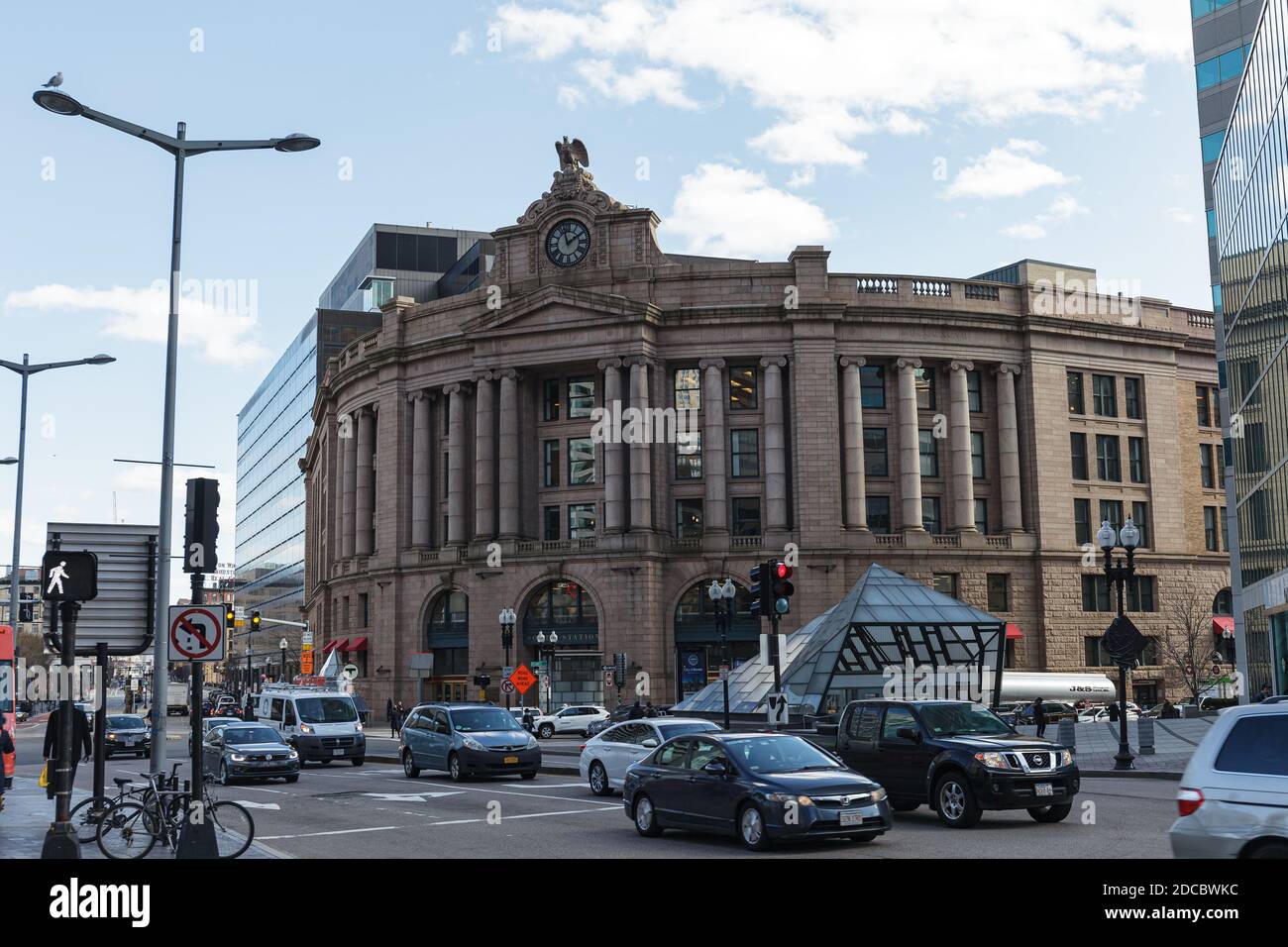
South Station is the busiest transit hub in New England and the primary Amtrak terminal for the city. Located at 700 Atlantic Avenue, it sits at the edge of the Financial District and the Seaport District.
Services and Routes
South Station serves as the terminus for:
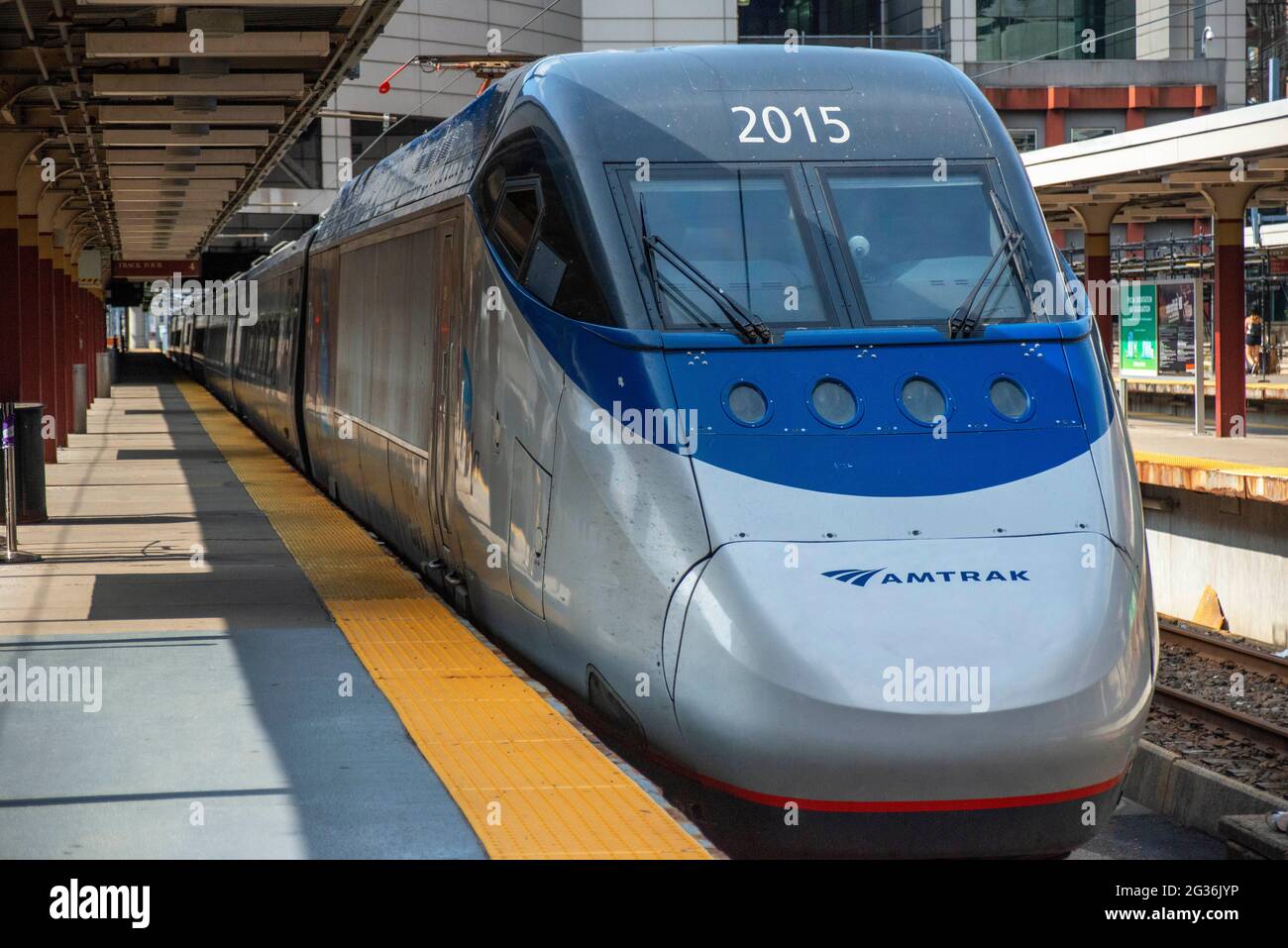
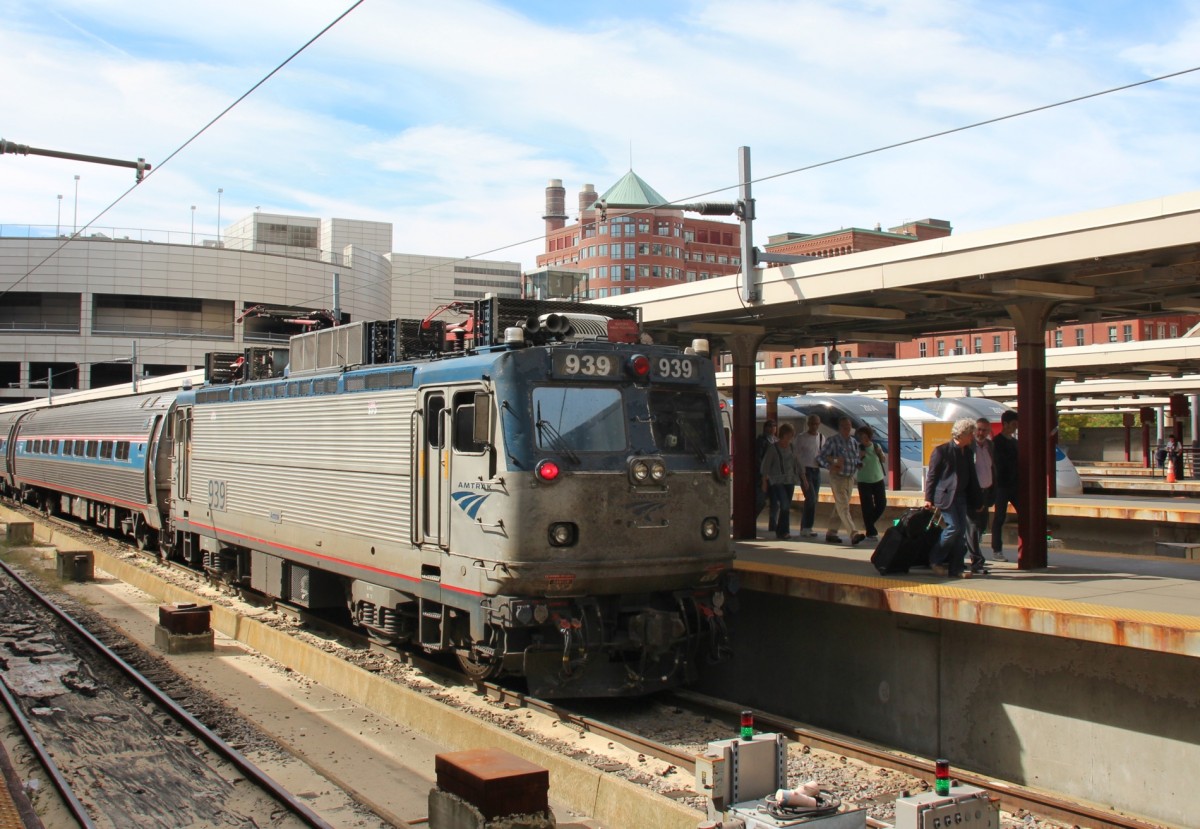
- Acela: The high-speed service connecting Boston to Providence, New Haven, New York, Philadelphia, and Washington, D.C.
- Northeast Regional: The standard service following the same route as the Acela but with more frequent stops.
- Lake Shore Limited: A long-distance route that travels west through Albany, New York, eventually terminating in Chicago.
Amenities and Facilities
As a major regional hub, South Station offers the most robust amenities. In 2026, the station continues to operate the Metropolitan Lounge, a premium waiting area for Acela First Class passengers and high-tier Amtrak Guest Rewards members. The lounge provides complementary refreshments, high-speed Wi-Fi, and private restrooms.
For general passengers, the main concourse features a large food court, newsstands, and a variety of quick-service dining options. The station is fully accessible under the Americans with Disabilities Act (ADA), featuring level boarding for most Amtrak trains.
Connecting Transit
South Station is an intermodal powerhouse. It connects directly to:
- MBTA Red Line: Access to Cambridge (MIT/Harvard) and Quincy/Braintree.
- MBTA Silver Line: Providing rapid transit bus service directly to Logan International Airport.
- Commuter Rail: Serving the southern and western suburbs.
- South Station Bus Terminal: Located adjacent to the rail platforms, this terminal hosts Greyhound, Peter Pan, and other regional bus carriers.
2. Back Bay Station (BBY)
Located at 145 Dartmouth Street, Back Bay Station is the secondary stop for almost all Amtrak trains arriving at or departing from South Station (with the exception of some Lake Shore Limited configurations).
Why Choose Back Bay?
Back Bay is often a more convenient choice than South Station for travelers staying in the South End, Back Bay neighborhood, or the Fenway area. It is significantly smaller and easier to navigate than South Station. If your destination is the Prudential Center, Copley Square, or the Hynes Convention Center, getting off at Back Bay will save you a 15-minute subway ride or a long walk from South Station.
Operational Notes
It is important to note that Back Bay is an intermediate stop. Unlike South Station, where trains may sit for 20 minutes before departure, trains at Back Bay stop only long enough to load and unload passengers. Travelers should be on the platform at least 10 minutes before the scheduled arrival. The platforms are underground, and the station can be quite drafty and industrial in feel compared to the historic grandeur of South Station.
3. Boston North Station (BON)
North Station, located beneath the TD Garden at 135 Causeway Street, is the exclusive home of the Downeaster service.
The Downeaster Route
If you are looking for Amtrak stations near Boston that head toward the North Shore or Maine, North Station is your only option. The Downeaster runs five daily round trips between Boston and Brunswick, Maine, with major stops in Woburn, MA; Exeter, NH; and Portland, ME.
Amenities and Access
North Station is integrated into the TD Garden complex. This means that on game nights (Boston Bruins or Celtics), the station becomes exceptionally crowded. The station offers a variety of bars, restaurants, and a large "Hub Hall" food hall nearby. However, there is no dedicated Amtrak Metropolitan Lounge at North Station.
4. Route 128 Station (RTE) – Westwood/Dedham
For those living in the suburbs or looking to avoid the congestion of downtown Boston, the Route 128 station in Westwood is a premier choice. It is located at the intersection of I-95 (Route 128) and University Avenue.
The "Park and Ride" Advantage
The primary draw of the Route 128 station is its massive multi-level parking garage. In 2026, this remains the most reliable place to park a vehicle for multi-day trips on the Northeast Corridor. Both Acela and Northeast Regional trains stop here, making it a "de facto" Boston station for travelers coming from the South Shore or the western suburbs.
Logistics
The station is relatively modern and features a climate-controlled waiting area and a small cafe. Because it serves both Amtrak and the MBTA Commuter Rail (Providence/Stoughton Line), it is essential to check the digital signage to ensure you are standing on the correct side of the platform for the high-speed tracks.
5. Anderson Regional Transportation Center (WOB) – Woburn
Just as Route 128 serves the southern suburbs, the Anderson Regional Transportation Center (RTC) serves the northern suburbs. Located in Woburn, near the intersection of I-93 and I-95, this station is a primary stop for the Downeaster.
Features and Benefits
Anderson RTC offers extensive long-term parking, making it much more convenient for Maine-bound travelers than North Station. It also serves as a hub for the Logan Express bus service, allowing passengers to park their cars and take a direct shuttle to Logan Airport, though this is a separate service from Amtrak.
Comparison of Amtrak Stations in the Boston Area
| Station Name | Code | Primary Routes | Best For... | Transit Connections |
|---|---|---|---|---|
| South Station | BOS | Acela, NE Regional, Lake Shore Limited | Downtown access, Logan Airport via Silver Line | Red Line, Silver Line, Bus Terminal |
| Back Bay | BBY | Acela, NE Regional, Lake Shore Limited | Copley Square, South End, Hynes Conv. Center | Orange Line, Green Line (nearby) |
| North Station | BON | Downeaster | Travel to NH and Maine, TD Garden events | Orange Line, Green Line |
| Route 128 | RTE | Acela, NE Regional | Suburban commuters, Easy long-term parking | I-95 access, Commuter Rail |
| Anderson RTC | WOB | Downeaster | North Shore residents, Maine-bound travelers | I-93/I-95 access, Logan Express |
Other Nearby Stations: Lake Shore Limited Stops
While the stations listed above are the primary "Boston" stops, the long-distance Lake Shore Limited makes two additional stops "near" Boston before heading into the Berkshires and New York State.
Framingham (FRA)
Located about 20 miles west of Boston, the Framingham station is a stop for the Lake Shore Limited. It serves the MetroWest region. However, note that the Acela and Northeast Regional trains do not stop here. This station is primarily an MBTA Commuter Rail hub (Framingham/Worcester Line).
Worcester Union Station (WOR)
While Worcester is its own city, many travelers in the western part of the Greater Boston area use Union Station to board the Lake Shore Limited. It is a beautifully restored historic station that offers a more manageable experience than the downtown Boston hubs for those living in Central Massachusetts.
Practical Logistics: Ticketing and Boarding in 2026
By 2026, Amtrak has fully integrated "touchless" boarding across the Boston network. Travelers are encouraged to use the Amtrak mobile app, which provides real-time gate information and boarding notifications.
Security and Arrival Times
Unlike airports, there are no TSA-style checkpoints for Amtrak in Boston. However, there is a visible security presence, including Amtrak Police and K-9 units. For South Station and North Station, arriving 30 minutes before departure is usually sufficient if you already have your e-ticket. If you need to check baggage (available only on the Lake Shore Limited and select Northeast Regional trains), you should arrive at least 45 minutes to an hour early.
Boarding at South Station
South Station uses a "gate" system. The track numbers are usually announced 10 to 15 minutes before departure. Acela passengers are often given priority boarding. If you are traveling on a Northeast Regional train, lines can form quickly near the gates, so staying alert to the overhead monitors is vital.
Common Mistakes to Avoid
- Mixing up North and South Stations: This is the most common error. Always double-check your ticket. If it says "Downeaster," you must go to North Station. If it says "Acela" or "Northeast Regional," you must go to South Station or Back Bay.
- Overlooking Back Bay: Many people automatically go to South Station because it is the "main" hub. However, if you are staying at a hotel like the Westin Copley or the Fairmont Copley Plaza, walking to Back Bay Station is much faster and saves you the stress of South Station's crowds.
- Parking Costs: Parking at South Station or North Station is prohibitively expensive for long trips. If you need to leave a car for several days, the Route 128 or Anderson RTC stations offer significantly better daily rates.
- The "T" Connection Time: If you are transferring between North and South Stations, do not assume a 5-minute trip. Even though they are less than a mile apart, waiting for a train and navigating the platforms usually takes 20 to 30 minutes.
Frequently Asked Questions
Which Amtrak station is closest to Logan Airport?
South Station is the closest Amtrak station to Logan International Airport. The MBTA Silver Line (SL1) picks up passengers directly at South Station and drops them off at all airport terminals. The trip typically takes 15 to 25 minutes depending on traffic.
Can I take an Amtrak train from North Station to South Station?
No. There is no direct Amtrak rail service between North Station and South Station. To travel between them, you must use the MBTA subway. Take the Orange Line from North Station to Downtown Crossing and walk (or transfer to the Red Line for one stop), or take a ride-share/taxi.
Is there long-term parking at the Boston Amtrak stations?
South Station and North Station have nearby parking garages (such as the South Station Bus Terminal Garage), but they are expensive and often full. For long-term travel, the dedicated Amtrak parking facilities at Route 128 (Westwood) or Anderson RTC (Woburn) are highly recommended due to their lower cost and direct platform access.
Does the Acela stop at North Station?
No. The Acela only operates on the Northeast Corridor, which terminates at South Station. The only Amtrak service at North Station is the Downeaster.
Are the stations in Boston safe at night?
Yes, Boston's Amtrak stations are generally very safe and well-patrolled by Amtrak Police and MBTA Transit Police. South Station remains open 24/7 for certain transit connections, though the main waiting areas have specific hours. As with any major urban hub, travelers should remain aware of their surroundings.
Summary of Recommendations
For the best experience when using Amtrak near Boston, follow these guidelines based on your specific needs:
- For Maine/New Hampshire travel: Go to North Station or Anderson RTC.
- For NYC/DC travel from downtown: Use Back Bay for convenience or South Station for more food options and the Metropolitan Lounge.
- For NYC/DC travel from the suburbs: Use Route 128 in Westwood to avoid city traffic and secure easy parking.
- For Chicago-bound travel: Use South Station or Worcester Union Station.
Before you depart, always verify your specific train's stops on the official Amtrak website or mobile app, as schedule adjustments in 2026 may occasionally alter intermediate stop patterns at Back Bay or Route 128.