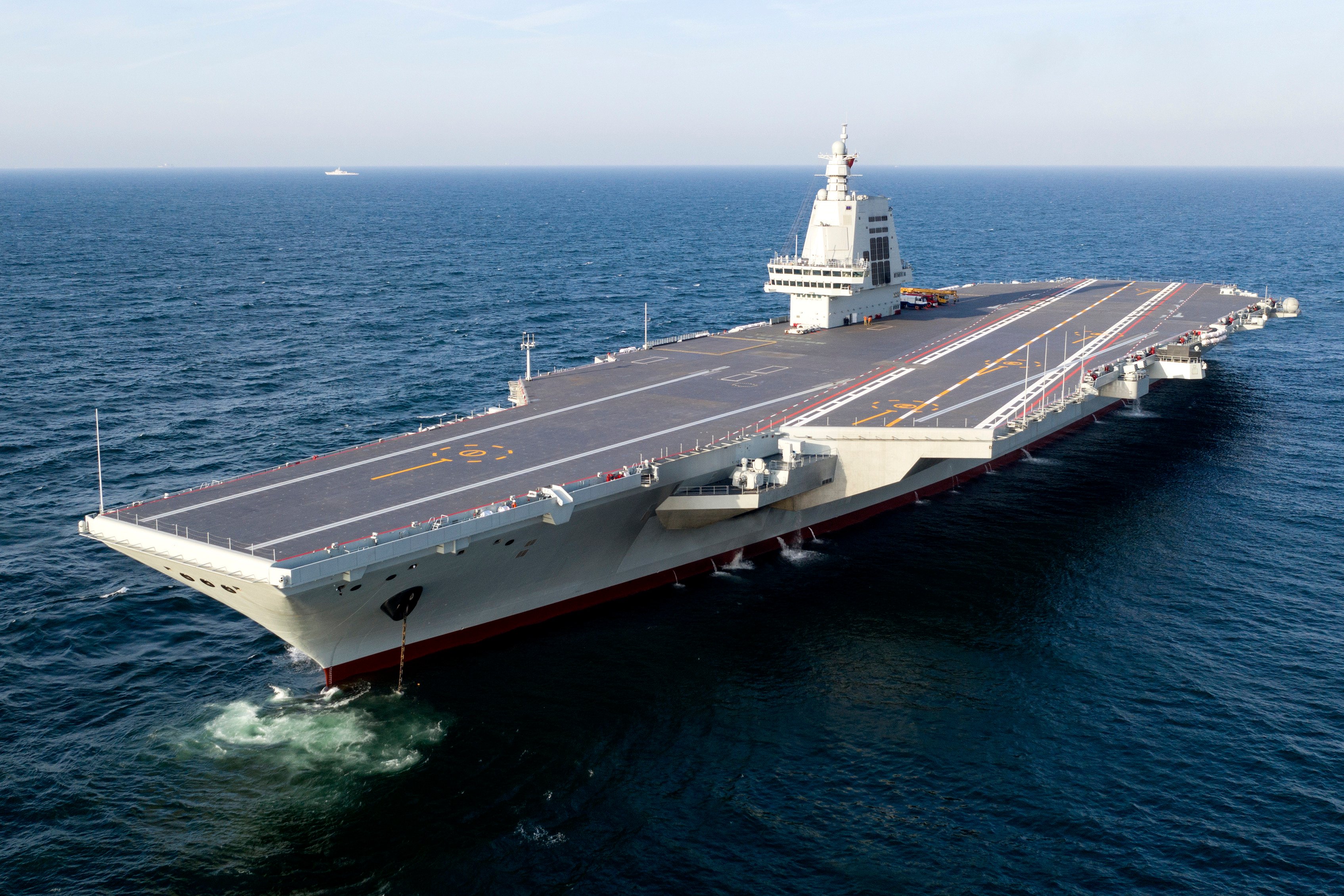
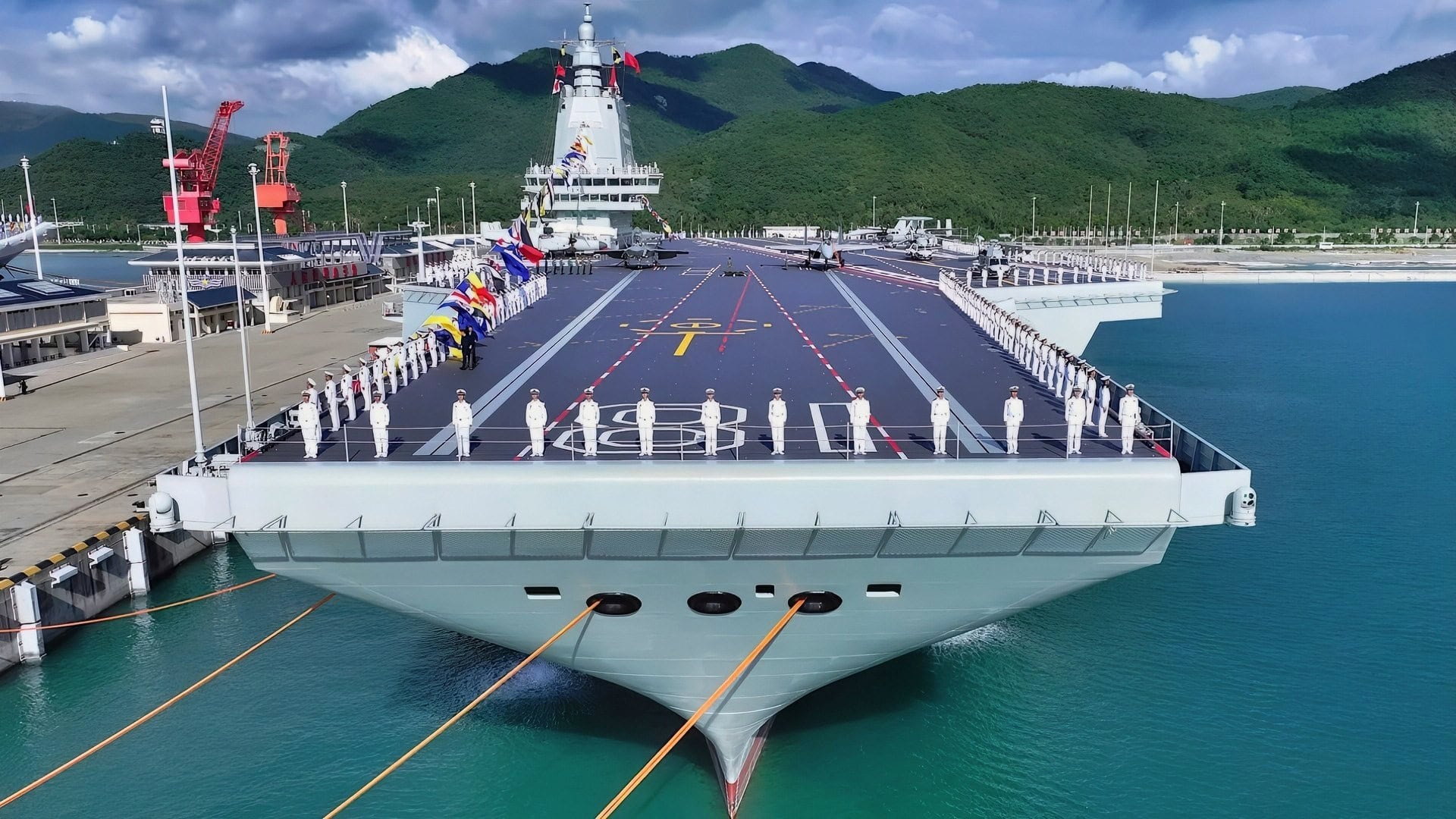
The People’s Liberation Army Navy (PLAN) currently operates a formidable trio of aircraft carriers: the Liaoning, the Shandong, and the Fujian. These vessels represent a decade-long transition from Soviet-era refurbishment and domestic design experimentation to the deployment of advanced, indigenous electromagnetic catapult-assisted launch systems, signaling a significant shift in China’s maritime power projection and naval doctrine.
Historical Context: From Procurement to Indigenous Design
The trajectory of China's aircraft carrier program began in the late 1990s and early 2000s, driven by the strategic requirement to protect "far seas" interests and assert influence within the First Island Chain. The foundational step was the acquisition of the Varyag, an unfinished Soviet Kuznetsov-class carrier, which was officially commissioned in 2012 as the Liaoning (CV-16).
The Liaoning served primarily as a floating laboratory and training platform, allowing the PLAN to master the complex art of carrier-based aviation, including deck operations, flight control, and the integration of the J-15 "Flying Shark" multirole fighter. The experience gained from the Liaoning provided the blueprint for the Shandong (CV-17), China's first domestically constructed carrier. Commissioned in 2019, the Shandong retained the ski-jump take-off configuration of its predecessor but incorporated improved hangar space, enhanced radar systems, and optimized deck layouts for more efficient sortie generation.
The Current Fleet: Technical Specifications and Capabilities
By 2026, the PLAN maintains a diverse carrier strike group capability. Each vessel represents a unique tier of technological maturity, reflecting the rapid pace of Chinese naval modernization.
Liaoning (CV-16)
The Liaoning utilizes a Short Take-Off But Arrested Recovery (STOBAR) configuration. This necessitates the use of a "ski-jump" ramp at the bow, which physically limits the takeoff weight of aircraft, as the planes must rely on their own engine thrust to achieve lift rather than being assisted by a catapult. While effective for air defense and limited strike sorties, it restricts the use of heavier airborne early warning and control (AEW&C) aircraft, forcing reliance on helicopters for this critical role.
Shandong (CV-17)
The Shandong refined the STOBAR concept. With a design refined for better internal organization, it features larger island structures for improved command and control, as well as updated sensor arrays. While its flight deck operations are fundamentally similar to the Liaoning, its throughput and operational availability are higher, serving as a pillar of China’s regional maritime posture.
Fujian (CV-18)
The Fujian represents a generational leap in Chinese naval aviation. Launched in 2022 and moving through its rigorous sea trial and commissioning phases toward full operational status by 2026, the Fujian utilizes a Catapult Assisted Take-Off But Arrested Recovery (CATOBAR) configuration. Crucially, it features an Electromagnetic Aircraft Launch System (EMALS). This technology allows for the launch of a wider variety of aircraft, including heavy aerial refuelers and advanced fixed-wing carrier-based AEW&C aircraft, significantly expanding the strike group's operational radius and situational awareness compared to the STOBAR predecessors.
Comparative Analysis of Carrier Configuration
The transition from STOBAR to CATOBAR is the most significant milestone in the development of Chinese carrier aviation. The following table highlights the functional differences between these platforms.
| Feature | Liaoning (CV-16) | Shandong (CV-17) | Fujian (CV-18) |
|---|---|---|---|
| Launch System | Ski-Jump (STOBAR) | Ski-Jump (STOBAR) | EMALS (CATOBAR) |
| Primary Fighter | J-15 | J-15B | J-15T / J-35 |
| AEW&C Support | Helicopter-based | Helicopter-based | Fixed-wing (KJ-600) |
| Primary Mission | Training / Regional | Regional Power | Deep-sea / Power Projection |
| Design Origin | Refurbished Soviet | Indigenous Evolution | Indigenous Advanced |
The Role of Carrier Air Wings
A carrier is only as effective as the air wing it carries. The J-15, based on the Sukhoi Su-33, has been the backbone of the carrier fleet. However, as of 2026, the introduction of the J-35—a carrier-compatible, stealthy twin-engine multirole fighter—marks a shift toward a more survivable and lethal air wing. The integration of the KJ-600 fixed-wing airborne early warning aircraft on the Fujian is equally critical, as it provides the long-range "eyes and ears" necessary for modern carrier strike group operations, allowing the fleet to detect threats far beyond the horizon.
Operational Doctrine and Strategic Objectives
The strategic deployment of these carriers is rooted in "Active Defense." While the Liaoning and Shandong are primarily utilized for presence and training in the South China Sea and the Western Pacific, the arrival of the Fujian enables the PLAN to contemplate more extended deployments.
The primary goal is the creation of a "Carrier Strike Group" (CSG) ecosystem. This includes not only the carrier itself but a protective screen of Type 055 destroyers (large, heavily armed guided-missile cruisers), Type 052D destroyers, and Type 901 fast combat support ships. This integrated approach is designed to ensure that the carrier is not an isolated asset but the center of a dense, multi-layered defensive and offensive network.
Maintenance, Logistics, and Sustainability
Operating an aircraft carrier is an exercise in immense logistical complexity. In 2026, China’s ability to sustain these vessels relies on a vast network of naval shipyards and specialized ports, most notably in Dalian and Shanghai.
- Dry-docking cycles: Carriers require regular maintenance for hull integrity and propulsion systems. China’s ability to cycle these ships through shipyards without leaving a total vacuum in naval coverage is a testament to the growth of its industrial base.
- Replenishment at Sea: The deployment of Type 901 replenishment ships allows for the transfer of fuel, ammunition, and provisions while underway. This capability is essential for sustaining long-term operations far from domestic homeports.
- Personnel Training: Beyond the hardware, the cultivation of a professional cadre of naval aviators and flight deck crews remains the most rigorous "prerequisite" for effective operation. The PLAN has shifted from experimental training programs to standardized, high-tempo curricula designed to maximize sortie rates.
Challenges and Limitations
Despite the rapid expansion, several challenges remain. The experience gap between the PLAN and established navies—such as the United States Navy, which has operated large-deck carriers for nearly a century—is a material factor in overall combat readiness. Tactical integration, especially in complex electronic warfare environments or coordinated strike operations, takes decades of institutional experience to perfect. Furthermore, the reliance on advanced electromagnetic systems like EMALS introduces new technical risks, where early-life reliability issues can temporarily sideline a multi-billion dollar asset.
Frequently Asked Questions
What is the main advantage of the EMALS system on the Fujian? The Electromagnetic Aircraft Launch System (EMALS) replaces traditional steam catapults. It allows for a more controlled acceleration, which reduces stress on airframes, and provides the ability to launch a wider range of aircraft, including heavier platforms that require more energy to reach takeoff speed, such as long-range AEW&C aircraft.
Are China’s carriers nuclear-powered? No. As of 2026, all three of China's operational aircraft carriers—the Liaoning, Shandong, and Fujian—are conventionally powered. This limits their operational range compared to nuclear-powered carriers, requiring more frequent replenishment of fuel during long-distance transits.
What aircraft currently operate from the Chinese carriers? The primary fighter remains the J-15 "Flying Shark." With the Fujian, the PLAN is integrating the J-35 stealth fighter and the KJ-600 airborne early warning aircraft, significantly upgrading the fleet's aerial capabilities compared to the older STOBAR-based groups.
How many aircraft can the carriers hold? The capacity varies by design. The Liaoning and Shandong generally accommodate around 30 to 40 aircraft, including fighters, helicopters, and AEW platforms. The Fujian, being a larger vessel, is expected to carry a larger air wing, likely exceeding 50 aircraft, with a more sophisticated mix of specialized platforms.
What is the strategic significance of the carrier groups? The carriers provide the PLAN with mobile, sovereign territory capable of projecting power into the deep ocean. They serve as the centerpiece for regional power projection, signaling, and, if required, offensive strike capabilities that can disrupt enemy maritime lines of communication.
Recommendations for Further Study
For those looking to track the operational status of these vessels, it is recommended to monitor official statements from the Ministry of National Defense of the People's Republic of China, as well as verified reporting from recognized maritime security analysts. Publicly available satellite imagery frequently confirms port movements and shipyard activities, providing the most accurate, real-time data on the status of individual hulls. Readers should remain cautious of speculative analysis regarding future carrier classes, as these often lack the verifiable evidence required for accurate strategic forecasting.