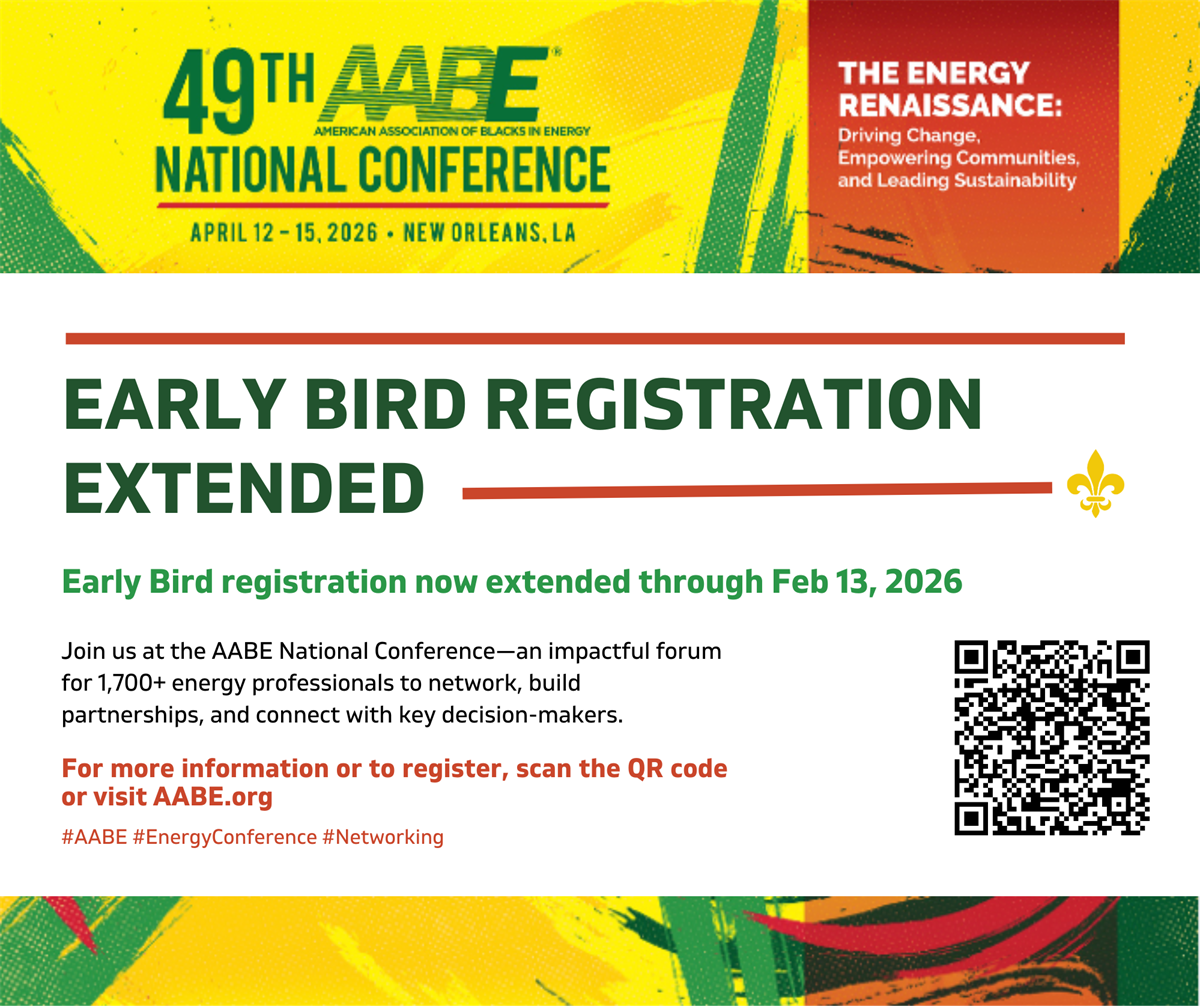
The AABE National Conference 2026 serves as the 49th annual gathering of the American Association of Blacks in Energy, bringing together industry leaders, policymakers, and professionals to address the evolving energy landscape. This year’s event focuses on the intersection of grid modernization, legislative implementation, and workforce inclusivity within the global transition to sustainable power.
The American Association of Blacks in Energy (AABE) has remained a cornerstone of the energy sector for nearly five decades. As we move through 2026, the organization’s role has shifted from general advocacy to a critical advisory capacity, ensuring that the benefits of the energy transition reach underserved communities. The 2026 National Conference represents a pivotal moment for the industry, occurring as major infrastructure projects funded in the early 2020s reach operational milestones and as the industry prepares for the monumental 50th-anniversary celebration in 2027.
Understanding the Mission of AABE in 2026
The American Association of Blacks in Energy is a national non-profit organization of energy professionals. Since its founding in 1977, AABE has dedicated itself to ensuring the input of African Americans and other minorities into the development and implementation of energy policies, research, and environmental strategies. In 2026, this mission is more relevant than ever as the "Just Transition" framework moves from a theoretical policy goal to a practical necessity for utility providers and government agencies.
The AABE National Conference is the organization's flagship event. It serves several distinct purposes:
- Policy Influence: Providing a platform for minority professionals to engage with officials from the Department of Energy (DOE) and the Federal Energy Regulatory Commission (FERC).
- Professional Development: Offering certified continuing education credits and leadership training for middle and senior management.
- Workforce Pipeline: Facilitating connections between energy corporations and the next generation of engineers, data scientists, and policy analysts through the Youth Summit and scholarship programs.
- Technical Exchange: Presenting peer-reviewed research on grid reliability, carbon sequestration, and decentralized energy resources (DERs).
AABE Conference 2026: Logistics and Attendance
The 49th Annual National Conference is scheduled for the spring of 2026. Historically, AABE rotates its conference locations to engage different regional chapters and highlight localized energy challenges, ranging from the petrochemical hubs of the Gulf Coast to the legislative centers of the East Coast.
Venue and Scheduling
The 2026 conference is hosted in Washington, D.C., a location chosen specifically to facilitate direct dialogue with federal lawmakers during a critical mid-term election year. By convening in the capital, AABE ensures that the voices of minority energy professionals are heard in the halls of Congress and within the various administrative agencies shaping 2027 fiscal budgets.
The event typically spans four days, structured to maximize both high-level plenary sessions and intimate breakout workshops.
- Day 1: Pre-Conference and Youth Summit. Focuses on student engagement and specialized technical workshops.
- Day 2: Opening Plenary and Policy Tracks. Features keynote addresses from the Secretary of Energy and CEOs of major utility companies.
- Day 3: Technical Sessions and Regional Meetings. Concentrates on the "How-To" of energy implementation and chapter-level strategy.
- Day 4: Closing Gala and Awards. Recognizes outstanding contributions to the industry and formalizes the transition of leadership for the coming year.
Registration Tiers and Eligibility
Attendance is open to AABE members and non-members alike, though members receive significant discounts on registration fees. In 2026, the registration structure remains tiered to encourage diverse participation:
| Registration Category | Description | Early Bird Rate (Approx.) | Standard Rate (Approx.) |
|---|---|---|---|
| Professional Member | Current members in good standing. | $850 | $1,050 |
| Non-Member | Includes a one-year introductory membership. | $1,150 | $1,350 |
| Student | Full-time undergraduate or graduate students. | $300 | $450 |
| Retiree | Former energy professionals with AABE status. | $500 | $600 |
| Government/Academic | Employees of public agencies or universities. | $750 | $900 |
Core Themes and Technical Tracks for 2026
The agenda for the 2026 conference is built around three primary pillars: Infrastructure Equity, Technological Sovereignty, and Legislative Accountability. Each pillar is explored through dedicated tracks that allow attendees to dive deep into their specific areas of expertise.
1. Infrastructure Equity and Grid Modernization
As the United States continues to overhaul its aging electrical grid, the 2026 conference emphasizes the "Last Mile" of energy delivery. This track examines how federal investments from the Infrastructure Investment and Jobs Act (IIJA) are being distributed. Discussions focus on preventing "energy deserts" and ensuring that low-to-moderate income (LMI) households are not left behind as utilities transition to smart meters and high-voltage direct current (HVDC) transmission lines.
Technical sessions in this track cover:
- Resilience and Reliability: Strategies for protecting the grid against extreme weather events, which have become increasingly frequent and severe.
- Microgrids and Community Solar: Case studies on community-owned energy assets that provide backup power and lower costs for urban neighborhoods.
- Electric Vehicle (EV) Infrastructure: Addressing the disparity in charging station placement in minority communities.
2. Technological Sovereignty and Innovation
This pillar addresses the role of minority-owned businesses and researchers in the development of new energy technologies. In 2026, the focus has shifted toward domestic supply chains and the "circular economy" of energy components.
Key areas of exploration include:
- Hydrogen Production: The viability of green hydrogen as a fuel source for heavy industry and its economic impact on localized labor markets.
- Artificial Intelligence in Utilities: How AI is being used to predict demand and manage load balancing, and the ethical implications of algorithmic decision-making in billing and service restoration.
- Battery Storage Solutions: Advances in long-duration energy storage (LDES) that are essential for making renewable energy a 24/7 reality.
3. Legislative Accountability and Economic Policy
With 2026 marking a decade since many major state-level renewable portfolio standards were established, this track provides a retrospective and a roadmap for future advocacy. AABE members work closely with the Congressional Black Caucus and other legislative bodies to ensure that energy tax credits and incentives remain accessible to minority entrepreneurs.
Specific legislative focuses for 2026 include:
- Tax Credit Monetization: Helping small businesses and non-profits navigate the complex landscape of "direct pay" and "transferability" for clean energy tax credits.
- Environmental Justice Mapping: Using tools like the EPA’s EJScreen to direct investment toward communities historically burdened by industrial pollution.
- Workforce Standards: Advocating for prevailing wage requirements and apprenticeship programs that create high-paying jobs within minority communities.
The Role of the Youth Summit and Student Engagement
A hallmark of the AABE National Conference is the concurrent Youth Summit. AABE recognizes that the energy transition will take decades to complete, requiring a steady influx of new talent. The 2026 Youth Summit is designed to demystify the energy sector for high school and college students.
Participants in the summit are given the opportunity to:
- Interact with Mentors: Students are paired with senior executives for "speed networking" sessions.
- Participate in Case Competitions: Teams work to solve a hypothetical energy crisis, presenting their solutions to a panel of judges for scholarship prizes.
- Explore Careers Beyond Engineering: The summit highlights roles in energy law, communications, finance, and data analytics, showing that the "energy professional" title is not limited to STEM fields.
The AABE scholarship program also reaches its peak during the conference. In 2026, the organization is expected to award over $300,000 in regional and national scholarships, funded by corporate partners and individual member donations. This financial support is vital for maintaining a diverse talent pipeline in an industry that has historically lacked minority representation at the executive level.
Networking and the Business of Energy
Beyond the formal sessions, the AABE National Conference 2026 provides a robust marketplace for business-to-business (B2B) engagement. The Exhibit Hall features major utility providers (such as Exelon, Southern Company, and Duke Energy), technology firms, and consulting groups.
For minority-owned business enterprises (MBEs), the conference is a critical venue for supplier diversity matchmaking. Many large utility companies host "Meet the Buyer" sessions where MBEs can learn about upcoming procurement opportunities and the specific certifications required to bid on multi-million dollar contracts. These interactions are not merely performative; they are essential for meeting the diversity requirements often mandated by state regulatory commissions.
Preparing for the 2026 Conference: Best Practices for Attendees
To maximize the value of the AABE National Conference, attendees should prepare well in advance of the spring event.
- Review the Preliminary Agenda: The full schedule is typically released three months prior. Identify which technical tracks align with your current role or career aspirations.
- Update Professional Profiles: The AABE conference app facilitates networking. Ensure your professional bio and contact information are current within the app to connect with other attendees effectively.
- Coordinate with Regional Chapters: AABE is a chapter-based organization. Many chapters organize group travel and pre-conference briefings to discuss regional priorities that they wish to elevate to the national level.
- Engage in the Legislative Day: If participating in the D.C. fly-in or legislative visits, research your local representatives' voting records on energy and environmental issues via the Congress.gov portal.
Frequently Asked Questions
Is the AABE National Conference 2026 open to non-members?
Yes, the conference is open to all professionals, students, and advocates interested in the energy sector. While non-members pay a higher registration fee, the cost often includes a one-year membership to the association, allowing new attendees to access AABE resources and local chapter events year-round.
How can companies become sponsors for the 2026 event?
Sponsorship opportunities are typically handled through the AABE National Office. Corporations can sponsor specific tracks, the Youth Summit, or social events like the Closing Gala. Sponsorship provides high visibility among a concentrated group of top-tier minority energy talent and decision-makers. Interested parties should contact the AABE development team at least six months prior to the conference.
Are there virtual attendance options for 2026?
Following the industry trends of the mid-2020s, AABE offers a "Hybrid Experience" for the 2026 conference. While the core networking and site visits are in-person, key plenary sessions and select technical workshops are streamed live for virtual ticket holders. This ensures that professionals with travel restrictions or smaller professional development budgets can still benefit from the conference's educational content.
What is the attire for the conference?
The standard attire for the daytime sessions and workshops is business professional. The Closing Gala is a formal event, typically requiring black-tie or formal evening wear. Attendees should also bring comfortable walking shoes for any off-site technical tours or legislative visits.
Can students apply for travel grants?
AABE provides a limited number of travel stipends for students who have been selected to participate in the National Youth Summit or who are regional scholarship winners. Students should check with their local AABE chapter or the national student relations committee for application deadlines and eligibility criteria.
Future Outlook: Moving Toward the 50th Anniversary
As the 2026 conference concludes, the organization will shift its focus toward 2027, which marks the 50th anniversary of AABE. The work done during the 2026 sessions in Washington, D.C., establishes the policy foundation for this milestone. The commitment to energy equity, professional excellence, and the mentorship of the next generation remains the driving force behind the association.
Attendees leaving the 2026 conference are encouraged to take the strategies learned back to their respective companies and chapters. Whether it is implementing a new community engagement model or advocating for more inclusive procurement practices, the "AABE effect" is measured by the tangible changes professionals implement in their home jurisdictions.