Finding reliable auto insurance in Clarksville, Tennessee, requires balancing the state’s mandatory financial responsibility laws with the specific needs of your vehicle and personal financial situation. Major national carriers dominate the local landscape, offering competitive premiums, digital claims management, and varied discount structures that cater to the unique driving profile of Montgomery County residents.
Understanding Tennessee’s Insurance Requirements
Before selecting a provider, you must understand what Tennessee law mandates. As of 2026, Tennessee operates under a "tort" system, meaning the driver at fault for an accident is responsible for the damages. To operate a vehicle legally on public roads, you must maintain minimum liability insurance.
The state-mandated minimums are:
- $25,000 for bodily injury per person.
- $50,000 for total bodily injury per accident.
- $25,000 for property damage per accident.
While these minimums satisfy the legal requirement, financial experts often recommend higher limits, particularly because the cost of medical care and vehicle repairs in 2026 frequently exceeds these amounts. Choosing the "top" option often involves weighing how much coverage you want above these baseline requirements.
Evaluating Top Auto Insurance Options in Clarksville
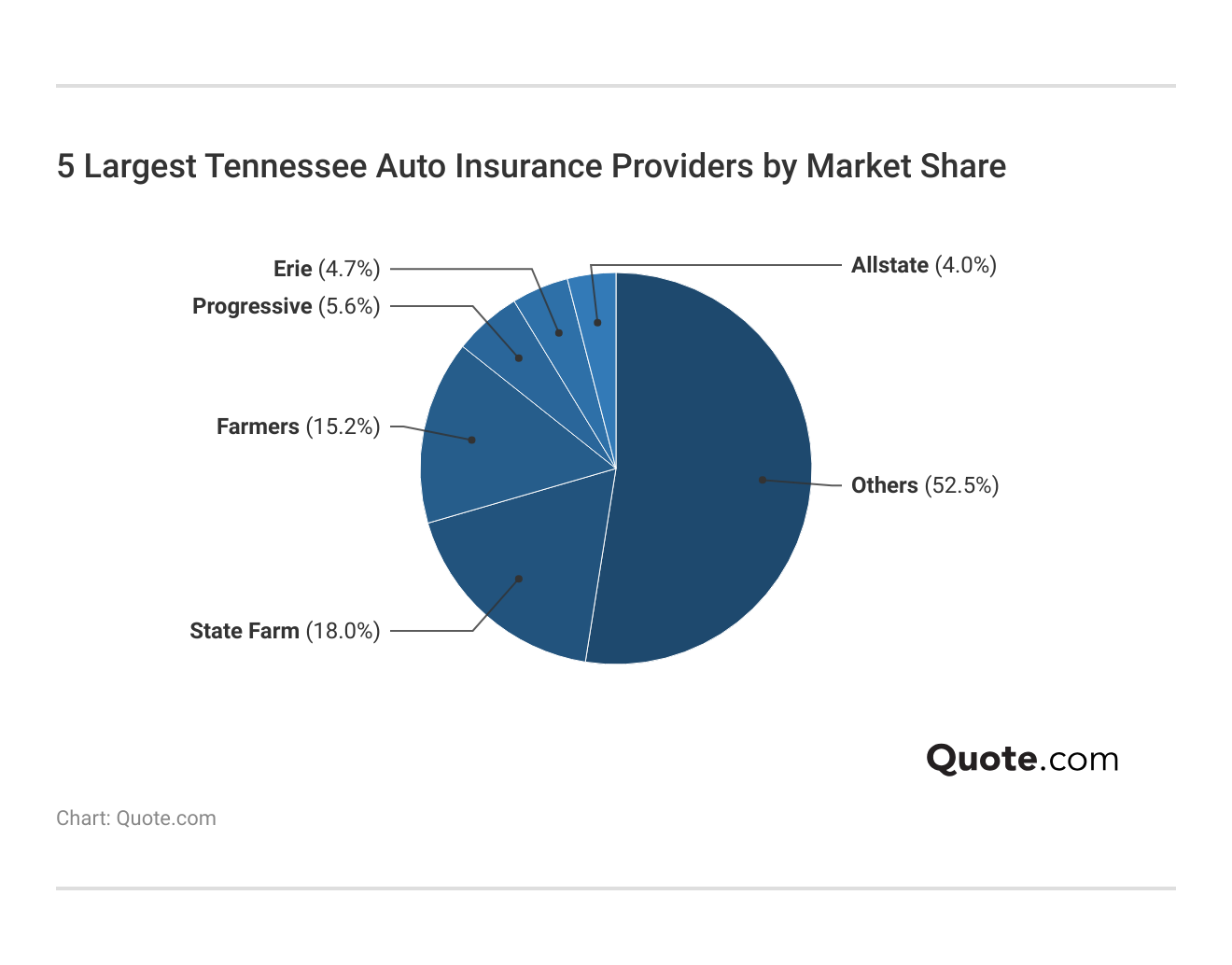
The following five companies consistently rank highly in Tennessee based on national market share, consumer satisfaction ratings, and the availability of local representation in the Clarksville area.
1. State Farm
State Farm maintains a significant presence in Clarksville. Its business model relies heavily on a network of dedicated local agents, which provides a distinct advantage if you prefer face-to-face service or assistance with complex claims. They are frequently noted for their "Drive Safe & Save" telematics program, which uses mobile data to adjust premiums based on actual driving behavior.
2. GEICO
GEICO is widely recognized for its streamlined digital-first approach. For Clarksville residents who prioritize convenience and mobile app functionality, GEICO offers a robust platform for policy management, billing, and rapid claims reporting. Their pricing model is often aggressive for clean driving records, making them a top choice for cost-conscious consumers.
3. Progressive
Progressive is often the preferred choice for drivers who have had a lapse in coverage or a history of minor traffic violations. Their "Name Your Price" tool allows users to toggle coverage options to see how specific changes affect their monthly premiums. Additionally, they offer robust umbrella coverage options for those looking to protect high-value assets.
4. Allstate
Allstate distinguishes itself through its extensive range of discount opportunities. Beyond standard safe-driver discounts, they provide incentives for new cars, multiple policies, and even student-related discounts for those with dependents in school. Their "Milewise" program is particularly relevant for residents who work from home or do not commute daily, as it ties premiums directly to mileage.
5. USAA
For Clarksville’s large military and veteran population—driven by the proximity to Fort Campbell—USAA is a premier choice. Availability is restricted to military members, veterans, and their families. Their customer service ratings typically outperform those of other major carriers, and they offer specific protections tailored to military life, such as storage discounts for deployed personnel.
Comparative Summary of Provider Characteristics
| Provider | Primary Strength | Best For |
|---|---|---|
| State Farm | Local Agent Network | Personal Service |
| GEICO | Digital Interface | Price & Convenience |
| Progressive | Flexible Customization | High-Risk Profiles |
| Allstate | Extensive Discounts | Bundled Policies |
| USAA | Military Focus | Veterans & Families |
Factors Influencing Your Premium in Clarksville
Your premium in 2026 is not determined solely by the insurance provider you choose. Several variables unique to you and your vehicle will shift the final quote significantly:
- Driving History: A history of at-fault accidents or traffic citations will increase your risk profile. Most insurers look back three to five years.
- Vehicle Specifications: The cost to repair your vehicle, its safety rating, and its susceptibility to theft all influence the comprehensive and collision portion of your policy.
- Coverage Limits: Opting for higher liability limits—often referred to as "full coverage"—increases your monthly cost but provides substantial protection against lawsuits and out-of-pocket expenses.
- Credit History: In Tennessee, insurers are permitted to use credit-based insurance scores to help determine premiums. Maintaining a healthy credit profile can result in lower rates.
- Deductibles: Choosing a higher deductible (the amount you pay out-of-pocket before insurance kicks in) can lower your monthly premium, but you must ensure you have the funds available in the event of a claim.
Steps to Securing the Best Policy
- Assess Your Needs: Determine if you need basic liability or if you require full coverage (comprehensive and collision) to protect an financed or leased vehicle.
- Gather Documentation: Have your driver’s license number, Vehicle Identification Number (VIN), and current mileage ready before requesting quotes.
- Request Multiple Quotes: Use the online portals of at least three of the top providers listed above. Because algorithms vary, one company may offer a better rate based on your specific demographic.
- Verify Agent Credentials: If you choose a carrier with local agents, verify their licensing status through the Tennessee Department of Commerce and Insurance.
- Review the Policy Annually: Life changes—such as a new address, a change in commute distance, or a new driver in the household—should trigger a policy review every 12 months.
Frequently Asked Questions
Does living in Clarksville affect my insurance rate compared to other Tennessee cities? Yes. Insurance companies utilize "rating territories." Factors like local traffic density, historical accident data in Montgomery County, and local vehicle theft rates are used to calculate the risk specific to your zip code.
What is the difference between comprehensive and collision coverage? Collision coverage pays to repair your vehicle if you hit another car or object. Comprehensive coverage handles damages caused by events outside of your control, such as theft, vandalism, fire, or hitting a deer, which is a common concern in suburban Tennessee areas.
Can I get a discount for bundling policies? Yes. Most major carriers provide significant discounts if you bundle your auto insurance with homeowners or renters insurance. It is highly recommended to ask for this discount during the quoting process.
Are there specific discounts for safe driving in 2026? Almost all major carriers now offer telematics programs. By installing an app or a plug-in device that monitors your acceleration, braking, and speed, you can qualify for lower premiums if you demonstrate consistent safe driving habits over a set period.
What should I do if I’m involved in an accident in Clarksville? First, ensure the safety of all parties and call 911 if there are injuries. Exchange insurance information with the other driver and take photos of the scene. Report the incident to your agent or via your insurer's mobile app as soon as possible. Professional legal or financial advice should be sought if the accident involves significant damages or liability disputes.
Final Recommendation
The "best" insurance option is subjective and depends on your current life stage and financial priorities. If you are a military member, begin your search with USAA to leverage their specialized member rates. For those who prioritize a local relationship, start with a consultation at a State Farm office. Regardless of your choice, ensure you compare "apples-to-apples" coverage limits across all quotes to ensure you are not sacrificing necessary protection just to achieve a lower monthly premium.