In 2026, payday loans in Cleveland are significantly more affordable than they were prior to state-level reforms, but they remain high-cost financial products. Under current Ohio law, interest is capped at 28% APR, though monthly maintenance fees and loan origination charges can increase the effective cost. While safer than the triple-digit interest rates of the past, these loans are only "affordable" when compared to predatory lending or cascading bank overdraft fees.
Determining whether a payday loan is a viable option in Northeast Ohio requires a deep dive into the specific fee structures permitted by the Ohio Fairness in Lending Act. While the term "payday loan" is still used colloquially, most short-term credit in Cleveland now functions as "short-term installment loans," which offer longer repayment periods and more structured paths to debt resolution than the old two-week models.
The Evolution of Short-Term Lending in Cleveland
To understand the affordability of a loan in Cleveland today, one must look at the regulatory environment that shapes the market. Before 2019, Ohio was notorious for having some of the most expensive payday loans in the United States, with average annual percentage rates (APRs) often exceeding 400%. Borrowers in Cleveland neighborhoods like Old Brooklyn or Glenville frequently found themselves trapped in a cycle where they had to take out a second loan just to pay the interest on the first.
The legislative landscape changed with the implementation of the Ohio Fairness in Lending Act. As of 2026, this law remains the primary safeguard for Cleveland consumers. It transformed the industry from a "predatory" model to a "high-cost installment" model. The key shift was the move away from the 14-day "balloon payment" structure toward a minimum 91-day term for many loans, giving residents of the Land more time to balance their budgets between payments.
The 28% Interest Rate Cap Explained
The headline figure for affordability in Cleveland is the 28% interest rate cap. By law, no licensed short-term lender in Ohio can charge more than 28% in stated interest. However, "affordability" is a relative term because the interest rate is not the only cost associated with the loan.
Lenders are permitted to charge additional fees that, while regulated, can drive the effective APR much higher than the 28% sticker price. When evaluating a loan from a storefront on Euclid Avenue or an online lender operating in the city, you must factor in the following:
- Monthly Maintenance Fees: Lenders may charge up to 10% of the original loan amount or $30 per month, whichever is less.
- Loan Origination Fees: For loans of $500 or more, lenders can charge a one-time fee of 2% of the loan amount.
- Total Cost Cap: Crucially, the total of all interest and fees cannot exceed 60% of the original loan amount.
Breaking Down the Math: What Does a Cleveland Loan Cost?
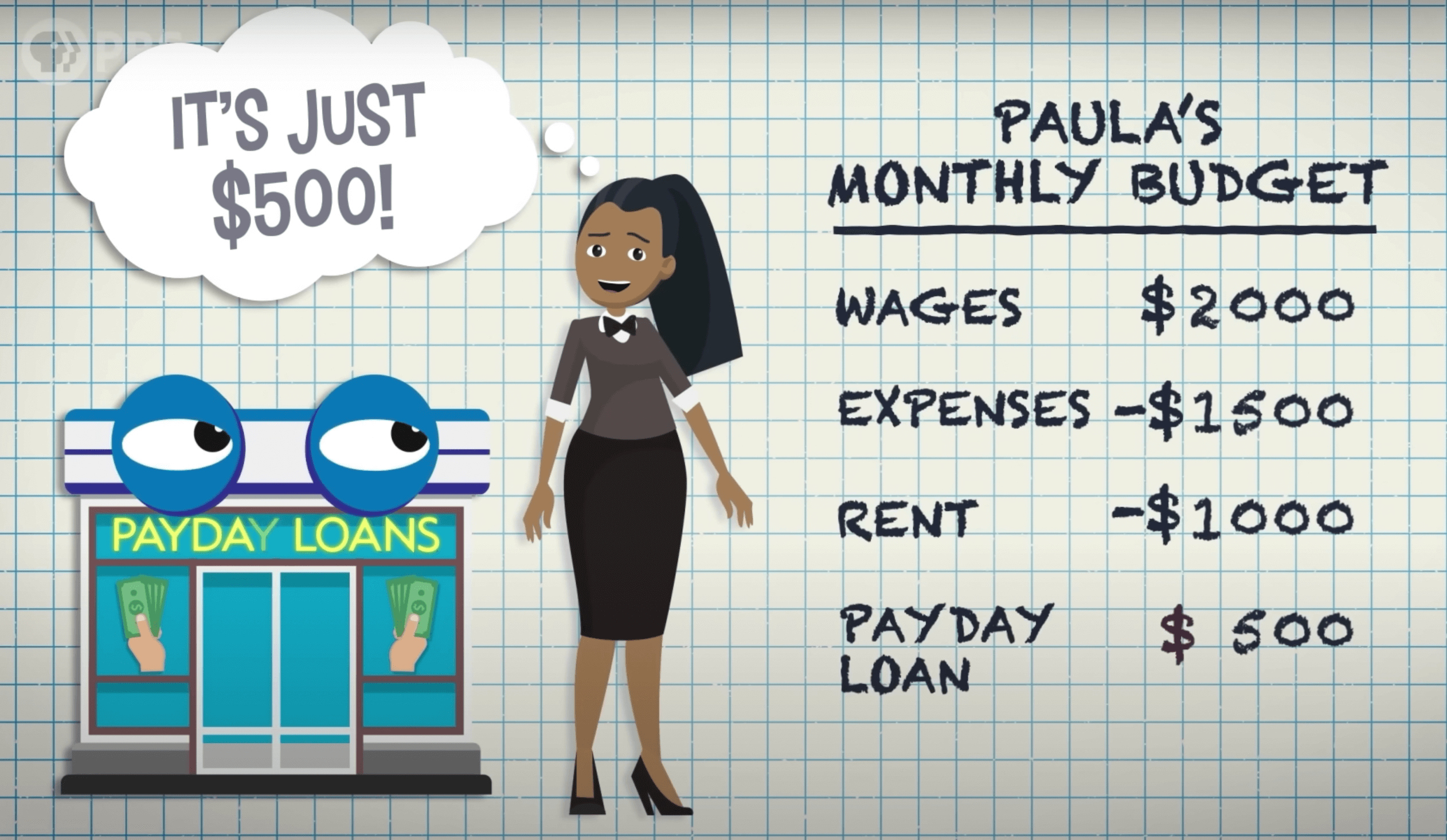
To determine if these loans are affordable for your specific situation, it is helpful to look at a concrete example. Suppose a Cleveland resident needs $500 to cover an unexpected car repair. Under the current 2026 regulations, the repayment structure would likely look like this:
Example: A $500 Loan Over Four Months
- Principal: $500
- Stated Interest (28% APR): Approximately $23.33 over 90 days.
- Monthly Maintenance Fees ($30/month): $90.00 total.
- Total Repayment: $613.33.
In this scenario, the borrower is paying back roughly $113 for the privilege of borrowing $500 for three months. While this is significantly cheaper than the $15 per $100 typical of older payday models (which would have cost hundreds more in renewals), it still represents a high cost of capital. For many Cleveland households living paycheck to paycheck, finding an extra $113 in the budget can be a challenge, though it is far more manageable than the debt traps of the previous decade.
Comparison of Loan Costs in Cleveland (2026)
| Loan Amount | Term Duration | Max Interest (28%) | Max Monthly Fees | Max Total Cost | Total Repayment |
|---|---|---|---|---|---|
| $300 | 90 Days | $14.00 | $90.00 | $104.00 | $404.00 |
| $500 | 120 Days | $31.11 | $120.00 | $151.11 | $651.11 |
| $1,000 | 180 Days | $93.33 | $180.00 | $273.33 | $1,273.33 |
Note: Calculations are estimates based on maximum allowable fees under Ohio law. Actual costs may vary slightly based on the lender's specific fee structure and the exact number of days in the loan term.
Eligibility and Prerequisites for Cleveland Borrowers
If you decide that the cost is manageable, you must meet specific state-mandated criteria to qualify. Cleveland lenders are required to verify your ability to repay the loan to prevent the "debt cycle" that previously plagued the city.
Income and Debt-to-Income Requirements
The most significant barrier to affordability is the state-mandated "ability to repay" test. Lenders must ensure that your total monthly payments for all short-term loans do not exceed 6% of your gross monthly income, or 7% of your net income, whichever is more. This means if you earn $3,000 a month (gross), your maximum monthly loan payment cannot exceed $180. This rule is designed to ensure that the loan is actually affordable within the context of your other living expenses, such as rent in Ohio City or utilities from Cleveland Public Power.
Necessary Documentation
To apply for a short-term loan in Cleveland, whether in-person or online, you will generally need:
- Proof of Identity: A valid Ohio driver’s license or state ID.
- Proof of Residency: A utility bill or lease agreement with a Cleveland-area address.
- Income Verification: Recent pay stubs, bank statements, or proof of government benefits.
- An Active Checking Account: Most lenders require a bank account to deposit funds and schedule electronic repayments.
Are There More Affordable Alternatives in Cleveland?
Before committing to a payday loan, Cleveland residents should explore local alternatives that are often significantly cheaper. The city has a robust network of credit unions and non-profit organizations dedicated to financial wellness.
Credit Union Payday Alternative Loans (PALs)
Local credit unions, such as the Credit Union of Ohio or Seven Seventeen Credit Union, often offer Small Amount Loans or PALs. These are designed specifically to compete with payday lenders. The interest rates are usually capped at 28% by federal regulation for federal credit unions, but they lack the heavy monthly maintenance fees that commercial payday lenders charge. A $500 loan from a credit union might cost only $15-$25 in total interest and fees, compared to over $100 at a payday storefront.
The Hebrew Free Loan Association of Cleveland (HFLA)
For those in genuine crisis, the HFLA of Northeast Ohio provides interest-free loans to residents who have a co-signer and a demonstrated need. While the application process is more rigorous than a 15-minute payday loan application, the "affordability" is unbeatable—you only pay back what you borrowed, with zero interest or fees.
Employer-Based Advance Programs
Several major employers in the Cleveland area, including those in the healthcare and manufacturing sectors, have partnered with platforms like EarnIn or DailyPay. These services allow workers to access wages they have already earned before payday for a small flat fee or even for free. This is almost always more affordable than a traditional payday loan because it is not technically a "loan" but an advance on earned income.
Identifying and Avoiding Illegal Lending Practices
While the Ohio Fairness in Lending Act has cleaned up much of the industry, Clevelanders must still be wary of "offshore" or "tribal" lenders who claim they do not have to follow Ohio's 28% cap. These lenders often operate online and target residents in high-need areas.
Red Flags of Predatory Lending
- Interest Rates over 28%: If a lender quotes an APR of 100%, 300%, or 700%, they are operating illegally in the state of Ohio.
- Balloon Payments: Any loan that requires the full principal and interest to be paid back in a single lump sum in less than 91 days (unless the payment is less than 7% of your monthly income) is likely violating state law.
- No Credit or Income Check: Lenders who do not ask for any proof of income are likely not following the "ability to repay" statutes designed to protect you.
- Upfront Payment Demands: Legal lenders in Cleveland will never ask you to pay a "processing fee" via a gift card or wire transfer before granting a loan.
If you encounter a lender in Cleveland that appears to be violating these rules, you should contact the Ohio Department of Commerce, Division of Financial Institutions. They are the regulatory body responsible for licensing and overseeing short-term lenders in the state.
Practical Steps for Managing a Short-Term Loan
If you find that a payday loan is your only option, following a strict management plan can ensure it remains as affordable as possible.
- Borrow the Minimum Amount: Just because you qualify for $1,000 doesn't mean you should take it. Borrow only what is necessary to cover the immediate emergency.
- Read the Disclosure: By law, the lender must provide a written disclosure of the APR and the total cost of the loan in dollars. Review this document carefully before signing.
- Pay Early if Possible: Ohio law prohibits prepayment penalties. If you get your tax refund or a work bonus, pay off the loan immediately to save on interest and monthly maintenance fees.
- Set Up Alerts: Ensure you have enough money in your account for the scheduled withdrawal. A $35 overdraft fee from your bank on top of a payday loan payment can quickly destroy the "affordability" of the credit.
FAQs About Cleveland Payday Loans
Can I have more than one payday loan at a time in Cleveland?
Technically, Ohio law allows you to have multiple loans, but the "6% of gross income" rule makes it very difficult to qualify for more than one simultaneously. Most reputable lenders will see your existing debt on the state’s tracking database and deny a second loan if it puts your total monthly payments over the legal threshold. This is a safety feature intended to prevent the debt spiral that was common in the early 2010s.
What happens if I can't pay back my loan on time?
In 2026, Ohio law provides certain protections for borrowers who default. Lenders are generally limited in the fees they can charge for a bounced check or a late payment. Furthermore, legal payday lenders in Cleveland cannot threaten you with jail time. Debt collection is a civil matter. If you cannot pay, the best course of action is to contact the lender to discuss a payment plan or seek credit counseling from a local non-profit like Apprisen.
Are online payday loans different from storefronts in Cleveland?
Both online and storefront lenders must be licensed by the State of Ohio to operate legally in Cleveland. If an online lender is licensed, they must follow the same 28% interest cap and 60% total cost cap as the physical store on Lorain Avenue. If an online lender is not licensed in Ohio, they are operating illegally, and their contracts may be unenforceable. Always verify a lender's license via the Ohio Department of Commerce website.
How does a payday loan affect my credit score?
Most short-term lenders in Cleveland do not report on-time payments to the major credit bureaus (Equifax, Experian, TransUnion). This means taking out a payday loan usually won't help you build credit. However, if you default on the loan and it is sold to a debt collector, that collection account will likely appear on your credit report and significantly damage your score.
Is there a "cooling off" period between loans?
While there isn't a mandatory "cooling off" period defined by a set number of days for everyone, the total cost cap effectively acts as one. Since you cannot pay more than 60% of the loan amount in interest and fees, and lenders must verify your income, the system is designed to prevent "flipping" a loan—immediately taking out a new loan to pay off an old one.
Final Recommendation for Cleveland Residents
While payday loans in Cleveland are more affordable in 2026 than in previous decades, they should remain a last resort. The combination of a 28% interest rate and monthly maintenance fees still results in an effective APR that is much higher than a standard credit card or a personal loan from a credit union.
Before applying, residents should check their eligibility for interest-free loans through the Hebrew Free Loan Association or contact United Way 2-1-1 Cleveland to see if there are local emergency assistance programs that can cover utility or rent costs without the need for debt. If you must use a payday loan, ensure the lender is Ohio-licensed, borrow only what is essential, and prioritize paying the balance off ahead of schedule to minimize fee accumulation.