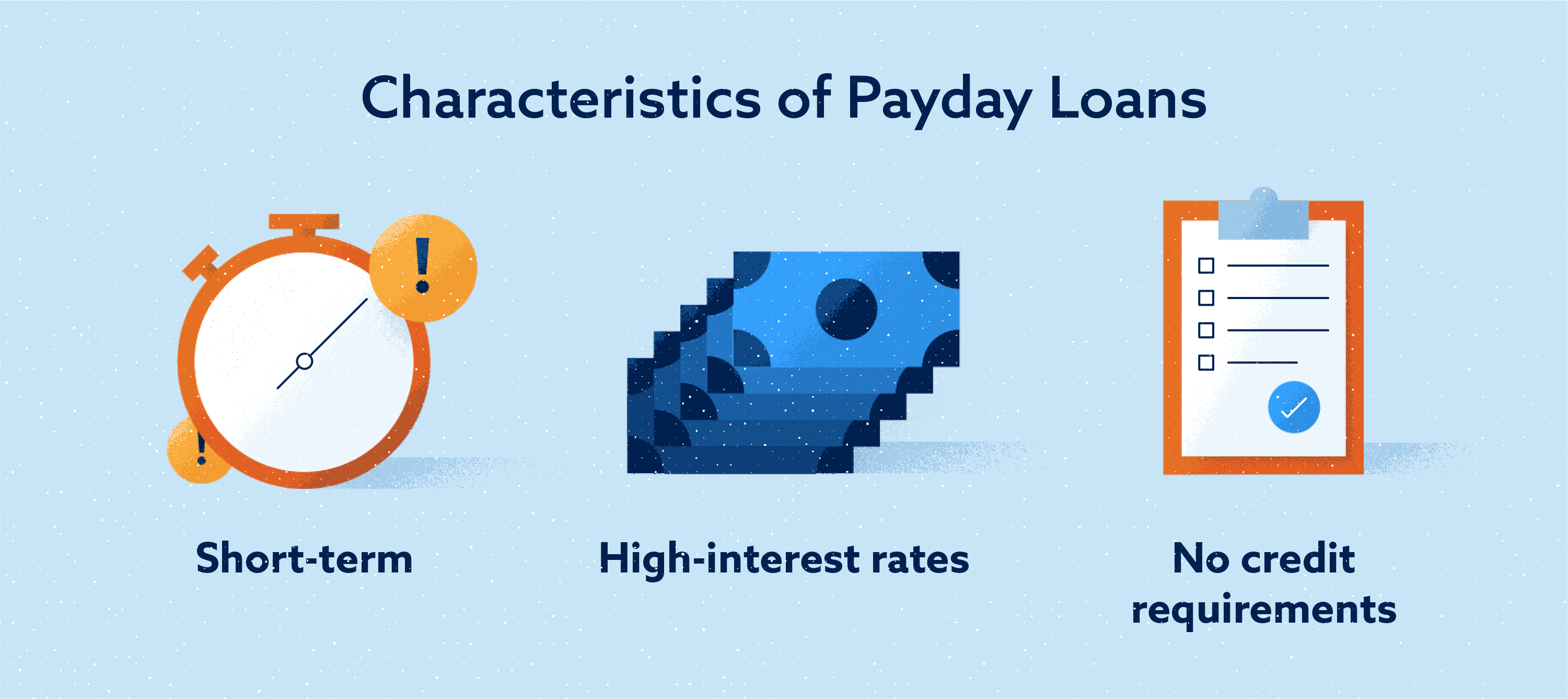
Determining if payday loans in Chattanooga are a good option depends on your ability to repay the full amount within two to four weeks. While they offer immediate cash for emergencies, the effective annual percentage rates often exceed 400%. For most residents, they are a high-risk last resort compared to local credit union alternatives.
Payday loans, officially known in Tennessee as "deferred presentment services," have been a staple of the short-term lending market in Chattanooga for decades. In 2026, despite the growth of fintech and digital banking, physical storefronts still dot the landscape from Brainerd Road to Hixson Pike. For many residents facing an unexpected car repair or a medical bill, these loans represent the only accessible line of credit. However, the convenience comes at a staggering cost that can jeopardize long-term financial stability.
To understand if these loans are a viable choice, one must look beyond the immediate "cash in hand" and analyze the legal framework, the mathematical reality of the interest rates, and the specific landscape of the Chattanooga financial market.
The Legal Framework: Payday Loans in Tennessee (2026)
In Tennessee, payday lending is strictly regulated under the Deferred Presentment Services Act. Even in 2026, these regulations remain the primary safeguard for consumers in Chattanooga. Understanding these rules is the first step in evaluating the risk of these products.
Tennessee law stipulates that a lender cannot advance more than $500 per transaction. It is important to note that this $500 limit applies to the "face amount" of the check you write to the lender. Because the lender is allowed to charge a fee immediately, the actual cash you receive will be significantly less than $500.
Maximum Fees and Loan Limits
The state caps the service fee at 15% of the face amount of the check. If you write a check for $500, the lender can charge a $75 fee (15% of $500), meaning you only walk out of the store with $425. This fee structure is often misunderstood by borrowers who view it as a simple "15% interest rate," when in reality, it is a 15% fee for a very short duration—usually 14 to 31 days.
Term Lengths and Renewals
The maximum term for a payday loan in Chattanooga is 31 days. Crucially, Tennessee law prohibits "rolling over" a loan. A rollover occurs when a borrower pays only the fee to extend the loan for another term. While the law prevents direct rollovers, it does not prevent a borrower from paying off the loan in full and immediately taking out a new one. This practice often leads to the "cycle of debt" that financial counselors in Hamilton County frequently warn against.
The Mathematical Reality: Analyzing the APR
When evaluating whether a payday loan is a "good option," the most critical metric is the Annual Percentage Rate (APR). While the 15% fee sounds manageable, it becomes astronomical when annualized.
For a typical two-week loan in Chattanooga:
- Loan Amount: $100
- Fee (15%): $15
- Total Repayment: $115
- Duration: 14 days
To calculate the APR, you divide the fee by the loan amount, multiply by the number of days in a year (365), divide by the loan term (14), and then multiply by 100. In this scenario, the APR is approximately 391%. If the loan term is shorter, say 10 days, the APR climbs even higher.
Compare this to a standard credit card, which might have an APR between 18% and 30%, or a personal loan from a Chattanooga credit union, which might range from 8% to 15%. When you view the cost through the lens of APR, payday loans are objectively the most expensive way to borrow money in Tennessee.
The Application Process in Chattanooga
One reason residents consider these loans a "good" option is the lack of barriers to entry. Unlike traditional banks in downtown Chattanooga that require high credit scores and extensive documentation, payday lenders focus primarily on your ability to provide a post-dated check and proof of income.
Common Requirements:
- Active Checking Account: You must provide a personal check or authorization for an electronic withdrawal (ACH).
- Proof of Income: This is usually a recent pay stub from a local employer or proof of government benefits (Social Security, disability).
- Identification: A valid government-issued ID (Tennessee driver's license or state ID).
- Residence: Proof that you live in the Chattanooga area, often verified via a utility bill.
The process is designed for speed. Most storefronts on Highway 153 or Ringgold Road can process an application and provide cash or a debit card load within 15 to 30 minutes. This speed is the primary "feature" of the product, but it often bypasses the careful consideration required for high-interest debt.
Risks and the Debt Cycle in Hamilton County
The greatest risk of choosing a payday loan in Chattanooga is the high probability of being unable to repay the loan on your next payday. Because the loan is designed to be repaid in a single lump sum—rather than in installments—it consumes a massive portion of the borrower's next paycheck.
If a resident earns $1,500 bi-weekly and borrows $500 (repaying $575 with fees), they are suddenly left with only $925 for all other expenses: rent, groceries, utilities, and gas. For many, this deficit creates a new emergency, forcing them to take out another loan to cover the gap. This is the "debt trap," where borrowers pay thousands of dollars in fees over several months without ever reducing the principal balance.
Comparing Financial Options in Chattanooga
Before committing to a payday loan, it is vital to compare it against other local resources. Chattanooga has a robust network of credit unions and non-profits that offer significantly better terms.
Local Credit Union Alternatives
Institutions like the Tennessee Valley Federal Credit Union (TVFCU) or Scenic City Credit Union often provide "Payday Alternative Loans" (PALs) or small-dollar personal loans. Even if your credit is not perfect, these member-owned institutions are more likely to work with you than a national bank.
Comparison Table: $500 Borrowing Costs in Chattanooga
| Feature | Payday Loan (Storefront) | Credit Union (Small Loan) | Credit Card Cash Advance |
|---|---|---|---|
| Amount Received | $425 - $435 | $500 | $500 |
| Typical APR | 390% - 460% | 12% - 28% | 24% - 36% |
| Repayment Term | 14 - 31 Days | 6 - 12 Months | Revolving |
| Total Interest/Fees | $75 per $500 check | $30 - $60 (approx.) | Variable + 5% fee |
| Credit Check? | Rarely | Yes (Soft/Hard) | Yes (Existing) |
| Impact on Credit | Usually none (unless default) | Can build credit | Can impact utilization |
Community Resources and Alternatives in Chattanooga
If you are considering a payday loan because you cannot afford basic necessities, Chattanooga offers several community-based alternatives that do not involve high-interest debt.
- United Way of Greater Chattanooga (2-1-1): By dialing 2-1-1, residents can be connected to local assistance for utilities, food, and emergency housing. This service acts as a clearinghouse for non-profit aid in Hamilton County.
- St. Vincent de Paul / Catholic Charities: These organizations often provide small one-time grants for emergency bills (like a water bill or car repair) for residents in crisis.
- Employer-Sponsored Advances: Some major employers in the Chattanooga area, including those in the manufacturing and logistics sectors, offer earned wage access (EWA) programs. These allow you to access money you have already earned before payday for a nominal fee or for free.
- Negotiation with Creditors: If the loan is for an existing bill (EPB, Tennessee American Water, or a medical provider), most are willing to set up a payment plan if you contact them before the due date. This is almost always cheaper than taking a loan to pay the bill.
When Is a Payday Loan the "Least Bad" Option?
While generally discouraged, there are very narrow circumstances where a payday loan might be considered. If a borrower is certain they will have the funds to repay the loan in full on their next payday, and the loan is preventing an even more expensive outcome—such as an eviction, a utility reconnection fee that exceeds the loan fee, or a job loss due to lack of transportation—then the loan may serve as a functional bridge.
However, this requires extreme financial discipline. One must view the $75 fee (on a $500 loan) as a sunk cost for an emergency service, rather than a sustainable way to manage monthly cash flow.
Steps to Take Before Applying in Chattanooga
If you decide to move forward with a payday loan in Chattanooga, follow these steps to minimize damage:
- Verify the License: Ensure the lender is licensed by the Tennessee Department of Financial Institutions (TDFI). Licensed lenders must adhere to state fee caps and disclosure laws.
- Borrow Only What You Need: Just because the limit is $500 does not mean you should take it. Borrow the absolute minimum required to solve the immediate emergency.
- Create a Repayment Plan: Before you leave the store, look at your calendar and your next paycheck. Calculate exactly how much will be left after the loan is repaid. If that amount isn't enough to live on, do not take the loan.
- Avoid Multiple Loans: Do not take out loans from multiple lenders (e.g., one on Brainerd Road and another in Hixson). This exponentially increases the risk of a total financial collapse.
FAQs About Payday Loans in Chattanooga
Can I be arrested for not paying back a payday loan in Chattanooga?
No. In Tennessee, you cannot be jailed for failing to pay back a payday loan. It is a civil matter, not a criminal one. However, the lender can sue you in Hamilton County General Sessions Court, which could lead to wage garnishment if they obtain a judgment against you.
Do Chattanooga payday lenders report to credit bureaus?
Most traditional payday lenders do not report your on-time payments to the three major credit bureaus (Equifax, Experian, TransUnion). However, if you default and the debt is sold to a collection agency, that agency will likely report the delinquency, which will severely damage your credit score.
Is there a "cooling-off" period in Tennessee?
Tennessee law does not mandate a specific "cooling-off" period between loans, but it does limit the number of outstanding checks a person can have. A lender cannot hold more than two checks from a single borrower at any one time, and the total face amount cannot exceed $500.
Can I cancel a payday loan if I change my mind?
Under Tennessee law, you have the right to rescind a deferred presentment agreement without penalty by the close of business on the next business day following the transaction. You must return the full amount of the advance to the lender to exercise this right.
Are online payday loans legal in Chattanooga?
Yes, but they must be licensed by the State of Tennessee to operate legally here. Many online lenders operate from offshore or tribal lands to bypass state interest rate caps. Borrowers in Chattanooga should be extremely cautious with online lenders that do not clearly state their Tennessee licensure, as their APRs can exceed 700%.
Final Recommendation
Are payday loans in Chattanooga a good option? For the vast majority of people, the answer is no. The cost of credit is simply too high, and the risk of entering a multi-month debt cycle is significant. Before visiting a storefront, residents should exhaust local alternatives such as the 2-1-1 assistance line, credit union "Payday Alternative Loans," or negotiating directly with their creditors. If you must use a payday loan, treat it as a high-cost emergency tool: borrow only what is essential, ensure you have a guaranteed repayment plan, and never use a second loan to pay off the first.