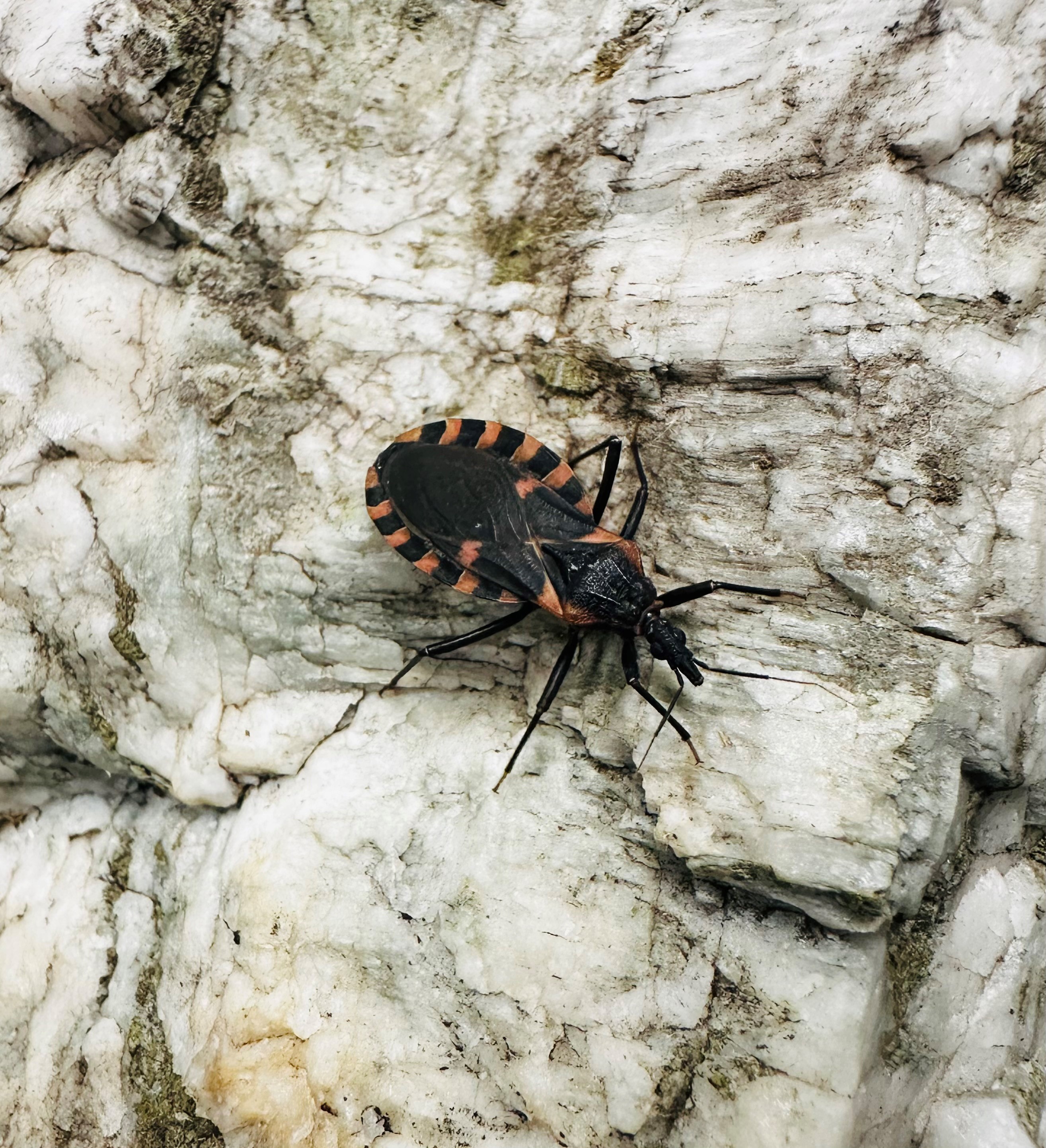
Kissing bugs, members of the subfamily Triatominae, are not considered established in Washington state. While various species of these insects inhabit the southern United States and parts of Latin America, the cooler climate and ecological conditions of the Pacific Northwest do not support the endemic populations of the species known to transmit Chagas disease.
Understanding the Kissing Bug (Triatominae)
To understand why these insects are not a concern for Washington residents, it is necessary to identify what a "kissing bug" actually is. These insects are blood-feeding members of the Reduviidae family, commonly referred to as assassin bugs. The term "kissing bug" specifically identifies those in the Triatominae subfamily. They earned this nickname because they are known to bite the faces of sleeping humans, often near the mouth or eyes, attracted by the carbon dioxide exhaled during respiration.
The primary health concern associated with kissing bugs is their potential to act as vectors for the protozoan parasite Trypanosoma cruzi, which causes Chagas disease. This disease is prevalent in Mexico, Central America, and South America, and it exists in the southern regions of the United States, including states like Texas, Arizona, and New Mexico.
Geography and Environmental Limitations
The geographic distribution of kissing bugs is dictated largely by temperature and humidity. These insects are ectothermic, meaning they rely on their environment to regulate their body temperature. Most species of Triatominae require consistently warm climates to survive, reproduce, and thrive.
Washington state, particularly west of the Cascade Mountains, features mild, wet winters and temperate summers. East of the Cascades, the climate is semi-arid with hot summers but very cold winters. Neither of these climate profiles provides the year-round warmth required for established colonies of the medically significant species of kissing bugs. While some insect species may occasionally be transported into the state via human activity—such as in luggage or shipping containers—they cannot establish permanent, self-sustaining populations in the Washington environment.
Mistaken Identity: Common Lookalikes in Washington
Many residents of Washington encounter insects that they fear might be kissing bugs due to their size, color, or shape. This is a common occurrence because the Pacific Northwest is home to several other species of true bugs that belong to the same family (Reduviidae) or other insect families that share a similar body plan.
The most frequent "lookalike" found in Washington is the Western Conifer Seed Bug (Leptoglossus occidentalis). These insects are often mistaken for kissing bugs because they are brown, roughly an inch long, and can be found indoors, especially as they seek shelter from the cold during the autumn months.
Distinguishing Features: A Comparative Guide
To differentiate between a true Triatominae kissing bug and the common insects found in Washington, consider the following characteristics.
| Feature | Kissing Bug (Triatominae) | Conifer Seed Bug | Leaf-Footed Bug |
|---|---|---|---|
| Body Shape | Elongated, flattened | Elongated, rectangular | Elongated |
| Coloration | Dark brown/black with red/orange stripes | Reddish-brown | Brown/gray |
| Antennae | Long, thin | Long, thin | Long, thin |
| Diet | Blood (Vertebrates) | Plant juices (Conifers) | Plant juices |
| Home Habitat | Nests of small animals | Pine trees, outdoor brush | Gardens, crops |
The most critical difference for the average resident is dietary preference. Kissing bugs are obligate hematophages (blood-feeders), while the insects commonly found in Washington homes, like the Western Conifer Seed Bug, are herbivores that feed on plant sap and seeds. They have no interest in human blood and possess no mechanism for transmitting Trypanosoma cruzi.
Public Health Context and Chagas Disease
Chagas disease is a chronic condition that remains rare in the United States, and cases are almost exclusively imported from endemic regions in Latin America. Because the transmission cycle for Chagas disease requires both the presence of the Trypanosoma cruzi parasite and the specific vector (the kissing bug), the absence of established vector populations in Washington effectively eliminates the risk of local, vector-borne transmission.
Medical professionals and public health departments in Washington do not track kissing bugs as a local health threat. If you believe you have found a specimen that matches the physical description of a Triatominae bug, the most appropriate action is to contact the Washington State University (WSU) Extension office or the Washington State Department of Agriculture. Entomologists can perform a formal identification, which almost invariably confirms that the specimen is a benign native species.
Managing Nuisance Insects Indoors
Even if the insects in your home are not medically significant kissing bugs, it is natural to want to keep your living space clear of pests. As homes cool down in the fall, many insects move indoors seeking warmth. This is a behavioral trait, not an infestation cycle.
- Exclusion: Inspect your home for gaps. Seal cracks around window frames, door sweeps, and vents. Installing or repairing window screens is the most effective way to prevent insects from entering.
- Lighting: Many bugs are attracted to bright lights at night. Using yellow-hued outdoor lighting or closing curtains during the evening can reduce the number of insects drawn to your home.
- Physical Removal: If you find an insect inside, there is no need for chemical pesticides. Simply use a container to catch the insect and release it outside, or use a vacuum to remove it. Because these insects are not aggressive toward humans, they do not require complex eradication methods.
- Natural Repellents: Essential oils like peppermint or cedarwood are sometimes used as mild deterrents, but they are rarely effective at stopping insects that are already seeking a temperature-controlled environment.
The Role of Citizen Science
If you find an insect that you are truly concerned about, you are encouraged to participate in citizen science programs. Organizations such as the BugGuide project or local master gardener programs rely on high-quality photographs to track insect populations. By photographing the insect and submitting it to a local expert, you contribute to a better understanding of biodiversity in the Pacific Northwest. This also provides you with immediate peace of mind by receiving a professional identification.
Frequently Asked Questions
Can I get Chagas disease from a bug bite in Washington? No. Because the specific species of kissing bugs that carry the Trypanosoma cruzi parasite are not established in Washington state, the risk of acquiring Chagas disease through a local insect bite is considered to be zero.
What should I do if I find a bug that looks like a kissing bug? Do not panic. Most insects identified by residents as "kissing bugs" are actually harmless native species like the Western Conifer Seed Bug. You can capture it in a jar and take a clear, well-lit photograph to send to your local WSU Extension office for identification.
Are kissing bugs attracted to pets in Washington? Even in states where kissing bugs are present, they are primarily attracted to the carbon dioxide and heat signals of animals. In Washington, there is no evidence of kissing bug activity, meaning your pets are not at risk from these specific insects.
Do pesticides help with kissing bugs? While broad-spectrum insecticides can kill most insects, they are not recommended for "kissing bug" control in Washington. Since the insects are not a health threat and do not live in your home, professional pest control is unnecessary. Prevention through physical exclusion is the best approach.
Are there any areas in the Pacific Northwest where these bugs live? While some species of the Triatominae subfamily exist in the southwestern United States, their range does not extend into the northern latitudes of the Pacific Northwest. The climate is simply too cold for them to maintain a life cycle.
Final Recommendation for Residents
If you reside in Washington and are concerned about household pests, focus your efforts on general home maintenance. Keep screens in good repair, seal exterior gaps with silicone caulk, and manage vegetation near the foundation of your home. If you encounter an insect that concerns you, photograph it and reach out to local agricultural extension experts. Rest assured that the "kissing bug" is not an established threat in your region, and the insects you find in your home are almost certainly harmless native species that prefer plants over people.