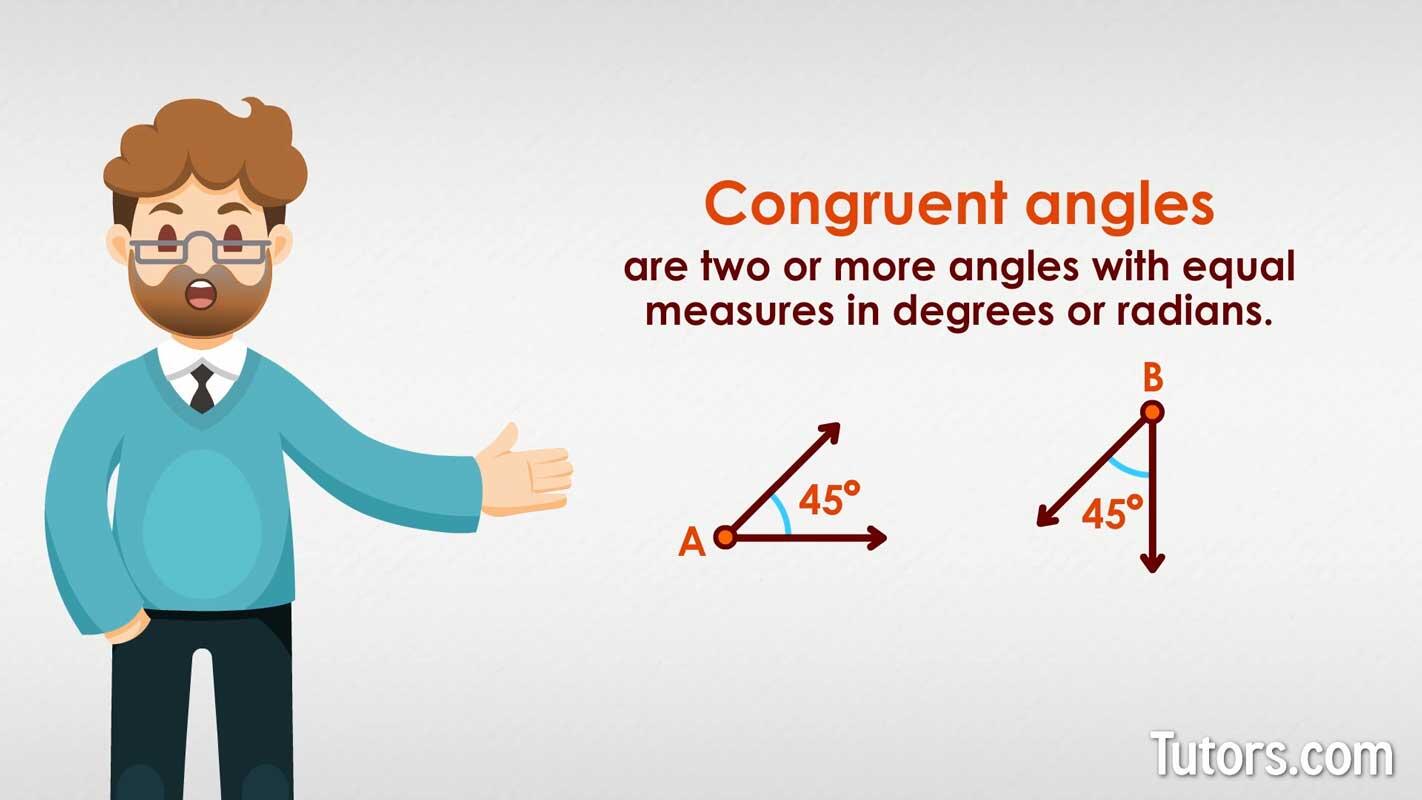
In geometry, congruent angles are those that have exactly the same measure, typically expressed in degrees or radians. While the terms "equal" and "congruent" are often used interchangeably in casual conversation, they possess distinct mathematical meanings: equality refers to the numerical value of the angle's measure, whereas congruence describes the relationship between the geometric figures themselves.
Defining Congruence in the Modern Geometric Context
As of 2026, the foundational principles of Euclidean geometry remain the bedrock of architectural design, mechanical engineering, and computational spatial analysis. To answer whether congruent angles are equal, we must first establish what congruence signifies. The term "congruent" is derived from the Latin congruere, meaning "to agree" or "to meet together." In a geometric sense, two angles are congruent if they are identical in shape and size.
If you were to "cut out" one angle and place it directly over another, and they matched perfectly without any overlap or gaps, those angles would be considered congruent. This physical or mental movement of one figure onto another is known as an isometry or a rigid transformation. These transformations—translation (sliding), rotation (turning), and reflection (flipping)—change the position or orientation of a figure but do not alter its dimensions or internal angles. Therefore, congruence is a statement about the "sameness" of objects, while equality is a statement about the "sameness" of numbers.
The Technical Distinction: Measure vs. Figure
To achieve high-level mathematical literacy, one must distinguish between an object and its properties. An angle is a geometric figure consisting of two rays sharing a common endpoint called a vertex. The "measure" of that angle is a numerical value representing the amount of rotation between those two rays.
Numerical Equality ($=$)
When we say that $m\angle A = m\angle B$, we are using the "m" to denote the "measure of." This is a statement of numerical equality. If $\angle A$ is $45^\circ$ and $\angle B$ is $45^\circ$, their measures are equal. Equality is used because $45 = 45$. In the realm of real numbers, equality follows the standard rules of arithmetic.
Geometric Congruence ($\cong$)
When we say $\angle A \cong \angle B$, we are describing a relationship between the two geometric sets of points. We are stating that the two angles are clones of one another in terms of their physical properties. The symbol for congruence, $\cong$, is intentionally composed of an equals sign ($=$) with a tilde ($\sim$) on top. The tilde represents "similarity" (same shape), and the equals sign represents "equality" (same size). Together, they denote that the figures are identical in every way that matters to Euclidean geometry.
The Axiomatic Foundation of Congruent Angles
The concept of congruence is not merely a convenience; it is a structural necessity in the axiomatic systems developed by mathematicians like David Hilbert and, much earlier, Euclid. In Euclid's Elements, the idea of "equal" was applied to many things we now call congruent. However, modern rigor requires a more granular approach.
Under the Protractor Postulate, every angle is paired with a real number between 0 and 180. This allows us to quantify congruence. The Angle Congruence Postulate (or definition) states: "Two angles are congruent if and only if they have equal measures." This "if and only if" (biconditional) relationship means that congruence and equal measure are logically equivalent. If you have one, you must have the other.
Properties of Congruence
Congruence is an equivalence relation, which means it satisfies three specific logical properties. These properties are essential for writing geometric proofs and for the logic used in automated theorem-proving software common in 2026.
- Reflexive Property: Any angle is congruent to itself ($\angle A \cong \angle A$). While this seems obvious, it is a necessary logical step in proofs involving overlapping triangles or shared sides.
- Symmetric Property: If $\angle A \cong \angle B$, then $\angle B \cong \angle A$. Congruence is a two-way street; the order in which you name the angles does not change the fact of their equivalence.
- Transitive Property: If $\angle A \cong \angle B$ and $\angle B \cong \angle C$, then $\angle A \cong \angle C$. This property is a powerful tool in complex geometric deductions, allowing mathematicians to bridge gaps between seemingly unrelated parts of a diagram.
How Congruence is Determined in Practice
In practical applications—such as CNC machining or CAD (Computer-Aided Design) software—identifying congruent angles relies on several established theorems and postulates. You do not always need to measure an angle to know it is congruent to another.
1. Vertical Angles Theorem
When two lines intersect, the angles opposite each other (vertical angles) are always congruent. This is a fundamental truth used in structural engineering to ensure balance and symmetry. If one angle in an "X" intersection is $110^\circ$, the angle directly across from it is guaranteed to be $110^\circ$.
2. Corresponding Angles Postulate
When a transversal intersects two parallel lines, the angles in the same relative position at each intersection are congruent. This is a cornerstone of urban planning and grid-based architecture. If a street crosses two parallel avenues at a $75^\circ$ angle, it creates eight angles, many of which are congruent based on this postulate.
3. Alternate Interior and Exterior Angles
Similarly, when parallel lines are cut by a transversal, the alternate interior angles (on opposite sides of the transversal and inside the parallel lines) and alternate exterior angles (on opposite sides and outside the lines) are congruent. This is vital for calculating stresses in truss bridges and other triangular supports.
4. Angle Bisectors
An angle bisector is a ray that divides an angle into two smaller, congruent angles. If a $90^\circ$ angle is bisected, the two resulting angles are each $45^\circ$ and are, by definition, congruent.
Comparison of Geometric Relationships
To better understand where congruence fits within the hierarchy of geometric relationships, consider the following table. It distinguishes how we compare angles and other figures based on their properties.
| Term | Symbol | Property Compared | Physical Meaning |
|---|---|---|---|
| Equality | $=$ | Numerical Measure | The numbers (e.g., $30^\circ$) are the same. |
| Congruence | $\cong$ | Shape and Size | The figures are identical "clones" of each other. |
| Similarity | $\sim$ | Shape Only | One figure is a scaled version of the other. |
| Equivalence | $\equiv$ | Logical Value | Two statements or values hold the same logical weight. |
Why the Distinction Matters in 2026
You might wonder if this is merely a matter of semantics. However, in technical fields, the distinction between a figure and its measure is critical.
In Robotics and Kinematics, a robot arm must calculate the "congruence" of a joint's position compared to a target model. If the software only looks at the numerical "equality" of a single sensor, it might miss errors in orientation or "pose" (the 3D position of the object). Congruence implies that the entire geometric orientation can be mapped via rigid motion, which is a more comprehensive check than simple numerical matching.
In Legal and Patent Documentation, descriptions of mechanical parts often specify "congruent components." Using the word "equal" could be legally ambiguous—does it mean equal in weight, equal in cost, or equal in volume? Specifying "congruent" ensures that the reader understands the parts must be identical in geometric form.
Common Misconceptions Regarding Congruent Angles
Even seasoned students of geometry can fall into traps regarding congruence. Addressing these misconceptions is essential for technical accuracy.
- The Length of the Rays: A common error is thinking that an angle with longer "sides" (rays) is larger than a congruent angle with shorter sides. Rays, by definition, extend infinitely. Even when represented by finite line segments on paper, the length of those segments has no impact on the angle's measure. Two $30^\circ$ angles are congruent regardless of how long the lines representing them are drawn.
- Orientation Confusion: Some believe that if an angle is "upside down" or rotated, it is no longer congruent to its original form. Because congruence is defined by the ability to move one figure onto another via rotation or reflection, orientation is irrelevant.
- Vertex Location: Two angles can be congruent even if they are on opposite sides of a coordinate plane. Their position in space does not affect their congruence, only their measures do.
Proving Congruence in Triangles
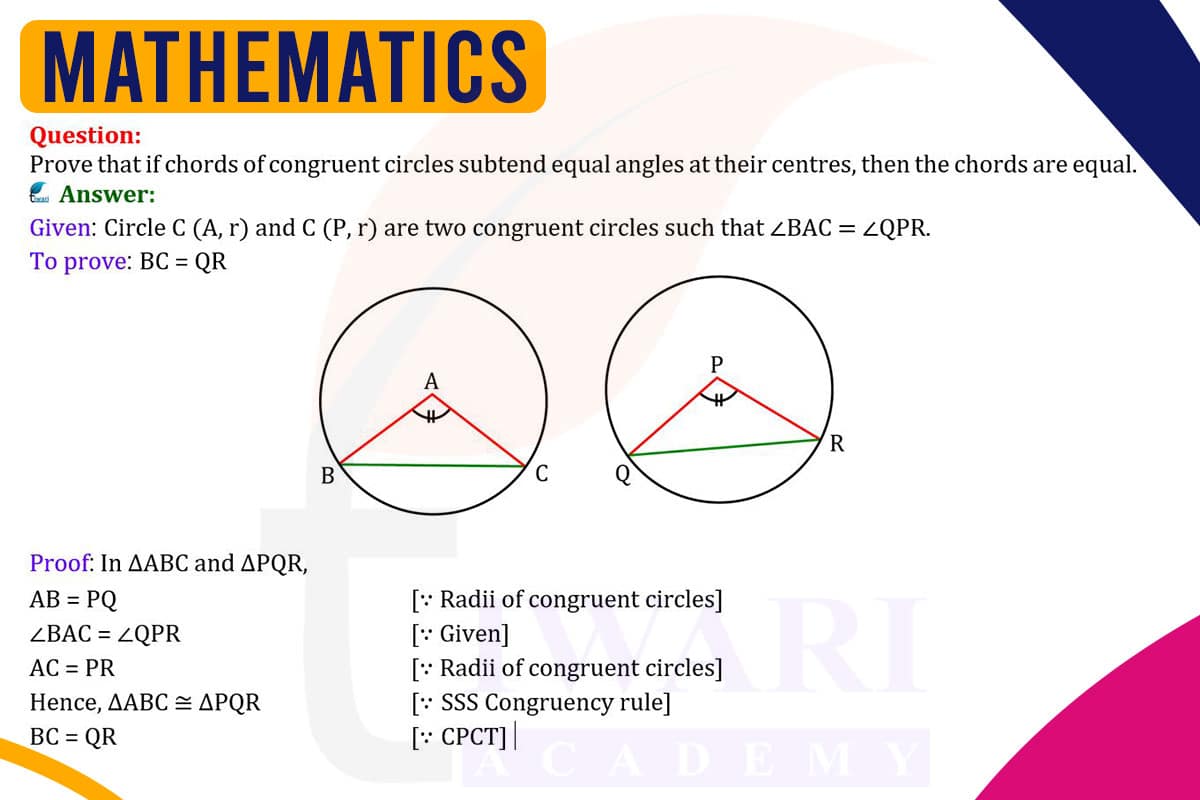
Congruent angles are often the "keys" to proving that entire shapes—specifically triangles—are congruent. In 2026, automated geometric solvers use these criteria to validate designs:
- ASA (Angle-Side-Angle): If two angles and the included side of one triangle are congruent to two angles and the included side of another, the triangles are congruent.
- AAS (Angle-Angle-Side): If two angles and a non-included side are congruent, the triangles are congruent.
- SAS (Side-Angle-Side): While this focuses on sides, the "Angle" must be the specific congruent angle between the two sides to ensure the third side's length is locked in.
Frequently Asked Questions
Can two angles be equal but not congruent?
No. In standard Euclidean geometry, if the measures of two angles are equal (e.g., both are $60^\circ$), they are by definition congruent. The terms describe the same state from two different perspectives: the numerical and the geometric.
Is the symbol for congruence the same as the symbol for equality?
No. The congruence symbol ($\cong$) includes a tilde ($\sim$) over an equals sign ($=$). While they are related, the congruence symbol is more specific to geometric figures, whereas the equals sign is used for numbers, variables, and lengths.
Does the size of the vertex point affect congruence?
In theoretical geometry, a point has no size (zero dimensions). In practical drafting or 2026-era digital modeling, the vertex is simply the coordinate of intersection. The "size" of the dot drawn at the vertex is a visual aid and has no mathematical bearing on the angle's measure or congruence.
How do you write that two angles are congruent?
You should write the angle symbol followed by the name, then the congruence symbol, then the second angle: $\angle ABC \cong \angle DEF$. If you are talking about their measures, you write: $m\angle ABC = m\angle DEF$.
Are all right angles congruent?
Yes. According to Euclid's fourth postulate, "all right angles are equal to one another." Because all right angles have a measure of exactly $90^\circ$, they all satisfy the definition of congruence.
What is the difference between congruent and similar angles?
Actually, for angles, there is no practical difference between "similar" and "congruent." If two angles have the same shape (which all angles do, being formed by two rays), and they are the "same size" (measure), they are congruent. Similarity usually applies to polygons where sides can be proportional; but for an individual angle, if it is similar, it must also be congruent because an angle's "size" is its measure, not the length of its sides.
Practical Recommendation for Students and Professionals
When working on geometric proofs or technical specifications, always be mindful of your notation. Use the equals sign ($=$) when you are dealing with the numerical measurements of angles (e.g., when performing addition, subtraction, or using the Law of Cosines). Use the congruence symbol ($\cong$) when you are describing the relationship between the angles as geometric entities, especially in the context of proofs, symmetry, or spatial transformations.
For those using modern CAD software in 2026, remember that "Constraints" often function as congruence rules. When you "constrain" two angles to be the same, the software is applying the principle of congruence to ensure that as one part of the model moves, the other maintains its geometric identity.


%20Congruent%20Triangles%20(Side-Angle-Side).webp)