A debt consolidation loan is beneficial if it secures a lower interest rate than your current debts and you have a disciplined plan to avoid future overspending. It simplifies your finances by combining multiple high-interest balances into a single monthly payment, potentially saving thousands in interest and accelerating your path to being debt-free.
Understanding the Fundamental Mechanics of Debt Consolidation
To determine if a consolidation loan is the right financial move in 2026, one must first understand exactly what happens during the process. At its core, debt consolidation is a form of refinancing. You are not erasing your debt; rather, you are taking out a new loan to pay off several smaller, high-interest obligations—typically credit card balances, medical bills, or payday loans.
The primary objective is to move from revolving debt, which often carries variable and high interest rates, to an installment loan with a fixed interest rate and a set repayment term. In the current 2026 economic landscape, where digital lending platforms have streamlined the application process, the speed of consolidation has increased, but the underlying mathematical principles remain the same. If the interest rate on the new loan is not significantly lower than the weighted average of your existing debts, the consolidation serves only an organizational purpose rather than a financial one.
Furthermore, consolidation changes the structure of your monthly cash flow. Instead of managing multiple due dates and varying minimum payments, you transition to a single predictable outflow. This can drastically reduce the cognitive load of financial management, which is a frequently overlooked benefit of the process.
The Financial Criteria: When Does Consolidation Save Money?
Determining the "goodness" of a consolidation loan requires a cold, hard look at your numbers. Financial experts and regulators, such as the Consumer Financial Protection Bureau (CFPB), emphasize that the total cost of borrowing is the most critical metric.
The Role of Annual Percentage Rate (APR)
The APR of your new loan must be lower than the average interest rate of the debts you are consolidating. In 2026, credit card interest rates remain significantly higher than personal loan rates for consumers with good-to-excellent credit. If you are carrying a balance on three cards with an average APR of 22%, and you qualify for a consolidation loan at 11%, the math is clearly in your favor.
Factoring in Origination Fees
Many lenders charge an origination fee, which is a percentage of the loan amount (typically 1% to 8%) deducted from the proceeds. For example, if you take a $20,000 loan with a 5% origination fee, you only receive $19,000, but you owe the full $20,000 plus interest. You must ensure that the interest savings over the life of the loan outweigh this upfront cost.
Loan Term and Total Interest
A common mistake is focusing solely on the monthly payment. While a longer-term loan (e.g., 60 months instead of 36) will lower your monthly obligation, it may increase the total interest paid over the life of the loan. In 2026, with inflation-adjusted cost-of-living pressures, the temptation to lower monthly payments is high, but it is essential to calculate the "total cost of debt" before signing any agreement.
Comparing Consolidation Options in 2026
Not all consolidation tools are created equal. The best choice depends on your credit score, the amount of equity you hold in assets, and your total debt volume.
| Option | Best For | Typical Interest Range | Pros | Cons |
|---|---|---|---|---|
| Personal Loan | Good credit; Unsecured debt | 7% – 24% | Fixed rates; No collateral | Higher rates for lower scores |
| 0% APR Credit Card | Smaller balances (<$15k) | 0% (Intro period) | No interest for 12-21 months | High fees; High "go-to" rate |
| Home Equity Loan (HELOC) | Homeowners; Large debt | 6% – 12% | Lowest rates available | Risk of losing your home |
| 401(k) Loan | Those with no credit access | Varies (Paid to self) | No credit check required | High risk if job is lost |
Unsecured Personal Loans
These are the most common vehicles for debt consolidation. They do not require collateral, meaning your car or home is not at risk if you default. In 2026, many fintech lenders use "alternative data" (like utility payment history) to help those with "thin" credit files qualify for better rates than traditional banks might offer.
Balance Transfer Credit Cards
If your total debt is manageable and you have excellent credit, a balance transfer card might be superior to a loan. These cards offer a 0% introductory APR for a set period. However, you must be certain you can pay off the entire balance before the promo period ends, as the interest rate usually spikes to 20% or higher thereafter.
Home Equity Options
For homeowners, using a Home Equity Line of Credit (HELOC) offers the lowest interest rates because the loan is secured by the property. However, this is the highest-risk strategy. You are effectively turning "unsecured" credit card debt into "secured" debt. If a financial catastrophe occurs and you cannot pay, the lender can foreclose on your home.
The Psychological Trap: Addressing the Root Cause
A consolidation loan is a tool, not a cure. One of the primary reasons consolidation loans "fail" for consumers is that they treat the now-zeroed-out credit card balances as "available money."
When you use a loan to pay off three credit cards, those cards suddenly have a $0 balance. For many, this creates a false sense of financial freedom, leading them to use the cards again for new purchases. Within a year, many borrowers find themselves with a consolidation loan payment and new credit card debt. This is known as "double-dipping," and it can lead to insolvency.
To make a consolidation loan "good for you," you must pair the loan with a strict budget. Some financial advisors recommend closing the accounts once they are paid off, although this can temporarily lower your credit score by reducing your total available credit and the average age of your accounts. A middle-ground approach is to keep the accounts open but remove the cards from digital wallets and physical reach.
Impact on Your Credit Score
A common concern is whether consolidating debt will damage your credit score. The impact is usually a "V-shaped" curve: a small initial dip followed by a significant long-term rise.
- The Dip: When you apply for the loan, the lender performs a "hard inquiry," which can shave a few points off your score. Additionally, a new loan reduces the "average age of accounts" component of your score.
- The Rise: The most significant factor in your credit score is your "Credit Utilization Ratio"—the amount of revolving credit you are using compared to your limits. By moving credit card debt to an installment loan, your utilization on those cards drops to 0%. This often results in a substantial score increase within 30 to 60 days.
- Payment History: As long as you make the new loan payments on time, your score will continue to improve, as payment history is the single largest factor in credit scoring models like FICO and VantageScore.
Eligibility and Requirements in 2026
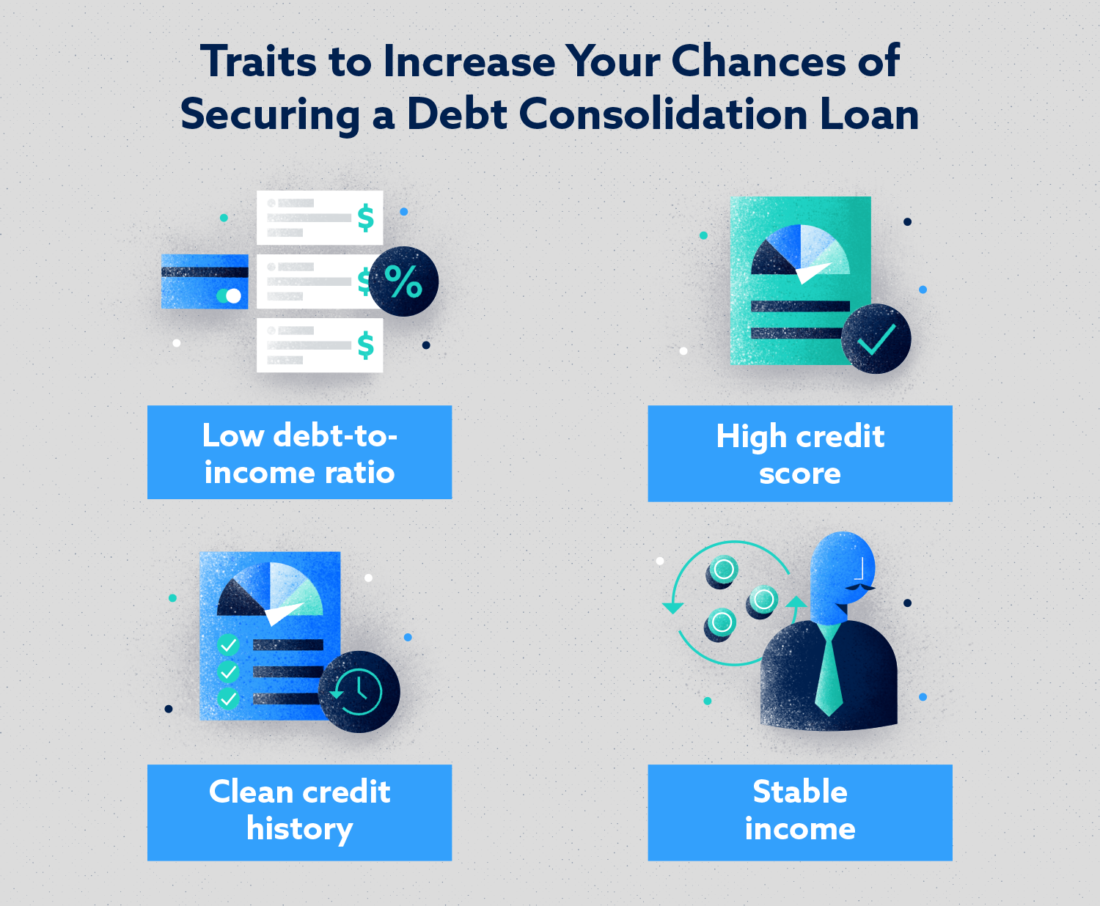
Lending standards in 2026 remain rigorous. To qualify for the most favorable rates, lenders typically look for several key indicators:
- Credit Score: Most competitive consolidation loans require a score of 670 or higher. While "bad credit" loans exist, their interest rates often approach 30%, which negates the benefit of consolidating.
- Debt-to-Income (DTI) Ratio: Lenders want to see that your total monthly debt payments (including the new loan) do not exceed 35-43% of your gross monthly income.
- Employment Stability: Proof of steady income is mandatory. In the 2026 "gig economy," many lenders now accept diverse income streams, including freelance contracts and platform-based earnings, provided they have a two-year history.
- Verifiable Identity: With the rise of deepfakes and identity theft, 2026 lending platforms require robust multi-factor authentication and often a "live" video verification during the application process.
Step-by-Step Guide to Consolidating Debt
If you have decided that a consolidation loan is likely good for your situation, follow these steps to ensure you get the best deal:
1. Audit Your Current Debts
Create a spreadsheet listing every debt, the current balance, the APR, and the minimum monthly payment. Calculate the weighted average interest rate. This is your "target" number; the new loan must beat it.
2. Check Your Credit and Pre-Qualify
Use a service that allows for "soft pull" pre-qualification. This allows you to see the rates and terms you qualify for without hurting your credit score. Compare at least three different lenders, including a credit union, a traditional bank, and an online-only lender.
3. Read the Fine Print
Look for hidden costs. Beyond the origination fee, check for "prepayment penalties." A good consolidation loan should allow you to pay it off early without charging you a fee. In 2026, most reputable lenders have eliminated these, but it is always worth verifying.
4. Execute the Payoff
Some lenders offer "direct pay," where they send the loan proceeds directly to your credit card companies. This is highly recommended as it removes the temptation to spend the cash when it hits your bank account. If your lender doesn't offer this, you must be disciplined enough to pay off the debts immediately upon receiving the funds.
Common Pitfalls to Avoid
Even with the best intentions, consolidation can go wrong. Be wary of these "red flags":
- Credit Repair Scams: Avoid companies that promise to "negotiate" your debt away for a high upfront fee. This is debt settlement, not consolidation, and it will ruin your credit score.
- Variable Interest Rates: While they may start lower, variable rates can rise over time. In an unpredictable 2026 economy, a fixed-rate loan is almost always the safer choice for debt management.
- Ignoring the Budget: If you don't change the behavior that led to the debt—whether it was medical emergencies, job loss, or overspending—consolidation is merely a temporary Band-Aid.
Frequently Asked Questions
Does debt consolidation hurt your credit score?
Initially, you may see a minor drop of 5 to 10 points due to the hard credit inquiry and the creation of a new account. However, most borrowers see their score increase significantly within a few months because their credit utilization ratio (the amount of credit card limit being used) drops.
Can I consolidate my debt if I have a low credit score?
Yes, but it is more difficult and expensive. Lenders for "fair" or "poor" credit often charge interest rates that are similar to credit cards. In this case, consolidation might simplify your life, but it won't save you much money. You may need a co-signer with better credit to secure a favorable rate.
Is it better to get a personal loan or use a balance transfer card?
A personal loan is better for large amounts of debt ($15,000+) that will take several years to pay off. A balance transfer card is better for smaller amounts that you can realistically pay off within 12 to 18 months, as the 0% interest period is temporary.
Should I close my credit cards after paying them off with a loan?
Generally, no. Closing old accounts can lower your credit score by reducing the average age of your credit history. However, if you know you cannot resist the temptation to spend on those cards again, closing them is a better long-term financial decision than falling back into debt.
What happens if I can't pay my consolidation loan?
Since most consolidation loans are "unsecured," the lender cannot seize your property immediately. However, they can sue you, garnish your wages, and report the delinquency to credit bureaus, which will severely damage your credit for seven years. If you used a "secured" loan (like a HELOC), you could lose the collateral (your home).
Practical Recommendation
A consolidation loan is an excellent tool for those with stable income and good credit who are feeling "smothered" by high-interest rates. If your total debt (excluding mortgage) is less than 50% of your annual income and your credit score is above 670, you are an ideal candidate.
Before applying, use a repayment calculator to compare the total interest you will pay on the new loan versus your current trajectory. If the savings are substantial, and you have a plan to address your spending habits, moving forward with consolidation in 2026 can be the catalyst for long-term financial stability.
Disclaimer: The information provided in this article is for educational purposes only and does not constitute financial, legal, or investment advice. Debt consolidation involves financial risk. Consult with a certified financial planner or credit counselor to discuss your specific situation.