While the City University of New York (CUNY) is not universally free for all students, a significant majority of New York State residents attend tuition-free through a combination of state-funded scholarships, federal grants, and specialized university programs. In 2026, CUNY remains one of the most affordable pathways to a degree in the United States, with approximately two-thirds of full-time undergraduates paying no out-of-pocket tuition.
The City University of New York, a massive network of 25 campuses across the five boroughs, was founded on the principle of providing high-quality education to all New Yorkers regardless of their economic status. Historically, CUNY offered free tuition from its inception in 1847 until a fiscal crisis in 1976. Since then, while tuition has been introduced, the state and city have developed robust financial aid frameworks to ensure that the cost of a degree remains accessible.
To understand if a CUNY school is "free" for you, it is necessary to distinguish between "tuition-free" and "cost-free." Tuition refers specifically to the price of instruction. Even when tuition is covered, students are generally responsible for student activity fees, technology fees, textbooks, transportation, and living expenses. However, for many students, even these auxiliary costs can be offset by specific success programs.
The Excelsior Scholarship: New York’s Pathway to Free Tuition
The most prominent program making CUNY schools free is the New York State Excelsior Scholarship. Launched in 2017, this program was designed to support middle-class families who often earn too much to qualify for traditional low-income grants but still struggle to afford college costs.
Eligibility Requirements for 2026
To qualify for the Excelsior Scholarship for the 2026-2027 academic year, applicants must meet several strict criteria:
- Income Limits: For most applicants, the household adjusted gross income must be $125,000 or less (based on the tax year two years prior to the application).
- Residency: You must be a resident of New York State and have resided in the state for 12 continuous months prior to the start of the term.
- Academic Load: Students must be enrolled full-time and complete at least 30 credits per year (including summer and winter sessions) that count toward their degree program.
- Post-Graduation Requirement: This is a "stay in New York" agreement. Recipients must live and, if employed, work in New York State for the same number of years they received the scholarship. If a student leaves the state early, the scholarship converts into a non-interest-bearing loan.
The "Last-Dollar" Mechanism
It is important to understand that the Excelsior Scholarship is a "last-dollar" program. This means it only covers the remaining tuition balance after all other grants—such as the federal Pell Grant and the New York State Tuition Assistance Program (TAP)—have been applied. If your Pell and TAP awards already cover your full tuition, you will not receive Excelsior funds, though you may still benefit from the tuition "freeze" that the program guarantees for its recipients.
Macaulay Honors College: The Elite Free-Tuition Experience
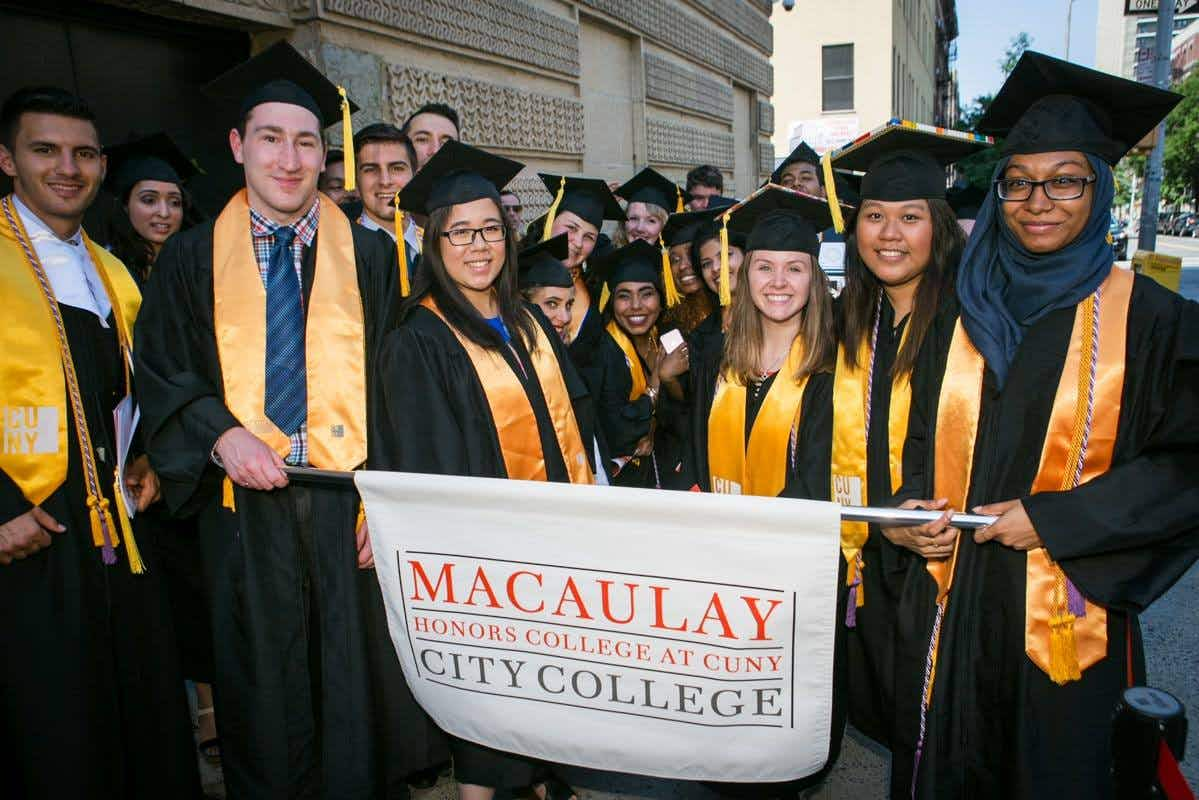
For high-achieving students, the Macaulay Honors College offers a unique opportunity that goes beyond mere tuition coverage. Macaulay is a highly competitive program integrated into eight of CUNY’s senior colleges (such as Hunter, Baruch, and Brooklyn College).
Financial Benefits
Macaulay scholars receive a specialized "University Scholarship," which covers full tuition for four years of undergraduate study. Unlike the Excelsior Scholarship, Macaulay is merit-based rather than exclusively income-based. In addition to tuition, Macaulay students often receive:
- A "Cultural Passport": Providing free or discounted entry to New York City museums, theaters, and cultural institutions.
- Opportunities Fund: Access to specialized grants to support study abroad, unpaid internships, or research projects.
- Technology Support: Historically, the program has provided students with a laptop to ensure they have the tools necessary for academic success.
Rigorous Standards
Admission to Macaulay is highly selective, requiring a separate application process. Students must maintain a high GPA (typically 3.5 or higher) and participate in community service and specialized honors seminars. For those who qualify, it represents a truly "free" elite education within a public university system.
CUNY ASAP and ACE: Beyond Tuition
The Accelerated Study in Associate Programs (ASAP) and its baccalaureate counterpart, Accelerate, Complete, and Engage (ACE), are national models for student success. These programs recognize that tuition is only one part of the financial barrier to graduation.
What ASAP/ACE Covers
For students who are Pell or TAP eligible and have a tuition gap, ASAP and ACE provide a scholarship to cover that remaining balance. However, the real value lies in the additional financial supports:
- Unlimited MetroCards: One of the largest expenses for a NYC student is transportation. ASAP provides monthly MetroCards to ensure students can get to campus.
- Textbook Assistance: The program provides a stipend or voucher to help cover the high cost of books.
- Dedicated Advising: Students are paired with a personal advisor to help them navigate academic and career hurdles, which significantly increases graduation rates.
ASAP is available at CUNY community colleges and some senior colleges for associate degree seekers, while ACE focuses on students pursuing four-year degrees. These programs are essential for students who need more than just tuition help to stay in school.
Traditional Financial Aid: Pell and TAP
For many CUNY students, the "free" status comes not from a specific scholarship like Excelsior, but from the foundational pillars of financial aid: the federal Pell Grant and the New York State Tuition Assistance Program (TAP).
Federal Pell Grants
The Pell Grant is a need-based award for undergraduate students. Because CUNY tuition is relatively low compared to private institutions, a maximum Pell Grant can often cover the majority—if not the entirety—of a student's tuition at a CUNY community college.
New York State TAP
TAP is available to New York residents attending in-state colleges. The award amount is based on the family's New York State taxable income. When combined, Pell and TAP awards frequently exceed the total cost of tuition at CUNY senior colleges (currently approximately $6,930 per year for NY residents) and community colleges (approximately $4,800 per year). In these cases, the student receives a "refund" check for the excess money, which can be used for housing, food, or books.
Comparison of Free Tuition Options at CUNY
| Program | Eligibility Basis | Coverage Type | Residency Requirement | Post-Grad Requirement |
|---|---|---|---|---|
| Excelsior Scholarship | Financial Need (Income <$125k) | Tuition only (Last-dollar) | NY State Resident | Stay/Work in NY |
| Macaulay Honors | Academic Merit | Full Tuition | NY State Resident | None |
| CUNY ASAP / ACE | Financial Need (Pell/TAP eligible) | Tuition Gap + MetroCards + Books | NY State Resident | None |
| Pell & TAP Grants | Financial Need | Full Tuition (often exceeds) | NY State Resident (for TAP) | None |
| Part-Time Scholarship | Need / Academic Load | Pro-rated Tuition | NY State Resident | None |
Common Costs That Are Not Free
Even if you qualify for free tuition, you must budget for "The Total Cost of Attendance." In 2026, CUNY estimates that living expenses in New York City can add significant financial pressure.
- Mandatory Fees: Every CUNY school charges student activity, technology, and consolidated service fees. These typically range from $200 to $500 per semester and are rarely covered by the Excelsior Scholarship.
- Housing: CUNY is primarily a commuter system. While some campuses (like Hunter or CCNY) have dorms, they are expensive and not covered by tuition-free scholarships.
- Books and Supplies: Expect to spend $500–$1,000 per year on textbooks unless you are in a program like ASAP that provides a stipend.
- Food and Personal Expenses: Living in New York City is costly. Students should look into the "CUNY Edge" program or campus food pantries if they face food insecurity.
How to Apply for a Free CUNY Education
Securing a free education at CUNY requires proactive planning and strict adherence to deadlines. Missing a single form can result in a tuition bill.
- File the FAFSA: The Free Application for Federal Student Aid is the gateway to all aid. Ensure you list your CUNY colleges of interest.
- Complete the TAP Application: New York residents will be directed to the HESC website after filing the FAFSA to apply for state aid.
- Apply for Excelsior separately: Unlike Pell and TAP, the Excelsior Scholarship requires its own application, which usually opens in the late spring or early summer for the following academic year.
- Check ASAP/ACE Eligibility: Contact the ASAP office at your specific CUNY campus once you are admitted to see if you meet their criteria and if space is available.
Frequently Asked Questions
Can out-of-state students attend CUNY for free?
Generally, no. The primary programs that make CUNY free, such as Excelsior and TAP, are strictly for New York State residents. Out-of-state and international students pay a higher tuition rate and are usually ineligible for state-funded free tuition programs, though they may still apply for federal Pell grants or private scholarships.
What happens if I lose my Excelsior Scholarship?
To keep the Excelsior Scholarship, you must maintain continuous enrollment and earn 30 credits per year. If you fall behind on credits or take a break in enrollment without an approved medical or military leave, you lose the scholarship permanently. It will not be reinstated even if you catch up on credits later.
Does "free" include graduate school at CUNY?
No. The Excelsior Scholarship and Macaulay Honors College are undergraduate programs. While there are specific fellowships and assistantships for graduate students (especially at the CUNY Graduate Center), there is no broad "free tuition" program for Master’s or Doctoral degrees across the system.
Can part-time students get free tuition?
Yes, but it is more difficult. New York State offers the Part-Time TAP program for students taking between 6 and 11 credits. Additionally, the CUNY Part-Time Scholarship was developed specifically to help students who cannot commit to 15 credits a semester due to work or family obligations, though the funding is more limited than full-time programs.
Is the Excelsior Scholarship a loan?
It only becomes a loan if you fail to meet the residency requirements after graduation. If you receive the scholarship for four years, you must live and work in New York State for four years after you finish school. If you move out of state before that period ends, the portion of the scholarship for the years you did not fulfill becomes a non-interest-bearing loan that must be repaid.
Final Recommendation for Students
If your goal is to attend a CUNY school for free, your first priority should be academic planning. The most common reason students lose their "free" status is failing to complete 30 credits per year. Before your first semester, meet with an academic advisor to map out a 15-credit-per-semester schedule and ensure every class counts toward your major. Simultaneously, ensure your FAFSA and TAP applications are filed by the priority deadlines (typically in early spring) to maximize your chances of receiving "first-dollar" grants that don't carry the residency restrictions of the Excelsior Scholarship.