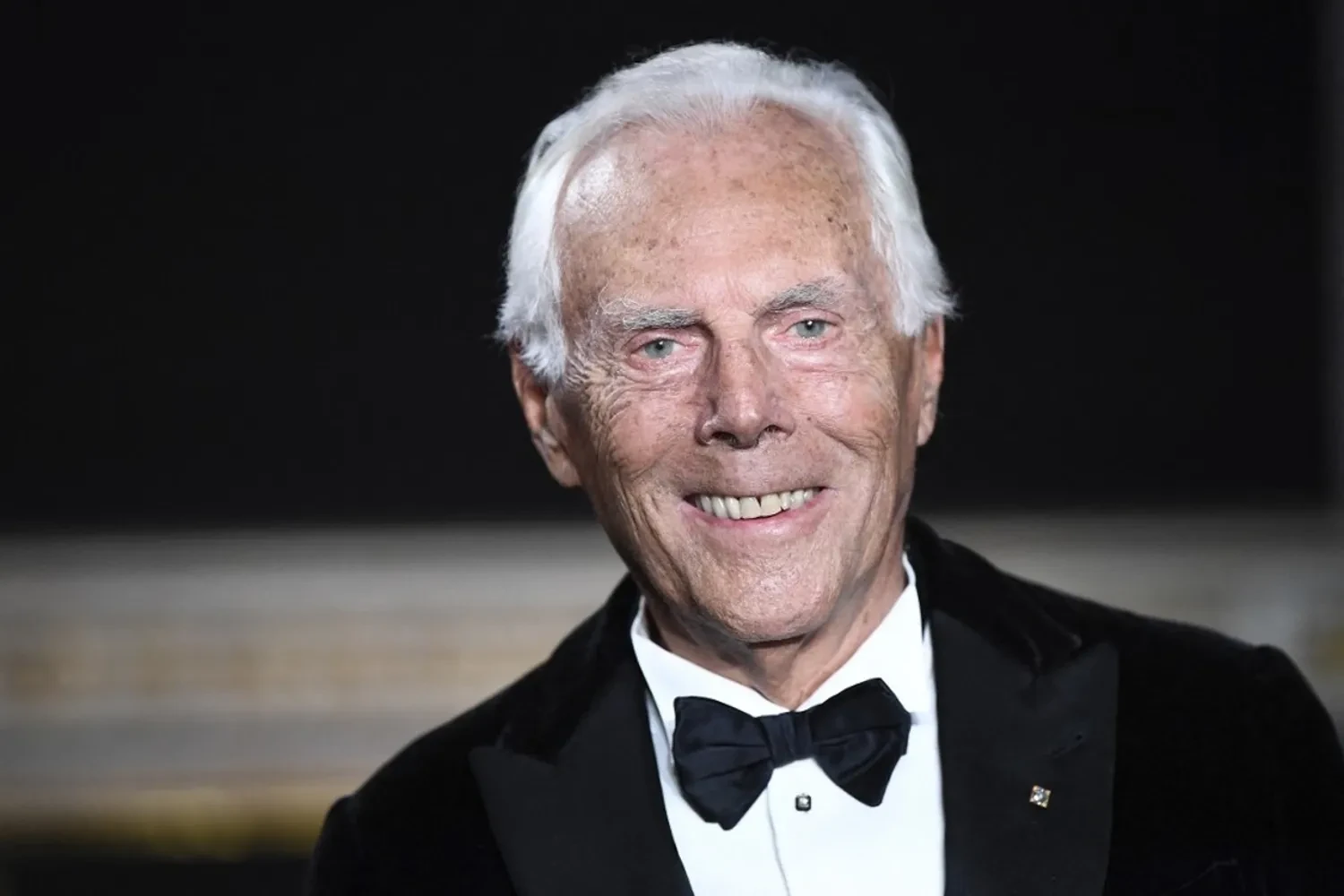
The history of the Armani company is a narrative of aesthetic revolution and shrewd business independence. Founded in 1975 by Giorgio Armani and Sergio Galeotti in Milan, Italy, the brand fundamentally altered global fashion by introducing "deconstructed" tailoring, which removed stiff padding and linings from traditional suits. Over five decades, Armani expanded from a singular menswear line into a diversified lifestyle empire encompassing haute couture, hospitality, and home decor, while remaining one of the few major luxury houses to maintain private, independent ownership into 2026.
The Formative Years: Giorgio Armani’s Path to Design (1934–1974)
Before the Armani name became synonymous with understated luxury, Giorgio Armani’s path was dictated by the post-war realities of Italy. Born in 1934 in Piacenza, Armani initially pursued a career in medicine, enrolling at the University of Milan. However, after three years of study and a stint of mandatory military service, he pivoted toward the creative arts and commerce.
In 1957, Armani began working as a window dresser and sales assistant at La Rinascente, a prestigious Milanese department store. This role was pivotal; it provided him with a direct understanding of consumer behavior, fabric quality, and the visual language of retail. By the early 1960s, his talent for textiles led him to the fashion house of Nino Cerruti, where he was tasked with designing menswear. It was during this decade-long tenure that Armani began experimenting with the silhouettes that would eventually define his career—softening the rigid structures of the traditional European suit to create something more fluid and comfortable.
By the early 1970s, encouraged by his close friend and partner Sergio Galeotti, Armani began working as a freelance designer for several Italian fashion manufacturers. This period of "ghost designing" allowed him to refine his signature style: a blend of casual elegance and rigorous craftsmanship. The realization that his vision was distinct enough to stand alone led to the decision to launch a dedicated label.
The Foundation of Giorgio Armani S.p.A. (1975)
On July 24, 1975, Giorgio Armani and Sergio Galeotti founded Giorgio Armani S.p.A. in Milan. The timing was fortuitous, as the fashion world was beginning to move away from the flamboyant, often restrictive styles of the 1960s toward a more pragmatic, yet sophisticated, aesthetic.
The company’s debut focused on menswear, specifically the introduction of the "unstructured" jacket. By removing the heavy canvas interlinings and shoulder pads that had defined tailoring for a century, Armani created a garment that draped like a second skin. This was not merely a stylistic choice; it was a socio-cultural shift. It allowed men to look professional without appearing stiff, bridging the gap between formal attire and sportswear.
In 1976, the company expanded into womenswear. Armani applied the same principles of masculine tailoring to the female wardrobe, offering women powerful, understated clothing that rejected the hyper-feminine tropes of the era. This "androgynous" approach became a cornerstone of the Armani identity, empowering a new generation of professional women entering the workforce in the late 1970s and 1980s.
The 1980s: Hollywood, the Power Suit, and Global Recognition
The 1980s marked the decade when Armani transitioned from a successful Italian label to a global cultural phenomenon. This ascent was fueled by a strategic intersection of fashion and cinema.
The American Gigolo Effect
In 1980, Armani provided the wardrobe for Richard Gere in the film American Gigolo. The scene where Gere’s character meticulously lays out Armani shirts and ties on his bed became an iconic moment in fashion history. It introduced the American public to the "Armani Look"—a palette of "greige" (a mix of grey and beige), impeccable fabrics, and a relaxed, sensual fit. This placement effectively marketed the brand as the ultimate symbol of modern, affluent masculinity.
The Rise of Power Dressing
As the global economy boomed, the "Power Suit" became the uniform of Wall Street and the corporate world. Armani’s designs for women, which featured broadened shoulders and clean lines, became the standard for executive attire. Unlike the restrictive corsetry of the past, Armani’s power suits offered authority through subtlety. His influence was so pervasive that in 1982, Giorgio Armani became the first fashion designer since Christian Dior to appear on the cover of Time magazine.
Strategic Diversification: Building the Multi-Brand Architecture
Recognizing that the high-end Giorgio Armani line was inaccessible to many, the company pioneered a multi-tiered brand strategy that allowed it to capture different market segments without diluting its prestige. This model, now standard in the luxury industry, was revolutionary at the time.
- Emporio Armani (1981): Launched as a more youthful, trend-focused line with lower price points. The famous eagle logo became a status symbol for younger consumers.
- Armani Junior (1982): A foray into high-end children’s clothing.
- Armani Jeans (1981): A move into the casual denim market, blending luxury with everyday utility.
- A|X Armani Exchange (1991): Targeted at the American mass market, focusing on "street-chic" culture and basic apparel.
- Armani Privé (2005): The brand’s entry into the world of Haute Couture, catering to the highest echelon of celebrity and private clients for red-carpet events.
This diversification was supported by a massive expansion into licensing. Through partnerships with companies like L'Oréal for fragrances and beauty, and Luxottica for eyewear, the Armani brand became a comprehensive lifestyle experience. The 1982 launch of the fragrance "Armani" for women marked the beginning of a highly lucrative beauty division that remains a market leader in 2026.
Navigating Crisis and Internal Transformation (1985–1990s)
In 1985, the company faced its greatest internal challenge when co-founder Sergio Galeotti passed away from complications related to AIDS. Galeotti had been the business mastermind, managing the finances and corporate strategy while Armani focused on design.
Following Galeotti's death, many industry analysts predicted the collapse of the company. However, Giorgio Armani defied expectations by stepping into the role of CEO and mastering the business side of the empire. This transition solidified his reputation not just as a creative visionary, but as one of the most capable executives in the luxury sector. Under his sole leadership, the company tightened its control over production and distribution, vertically integrating much of its supply chain to ensure quality and exclusivity.
The 21st Century: Lifestyle Integration and Hospitality
As the 2000s began, Armani moved beyond clothing to define the spaces in which people lived. This led to the creation of Armani/Casa in 2000, a dedicated interior design and furniture division.
The most ambitious expansion, however, was the move into hospitality. Through a partnership with Emaar Properties, the Armani Hotel Dubai opened in 2010 within the Burj Khalifa, followed by the Armani Hotel Milano in 2011. These properties were designed entirely by Giorgio Armani, from the room layouts to the bespoke toiletries, offering fans of the brand a "360-degree" immersion into the Armani aesthetic.
Timeline of Key Historical Milestones
| Year | Milestone Event | Strategic Impact |
|---|---|---|
| 1975 | Formation of Giorgio Armani S.p.A. | Established the foundation for independent luxury. |
| 1980 | American Gigolo wardrobe design | Launched the brand into mainstream American consciousness. |
| 1981 | Launch of Emporio Armani | Pioneered the "bridge" line strategy in luxury fashion. |
| 1982 | Time Magazine Cover | Solidified Giorgio Armani as a global cultural icon. |
| 1985 | Death of Sergio Galeotti | Forced Giorgio Armani to take full business control. |
| 2000 | Launch of Armani/Casa | Expanded the brand into the home and lifestyle sector. |
| 2005 | Debut of Armani Privé | Established the brand in the elite Haute Couture space. |
| 2010 | Opening of Armani Hotel Dubai | Diversified the company into the ultra-luxury hospitality market. |
| 2025 | 50th Anniversary Celebration | Marked half a century of independent operation and global influence. |
The Armani Philosophy: Aesthetics and Sustainability
Central to the company's longevity is the consistency of its design philosophy. Armani has famously eschewed fleeting trends in favor of "timelessness." His palette—heavy on navy, charcoal, and the signature "greige"—ensures that garments remain relevant for decades. This focus on durability inadvertently positioned Armani as a leader in the sustainable fashion movement long before it became a corporate requirement.
Entering 2026, the company has further integrated ESG (Environmental, Social, and Governance) principles. This includes the elimination of fur across all lines (announced in 2016) and the increased use of recycled textiles and transparent supply chains. The Giorgio Armani Foundation, established in 2016, ensures that the company's wealth is used for social responsibility projects while also providing a framework for the brand’s governance after its founder’s eventually steps back.
Independence in an Age of Conglomerates
One of the most remarkable aspects of Armani's history is its continued independence. Throughout the 1990s and 2000s, many iconic Italian brands—such as Gucci, Fendi, and Loro Piana—were acquired by massive luxury conglomerates like LVMH or Kering.
Arm Giorgio Armani has consistently refused all buyout offers, valuing the creative freedom that comes with private ownership. As of 2026, the company remains under the control of the Armani family and the Giorgio Armani Foundation. This independence allows the brand to make long-term decisions without the pressure of quarterly earnings reports for public shareholders, maintaining a level of exclusivity and brand integrity that is rare in the modern market.
Frequently Asked Questions
Who owns the Armani company in 2026?
The company remains privately held. Giorgio Armani himself retains a controlling interest, though the Giorgio Armani Foundation was established to manage the brand's assets and ensure its continuity. This structure is designed to prevent the company from being broken up or sold to a conglomerate in the event of a leadership transition.
What is the difference between Giorgio Armani and Emporio Armani?
Giorgio Armani is the "signature" or "Black Label" line. It is the most expensive, uses the highest quality materials, and is often handcrafted. It focuses on timeless, sophisticated elegance. Emporio Armani is a more accessible, contemporary line designed for a younger audience. It is trend-driven and carries a lower price point than the signature collection.
How did the "Power Suit" change fashion?
Before Armani, professional suits for men and women were often stiff, heavily padded, and uncomfortable. Armani’s "Power Suit" utilized deconstructed tailoring, removing interior structures to create a look that was authoritative but fluid. It changed fashion by making comfort and elegance synonymous, allowing for a more modern, relaxed professional appearance.
Where are Armani products manufactured?
While the brand has global reach, the majority of its high-end lines (Giorgio Armani and Armani Privé) are still manufactured in Italy to maintain the "Made in Italy" heritage and quality. Lower-tier lines like A|X Armani Exchange may utilize global supply chains, though the company has tightened oversight to meet 2026 sustainability standards.
Is Armani still relevant in 2026?
Yes. By diversifying into hotels, home decor, and beauty, Armani has transformed from a clothing brand into a "lifestyle." Its commitment to timeless design rather than fast-fashion trends has allowed it to maintain a loyal customer base across multiple generations, while its 50th-anniversary events in 2025 reaffirmed its status as a pillar of the luxury world.
Conclusion and Strategic Outlook
The history of the Armani company is a testament to the power of a singular, uncompromising vision. By redefining the silhouette of modern clothing and successfully navigating the transition from a design studio to a global corporation, Giorgio Armani created a blueprint for the modern luxury industry. For those looking to understand the brand's enduring appeal, the key lies in its "silent luxury"—the ability to convey status and sophistication without the need for overt logos or aggressive trends.
As the company looks toward the future beyond 2026, its focus remains on the transition of leadership to the Giorgio Armani Foundation and the continued integration of sustainable practices. For the consumer and the fashion student alike, the Armani story serves as a reminder that true style is not about what is new, but about what is lasting.