As of 2026, the integration of generative AI into search engines has fundamentally transitioned from an experimental feature to the primary mode of information retrieval. This paradigm shift—moving from keyword-indexed blue links to synthesised, conversational responses—has redefined user expectations, search engine optimization (SEO) standards, and the economic landscape of the digital publishing industry.
The Evolution of Search Architecture
The transition to AI-powered search is not merely a cosmetic update to interfaces; it represents a foundational change in how data is retrieved, parsed, and presented. Traditional search engines functioned as retrieval systems, indexing pages and ranking them based on signals like backlinks, keyword density, and technical site performance. In contrast, modern AI-driven search employs Large Language Models (LLMs) to synthesize information across multiple domains, offering direct answers that reduce the need for users to click through to individual websites.
This shift relies on Retrieval-Augmented Generation (RAG). RAG allows search engines to ground model responses in verified, real-time data retrieved from their existing indices. By combining the linguistic prowess of LLMs with the indexing capabilities of traditional search crawlers, companies are now able to provide coherent summaries, direct comparisons, and nuanced explanations that previously required manual research across several search results.
Shifting Capabilities: What Users and Creators Experience
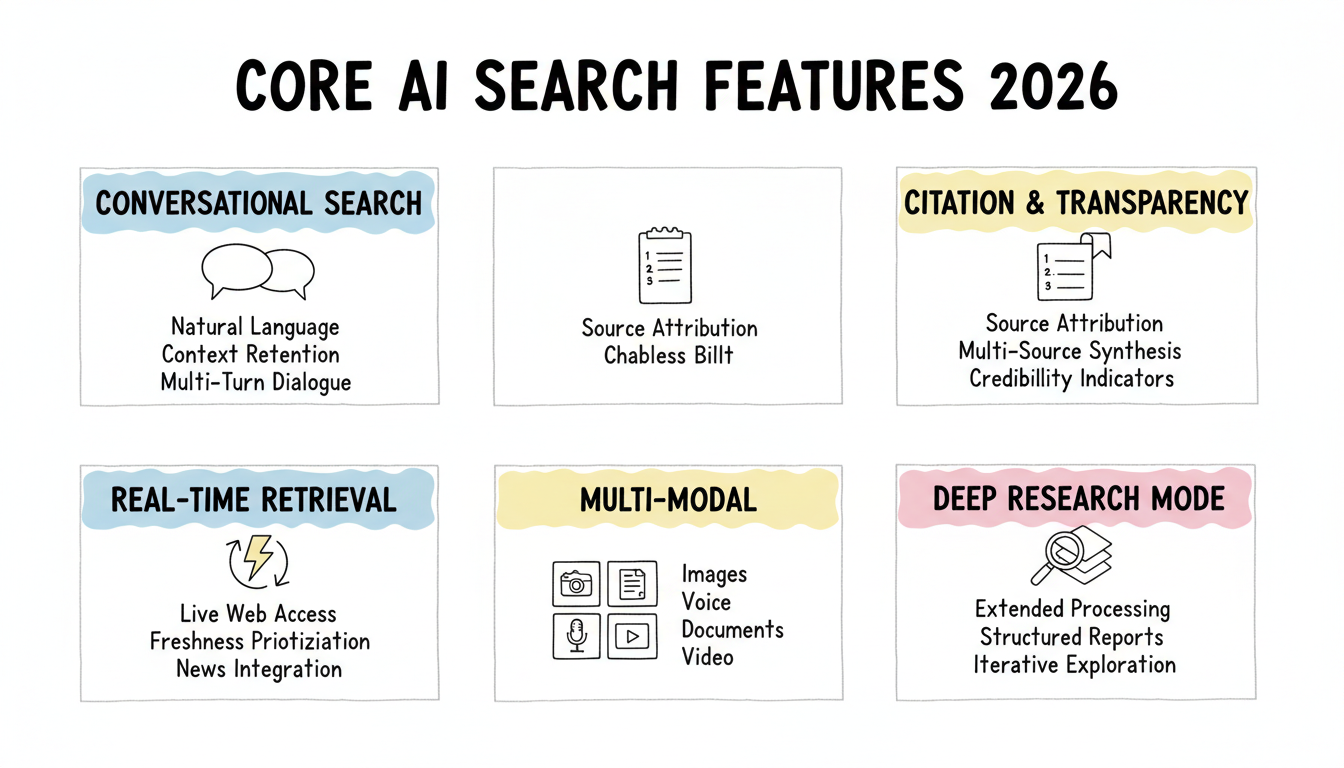
The capabilities of AI-powered search in 2026 are multifaceted, focusing on multi-modal inputs and context retention.
- Multi-modal Query Processing: Modern search is no longer limited to text-to-text. Users frequently utilize images, voice, and video clips to initiate queries. For example, a user can upload a photo of a broken appliance part and ask for repair steps, or record a video of a software error to receive a debugging guide.
- Conversational Continuity: Search sessions now act as ongoing dialogues. If a user asks about the history of a specific technology, they can follow up with specific questions about its economic impact without needing to restate the context of the previous query.
- Direct Synthesis: For complex topics—such as legal nuances or technical troubleshooting—search engines now aggregate information from multiple authoritative sources into a single, cohesive response, citing the origins of that information via sidebar links or embedded snippets.
For content creators, this creates a bifurcated landscape. High-volume, informational search traffic is increasingly captured by the search engine’s AI interface, leading to what is often described as "zero-click" searches. Conversely, specialized, high-authority, and experiential content continues to drive traffic as users seek depth or verification that an AI summary cannot fully replicate.
Comparison of Search Paradigms
| Feature | Traditional Keyword Search | AI-Powered Search (2026) |
|---|---|---|
| Primary Output | Ranked list of URLs | Synthesized direct answers |
| User Effort | High (browsing/evaluating) | Low (direct summary) |
| Context | Single query focus | Conversational state retention |
| Source Attribution | Primary goal of delivery | Secondary reference point |
| Monetization | Display ads on SERPs | Integrated contextual commerce |
Ongoing Debates and Ethical Considerations
The rapid adoption of AI-powered search has ignited intense debates regarding the sustainability of the web ecosystem and the veracity of automated output.
The Economics of Traffic and Attribution
A central point of contention is the erosion of referral traffic to publishers. If a search engine provides a complete answer to a query, the incentive for the user to visit the source website diminishes. This creates a "publisher's dilemma": creators rely on search traffic to fund the production of the very data the AI uses to train and respond. Critics argue that this creates a parasitic relationship, where search giants profit from the aggregation of proprietary content while simultaneously diverting the audience away from those sources.
Veracity and Hallucination Risks
Despite improvements in accuracy, AI models remain susceptible to "hallucinations"—the generation of false information delivered with high confidence. While retrieval-augmented generation significantly lowers this risk by grounding output in verified sources, the risk persists in niche subjects or areas with conflicting data. Users are now encouraged, and sometimes required, to adopt a "verify-first" mindset, cross-referencing AI summaries with primary source documents, especially for financial, health, or legal queries.
Bias and Homogenization of Information
Because AI-powered search synthesizes data based on weighted training sets, there is an ongoing concern about the homogenization of thought. If the majority of the population relies on a single or a handful of AI search models for information, the diversity of viewpoints may narrow. Furthermore, the inherent biases present in historical training data can lead to subtle prejudices in how search engines frame sensitive topics, necessitating ongoing audits by search companies to ensure neutrality and representativeness.
Technical Limitations and User Requirements
For organizations and individuals attempting to optimize for this environment, the technical requirements have shifted. Optimization now involves ensuring that content is structured in a way that AI models can easily ingest and reference. This involves:
- Semantic Markup: Utilizing Schema.org markup is more critical than ever. It provides the explicit signals models need to categorize data correctly.
- Authoritative Depth: AI models prioritize content that demonstrates experience, expertise, authoritativeness, and trustworthiness (E-E-A-T). Thin, repetitive content is increasingly penalized by the models' preference for high-signal, high-value data.
- Direct Answer Optimization: Drafting content that explicitly answers the "who, what, when, where, and why" of a search intent within the first few paragraphs helps the model identify and extract the most relevant segments of a page.
Addressing Common Queries
Does AI search mean the end of SEO? SEO is not dying, but it is evolving. The focus has moved away from gaming keyword density and toward positioning content as the definitive, authoritative source that an AI model would naturally want to cite to ensure the accuracy of its own answer.
How can I ensure the information provided by an AI search is accurate? Always review the citations provided. If an AI search provides a definitive claim on a critical topic (like a medical diagnosis or tax advice), locate the linked original source. If no source is provided, treat the information as a suggestion rather than a verified fact and conduct an independent search.
Why is my website traffic down despite higher rankings? This is a hallmark of the shift toward zero-click searching. If your site answers a common question that is now being summarized by the search engine, you are experiencing the "answer capture" effect. Focus your content strategy on high-intent, complex, or expert-level topics where users require the full context found only on your page.
What is the cost of AI search for users? While basic search remains free, 2026 has seen an increase in premium search tiers that offer higher token limits, advanced data analysis, and faster processing speeds. Free tiers remain heavily supported by contextual advertising integrated into the conversational flow.
Are there legal regulations governing these search engines? Global regulatory bodies are increasingly focusing on the transparency of AI models. Requirements for clear labeling of AI-generated content and the potential for "opt-out" mechanisms for publishers are currently being debated in several legislative jurisdictions.
Navigating the Future
For the end user, the best approach is to embrace the convenience of AI-powered search for synthesis and efficiency, while maintaining a healthy skepticism for high-stakes information. For content producers, the strategy must pivot toward building "un-summarizable" content—information that requires a full visit to engage with, such as deep-dive tutorials, original research, and unique community-based analysis.
As the underlying models continue to refine their grounding and attribution, the friction between search engines and publishers will likely lead to new licensing models or digital compensation frameworks. Until these economic structures mature, the focus remains on producing content that acts as an essential, high-quality building block for the search engines of the future.