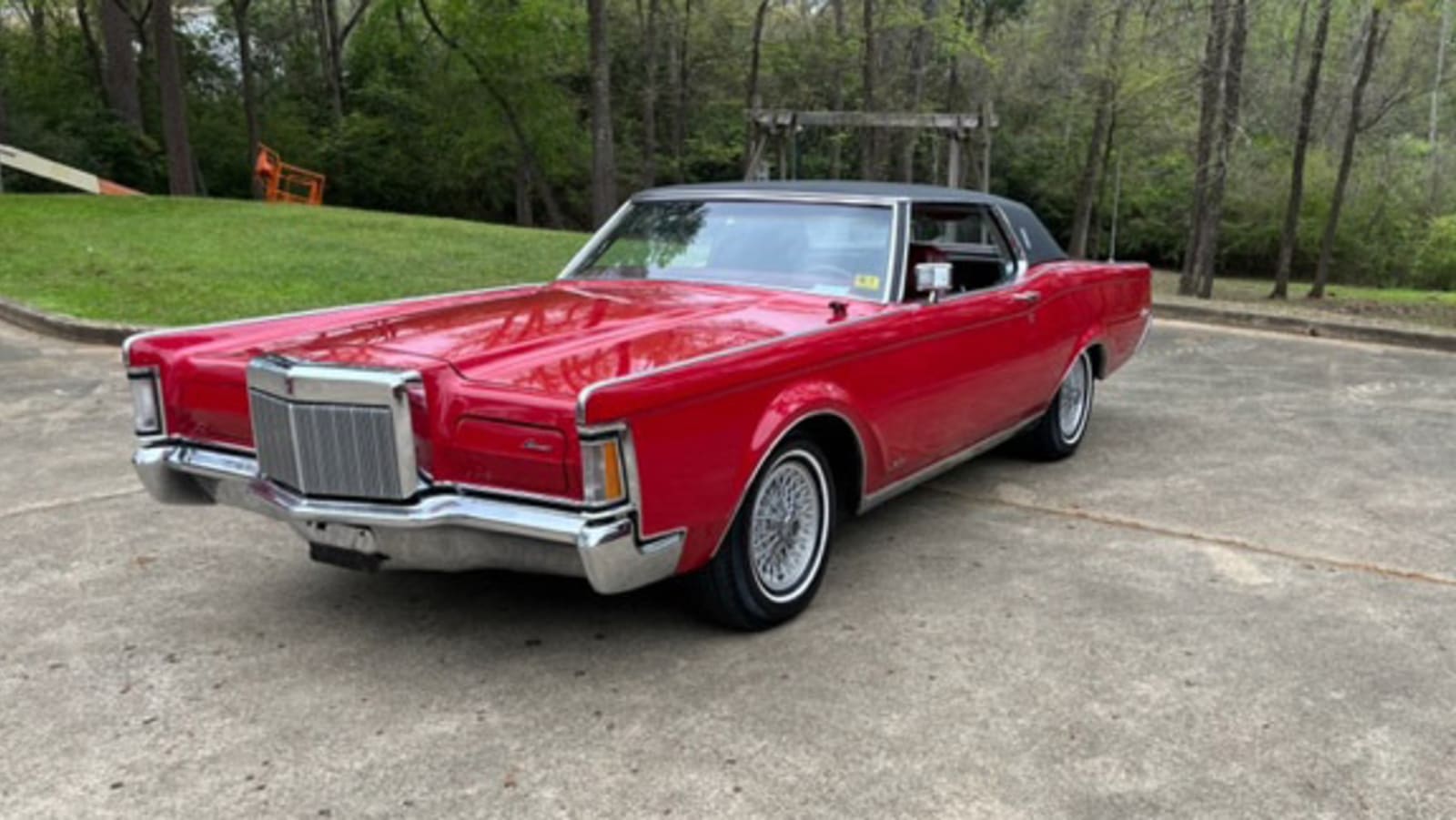
As of 2026, the 1971 Lincoln Continental Mark III remains a highly desirable acquisition for collectors who prioritize presence, build quality, and "Personal Luxury" over raw performance. While high fuel consumption and the scarcity of specific interior trim pieces pose challenges, its iconic styling and smooth 460 V8 make it a worthwhile investment for those seeking a peak American classic.
The Significance of the 1971 Model Year
The 1971 Lincoln Continental Mark III represents the final and most refined year of one of Ford Motor Company’s most successful luxury experiments. Introduced in mid-1968 as a direct competitor to the front-wheel-drive Cadillac Eldorado, the Mark III was Lee Iacocca’s masterpiece. By 1971, the model had reached its zenith of production quality and feature integration before being replaced by the larger, heavier Mark IV in 1972.
Buying a '71 model today is a pursuit of a specific era of American opulence. It was the last year before federal bumper regulations and emissions standards began to significantly alter the aesthetics and performance of American V8s. In 2026, the Mark III is no longer just an "old car"; it is a curated piece of mid-century automotive art that commands respect at concours events and local cruise-ins alike.
Technical Specifications and Performance Realities
To understand if the Mark III is worth buying, one must understand the mechanical beast under the hood. Every 1971 Mark III came equipped with the 460 cubic inch (7.5L) V8. In 1971, this engine was rated at 365 gross horsepower, though it is important to remember that 1971 was the transition year before the industry moved to "net" horsepower ratings.
The Powerplant
The 460 V8 is a torque monster, designed to move 5,000 pounds of steel with effortless grace. It utilizes a four-barrel carburetor and is paired with the C6 three-speed automatic transmission, a unit known for its near-indestructibility. While the 460 is reliable, it is thirsty. In 2026, with fluctuating fuel prices, owners should expect no more than 8 to 12 miles per gallon. Furthermore, these engines were designed for high-octane leaded fuel; modern owners must often use premium unleaded with lead substitutes or hardened valve seats to ensure long-term engine health.
The Ride Quality
The Mark III utilizes a body-on-frame construction with a coil-spring suspension at all four corners. The goal was never cornering agility; it was "boulevard ride." The steering is over-boosted by modern standards, allowing one to steer the massive coupe with a single finger. For a driver in 2026 accustomed to the stiff, communicative suspension of modern EVs or sport sedans, the Mark III will feel like a cloud. It absorbs road imperfections that would jar a modern vehicle, providing a serene, if somewhat disconnected, driving experience.
Interior Luxury: The Cartier Influence
The interior of the 1971 Mark III is where the "Personal Luxury" label truly earns its keep. This was the year that solidified the Lincoln-Cartier partnership, featuring a Cartier-branded chronometer on the dashboard.
Materials and Craftsmanship
Unlike the plastic-heavy interiors of the late 70s and 80s, the '71 Mark III used high-quality materials. You will find genuine walnut or East Indian Rosewood veneers on the dash and door panels (depending on the trim package). The seats, often referred to as "Twin Comfort" lounge seats, were available in high-grade leather or "Westminster" cloth.
Features That Were Ahead of Their Time
In 2026, we take many features for granted, but the 1971 Mark III offered:
- Automatic Climate Control: A "Set it and forget it" system that was remarkably advanced for 1971.
- Sure-Track Braking: An early form of rear-wheel anti-lock brakes (ABS) developed by Kelsey-Hayes.
- Power Everything: Windows, locks, seats, and even a power trunk release were standard or common options.
The challenge for the modern buyer is the functionality of these systems. Many rely on complex vacuum lines. A "worthwhile" Mark III is often one where these systems have already been serviced, as troubleshooting vacuum leaks in a 55-year-old dashboard can be both time-consuming and expensive.
Market Value and Investment Potential in 2026
The collector car market has seen a shift toward the "Radwood" era (the 80s and 90s), but the 1971 Mark III has maintained a steady upward trajectory. It occupies a "sweet spot" in the market: it is more affordable than a comparable 1960s Lincoln Continental convertible, yet more prestigious than the later Mark V or VI models.
| Condition | Estimated Value (2026) | Trend |
|---|---|---|
| #1 Concours (Mint) | $45,000 - $65,000 | Rising |
| #2 Excellent (Show Ready) | $30,000 - $42,000 | Stable |
| #3 Good (Driver Quality) | $18,000 - $28,000 | Stable |
| #4 Fair (Project Car) | $7,000 - $12,000 | Declining |
For a buyer today, the "Good" to "Excellent" range offers the best value. Cars in this bracket have usually been maintained well enough to drive regularly but haven't reached the price ceiling of a museum piece. The investment potential is solid; as younger generations look for "statement" vehicles that stand out against a sea of aerodynamic crossovers, the sharp lines and hidden headlights of the Mark III offer unmatched curb appeal.
Critical Issues to Inspect Before Buying
While the Mark III is robust, it has specific Achilles' heels that can turn a "good deal" into a financial burden.
1. The Vinyl Roof and Rust
Almost every Mark III came with a vinyl-covered roof. Over decades, moisture can trap underneath the vinyl, rotting the metal roof skin from the outside in. Inspect the base of the "C-pillars" and the area around the rear window molding very closely. If the vinyl feels "crunchy" or shows bubbling, walk away, as the repair costs often exceed the car's value.
2. Vacuum System Failure
The iconic hidden headlights are vacuum-operated. If the seals or hoses fail, the "eyes" of the car will droop or stay open permanently. Similarly, the door locks and climate control doors are vacuum-dependent. A buyer should verify that the headlights flip up and down promptly when the switch is toggled.
3. Parts Availability
While mechanical parts (engine, transmission, brakes) are easily sourced because they share components with Ford trucks and Thunderbirds, trim pieces are the nightmare. Finding a replacement Cartier clock, a specific piece of side molding, or a pristine dashboard pad is incredibly difficult and expensive. Ensure the car you are buying is "complete."
Comparison: Mark III vs. The Competition
To determine if it is worth buying, we must look at how it stacks up against its historical and modern rivals.
| Feature | 1971 Lincoln Mark III | 1971 Cadillac Eldorado | 1971 Ford Thunderbird |
|---|---|---|---|
| Drive Type | Rear-Wheel Drive | Front-Wheel Drive | Rear-Wheel Drive |
| Engine Size | 460 cu in (7.5L) | 500 cu in (8.2L) | 429 cu in (7.0L) |
| Status Symbol | High (The "Elite" Ford) | Very High (The Standard) | Mid-Range |
| Maintenance | Moderate | Complex (FWD setup) | Easier (More common) |
| Styling | Formal/Classic | Modern/Bold (for '71) | Sporty/Jet-Age |
The Mark III is often preferred by enthusiasts over the '71 Eldorado because the Lincoln's rear-wheel-drive layout is simpler to maintain and provides a more traditional "long hood, short deck" silhouette.
Practicality in a 2026 Context
Is it a daily driver? Absolutely not. The size alone makes it a liability in modern parking garages and narrow city streets. However, as a weekend cruiser, it is exceptional. Its massive trunk can hold more luggage than most modern mid-sized SUVs, and the interior volume ensures that four adults can travel in total comfort.
If you live in a region with strict emissions testing, check your local laws. In many jurisdictions, a 1971 vehicle is exempt from smog checks due to its age, which is a significant "pro" for the Mark III. However, ensure your insurance provider offers a "Classic Car" policy (such as those from Hagerty or Grundy) to protect the agreed value of the car rather than its depreciated "blue book" value.
FAQs
Is the 1971 Lincoln Mark III reliable for long road trips?
Yes, provided the cooling system and tires are modern. The 460 V8 was built for sustained highway cruising. However, you should carry a basic tool kit and spare vacuum lines, as older rubber components can fail under the heat of a long journey.
How much should I budget for annual maintenance?
For a well-maintained "Driver" quality car, expect to spend between $1,000 and $2,000 annually. This covers oil changes (using high-zinc oil for flat-tappet cams), minor electrical repairs, and preventative maintenance. This budget excludes major failures like a transmission rebuild or rust repair.
Can I upgrade the Mark III with modern technology?
Many owners install "hidden" Bluetooth audio systems to preserve the original look of the dash. Mechanical upgrades like electronic fuel injection (EFI) systems (e.g., Holley Sniper) are popular for improving reliability and cold-start behavior, though they may slightly decrease the value for "purity" collectors.
What is the rarest color for the 1971 Mark III?
While black and silver were popular, the "Moondust" metallic paints and the "Triple White" (white paint, white vinyl top, white leather) are highly sought after today. Any car with a documented "Special Order" paint code will command a premium.
Does the 1971 Mark III have a catalytic converter?
No. Catalytic converters were not mandated until 1975. This makes the 1971 model easier to maintain and allows the 460 V8 to "breathe" better than its mid-70s successors, though it does mean the exhaust scent is more pronounced.
Final Recommendation: Should You Buy One?
The 1971 Lincoln Continental Mark III is worth buying today if you view it as a functional investment. It is not a vehicle for the budget-conscious or those who lack a garage. It requires space, patience for finding parts, and a healthy fuel budget.
However, if you seek a vehicle that offers a sense of occasion every time you turn the key—a car that feels more like a private club than a mode of transportation—the Mark III is peerless. It represents the end of an era of unapologetic American granduer. To maximize your value, look for a "no-rust" example from a dry climate with a documented service history of its vacuum and climate control systems. In 2026, these cars are moving from "old luxury" to "blue-chip classic," and getting in now is a wise move for any serious enthusiast.