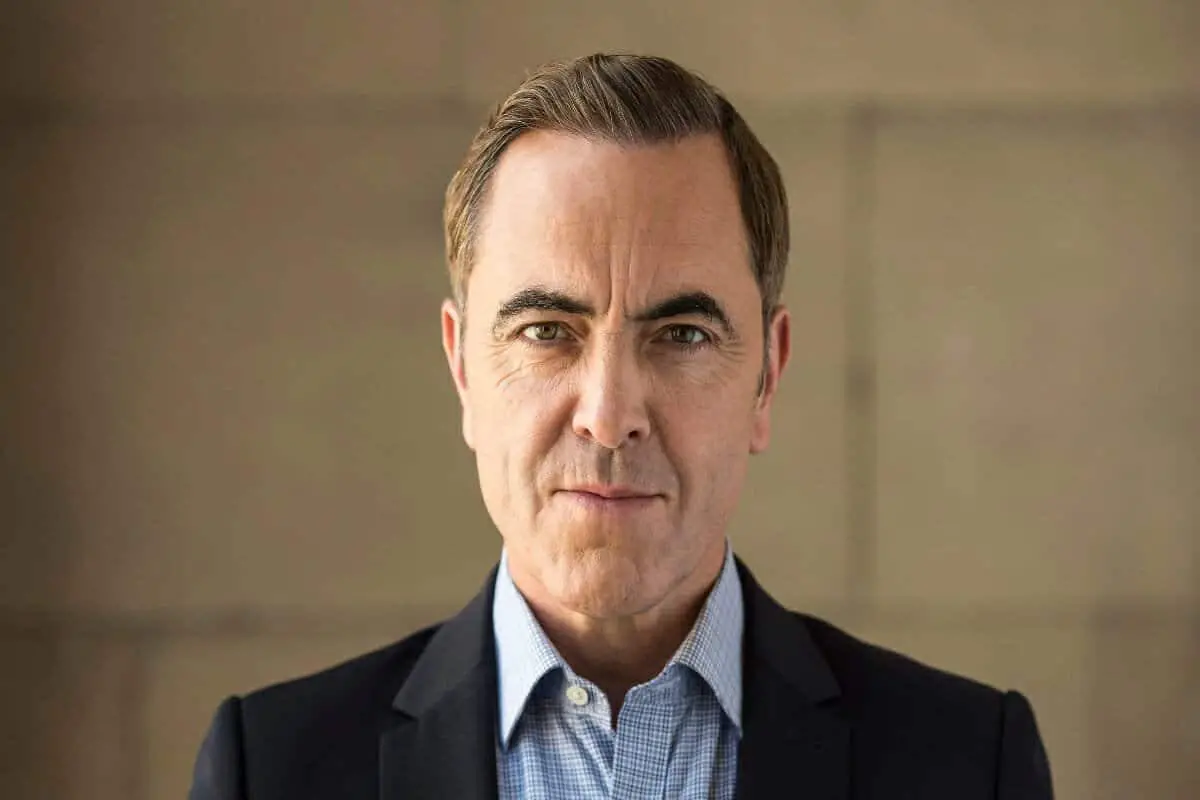
As of the 2025–2026 financial assessments, OpenAI Co-founder and President Greg Brockman has an estimated net worth ranging between $500 million and $1 billion. This valuation stems primarily from his early equity accumulation as the former Chief Technology Officer of Stripe, profit-participation units and equity allocations within OpenAI, and an active portfolio of venture capital investments across frontier technologies.
Financial & Valuation Disclaimer
Estimating the net worth of executives in privately held technology firms involves inherent analytical uncertainties. Financial figures presented in this analysis rely on public funding filings, secondary share market transactions, venture capital valuation benchmarks, and historical corporate disclosures. These estimates do not represent audited tax records or official financial disclosures and should be used strictly for analytical and educational purposes.
Analyzing Greg Brockman’s Estimated Net Worth Spectrum
Determining the precise financial standing of Greg Brockman requires evaluating private market equity, non-traditional corporate profit structures, and illiquid venture holdings. Unlike executives at publicly traded entities such as Microsoft, Apple, or Alphabet, whose wealth can be tracked daily via SEC Form 4 filings and market capitalization movements, Brockman’s wealth is concentrated in privately held technology entities.
Financial analysts and venture wealth intelligence platforms generally segment Brockman’s total net worth into three core asset tiers:
- Conservative Baseline ($350M – $500M): Factor in heavy discounts for private share illiquidity, potential tax liabilities on vested options, conservative estimates of early Stripe equity retention, and non-dilutive profit units within OpenAI prior to full corporate restructuring.
- Mid-Range Consensus ($500M – $800M): Incorporates secondary share liquidity events executed during OpenAI’s valuation surges, realized capital gains from early Stripe stock sales, and appreciated positions in early-stage seed investments.
- Aggressive Market Peak ($850M – $1.2B+): Assumes full conversion of profit units into standard corporate equity following OpenAI's structural alignment with traditional corporate models, combined with un-discounted valuations of secondary market holdings in Stripe and high-growth AI startups.
Greg Brockman Asset Spectrum Estimate:
- Conservative: $350M - $500M (Illiquidity Discounted + Realized Liquidity)
- Mid-Range Consensus: $500M - $800M (Balanced Private Valuation + Secondary Sales)
- Aggressive Peak: $850M - $1.2B+ (Full Post-Restructuring Equity + Stripe Appreciation)
Key Pillars of Wealth: Where Greg Brockman’s Assets Originate
Greg Brockman’s financial trajectory differs significantly from traditional Silicon Valley founders who build a single enterprise and hold direct, massive equity stakes from inception to initial public offering (IPO). Instead, his net worth is built on two primary technology super-generators: Stripe and OpenAI.
1. The Stripe Era: Early Engineering Leadership and Equity
Before joining OpenAI, Brockman spent nearly five years at Stripe, serving as its founding Chief Technology Officer after joining as one of its earliest employees in 2010. During his tenure, Stripe grew from a small payments startup into one of the most valuable financial technology infrastructure providers in the world.
As CTO, Brockman was granted substantial early-stage employee stock options. While Stripe's valuation fluctuated significantly across different funding cycles—peaking near $95 billion in 2021 before adjusting to the $50 billion to $70 billion range in subsequent secondary liquidity rounds—early executive shares retained immense value.
Key factors contributing to his Stripe wealth legacy include:
- Early Option Grants: Early executive grants issued when Stripe was valued under $100 million yielded exponential appreciation as the firm scaled global payments infrastructure.
- Secondary Market Sales: Stripe periodically hosted structured tender offers allowing long-tenured employees to liquidate portions of their vested equity, providing Brockman with early liquid capital prior to founding OpenAI.
- Diversification Runway: Liquid proceeds from Stripe provided the financial independence necessary to co-found a risky non-profit artificial intelligence laboratory in 2015 without requiring an immediate market-rate executive salary.
2. OpenAI Equity and Executive Compensation Architecture
Brockman’s financial involvement with OpenAI is unique within modern corporate history. OpenAI was established in late 2015 as a 501(c)(3) non-profit research organization. Under this initial governance structure, founders—including Greg Brockman, Sam Altman, and Ilya Sutskever—did not hold traditional equity shares, as non-profits cannot issue stock.
The Capped-Profit Transition (OpenAI Global LLC)
In 2019, OpenAI restructured to create a "capped-profit" commercial entity (OpenAI Global LLC) under the control of the non-profit board. This structure introduced Profit Participation Units (PPUs) designed to attract world-class talent while limiting potential investor returns to a specified multiple (e.g., 100x on early investment capital).
Unlike Sam Altman, who publicly stated he held no direct equity in OpenAI for many years (attributing his involvement to mission alignment rather than financial gain), Brockman participated in the commercial entity's compensation architecture:
- Executive Profit Units: Brockman received substantial allocations of profit participation units linked to OpenAI’s commercial valuation growth.
- Valuation Cascades: As OpenAI’s commercial arm grew rapidly following the launch of ChatGPT—scaling from a $29 billion valuation in early 2023 to an $86 billion tender offer in early 2024, and ultimately reaching a $157 billion valuation in late 2024—the implicit value of these profit units expanded rapidly.
- Tender Offers and Secondary Liquidity: OpenAI regularly arranged secondary share purchase programs backed by major investment firms like Thrive Capital, SoftBank, and Dragoneer. These secondary transactions enabled senior executives and early team members to convert vested units into cash, converting theoretical private valuation into realized net worth.
Corporate Restructuring Impact
OpenAI’s moves to transition toward a traditional public benefit corporation (PBC) marked a structural shift in how executive equity was assigned. Under proposed corporate adjustments, traditional equity models aligned OpenAI with standard tech giants, cementing Brockman's equity positioning as a major co-founder.
3. Venture Capital and Private Angel Investment Portfolio
Leveraging early liquidity from Stripe and secondary sales from OpenAI, Brockman established himself as an active tech angel investor. High-net-worth engineering leaders often reinvest capital into emerging infrastructure, developer tools, and frontier science startups.
Brockman’s personal investment portfolio focuses primarily on:
- Developer Infrastructure & AI Tooling: Early-stage investments in software architecture, enterprise security, and AI developer software.
- Synthetic Biology & Climate Tech: Investments in deep-tech domain ventures that rely heavily on computational biology and advanced machine learning modeling.
- Fintech & Decentralized Protocols: Strategic participation in next-generation payment systems building upon his deep experience at Stripe.
While private startup investments remain illiquid and carry high failure rates, early-stage allocations in successful software companies offer substantial upside that diversifies his wealth outside of OpenAI.
The Impact of OpenAI’s Valuation Surges on Founder Wealth
To understand how Brockman’s net worth expanded between 2023 and 2025, one must analyze the valuation trajectory of OpenAI. The exponential rise in private market valuation directly impacted the implied value of executive options, restricted stock units (RSUs), and profit units.
OpenAI Commercial Valuation Growth (2021 - 2024/2025):
- 2021: $14B
- 2023: $29B
- Early 2024: $86B
- Late 2024: $157B
Key Valuation Milestones:
- 2021 Funding Round ($14 Billion): Early commercialization attempts around GPT-3 established the initial baseline for commercial profit units.
- Early 2023 Strategic Investment ($29 Billion): Microsoft’s multi-billion dollar commitment validated the commercial enterprise, increasing employee equity values across the organization.
- Early 2024 Employee Tender Offer ($86 Billion): Allowed early employees and leaders to sell equity to institutional investors, confirming real secondary liquidity at massive premiums.
- Late 2024 Recapitalization Round ($157 Billion): Led by major institutional tech investors, this round solidified OpenAI’s standing as one of the most valuable private companies in world history, dramatically scaling executive wealth allocations.
For Greg Brockman, whose role as President places him at the core of technical execution and organizational leadership, these valuation leaps directly elevated his net worth range. Even after accounting for standard dilution and tax obligations, secondary tender mechanisms allowed senior leaders to secure high multi-million-dollar cash positions while retaining significant upside.
Comparative Analysis: OpenAI Leadership Net Worth Dynamics
To contextualize Greg Brockman’s net worth within the broader leadership landscape of artificial intelligence enterprises, it is helpful to examine how executive compensation and asset structures differ among core figures.
| Executive | Organization | Primary Wealth Drivers | Estimated Net Worth Range | Equity Structure Notes |
|---|---|---|---|---|
| Greg Brockman | OpenAI | Stripe early CTO equity, OpenAI profit units/equity, Angel investments | $500M – $1B+ | Vested profit units converted under new corporate structures; historical Stripe liquidity. |
| Sam Altman | OpenAI | Y Combinator, early angel investments (Stripe, Airbnb, Reddit), venture funds | $1B – $2B+ | Wealth largely independent of early OpenAI non-profit salary; holding major venture assets & public shares. |
| Ilya Sutskever | SSI (Safe Superintelligence) / Ex-OpenAI | Early OpenAI allocations, research grants, new funding rounds for SSI | $100M – $300M | Academic/Research background; transitioned equity holdings following departure from OpenAI. |
| Mira Murati | Ex-OpenAI | OpenAI executive compensation, secondary liquidity, new stealth ventures | $50M – $150M | Key operational leadership compensation; secondary share liquidations during 2023–2024. |
Valuation Methodology: How Private AI Wealth Is Calculated
Calculating the net worth of private technology executives requires applying standard financial analysis principles to incomplete or confidential data sets. Financial analysts use specific frameworks to establish realistic asset ranges:
1. Illiquidity Discounting (Haircut Application)
Direct stock in publicly traded companies can be converted into cash instantly at market prices. In contrast, private company stock cannot be sold without board approval, company-managed tender offers, or specialized private liquidity platforms (such as Forge Global or EquityZen).
Consequently, analysts apply an illiquidity discount ranging from 15% to 30% on un-listed equity holdings to reflect the lack of instant market access and regulatory restrictions.
2. Tax Obligations on Options and Vested Units
When tech executives exercise non-qualified stock options (NSOs) or experience RSU vesting events, substantial tax liabilities occur. In states like California, combined federal and state income and capital gains tax burdens can exceed 40% to 50% upon realization. Net worth estimates must account for historical tax withholding and capital gains obligations resulting from secondary stock sales.
3. Preferred vs. Common Stock Pricing Spreads
In high-growth private financing rounds, institutional investors receive Preferred Stock featuring liquidation preferences, anti-dilution protections, and board rights. Employees and founders typically hold Common Stock or Profit Participation Units, which carry lower market prices on internal 409A valuations.
Evaluating executive wealth based solely on the high preferred share price paid by venture funds often overstates individual holdings unless explicit common-to-preferred conversion parity is established.
Future Financial Outlook: Factors Affecting Brockman’s Net Worth Beyond 2025
Looking beyond 2025, several key operational and financial catalysts could drastically alter Greg Brockman’s net worth:
- Potential OpenAI Initial Public Offering (IPO): Should OpenAI eventually pursue an IPO, public market price discovery will establish an exact liquid value for Brockman's equity holdings, removing illiquidity discounts.
- Completion of Corporate Restructuring: Finalizing the legal transition of OpenAI into a streamlined corporate entity with standard equity structures could unlock formal equity grants for executive leadership.
- Stripe’s Liquidity Events: Any eventual public market debut or major recapitalization event by Stripe would provide a finalized valuation on residual long-term holdings from his tenure as CTO.
- Venture Portfolio Realization: As early-stage artificial intelligence and synthetic biology companies in Brockman's private portfolio mature, exit events (mergers, acquisitions, IPOs) will add additional liquid capital to his overall net worth balance.
Key Takeaways for Financial Analysts and Industry Observers
Understanding Greg Brockman's financial profile offers broader insights into the changing landscape of modern technology executive compensation:
- Dual-Engine Wealth Creation: Brockman's financial standing is not tied to a single success story; it represents cumulative value built across two separate generational technology firms (Stripe and OpenAI).
- Evolving Corporate Compensation Models: His wealth trajectory illustrates how capped-profit organizations and non-profit-controlled LLCs adapt standard executive equity mechanisms to recruit and retain premier engineering leadership.
- Private Liquidity Mechanisms: Secondary tender offers have redefined executive net worth, allowing leaders to realize substantial liquid wealth long before a traditional public market IPO occurs.
Frequently Asked Questions (FAQs)
What is Greg Brockman's estimated net worth in 2025?
Greg Brockman's net worth is estimated between $500 million and $1 billion. This range reflects his early executive equity from Stripe, profit units and equity allocations within OpenAI, and private angel venture investments.
Did Greg Brockman build his wealth from Stripe or OpenAI?
His wealth is built on a foundation of both enterprises. His initial liquid capital and foundational equity originated from his five-year tenure as the early CTO of Stripe. His overall financial valuation expanded significantly through OpenAI’s high-growth valuation trajectory and associated secondary share liquidity events.
Does Greg Brockman hold direct stock in OpenAI?
Historically, OpenAI operated as a non-profit and later introduced Profit Participation Units (PPUs) under OpenAI Global LLC. As OpenAI restructures its governance to align with standard corporate models, executive compensation structures—including Brockman's—have increasingly aligned with traditional direct corporate equity.
How does OpenAI’s $157 billion valuation affect Greg Brockman’s net worth?
A high valuation raises the theoretical and secondary market value of executive equity, options, and profit-sharing allocations. It allows founders and senior executives to participate in secondary tender sales at higher per-share valuations, increasing their realized liquid net worth.
Why do net worth estimates for private tech founders vary widely?
Private companies are not subject to the same public disclosure rules as SEC-reporting public firms. Variations in net worth estimates occur due to differing analytical assumptions regarding illiquidity discounts, tax obligations, private venture portfolio returns, and exact equity ownership percentages.