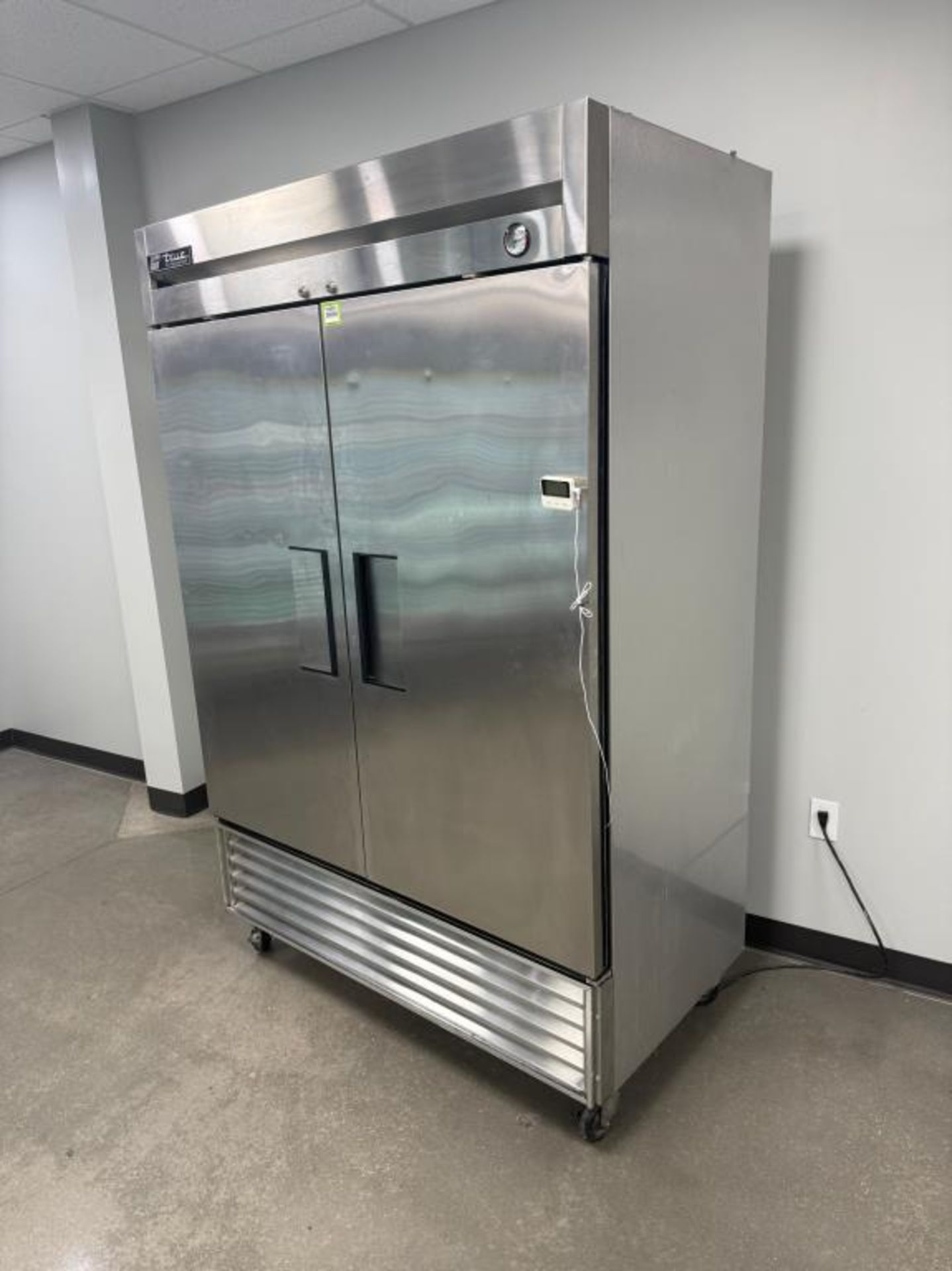
The True Manufacturing T-49 is a dual-section, reach-in commercial refrigerator engineered for high-volume foodservice environments. Known for its robust stainless steel construction and bottom-mount refrigeration system, the T-49 provides a consistent, heavy-duty cooling solution designed to maintain internal temperatures between 33°F and 38°F (0.5°C to 3.3°C) under demanding kitchen conditions.
Defining the True T-49 in a Commercial Context
The True T-49 occupies a specific niche in commercial kitchen design. It is not merely an appliance; it is a critical piece of infrastructure. The "T" series designation from True Manufacturing represents their flagship line of reach-in refrigerators, characterized by the use of oversized, factory-balanced refrigeration systems. In professional settings, this is often the standard against which other reach-in units are measured.
When assessing the T-49, it is important to distinguish it from the "TS" series (which denotes a full stainless steel interior and exterior) or the "TR" series. The standard T-49 typically features a stainless steel front with aluminum ends, back, and top, complemented by a clear-coated aluminum interior. This hybrid construction balances the need for high-impact durability on the exterior with cost-effective, corrosion-resistant materials on the interior.
Technical Specifications and Construction Integrity
The performance of the T-49 is rooted in its engineering design, which prioritizes thermal efficiency and serviceability.
The Bottom-Mount Refrigeration System
Unlike residential refrigerators that typically place the compressor on top, the T-49 utilizes a bottom-mounted system. This design choice offers three distinct functional advantages:
- Ergonomics: The bottom-mounted system elevates the food storage area, reducing the need for staff to bend down to access frequently used items.
- Heat Management: Because the compressor is located at the base, it draws in air from the coolest part of the kitchen, rather than the warmer air found near the ceiling.
- Service Access: Technicians can easily slide the entire refrigeration assembly out from the front of the unit, significantly reducing the downtime associated with routine maintenance or component replacement.
Insulation and Energy Standards
The T-49 utilizes high-density, "Ecomate" polyurethane insulation that is foamed in place. This insulation is free of ozone-depleting substances and serves as the primary barrier against ambient heat transfer. Coupled with self-closing, stay-open door features (which typically engage at 90 degrees), the unit is designed to minimize the loss of chilled air during the high-traffic pulses common in restaurant service.
Material Comparison: Understanding the "T" Series Variations
When procuring or maintaining a T-49, it is vital to understand the materials, as these determine the lifespan and cleaning protocols for the unit.
| Component | Standard T-49 Specification | TS-49 Variation (Alternative) |
|---|---|---|
| Exterior Front | Stainless Steel | Stainless Steel |
| Exterior Ends | Aluminum | Stainless Steel |
| Interior Floor | Stainless Steel | Stainless Steel |
| Interior Walls | Clear-Coated Aluminum | Stainless Steel |
| Shelving | PVC-Coated Wire | Stainless Steel |
Operational Requirements and Site Preparation
Installing a T-49 requires careful consideration of the physical environment. Commercial refrigeration units generate significant heat and require adequate airflow to function as specified.
Ventilation and Clearance
The T-49’s compressor requires an unobstructed flow of air to vent the heat extracted from the interior. Blocking the bottom grille will lead to immediate compressor strain, rapid temperature fluctuations, and eventual mechanical failure. Ensure a minimum of 3 to 4 inches of clearance around the base and avoid placing the unit near heat-producing equipment such as fryers, ovens, or dishwashing stations.
Electrical and Environmental Constraints
The unit is designed for a dedicated 115V circuit, typically utilizing a NEMA 5-15P plug. It is highly recommended that the refrigerator is placed on a circuit that does not share load with other major appliances. Environmental factors such as ambient room humidity and ambient temperature are critical; most True T-49 models are rated for operation in ambient temperatures up to 86°F–90°F. If your kitchen routinely exceeds these temperatures, the unit will be forced to run continuously, which may lead to icing of the evaporator coil.
Essential Maintenance Practices for Longevity
The T-49 is built for a lifespan often exceeding a decade, provided it receives scheduled maintenance. The following tasks are fundamental to its operation:
- Condenser Coil Cleaning: This is the most important task. Dust, grease, and debris build up on the condenser coil, acting as an insulator that prevents heat from escaping. The coil should be cleaned at least once a month (or more frequently in high-grease environments) using a soft brush or a vacuum attachment.
- Gasket Inspection: The magnetic door gaskets are the first line of defense against warm air infiltration. If a gasket is torn or loose, the compressor will run constantly to compensate for the leaking air, leading to higher electricity bills and premature motor failure.
- Evaporator Drain Maintenance: Ensure the drain line is clear. If condensation inside the unit cannot drain properly, it will pool at the bottom or freeze, leading to ice buildup that obstructs airflow.
Troubleshooting Common Issues
If the T-49 begins to fail, the issue is almost always related to airflow or power. Before calling a technician, perform these checks:
- Unit is not cooling: Check the condenser coil for debris. If the coil is clean and the fan is running, listen for the compressor. If the fan is running but the compressor is silent, check the thermostat settings.
- Ice buildup on the back wall: This usually indicates a door that is not sealing correctly, or excessive ambient humidity entering the unit. Check the gaskets for gaps and ensure the door hinges are properly aligned.
- Noisy operation: Listen to the condenser fan motor. A rattling sound often indicates a blade hitting a piece of debris or a worn-out fan motor bearing.
- Unit cycling on and off rapidly: This is often an indication that the unit is "short cycling," which can be caused by a dirty condenser or an electrical supply issue.
Frequently Asked Questions
Does the True T-49 require a floor drain? No, the T-49 is self-contained. It uses a re-evaporator pan that collects condensation and uses the heat from the compressor to evaporate the water back into the atmosphere. You do not need plumbing for this unit.
Can I store the T-49 in an outdoor kitchen? The T-49 is designed for indoor, climate-controlled environments. Outdoor use, even in a covered area, exposes the electrical components to humidity, temperature swings, and pests that the unit is not sealed against.
How often should I replace the shelves? The PVC-coated wire shelves are durable, but if the coating begins to peel or the metal begins to rust, they should be replaced immediately. Exposed rust can harbor bacteria that violates health codes.
What is the difference between the T-49 and the T-49-HC? The "HC" designation refers to the use of R290 hydrocarbon refrigerant. This is an environmentally friendly, natural refrigerant that has become the standard for new True models. It is more energy-efficient than older HFC-based refrigerants.
Can the doors be reversed? The T-49 is typically ordered as a left/right door configuration. While some field conversions are possible with specific kits, it is much more efficient to order the hinge configuration that fits your workflow at the time of purchase.
Is it safe to store raw meat and produce together? While the T-49 provides excellent temperature control, it does not have separate climate zones. To prevent cross-contamination, store raw meats on the bottom shelves and ready-to-eat foods or produce on the upper shelves, ensuring all items are covered or sealed.
Final Recommendation for Users
The True T-49 is an investment in kitchen reliability. To maximize the value of your unit in 2026, establish a strict preventive maintenance schedule. The single most effective action you can take to prevent a service call is to clean the condenser coil every 30 days. If the unit is located in a high-volume, greasy environment, use a specialized coil cleaner to cut through the buildup. By maintaining clean airflow and ensuring the door gaskets seal firmly, you will minimize energy consumption and protect the integrity of your ingredients for years to come.