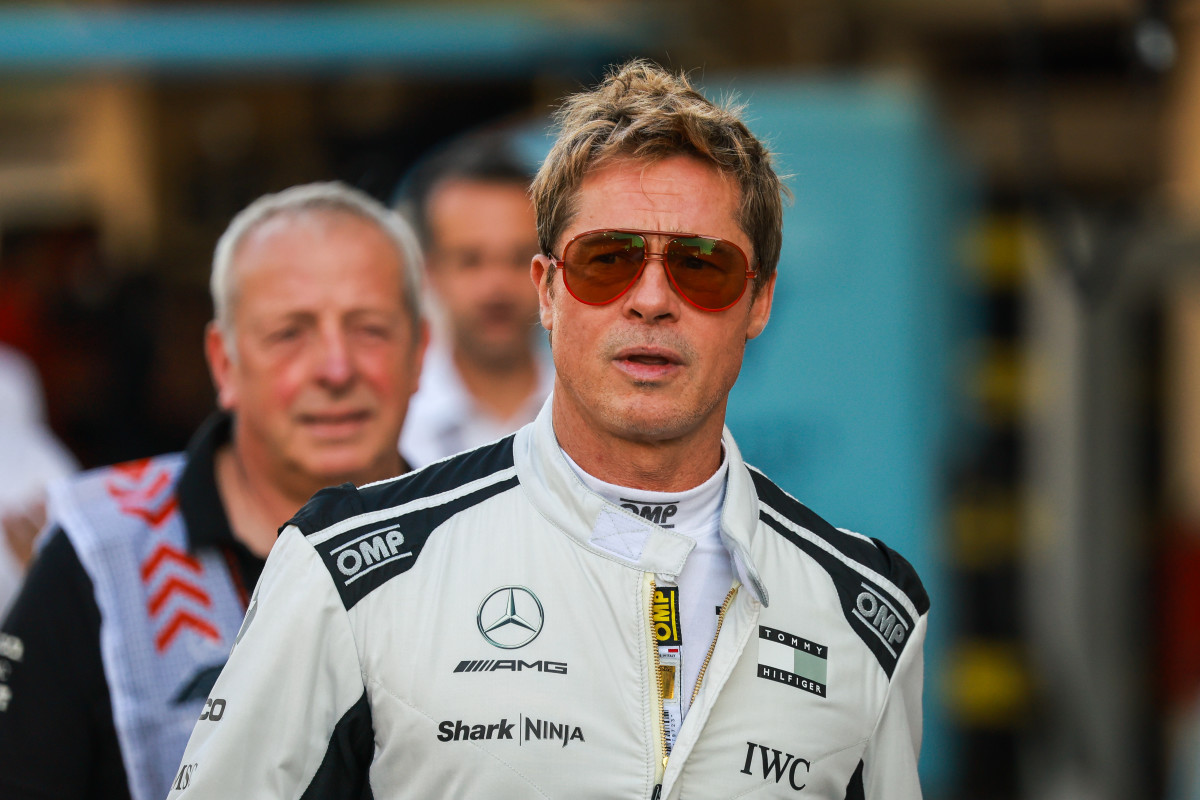
Brad Pitt performed a significant portion of his own driving for the film F1, but he did not compete in a real Formula 1 race. While the production utilized modified open-wheel cars to capture authentic high-speed footage on active grand prix circuits, the actor was never behind the wheel during live-fire competitive racing scenarios involving the full Formula 1 grid. Instead, the film relied on a mix of professional driver doubles, specialized camera rigs, and controlled track sessions to create the visceral intensity of the sport.
Understanding the Production Logistics of F1
To capture the high-octane atmosphere of Formula 1, the production team behind the 2025 film F1, directed by Joseph Kosinski, took an unconventional approach to cinematography. Rather than relying solely on green screens or digital assets—a common practice in modern cinema—the filmmakers sought to ground the movie in reality by working directly with Formula 1 teams and utilizing actual race weekend environments.
The cars featured in the movie were not stock Formula 1 machines. Because actual F1 cars are notoriously difficult to operate for non-professional drivers and require an entire support crew to start, the production team collaborated with Mercedes-AMG Petronas F1 Team engineers to modify Formula 2 chassis. These cars were aesthetically dressed to resemble modern F1 machinery, allowing them to be operated more reliably while still providing the physical sensation of driving a high-performance open-wheel vehicle.
Brad Pitt’s Role Behind the Wheel
The question of whether Brad Pitt drove is nuanced. Pitt did undergo rigorous driver training to prepare for the role. This training was conducted under the supervision of professional racing instructors and, notably, seven-time world champion Lewis Hamilton, who served as both a producer and a consultant on the project.
During the production, Brad Pitt was filmed driving these modified cars on active race tracks. These sequences were captured during intervals between real-world racing sessions. In these instances, Pitt was in the cockpit, driving at significant speeds to capture close-up shots of his reactions and the internal mechanics of the car. However, safety regulations set by the FIA (Fédération Internationale de l'Automobile) and the insurance requirements of the film studio strictly prohibited the actor from being on track while other professional F1 drivers were conducting their practice, qualifying, or race sessions.
The Role of Professional Stunt Drivers
While Pitt’s participation in the driving sequences was authentic to his own physical experience, the most dangerous, high-speed, and complex maneuvers were performed by professional racing drivers. The movie employed a fleet of skilled drivers who are capable of handling the extreme G-forces and precise handling characteristics required of a Formula 1 vehicle.
These professionals were responsible for the "chase cam" sequences, where a car follows or leads another at speeds exceeding 150 mph. When the film required footage of the car navigating tight corners in a pack or executing high-speed overtakes, the stunt team took over. By blending Pitt’s cockpit footage with the high-speed work of professional drivers, the production successfully achieved a visual standard that mimics the broadcast quality of real Formula 1 races.
Comparison: Actor Involvement vs. Professional Stunt Work
It is common for high-budget sports dramas to balance the actor's performance with the necessity of safety. The following table illustrates the distinction between the roles during the production of F1.
| Feature | Actor Performance (Brad Pitt) | Professional Stunt Driver |
|---|---|---|
| Cockpit Close-ups | Yes | Minimal |
| Controlled Track Speed | Yes | Yes |
| Competitive Overtaking | No | Yes |
| High-G Cornering | Moderate | Extreme |
| Live Race Integration | No | Yes |
| Complex Maneuvers | No | Yes |
This separation of tasks is standard industry practice. While audiences may appreciate the "authenticity" of an actor performing their own stunts, the reality of open-wheel racing—which involves operating a machine worth millions of dollars at speeds that can result in catastrophic failure—makes total actor participation impossible.
The Technical Challenges of Filming F1
One of the most significant challenges the production faced was the size of the camera equipment. Traditional cinema cameras are bulky and require stable mounts. To capture the unique angles seen in F1, the technical team developed the smallest 6K camera rigs ever integrated into a race car.
These cameras allowed the filmmakers to position lenses in places that had never been seen before, such as directly in front of the driver’s visor or tucked tightly into the sidepods. Because these rigs had to be perfectly balanced to maintain the car's aerodynamics and handling, only professional drivers could be entrusted with the vehicles when these rigs were mounted. When Pitt was in the car, the camera configurations were often simplified to focus on his performance, further highlighting the divide between "action performance" and "racing action."
Why Accurate Representation Matters
For fans of Formula 1, the distinction between Pitt's driving and the stunt work is important for maintaining the integrity of the sport. Formula 1 is a highly specialized discipline that takes years to master. There is a general consensus within the motorsports community that portraying the sport requires a level of reverence for the risks involved.
By employing actual F1 teams to help build the cars and using real circuits, the film avoids the "uncanny valley" of racing movies, where CGI cars often appear to defy the laws of physics. Even if Pitt did not drive in competitive race conditions, the fact that he physically operated the vehicle on the same asphalt as the real F1 stars provides a level of tactile engagement that viewers can perceive on screen.
Frequently Asked Questions
Did Brad Pitt really train with Lewis Hamilton?
Yes, Lewis Hamilton played a pivotal role in the production. He was heavily involved in the script development to ensure the terminology and culture of F1 were represented accurately and provided direct coaching to Pitt to help him understand the nuances of braking points, racing lines, and cockpit management.
Is the footage in the movie from real races?
The production team utilized "real-world" race weekends as a backdrop. They filmed on-site at various Grand Prix circuits, often positioning their custom-made camera cars on the track immediately before or after official sessions, allowing them to capture the genuine scale and environment of the sport.
Why didn’t Brad Pitt race against real F1 drivers?
Insurance and safety regulations are the primary barriers. The FIA oversees all activities on a Formula 1 circuit during a race weekend, and they maintain strict criteria for who is permitted to drive at speed. A non-professional, regardless of their training, does not meet the eligibility requirements to operate an F1 car in a competitive field.
How much of the driving is CGI?
While some post-production work was used to enhance backgrounds and integrate the fictional "APXGP" team into the real grid, the vast majority of the car action was captured in-camera. The production favored practical effects to maintain a sense of weight and speed that is often lost in purely digital environments.
Will Brad Pitt continue to drive in future racing projects?
While there has been no official announcement regarding future racing films, the success of the F1 production model—combining authentic machinery with high-end cinematography—has set a new industry benchmark. It is likely that future projects will look to replicate this "hybrid" approach to filming high-speed sports.
Conclusion and Recommendations
Brad Pitt’s involvement in the driving sequences for F1 was significant and demonstrated a high level of commitment to the role, but it remained firmly within the bounds of controlled, non-competitive driving. For those interested in the technical aspects of how the film was made, the best approach to understanding the production is to look at the behind-the-scenes content released by the film’s distributors. These featurettes often provide a breakdown of the custom camera rigs and the collaborative effort between the film crew and F1 engineering teams. If you are a racing enthusiast, pay close attention to the sound design and the "shaky cam" sequences, as these are the elements where the stunt drivers’ work is most apparent compared to the actor’s close-up cockpit shots.