Determining if you are "rich" involves comparing your total net worth—the sum of your assets minus your liabilities—against specific benchmarks. Wealth is relative; while a net worth of $1 million marks the threshold for a high-net-worth individual (HNWI) in many contexts, your objective global rank depends on the percentile distribution within your specific country and the broader international population.
Understanding Net Worth Calculation
Before analyzing your rank, you must define your financial baseline. Net worth is not merely the balance in your checking account; it is the comprehensive snapshot of your financial health. To calculate it accurately, you must subtract all outstanding liabilities from the total market value of your assets.
Assets include:
- Cash and cash equivalents (savings, money market accounts).
- Investments (stocks, bonds, mutual funds, 401(k) or IRA balances).
- Real estate (primary residence, investment properties at current market value).
- Personal property (vehicles, jewelry, art, and collectibles).
- Business equity (the value of any private companies you own).
Liabilities include:
- Mortgage balances.
- Consumer debt (credit card balances, personal loans).
- Student loans.
- Tax liabilities or other legal judgments.
By subtracting your liabilities from your assets, you arrive at your net worth. This figure is the standardized metric used by financial institutions and government agencies to categorize economic status.
The Problem of Relativity: Global vs. Local Wealth
The perception of wealth is fundamentally skewed by geography. According to reports from the World Inequality Database and the Credit Suisse Global Wealth Report, the entry point for the top 1% of the global population is vastly different from the top 1% in the United States, Switzerland, or China.
If your net worth is roughly $1,000,000 USD, you are considered a millionaire. Globally, this figure places you well within the top 1% of the world’s adult population in terms of total wealth. However, that same $1,000,000 might not even place you in the top 10% of households in major metropolitan centers like San Francisco or New York City, where the cost of living—and the cost of assets like real estate—inflates the local wealth floor.
When asking, "Am I rich?", you must identify which measuring stick you are using: the survival standard, the local socioeconomic standard, or the global elite standard.
Wealth Percentiles: The Data Framework
Economists use percentiles to clarify wealth distribution. A percentile rank indicates the percentage of the population that has a net worth lower than yours. If you are in the 90th percentile, you are wealthier than 90% of the population in your defined bracket.
| Percentile Rank | Economic Interpretation | Typical Net Worth Context |
|---|---|---|
| Bottom 25% | Low liquidity/high debt | Negative to nominal net worth |
| Median (50th) | Middle Class | Reflects stability, housing equity |
| 75th Percentile | Upper Middle Class | Significant retirement and real estate |
| 90th Percentile | High Net Worth (HNWI) | Significant investment portfolios |
| 99th Percentile | The Top 1% | Multi-million dollar net worth |
These numbers fluctuate annually due to equity market performance, real estate appreciation, and inflation. As of 2026, the threshold for the top 1% in the United States remains significantly higher than the global threshold, reflecting the disparity between developed and emerging economies.
The Role of Age and Lifecycle
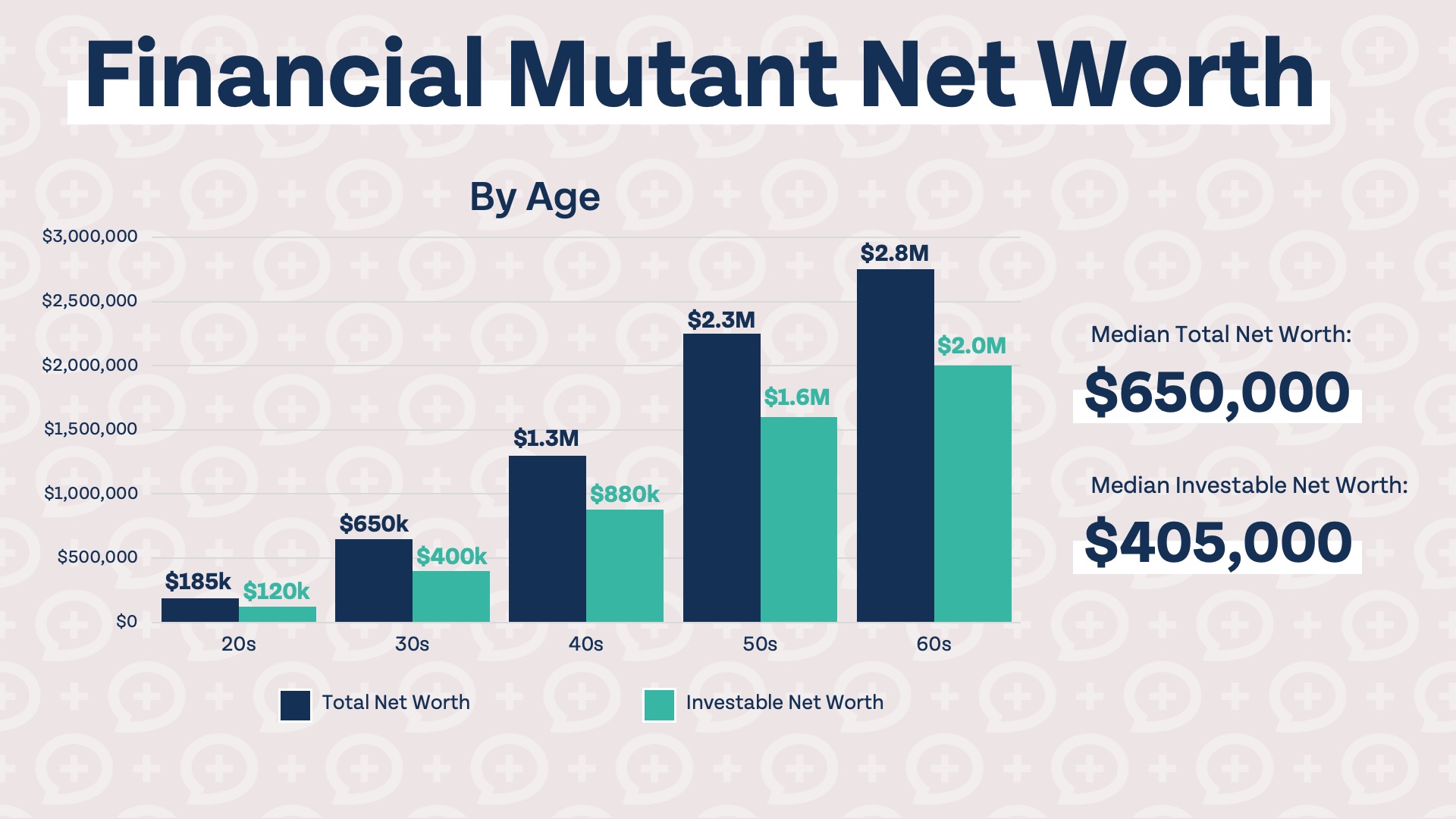
A critical error in assessing wealth is comparing your net worth to an aggregate average without accounting for age. Wealth is cumulative. A 25-year-old with a net worth of $50,000 is performing significantly better than their cohort, whereas a 60-year-old with the same net worth would likely be considered behind on their retirement funding.
Financial planners emphasize that net worth must be viewed through a "lifecycle" lens. In your early career, your net worth may be low or negative due to educational debt. As you transition into middle age, you are expected to see the "compounding effect"—where your assets, primarily through retirement accounts and home equity, begin to significantly outpace your liabilities.
Does Income Equal Wealth?
A common point of confusion is the distinction between income and net worth. High income is a tool to build wealth, but it is not wealth itself. If an individual earns $500,000 per year but spends $490,000 on high-interest debt and depreciating assets, their net worth may be lower than an individual earning $80,000 per year who has consistently invested in low-cost index funds for two decades.
This is often referred to as "the millionaire next door" phenomenon. True wealth is determined by how much you keep, how long you hold your assets, and the rate at which those assets appreciate. If you rely entirely on a paycheck, you are wealthy in income, but not in net worth.
The Psychological Threshold of "Being Rich"
Beyond the raw math, there is the subjective experience of wealth. Behavioral economists note that "rich" is often defined by the absence of financial anxiety regarding basic needs. This is sometimes called "financial independence."
You may feel rich when your passive income—money generated by your assets without your active labor—covers your annual cost of living. If your net worth is large enough that a 3% to 4% withdrawal rate supports your desired lifestyle, you have achieved a form of wealth that transcends raw rankings. In this state, your rank in the national percentile matters less than your ability to sustain your quality of life indefinitely.
Frequently Asked Questions
How can I accurately find my net worth percentile rank? To find your rank, look for data provided by the Federal Reserve’s Survey of Consumer Finances or national statistical bureaus. These agencies publish reports that break down net worth by age bracket and education level. Comparing yourself to your specific demographic cohort provides a more accurate view than comparing yourself to the entire adult population.
Is my primary home considered part of my net worth? Yes, your home is a major asset. However, financial experts often recommend calculating "liquid net worth" alongside "total net worth." Liquid net worth excludes your primary residence because it is an illiquid asset; you cannot easily sell a portion of your home to pay for daily expenses. Keeping these figures separate helps you understand your actual financial flexibility.
Why does my rank change even if my assets don't? Your rank is relative to others. If you hold $1 million in assets, your rank depends on what everyone else owns. If there is a massive surge in the stock market, the net worth of everyone with significant equity holdings increases, potentially pushing the "top 1%" threshold higher and causing your relative rank to drop, even though your actual dollar amount remains the same.
What is the difference between net worth and wealth? Net worth is the mathematical result of an audit of your finances (Assets - Liabilities). Wealth is a broader concept that can include human capital (your ability to earn money in the future), access to credit, and the qualitative standard of living your assets provide. Net worth is the metric used for rankings; wealth is the reality of your economic lifestyle.
How does inflation affect my perceived wealth? Inflation erodes the purchasing power of your cash and fixed-income assets. Over time, a net worth of $1 million represents less "wealth" in terms of what it can buy. To remain wealthy in real terms, your assets must appreciate at a rate equal to or higher than the inflation rate over the long term.
Next Steps for Financial Assessment
To move from abstract numbers to a concrete understanding of your position, follow this protocol:
- Conduct a biannual audit: Every six months, update your spreadsheet of assets and liabilities.
- Filter by age: Search for "median net worth by age [Your Age]" from official government census data. This is your most relevant benchmark.
- Evaluate your savings rate: If your net worth is lower than your age-based cohort, do not aim to suddenly hit a high percentile. Instead, focus on increasing your monthly savings rate to maximize the impact of compound interest over the next decade.
- Consult a professional: If your net worth exceeds the threshold for high-net-worth status (often starting around $1 million to $5 million in investable assets), speak with a certified financial planner to discuss tax optimization and estate planning.
Understanding your rank is an exercise in data collection, not self-judgment. Use these figures to adjust your savings, investment, and debt-repayment strategies rather than as a definitive assessment of your personal value or success.