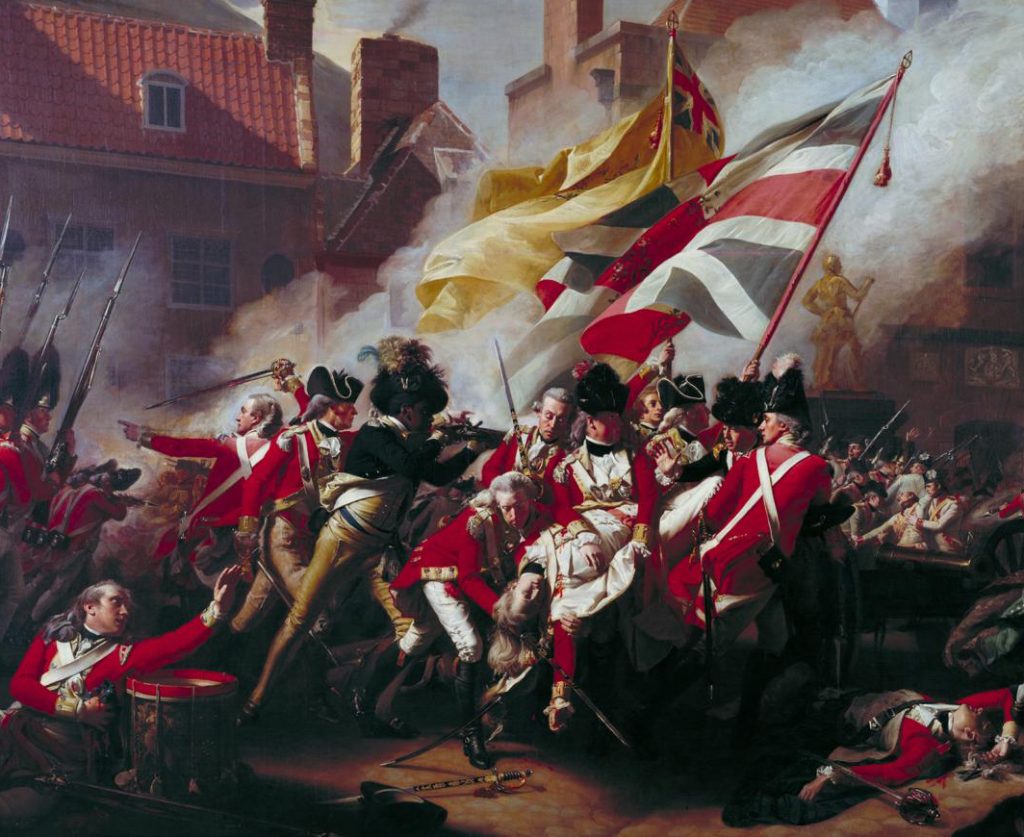
The American Revolution was a transformative political and social upheaval that occurred between 1765 and 1783, resulting in the thirteen North American colonies gaining independence from Great Britain. It began with ideological disagreements over taxation and governance and evolved into a global conflict, ultimately establishing the United States of America as a sovereign republic.
The Intellectual and Political Origins of the Revolution
The roots of the American Revolution were not purely economic; they were deeply embedded in the intellectual shift of the 18th-century Enlightenment. Before the first shot was fired at Lexington, a "revolution of the mind" occurred among the colonial elite and the broader public. This shift was characterized by a transition from being loyal subjects of a monarchy to becoming citizens of a republic.
John Locke’s theories on natural rights—life, liberty, and property—provided the philosophical foundation for colonial grievances. Locke argued that government exists only by the consent of the governed and that people have a right to overthrow a government that violates their natural rights. In the colonies, these ideas were amplified by local writers and orators like Thomas Paine, whose pamphlet Common Sense argued that it was contrary to reason for a continent to be perpetually governed by an island.
Furthermore, the concept of "salutary neglect" played a crucial role. For decades, the British government had largely left the colonies to manage their own internal affairs and trade. When Britain attempted to tighten its grip following the expensive Seven Years' War (1756–1763), the colonies viewed this not as a return to order, but as an infringement on established liberties. The sudden enforcement of the Navigation Acts and the introduction of direct taxes fundamentally altered the relationship between the periphery and the center of the British Empire.
The Road to Rebellion: Policy and Provocation
The decade leading up to 1775 was marked by a series of legislative escalations and colonial resistance. Following the French and Indian War, Great Britain faced a massive national debt. The British Parliament, led by various ministries under King George III, believed the colonies should contribute to the costs of their own defense and the administration of the empire.
The Stamp Act and the Rise of Organized Resistance
In 1765, Parliament passed the Stamp Act, the first internal tax levied directly on American colonists. It required that many printed materials in the colonies—legal documents, magazines, playing cards, and newspapers—be produced on stamped paper produced in London, carrying an embossed revenue stamp.
The reaction was swift and coordinated. The "Sons of Liberty" formed to intimidate stamp distributors, while the Stamp Act Congress provided a unified political front. This period saw the popularization of the slogan "No taxation without representation," arguing that as the colonists had no representatives in Parliament, they could not be legally taxed by it. Although the Stamp Act was repealed in 1766, it was immediately followed by the Declaratory Act, which asserted Parliament's authority to bind the colonies "in all cases whatsoever."
The Townshend Acts and the Boston Massacre
The 1767 Townshend Acts imposed duties on imported goods such as glass, lead, paint, paper, and tea. This led to widespread boycotts and increased tensions in urban centers, particularly Boston. On March 5, 1770, a confrontation between a mob of colonists and British soldiers resulted in the death of five civilians, an event quickly branded the "Boston Massacre." While the Townshend duties were eventually repealed (except for the tax on tea), the event served as a powerful propaganda tool for the revolutionary cause.
The Tea Act and the Intolerable Acts
The crisis reached a breaking point with the Tea Act of 1773. While it actually lowered the price of tea, it granted the British East India Company a monopoly, which angered colonial merchants and fueled fears of further parliamentary overreach. In December 1773, protesters disguised as Mohawk Indians dumped 342 chests of tea into Boston Harbor.
In response, Britain passed the Coercive Acts (known in America as the Intolerable Acts) in 1774. These acts closed Boston Harbor, dissolved the Massachusetts provincial government, and allowed for the quartering of British troops in private homes. Rather than isolating Massachusetts, these measures galvanized the colonies, leading to the formation of the First Continental Congress.
Outbreak of Hostilities: 1775–1776
By 1775, the situation had shifted from political protest to armed conflict. The colonial militias began stockpiling weapons and drilling in secret. The British military command in Boston, led by General Thomas Gage, sought to seize these supplies and arrest rebel leaders like Samuel Adams and John Hancock.
Lexington, Concord, and the Siege of Boston
On April 19, 1775, British "Redcoats" clashed with colonial "minutemen" at Lexington and Concord. The "shot heard 'round the world" marked the definitive start of the Revolutionary War. Following these engagements, the British were forced back to Boston, where they were besieged by a growing colonial army.
The Battle of Bunker Hill (June 1775) further demonstrated that the colonial militia could stand against professional British regulars. Although the British technically won the ground, they suffered nearly 50% casualties, proving the war would be neither short nor easy.
The Declaration of Independence
While fighting continued, the Second Continental Congress met in Philadelphia. Initially, many delegates hoped for reconciliation (exemplified by the Olive Branch Petition). However, the King’s refusal to negotiate and the hiring of Hessian mercenaries by Britain pushed the colonies toward total separation.
On July 4, 1776, Congress adopted the Declaration of Independence, primarily authored by Thomas Jefferson. This document was more than a list of grievances; it was a formal announcement to the world that the thirteen colonies were now "Free and Independent States." It established the ideological framework for the new nation, emphasizing equality and unalienable rights.
The Turning Point and International Involvement
The middle years of the war (1777–1778) were characterized by a shift in strategy. The British sought to isolate New England by seizing the Hudson River valley, while George Washington’s Continental Army struggled with desertion, disease, and lack of supplies.
The Battle of Saratoga
The 1777 Battle of Saratoga was the most significant turning point of the war. General John Burgoyne’s British army was surrounded and forced to surrender to American forces under Horatio Gates and Benedict Arnold. This victory achieved two critical goals: it halted the British attempt to split the colonies and, more importantly, it convinced the Kingdom of France that the Americans could actually win.
The French Alliance
Following Saratoga, France formally entered the war in 1778, signing a Treaty of Alliance with the United States. France provided essential money, gunpowder, troops, and, most crucially, a powerful navy that could challenge British control of the seas. Spain and the Dutch Republic eventually joined the conflict against Britain as well, turning a colonial rebellion into a global maritime war that stretched British resources from the Caribbean to the Indian Ocean.
Key Battles and Strategic Impact
The following table outlines the major military engagements that defined the trajectory of the revolution.
| Battle | Date | Victor | Strategic Significance |
|---|---|---|---|
| Lexington & Concord | April 19, 1775 | Inconclusive | Initiated armed conflict; led to the Siege of Boston. |
| Trenton | Dec 26, 1776 | United States | Boosted morale; saved the Continental Army from collapse. |
| Saratoga | Sept-Oct 1777 | United States | Secured the French Alliance; ended British Northern strategy. |
| Charleston | March-May 1780 | Great Britain | Major loss for the US; gave British control of the Deep South. |
| Cowpens | Jan 17, 1781 | United States | Decimated British light infantry; turned the tide in the South. |
| Yorktown | Sept-Oct 1781 | US & France | Decisive victory; forced the British to seek peace terms. |
The Southern Campaign and Final Victory
After 1778, the British focused their efforts on the Southern colonies, believing they would find more Loyalist support there. This "Southern Strategy" initially saw success with the capture of Savannah and Charleston. However, the British under Lord Cornwallis found it impossible to maintain control of the vast interior.
The Continental Army, utilizing guerrilla tactics and led by commanders like Nathanael Greene, wore down the British forces through a war of attrition. Cornwallis eventually moved his army to the Virginia coast at Yorktown, hoping to be reinforced or evacuated by the British Navy.
In the autumn of 1781, a combined American and French land force, supported by a French fleet that had won control of the Chesapeake Bay, besieged Cornwallis. With no escape and no reinforcements, Cornwallis surrendered on October 19, 1781. While skirmishes continued for another year, Yorktown effectively ended major British military operations in North America.
The Peace of Paris and the Birth of a Nation
The formal end of the American Revolution came with the Treaty of Paris (1783). Negotiated by Benjamin Franklin, John Adams, and John Jay, the treaty was remarkably favorable to the United States.
Key provisions of the treaty included:
- Great Britain's formal recognition of the United States as a sovereign and independent nation.
- The establishment of the U.S. boundaries: extending west to the Mississippi River, north to Canada, and south to Spanish Florida.
- Fishing rights for Americans off the coast of Newfoundland.
- A recommendation that Loyalists be treated fairly and their confiscated property returned (though this was rarely enforced).
As of 2026, the Treaty of Paris remains one of the most successful diplomatic negotiations in American history, as it secured not just independence but also the vast western territories that would allow for future expansion.
Social and Economic Impact of the Revolution
The revolution was more than a military victory; it initiated profound changes within American society. However, these changes were unevenly distributed.
The Concept of Republican Motherhood
For women, the revolution brought a new role known as "Republican Motherhood." While women did not gain the right to vote, they were tasked with the vital civic duty of raising the next generation of virtuous citizens. This led to increased opportunities for female education, as mothers needed to be literate and informed to properly instruct their sons in republican values.
Slavery and the Contradiction of Liberty
The revolution highlighted the glaring contradiction between the rhetoric of "liberty" and the reality of chattel slavery. In the North, the revolutionary spirit led to the gradual abolition of slavery in states like Pennsylvania and Massachusetts. In the South, however, the institution became even more entrenched, despite the fact that many enslaved people fled to British lines during the war to seek freedom.
Displacement of Native Americans
For Native American nations, the revolution was largely a disaster. Many tribes, such as the Iroquois Confederacy, were split by the conflict. The British defeat meant the removal of the Proclamation Line of 1763, which had previously restricted colonial westward expansion. The new United States viewed the West as its "empire of liberty," leading to decades of forced removal and conflict for indigenous populations.
Common Misconceptions About the Revolution
Understanding the American Revolution requires clearing away several historical myths that have persisted for centuries.
- The "Unanimous" Rebellion: It is often assumed that all colonists supported the revolution. In reality, society was roughly divided into thirds: one-third Patriots, one-third Loyalists (Tories), and one-third neutral. This made the conflict as much a civil war as it was a war for independence.
- The Nature of the British Army: British soldiers are often portrayed as bumbling or incompetent. In truth, they were among the most disciplined and professional soldiers in the world. The American victory was not due to British failure as much as it was due to the logistical impossibility of conquering a massive, decentralized territory with a high degree of local armed resistance.
- The Role of Taxes: While "No taxation without representation" is the famous cry, the colonists were actually among the lowest-taxed people in the British Empire. Their objection was to the principle of being taxed by a body in which they had no voice, not necessarily the amount of the tax itself.
Frequently Asked Questions
What was the primary cause of the American Revolution?
The primary cause was a dispute over the nature of political authority and representation. The British Parliament asserted its right to tax and legislate for the colonies "in all cases whatsoever," while the colonists argued that as British subjects, they could only be taxed by their own elected representatives. This constitutional impasse was exacerbated by economic grievances and Enlightenment-era ideas about natural rights.
How did the American Revolution affect the rest of the world?
The revolution had a massive global impact, serving as a blueprint for subsequent democratic movements. It directly influenced the French Revolution (1789) and various independence movements in Latin America during the early 19th century. It also forced the British Empire to reorganize its colonial administration, shifting its focus more toward India and the East.
Who were the most important leaders of the revolution?
Key figures included George Washington (Commander-in-Chief of the Continental Army), Thomas Jefferson (primary author of the Declaration of Independence), Benjamin Franklin (lead diplomat to France), and John Adams (a fierce advocate for independence in Congress). On the British side, King George III and General Lord Cornwallis were the most prominent figures.
Why did the British lose the war?
The British lost due to a combination of logistical challenges, the intervention of France and Spain, and the lack of a single "center of gravity" to capture. The American colonies were vast and agrarian; capturing cities like New York or Philadelphia did not force a surrender. Additionally, the British public grew weary of the mounting debt and the length of the conflict, leading to a loss of political will in London.
What happened to the Loyalists after the war?
An estimated 60,000 to 100,000 Loyalists fled the United States following the war. Many moved to Canada (particularly Nova Scotia and Ontario), where they were known as United Empire Loyalists. Others went to Great Britain or the Caribbean. Their departure resulted in a significant loss of professional and merchant class members but also allowed the new republic to stabilize without a large, disgruntled internal opposition.
What was the Articles of Confederation?
The Articles of Confederation was the first constitution of the United States, adopted in 1777 and ratified in 1781. It created a very weak central government because the colonists were wary of replacing one distant tyranny with another. However, the government’s inability to tax, regulate trade, or maintain an army led to its replacement by the current U.S. Constitution in 1789.
Practical Recommendation for Further Study
To gain a deeper understanding of the American Revolution, readers should focus on primary source documents rather than just modern interpretations. Examining the Federalist Papers provides insight into the transition from revolution to governance. Additionally, visiting the National Archives online allows for the direct examination of the Declaration of Independence and the Constitution. For those interested in the military history, the American Battlefield Trust offers detailed maps and preservation status for the locations mentioned in this article.