Aon Form 4 is a critical documentation tool used by Aon brokers to manage workers' compensation class codes, specifically regarding the inclusion or exclusion of executive officers and the verification of payroll data. Accurate completion ensures that businesses are charged correct premiums based on NCCI or state-specific risk classifications, helping to prevent costly audit adjustments and ensuring regulatory compliance throughout the 2026 policy year.
Managing workers' compensation insurance is one of the most complex administrative tasks for any medium-to-large enterprise. At the heart of this complexity lies the "class code"—a four-digit numerical string that dictates the perceived risk of an employee's job duties. For organizations partnering with Aon, a global leader in risk management and insurance brokerage, the Form 4 (often associated with state-specific officer exclusion or payroll classification worksheets) serves as the primary mechanism for aligning corporate hierarchy with insurance liability.
As we navigate the 2026 fiscal landscape, the nuances of these forms have become even more vital. Misclassification can lead to significant financial penalties, while the improper filing of exclusion forms can leave high-level executives without coverage or, conversely, cause the company to pay unnecessary premiums on high-salary individuals.
The Role of Aon in Workers' Compensation Management
Aon acts as a professional intermediary between the business and the insurance carrier. In the context of workers' compensation, Aon’s role is to ensure that the risk profile presented to the underwriter is as accurate as possible. The "Aon Form 4" terminology often refers to the specific documentation Aon requires from its clients to facilitate state-mandated filings or internal auditing of class codes.
By 2026, many of these processes have transitioned to digital-first environments, but the underlying logic remains grounded in the National Council on Compensation Insurance (NCCI) standards or specific state rating bureaus like the WCIRB in California or the NYCIRB in New York. Aon uses these forms to gather granular data that the carrier needs to calculate the Experience Modification Rate (MOD) and the final premium.
Decoding Workers’ Compensation Class Codes
To understand why the Aon Form 4 is so important, one must first master the concept of class codes. A class code is a categorization system used by insurance companies to group together employees who perform similar tasks and are exposed to similar risks.
The NCCI Standard
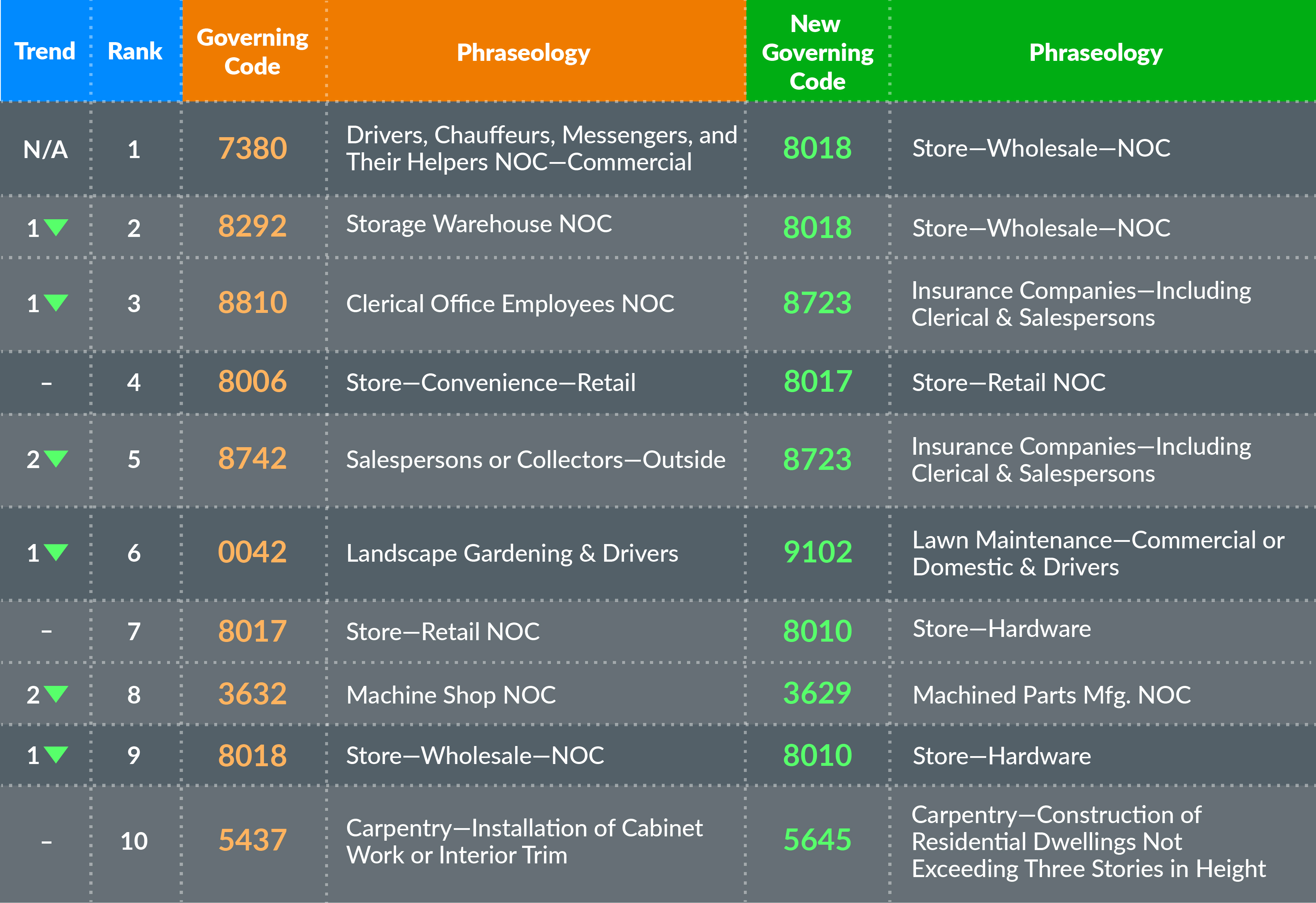
Most states utilize the NCCI classification system. Each code, such as 8810 for clerical office employees or 8742 for outside salespersons, has a specific rate attached to it. This rate is usually expressed as a dollar amount per $100 of payroll. For example, if a "Clerical" code has a rate of $0.20 and the "Roofing" code has a rate of $15.00, the difference in premium is massive.
State-Specific Variations
While the NCCI covers the majority of the United States, several "independent bureau states" maintain their own code systems. If your business operates in California, New Jersey, or Pennsylvania, your Aon Form 4 must reflect the specific codes dictated by those states' individual rating bureaus. Aon’s global presence allows them to synthesize these varying requirements into a streamlined reporting process for the employer.
Why Accuracy in Form 4 Reporting Matters
The Form 4 is frequently used to identify which executive officers, partners, or sole proprietors are to be included in or excluded from the workers' compensation policy. This is a critical decision point for any business.
- Premium Savings: In many jurisdictions, executive officers have significantly higher salaries than the average worker. If an officer is included in the policy, their entire salary (up to a state-mandated cap) is multiplied by the class code rate. By using Form 4 to legally exclude an officer who does not perform hazardous duties, a company can save thousands of dollars in annual premiums.
- Audit Defense: At the end of the policy period, insurance carriers perform a premium audit. They will look at your Form 4 filings to see who was excluded. If you excluded an officer but failed to file the proper Form 4 with the state or broker, the auditor will add that officer's payroll back into the calculation, resulting in a surprise bill.
- Coverage Gaps: Conversely, if an officer is excluded via Form 4 to save money, they are generally not eligible for workers' compensation benefits if they are injured on the job. In 2026, with the rise of hybrid work and executive travel, understanding these coverage gaps is essential for corporate risk officers.
Step-by-Step Guide to Completing the Aon Form 4 Process
Navigating the Form 4 requirement requires a methodical approach to data collection. Whether you are using a physical document or Aon’s proprietary digital portal, the following steps are standard for the 2026 reporting cycle.
Step 1: Identify All Executive Personnel
List every individual who holds a corporate title (President, VP, Secretary, Treasurer) or an ownership stake (Partner, Member of an LLC). This is necessary because state laws often automatically include these individuals in workers' comp coverage unless a specific exclusion form is filed.
Step 2: Determine Class Code Eligibility
For each person listed, define their actual job duties. Do not rely on titles alone. If a Vice President spends 40% of their time on a construction site, they may not qualify for the 8810 (Clerical) code. Aon specialists often review these descriptions to ensure they meet the strict definitions found in the NCCI Scopes Manual.
Step 3: Check State-Specific Salary Caps
For 2026, ensure you are using the most recent payroll limitation figures. Most states set a minimum and maximum payroll amount for executive officers for premium calculation purposes. Even if an executive earns $500,000, the state might cap their "ratable payroll" at $150,000. This information must be accurate on your Aon Form 4 to ensure the quote you receive is realistic.
Step 4: Formal Election of Exclusion/Inclusion
The Form 4 acts as a legal election. The business must clearly check the box for "Exclude" or "Include" for each eligible individual. This section usually requires a signature from the officer being excluded, acknowledging that they understand they are waiving their right to workers' comp benefits.
Step 5: Submission and Verification
Once the form is completed, it must be submitted to Aon, who then files it with the carrier and, in some cases, the state’s Department of Labor or Insurance. Always request a "date-stamped" copy for your records to serve as evidence during the year-end audit.
Common Class Codes and Risk Profiles in 2026
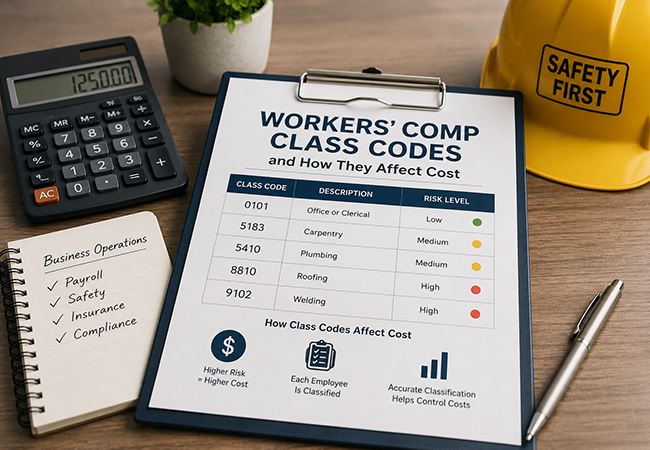
The following table highlights some of the most frequently used class codes that businesses report on their Aon documentation. Note that rates vary significantly by state and carrier.
| Class Code | Description | Typical Risk Profile | 2026 Trend/Notes |
|---|---|---|---|
| 8810 | Clerical Office Employees | Very Low | Includes remote/hybrid workers if they meet strict "no physical duties" criteria. |
| 8742 | Salespersons - Outside | Low | Applies to those who travel for sales but do not deliver products. |
| 8871 | Telecommuter Clerical | Very Low | Increasingly used as a distinct code for 100% remote employees in some jurisdictions. |
| 5190 | Electrical Wiring | Moderate | Common for tech-installation firms; requires careful payroll splitting. |
| 8017 | Retail Stores (General) | Low-Moderate | Often misapplied; specific codes exist for grocery vs. clothing. |
| 9012 | Property Management | Moderate | Includes building managers and leasing agents; risk involves site visits. |
Avoiding Common Mistakes and Audit Pitfalls
Even with Aon's guidance, employers frequently make errors on Form 4 and class code assignments. Avoiding these mistakes is the key to a smooth 2026 insurance renewal.
Misapplying "Standard Exceptions"
Codes like 8810 (Clerical) and 8742 (Outside Sales) are known as "standard exceptions." They are intended for employees who have absolutely no duties related to the company’s primary, more hazardous operations. A common mistake is putting a "Shop Foreman" under the Clerical code because they have an office. If they ever step onto the shop floor to supervise, an auditor will likely reclassify their entire payroll to the higher-rated manufacturing code.
Failing to Update During the Policy Term
Business operations change. If you start a new division in 2026 that involves different risks (e.g., a software company starts a hardware delivery wing), you must notify Aon immediately. You may need to submit a revised Form 4 or an "Addition of Operations" form to ensure the new class codes are added to your policy before an accident occurs.
Incomplete Officer Information
In states where "Form 4" specifically refers to officer exclusion, failing to list an officer's exact ownership percentage can lead to a rejection of the form. Many states require a minimum ownership stake (often 10% or 25%) for an officer to be eligible for exclusion.
Technical Considerations for Aon Clients
Aon often utilizes sophisticated data analytics to help clients predict their workers' compensation costs. When you provide data via Form 4, it isn't just for a static policy; it’s fed into models that calculate your Loss Sensitive ratings or Retrospective Rating plans.
In 2026, Aon's platforms may integrate directly with your payroll providers (like ADP or Workday). Even with this automation, the manual oversight of the Form 4 remains a "human-in-the-loop" necessity. An automated system might see a high salary and assume it belongs to an executive, but it cannot know if that executive has signed the legal waiver to be excluded from coverage.
Professional Advice Limitation: This guide is provided for informational purposes only and does not constitute legal, financial, or insurance advice. Workers' compensation laws and class code regulations vary significantly by jurisdiction and are subject to change. Always consult with a licensed insurance professional at Aon or a qualified legal advisor to discuss your specific coverage needs and state-specific filing requirements for the 2026 period.
Frequently Asked Questions
What happens if I lose my copy of the filed Aon Form 4?
You should contact your Aon account executive immediately. They maintain digital archives of all policy endorsements and state filings. Having this copy is essential if your insurance carrier's auditor claims they have no record of an officer's exclusion, as it serves as your primary defense against back-dated premium charges.
Can I change a class code mid-year if an employee's job changes?
Yes, this is known as a "Mid-Term Adjustment." You must provide Aon with a written description of the employee's new duties and the date the change occurred. Aon will then request the carrier to add the new class code to the policy. Note that payroll for that employee will need to be split accurately between the two codes for the audit.
Does the Aon Form 4 affect my Experience Modification Rate (MOD)?
Indirectly, yes. The Form 4 determines which payroll is included in your policy. Since the MOD is a ratio of your actual losses to your "expected" losses (which are calculated based on your payroll and class codes), any error in your Form 4 reporting will result in an inaccurate MOD. An artificially low payroll report can actually make your MOD look worse than it is.
Are remote workers always classified under code 8810?
Not necessarily. While many states have adopted code 8871 specifically for telecommuters, the rules are strict. If a remote worker's duties involve any "direct supervision" of physical labor or handling of inventory, they may not qualify. For 2026, it is vital to review the current state-specific guidelines on telecommuting classifications with your Aon representative.
What is the difference between an NCCI Form 4 and an Aon Form 4?
The NCCI Form 4 is a standard industry document used to report changes in ownership or combinability of entities. When clients refer to an "Aon Form 4," they are usually referring to the internal version or the state-mandated version of the officer exclusion or class code verification worksheet that Aon facilitates for the policy.
Practical Recommendation
For the 2026 policy year, businesses should conduct a "mini-audit" of their employee roles at least 90 days before their workers' compensation renewal. Review every individual currently classified under "Standard Exception" codes (8810 and 8742) to ensure their duties haven't evolved. When completing the Aon Form 4, ensure that every officer’s exclusion status is verified and that the signatures are current. Taking these proactive steps will not only stabilize your insurance budget but also provide a robust defense against the inevitable year-end premium audit.