Scholarships for American universities encompass a diverse range of financial awards including merit-based, need-based, and talent-specific grants provided by federal agencies, private foundations, and the institutions themselves. To secure funding for the 2026-2027 academic year, applicants must navigate complex federal requirements like the FAFSA for domestic students or institutional profiles like the CSS Profile for international and private aid.
Understanding the Landscape of US Higher Education Funding
Navigating the financial structures of United States higher education requires a clear understanding of the distinction between "sticker price" and "net price." While the advertised tuition at many American universities can exceed $60,000 per year, very few students pay the full amount. In 2026, the primary mechanism for reducing these costs remains the scholarship—a form of "gift aid" that does not require repayment.
Scholarships in the American context are generally categorized by their source: institutional, federal/state, and private. Institutional scholarships are awarded directly by the university and are often the largest source of funding. Federal and state aid typically focuses on domestic students with demonstrated financial need. Private scholarships are funded by corporations, non-profits, or community groups and often have highly specific eligibility criteria, such as a student’s heritage, intended major, or local residency.
For international students, the landscape is narrower but still robust. While international applicants are ineligible for US federal aid (like Pell Grants), they are frequently eligible for significant institutional merit scholarships and specific private international fellowships.
Identifying the Most Common Scholarship Types
Merit-Based Scholarships
Merit-based aid is awarded based on a student’s achievements rather than their financial situation. In 2026, American universities continue to look beyond standardized test scores. While high GPAs remain a cornerstone of merit aid, institutions are increasingly prioritizing "holistic" merit, which evaluates leadership, community service, and specialized talents.
Large-scale merit programs, such as the National Merit Scholarship Program, utilize the PSAT/NMSQT as a qualifying filter, but individual universities often have their own automatic-consideration awards. At many public state universities, reaching a specific GPA threshold can trigger an automatic tuition waiver or discount, significantly lowering the cost for out-of-state and international residents.
Need-Based Financial Aid
Need-based aid is calculated using a formula that subtracts the Student Aid Index (SAI) from the total Cost of Attendance (COA). For the 2026 cycle, domestic students must complete the Free Application for Federal Student Aid (FAFSA). This document determines eligibility for federal grants, work-study programs, and subsidized loans.
Private universities often require an additional form called the CSS Profile, administered by the College Board. The CSS Profile is more intrusive than the FAFSA, looking at home equity, medical expenses, and non-custodial parent income. This allows institutions to distribute their own private endowment funds more equitably to students who truly cannot afford the tuition.
Talent-Specific and Athletic Scholarships
Athletic scholarships are governed by the National Collegiate Athletic Association (NCAA) and are categorized by Division. Division I and II schools can offer athletic aid, while Division III schools focus exclusively on academic merit and need. Similarly, many American universities offer "full-ride" or partial scholarships for students in the performing arts—such as music, dance, and theater—often requiring a portfolio or audition as part of the scholarship application.
Specific Focus: American University (Washington, D.C.) Aid Programs
When searching for "American University scholarships," many applicants are specifically looking for the institution located in Washington, D.C. This private research university is known for its robust international relations and public policy programs and offers several distinct funding tiers.
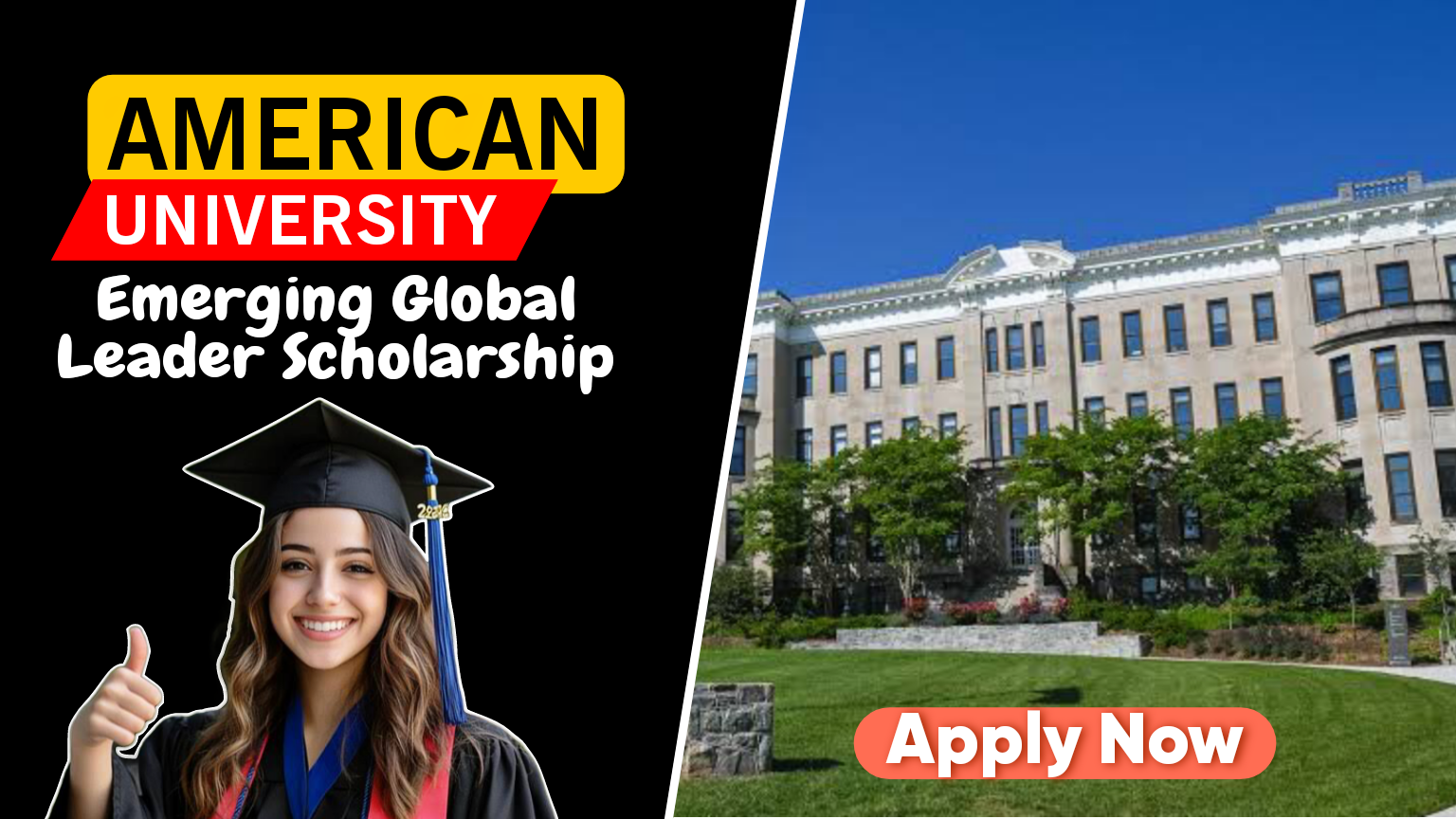
The AU Emerging Global Leader Scholarship (AU EGLS)
The AU EGLS is one of the most prestigious awards for international students in the United States. It is designed for high-achieving international students who are dedicated to positive civic and social change. By 2026, this program remains highly competitive, typically covering full tuition, room, and board for one international student per year.
Applicants for the AU EGLS must demonstrate a commitment to leadership and volunteerism in their home countries. The scholarship is intended for students who will return home after graduation to apply their education to the improvement of their local communities.
AU Merit Awards for Domestic and International Students
Beyond the EGLS, American University offers standard merit scholarships ranging from $6,000 to $25,000 per year. These are "renewable" awards, meaning as long as the student maintains a specific GPA (usually 3.0 or higher), the funding continues for all four years of undergraduate study. Admission to the university automatically triggers consideration for most of these awards, though some may require an additional essay or earlier application deadline.
Essential Tools and Applications for 2026
To successfully secure an American university scholarship, students must master two primary platforms. Failure to submit these accurately and on time is the most common reason for a loss of funding eligibility.
The FAFSA (Domestic Students)
The FAFSA is the gateway to all federal funding. For the 2026-2027 academic year, the application typically opens in late 2025. It uses "prior-prior year" tax data, meaning for a 2026 start date, students and parents will use their 2024 tax returns. This system allows families to apply early in the senior year of high school without waiting for the most recent tax filings.
The CSS Profile (Private Aid)
The CSS Profile is used by nearly 400 colleges and scholarship programs to award non-federal institutional aid. Unlike the FAFSA, which is free, the CSS Profile carries a fee for the initial application and for each school it is sent to, though fee waivers are available for low-income families. For international students, the CSS Profile is often the only way to demonstrate financial need to an American institution.
Comparing Scholarship Types and Requirements
| Scholarship Category | Primary Eligibility | Key Documentation | Typical Coverage |
|---|---|---|---|
| Federal Pell Grant | Exceptional financial need | FAFSA | Up to $7,395 (approx.) |
| Institutional Merit | High GPA, Test Scores, Leadership | Admissions Application | $5,000 to Full Tuition |
| Institutional Need-Based | Demonstrated financial gap | CSS Profile / ISFAA | Varies by endowment |
| NCAA Athletic Aid | Athletic prowess (Div I/II) | Recruiting/NCAA Eligibility Center | Partial to Full Ride |
| Private/External | Demographic or niche criteria | Separate applications/Essays | $500 to $10,000 |
Strategic Application Timeline for 2026 Enrollment
Timing is critical. In the US system, many scholarships are awarded on a "first-come, first-served" basis until the fund is depleted.
- September – October 2025: Research university-specific deadlines. Many top-tier merit scholarships require a "Priority Deadline" application, often as early as November 1st.
- October 1, 2025: The FAFSA and CSS Profile typically become available. Aim to submit these within the first 30 days to maximize eligibility for state and limited institutional grants.
- November – January 2026: Finalize admissions applications. For schools like American University, applying under Early Decision (ED) can sometimes impact financial aid packages, though it also represents a binding commitment to attend.
- March – April 2026: Receive financial aid award letters. This is the period for "appealing" a financial aid decision if a family's financial situation has changed significantly since the tax data was filed.
- May 1, 2026: National Decision Day. This is the deadline to accept a scholarship offer and place a tuition deposit.
International Student Considerations
For students outside the US, the search for "American university scholarships" involves unique hurdles. Most US government funding is restricted to citizens and eligible non-citizens (such as permanent residents). Therefore, international students must look toward:
- Institutional Aid: Seek "Need-Blind" vs. "Need-Aware" schools. Need-blind schools do not consider a student’s ability to pay when making admission decisions, and they often promise to meet 100% of demonstrated need for those they admit.
- Governmental Fellowships: The Fulbright Program provides grants for graduate students, young professionals, and artists to study in the US.
- EducationUSA: This is a US Department of State network of over 400 international student advising centers. EducationUSA provides verified information on scholarships specifically available to residents of specific countries.
Common Pitfalls in the Scholarship Process
Even the most qualified students can lose out on funding due to technical errors. In 2026, with the increasing automation of financial aid offices, precision is mandatory.
- Misaligning Names: Ensure the name on the FAFSA, CSS Profile, and University Application exactly matches the student’s Social Security card or Passport. Discrepancies can lead to "verification flags" that delay aid by months.
- Ignoring the "Net Price Calculator": Every American university is legally required to host a Net Price Calculator on its website. Using this tool before applying gives a realistic estimate of what a specific student might receive in scholarships, preventing the heartbreak of an unaffordable acceptance letter.
- Missing Local Scholarships: Many students focus so heavily on the $50,000 university awards that they ignore the $1,000 local community awards. These smaller scholarships are often much less competitive and can be used to cover "indirect costs" like books, travel, and personal expenses.
Frequently Asked Questions
Can international students get full-ride scholarships in the US?
Yes, but they are extremely competitive. Full-ride scholarships for international students are generally found at "Meeting Full Need" institutions (like Harvard, Yale, or Amherst) or through specific prestige programs like the AU Emerging Global Leader Scholarship at American University. Most international students should expect to cover a portion of their costs through personal savings or external loans.
Is the SAT or ACT required for scholarships in 2026?
The landscape is mixed. While many American universities have moved to "Test-Optional" admissions, some still require standardized test scores specifically for merit-based scholarship consideration. Always check the specific "Scholarship Requirements" page of the university, as it may differ from the general "Admissions Requirements" page.
What is the difference between a scholarship and a grant?
In general usage, the terms are often used interchangeably, but technically, scholarships are usually merit-based (rewarding achievement), while grants are usually need-based (assisting those with limited financial resources). Both are "gift aid" and do not need to be repaid.
How do I prove financial need if my parents are self-employed or live abroad?
For domestic students, the FAFSA uses tax transcripts. For international students or those with complex financial situations, the CSS Profile allows for more detailed explanations. You may be asked to provide certified bank statements, employer letters, or local tax returns translated into English.
Can graduate students apply for these scholarships?
Most of the scholarships discussed here are for undergraduate (Bachelor's) degrees. Graduate students (Master's and PhD) typically fund their education through "Assistantships" (Teaching or Research), where the university waives tuition in exchange for work, or through specific fellowships like the Fulbright or Rhodes scholarships.
Practical Recommendation for 2026 Applicants
To maximize your chances of securing an American university scholarship for 2026, begin by creating a "financial safety" list. This should include at least two institutions where your academic profile (GPA and scores) sits in the top 10% of the previous year’s admitted class, as this is where you are most likely to receive high-value merit aid. Simultaneously, complete the FAFSA or CSS Profile as early as possible in October 2025 to ensure you are considered for priority funding pools. Finally, verify if your chosen schools are "Need-Blind" or "Need-Aware," as this will significantly impact your strategy for disclosing financial requirements during the application process.