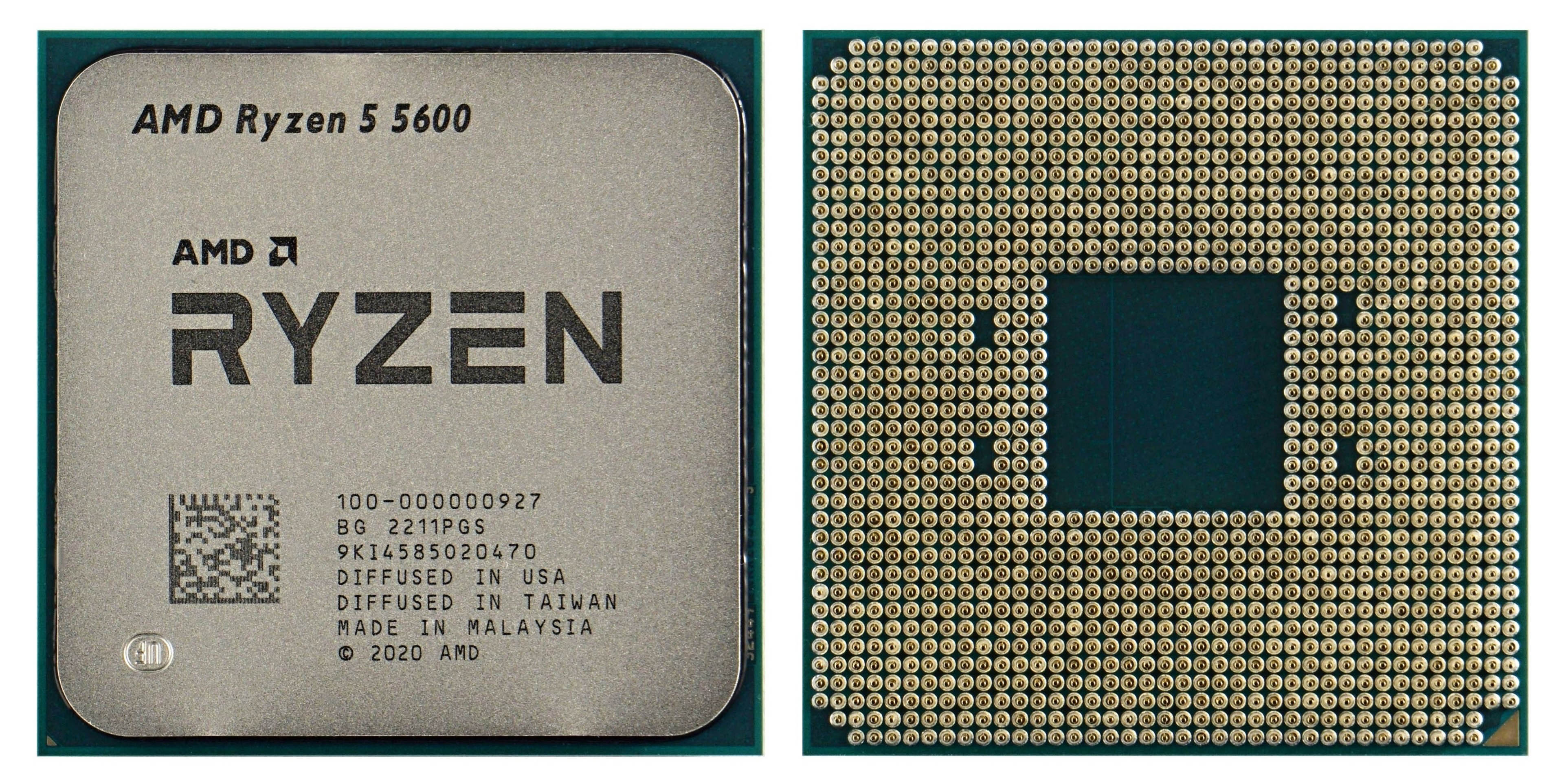
The AMD Ryzen 5 5600G was officially released to the retail market on August 5, 2021. As a member of the Cezanne (Zen 3) APU family, it was designed to bridge the gap between high-performance desktop processing and integrated graphics capabilities, serving as a critical hardware solution during a period of global semiconductor supply volatility.
The Context of the Ryzen 5 5600G Launch
When the AMD Ryzen 5 5600G arrived in 2021, it occupied a unique space in the DIY (Do-It-Yourself) PC building landscape. During this era, the global graphics card market was severely constrained by high demand and logistical challenges, making dedicated GPUs difficult to acquire at manufacturer-suggested retail prices. The 5600G provided a functional, high-performance alternative for users who needed a capable processor for daily tasks, office work, and light-to-moderate gaming without the immediate requirement of a discrete graphics card.
The release date of August 5, 2021, followed several months of availability for the OEM (Original Equipment Manufacturer) version of the chip, which had appeared in pre-built systems earlier that year. The retail "box" release allowed system builders, enthusiasts, and students to purchase the chip as a standalone component for use with existing AM4 motherboards, significantly democratizing access to the Zen 3 architecture combined with Radeon Vega 7 integrated graphics.
Architectural Significance: Zen 3 and Cezanne
To understand why the release of the Ryzen 5 5600G was a pivotal moment in 2021, one must examine its architecture. The "G" suffix in AMD’s naming convention denotes an Accelerated Processing Unit (APU), which integrates the central processing unit (CPU) and graphics processing unit (GPU) on a single silicon die.
The 5600G utilizes the Zen 3 core architecture, which delivered a significant Instructions Per Clock (IPC) improvement over the preceding Zen 2 (Renoir) APUs. Unlike the Ryzen 5 5600X, which features a larger L3 cache, the 5600G adopts a monolithic die design. This design choice is fundamental to the APU’s function, as it minimizes latency between the CPU cores and the integrated graphics engine, which is vital for gaming performance when relying on system RAM as video memory.
Key Technical Specifications
The technical specifications of the Ryzen 5 5600G underscore why it remains a relevant processor even in 2026 for budget-conscious builds and home office environments.
- Cores/Threads: 6 Cores and 12 Threads
- Base Clock: 3.9 GHz
- Boost Clock: Up to 4.4 GHz
- Integrated Graphics: Radeon Graphics (Vega 7) at 1900 MHz
- TDP (Thermal Design Power): 65W
- Socket: AM4
The integration of 7 graphics cores clocked at 1900 MHz allowed the 5600G to handle titles like Esports classics and less demanding AAA games at 720p or 1080p low settings. While it does not compete with mid-range or high-end discrete GPUs, it serves as a highly efficient entry point for a computing system that can be upgraded later.
Comparison of Popular Ryzen 5000 Series APUs
The following table outlines the differences between the 5600G and its siblings from the same generation. This comparison helps identify why the 5600G was, and remains, the sweet spot for many users.
| Feature | Ryzen 3 5300G | Ryzen 5 5600G | Ryzen 7 5700G |
|---|---|---|---|
| Cores/Threads | 4 / 8 | 6 / 12 | 8 / 16 |
| Base/Boost Clock | 4.0 / 4.2 GHz | 3.9 / 4.4 GHz | 3.8 / 4.6 GHz |
| GPU Cores | 6 | 7 | 8 |
| L3 Cache | 8 MB | 16 MB | 16 MB |
| TDP | 65W | 65W | 65W |
Strategic Value in the 2026 Landscape
By 2026, the Ryzen 5 5600G has matured from a "stop-gap" solution during hardware shortages into a staple of the secondary market and entry-level computing. For users building a home theater PC (HTPC), a home office terminal, or a dedicated gaming machine for a younger student, the 5600G provides a reliable platform.
Because it utilizes the AM4 socket—a platform with immense longevity—the 5600G allows for a clear upgrade path. A user can start with a 5600G and, should their computing needs increase, install a discrete GPU (like an RX 6600 or RTX 4060) to unlock full gaming performance, or upgrade the CPU to a Ryzen 7 5800X3D for a significant boost in gaming frames per second without changing the motherboard.
Prerequisites and Compatibility Requirements
For those considering this processor in 2026, verification of motherboard compatibility is the most important step. Because the 5600G was released after the launch of many B450 and X470 motherboards, a BIOS update is almost always required to ensure the motherboard recognizes the Cezanne architecture.
- BIOS Readiness: Check the manufacturer's support page for your motherboard. Ensure the BIOS version installed is compatible with "Cezanne" or "Ryzen 5000G" series processors.
- RAM Considerations: Integrated graphics rely on system memory. Installing dual-channel, high-speed RAM (ideally 3200 MHz or 3600 MHz) is essential for squeezing maximum performance out of the Radeon graphics core. Using single-channel RAM will drastically throttle gaming performance.
- Cooling: The included Wraith Stealth cooler is sufficient for stock operation. However, if you are performing a small form factor (SFF) build, ensure the case provides adequate airflow to mitigate the thermal output of the CPU and the integrated graphics simultaneously.
Common Pitfalls for New Builders
The most common mistake when building with the 5600G involves the allocation of Video RAM (VRAM) within the BIOS. By default, the system may assign a conservative amount of your system RAM to the integrated graphics. Users can often enter the BIOS and manually increase the "UMA Frame Buffer Size" to 2GB or 4GB if they have sufficient system memory (16GB or more), which can help prevent stuttering in games that are heavy on asset loading.
Another oversight is the failure to install the latest AMD Adrenalin drivers. While Windows Update provides basic display drivers, the official AMD software suite is necessary to ensure the best performance and compatibility with modern game titles.
Frequently Asked Questions
Is the Ryzen 5 5600G still good for gaming in 2026? The 5600G remains excellent for esports titles (e.g., Valorant, League of Legends, CS2) and indie games. It is not intended for modern, graphically demanding AAA titles without the addition of a dedicated graphics card.
Do I need a graphics card with the 5600G? No, the "G" in the name stands for integrated graphics. You can plug your monitor directly into the motherboard's HDMI or DisplayPort output and achieve a fully functional desktop experience.
What is the best motherboard for the 5600G? A B550 chipset motherboard is the recommended choice. It offers PCIe 4.0 support for future GPU upgrades and natively supports the 5600G, often without needing a BIOS flashback, though checking the box for "Ryzen 5000 Ready" labels is still advised.
Can I overclock the integrated graphics? Yes, but with limitations. The integrated Vega 7 graphics can be overclocked via the BIOS or AMD Ryzen Master, but heat management is critical in a 65W chip. Small gains in frequency often yield diminishing returns compared to optimizing your RAM speed.
Does the 5600G support PCIe 4.0? It is important to note that the 5600G is limited to PCIe 3.0. While this does not impact daily tasks or general gaming, it may slightly limit the performance of high-end, PCIe 4.0-dependent SSDs or top-tier graphics cards if you upgrade in the future.
Practical Recommendation
For a balanced, cost-effective build in 2026, pair the Ryzen 5 5600G with a B550 motherboard and at least 16GB (2x8GB) of DDR4-3600 CL16 RAM. This configuration optimizes the integrated graphics performance while keeping the total system cost low. If you eventually find yourself limited by the integrated GPU, look toward the mid-range GPU market to complement the CPU, which remains a highly capable multi-core processor for productivity and creative work.