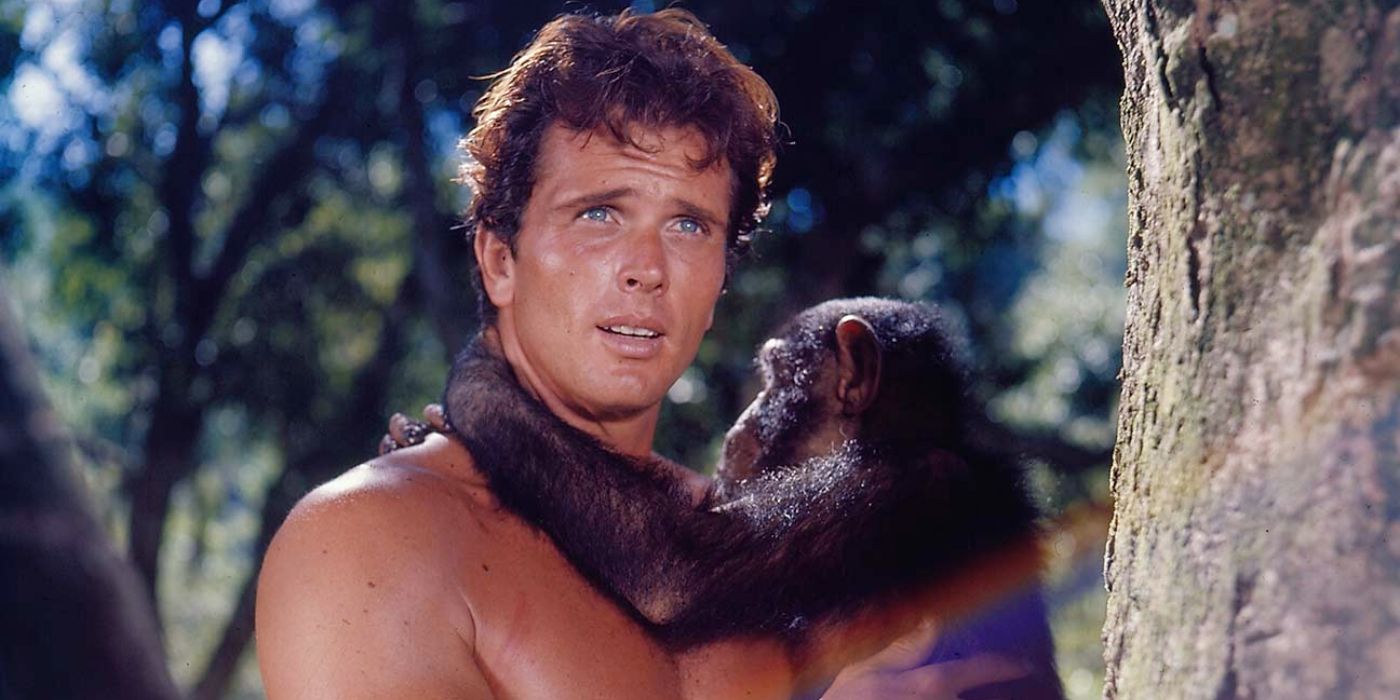
From the silent era of Hollywood to modern CGI-driven spectacles, dozens of actors have stepped into the loincloth to portray Edgar Rice Burroughs' iconic Lord of the Greystoke jungle. Defining the cinematic adventure genre, these actors brought distinct physical attributes, athletic backgrounds, and acting styles to a role that transformed across more than a century of filmmaking.
The cinematic history of Tarzan spans over a century, beginning with Elmo Lincoln in the silent film Tarzan of the Apes (1918) and evolving through the iconic Olympic swimmer Johnny Weissmuller in the 1930s and 1940s, the rugged television iterations of Ron Ely, and the big-budget epics starring Alexander Skarsgård. This lineage reflects changing cultural attitudes toward conservation, heroism, and storytelling, transforming the character from a pulp fiction trope into a complex, evolving cinematic archetype.
The Genesis of the Cinematic Ape Man: Silent Era Pioneers
When Edgar Rice Burroughs published Tarzan of the Apes in 1912, the literary world embraced the orphan raised by great apes in the African jungle. Adapting this visual, action-heavy story for the screen required performers with exceptional physiques and fearlessness around wild animals.
Elmo Lincoln and the First Screen Tarzan
Elmo Lincoln (born Otto Elmo Linkenhelt) holds the historic distinction of being the first actor to play Tarzan on film. Standing over six feet tall with a barrel-chested, muscular build that predated modern bodybuilding, Lincoln starred in Tarzan of the Apes (1918) and The Romance of Tarzan (1918), followed by The Adventures of Tarzan (1921).
Lincoln did not use a stunt double for the most hazardous sequences. He wrestled real lions, swung from actual vines, and performed rigorous physical feats that established the baseline expectations for anyone attempting the role. His portrayal leaned heavily on the silent era's melodramatic acting style, yet his physical authenticity anchored the fantasy in a gritty, visceral reality.
Other Silent Era Standouts
Following Lincoln's success, several other actors assumed the mantle during the 1920s:
- Enrique El Guapo / Gordon Griffith: Griffith played the child Tarzan in the 1918 film, making him the first actor ever to portray the character on screen chronologically.
- P. Dempsey Tabler: Starred in The Son of Tarzan (1920).
- Kamuela C. Searle: Played the role in The Revenge of Tarzan (1920), tragically dying a few years later during the filming of another production.
- James Pierce: Played Tarzan in Tarzan and the Golden Lion (1927), a film notable for featuring a young Boris Karloff as a villain. Pierce later married the daughter of Edgar Rice Burroughs and went on to portray Tarzan on the radio.
The Golden Age and the Definitive Voice: Johnny Weissmuller
The arrival of synchronized sound in cinema demanded a new kind of physical performer. The role required someone who possessed not only athletic prowess but also a commanding physical presence and a memorable vocal signature.
Johnny Weissmuller's Reign
Hungarian-born American swimmer Johnny Weissmuller redefined the character completely. Winning five Olympic gold medals in swimming and setting numerous world records, Weissmuller brought unprecedented aquatic grace to the screen. He signed with Metro-Goldwyn-Mayer and starred in Tarzan the Ape Man (1932), opposite Maureen O'Sullivan as Jane.
Weissmuller portrayed Tarzan in 12 feature films, first for MGM and later for RKO Radio Pictures, ending his run with Tarzan and the Mermaids (1948). His version of Tarzan was famously reined in linguistically, communicating primarily through monosyllabic phrases ("Me Tarzan, you Jane"—though he never actually uttered that exact phrasing in a single line) and a distinctive, operatic yodeling yell that became a globally recognized pop-culture artifact.
The Supporting Cast of the 1930s and 1940s
While Weissmuller dominated the era, other actors briefly wore the loincloth or played rival jungle lords:
- Buster Crabbe: An Olympic swimmer who starred in the 1933 serial Tarzan the Fearless. Crabbe later achieved legendary status playing Flash Gordon and Buck Rogers.
- Bruce Bennett (Herman Brix): An Olympic shot putter who was originally slated to play the role before Weissmuller, eventually starring in The New Adventures of Tarzan (1935). Bennett's version was widely praised by purists for being closer to Burroughs' literate, articulate literary creation.
The Post-War Transition: Lex Barker and Gordon Scott
As Johnny Weissmuller aged out of the role, studios sought younger, athletic actors to maintain the franchise's commercial viability through the 1950s. This era transitioned the character away from the MGM soundstages toward authentic, exotic location shooting.
Lex Barker
Lex Barker, a former military officer and skilled athlete, took over the role from Weissmuller in Tarzan's Magic Fountain (1949) and starred in five films total. Barker's Tarzan was blond, deeply tanned, and possessed a refined physical elegance. His films introduced sharper pacing and more complex storytelling, though they still relied on stock footage of African wildlife combined with Hollywood backlot sets.
Gordon Scott
Discovered while working as a lifeguard in Las Vegas, Gordon Scott brought a statuesque, classic physique to six films between 1955 and 1958. His early films, such as Tarzan's Hidden Jungle (1955), followed the formulaic B-movie template. However, his final two entries—Tarzan's Greatest Adventure (1959) and Tarzan the Magnificent (1960)—are widely considered by film historians to be among the finest action-adventure films of the era. Shot on location in Kenya, these films featured Scott playing a smart, formidable Tarzan who spoke in complete, articulate sentences, fighting ruthless villains rather than generic poachers.
Television Adaptation and the Modern Era: Ron Ely to Alexander Skarsgård
As feature film budgets shifted toward other blockbusters in the 1960s, the franchise expanded successfully into television, before experiencing high-budget cinematic revivals in the late 20th and early 21st centuries.
Ron Ely and the 1960s Television Series
Ron Ely starred in the NBC television series Tarzan (1966–1968). Unlike many of his predecessors who relied heavily on stunt doubles, Ely performed the vast majority of his own hazardous stunts, resulting in numerous concussions, broken bones, and animal bites. Ely's Tarzan was well-educated, well-spoken, and moved fluidly between modern civilization and the jungle, giving the character a contemporary relevance.
Later Interpretations
- Miles O'Keeffe: Starred alongside Bo Derek in Tarzan, the Ape Man (1981), a critically panned erotic adventure that focused more on cinematic aesthetics than narrative fidelity.
- Christopher Lambert: Starred in Greystoke: The Legend of Tarzan, Lord of the Apes (1984). This film offered a high-end, tragic, and psychologically grounded adaptation of Burroughs' novel, earning three Academy Award nominations and receiving praise for its serious tone.
- Casper Van Dien: Played the character in Tarzan and the Lost City (1998), an attempt to return the character to his 1930s pulp roots.
Alexander Skarsgård in The Legend of Tarzan (2016)
The most recent major cinematic iteration features Alexander Skarsgård in Warner Bros.' The Legend of Tarzan (2016). Directed by David Yates, the film inverted the traditional origin story. It presented John Clayton III, Lord Greystoke, returning to the Congo Free State years after leaving the jungle, forced to defend his adopted home from Belgian imperial forces. Skarsgård utilized a lean, functional, and intensely toned physique, aided by digital effects to render the vines and jungle environment with photorealistic precision.
Comprehensive Comparison of Major Tarzan Actors
| Actor | Active Years / Films | Defining Characteristics | Notable Co-Stars / Notable Notes |
|---|---|---|---|
| Elmo Lincoln | 1918–1921 (3 films) | First screen Tarzan; wrestled live lions; silent era melodramatic style. | Enid Markey; performed own dangerous stunts. |
| Johnny Weissmuller | 1932–1948 (12 films) | Five-time Olympic gold medalist; created the iconic cinematic Tarzan yell. | Maureen O'Sullivan (Jane); longest-running feature film actor in the role. |
| Buster Crabbe | 1933 (1 serial) | Olympic swimmer; starred in a 12-chapter cinematic serial. | Frances Dee; later famous for Flash Gordon. |
| Bruce Bennett | 1935 (2 films) | Olympic shot putter; portrayed a more articulate, book-accurate Tarzan. | Asaya Noris; known off-screen as Herman Brix. |
| Lex Barker | 1949–1953 (5 films) | Former military officer; blond, athletic, and traditional action hero. | Virginia Huston, Dorothy Hart; bridged the gap between Weissmuller and 1950s cinema. |
| Gordon Scott | 1955–1960 (6 films) | Discovered as a lifeguard; starred in gritty, critically acclaimed location shoots. | Eve Brent, Betta St. John; final two films shot on location in Kenya. |
| Ron Ely | 1966–1968 (TV Series) | Performed his own grueling stunts; intelligent, articulate television iteration. | Manuel Padilla Jr. (Boy); sustained frequent injuries on set. |
| Christopher Lambert | 1984 (1 film) | High-end psychological drama focusing on culture clash and tragic identity. | Andie MacDowell, Ian Holm; earned three Academy Award nominations. |
| Alexander Skarsgård | 2016 (1 film) | Modern CGI-driven epic; reverse origin story dealing with colonial exploitation. | Margot Robbie (Jane), Samuel L. Jackson; lean, athletic post-civilization interpretation. |
Frequently Asked Questions About Actors Who Played Tarzan
Who was the very first actor to play Tarzan?
Elmo Lincoln was the first actor to portray Tarzan on film, starring in the silent movie Tarzan of the Apes in 1918. He established the physical template for the role by performing his own stunts and wrestling live animals on camera, setting a standard for physical courage in early adventure cinema.
Which actor played Tarzan the most times?
Johnny Weissmuller holds the record for playing Tarzan in the highest number of feature films, starring in 12 successive movies between 1932 and 1948. His tenure spanned two major Hollywood studios, Metro-Goldwyn-Mayer and RKO Radio Pictures, cementing his iteration as the definitive pop-culture version of the character.
Did Johnny Weissmuller invent the famous Tarzan yell?
While pop-culture mythology often credits Weissmuller with creating the vocalization naturally, audio engineers layered various recorded sounds—including a soprano singing voice played backwards, a hyena's howl, and audio of Weissmuller shouting through a megaphone—to create the iconic, resonant cinematic scream.
Which Tarzan film is considered closest to Edgar Rice Burroughs' original novels?
Greystoke: The Legend of Tarzan, Lord of the Apes (1984), starring Christopher Lambert, is widely regarded as the most faithful and serious adaptation of Burroughs' source material. It examines the psychological toll of transitioning from feral animal existence back into Victorian British society.
Why did the portrayal of Tarzan change so drastically over the decades?
The portrayal evolved in response to shifting social values, technological advancements in filmmaking, and audience expectations. Early silent films emphasized brute physical survival and spectacle, the mid-century films relied on athletic escapism, and 21st-century adaptations focus on ecological awareness, post-colonial critiques, and psychological depth.
Summary and Next Actions
The cinematic lineage of Tarzan serves as a fascinating mirror of Hollywood's evolution over a century. From Elmo Lincoln's silent-era wrestling matches to Alexander Skarsgård's digital-age epic, each actor brought unique athletic credentials and dramatic interpretations to the legendary Lord of the Greystoke jungle. For film enthusiasts seeking to explore this history further, start by watching Tarzan the Ape Man (1932) for the classic Golden Age standard, followed by Tarzan's Greatest Adventure (1959) for peak mid-century action, and Greystoke (1984) for a prestige dramatic interpretation.