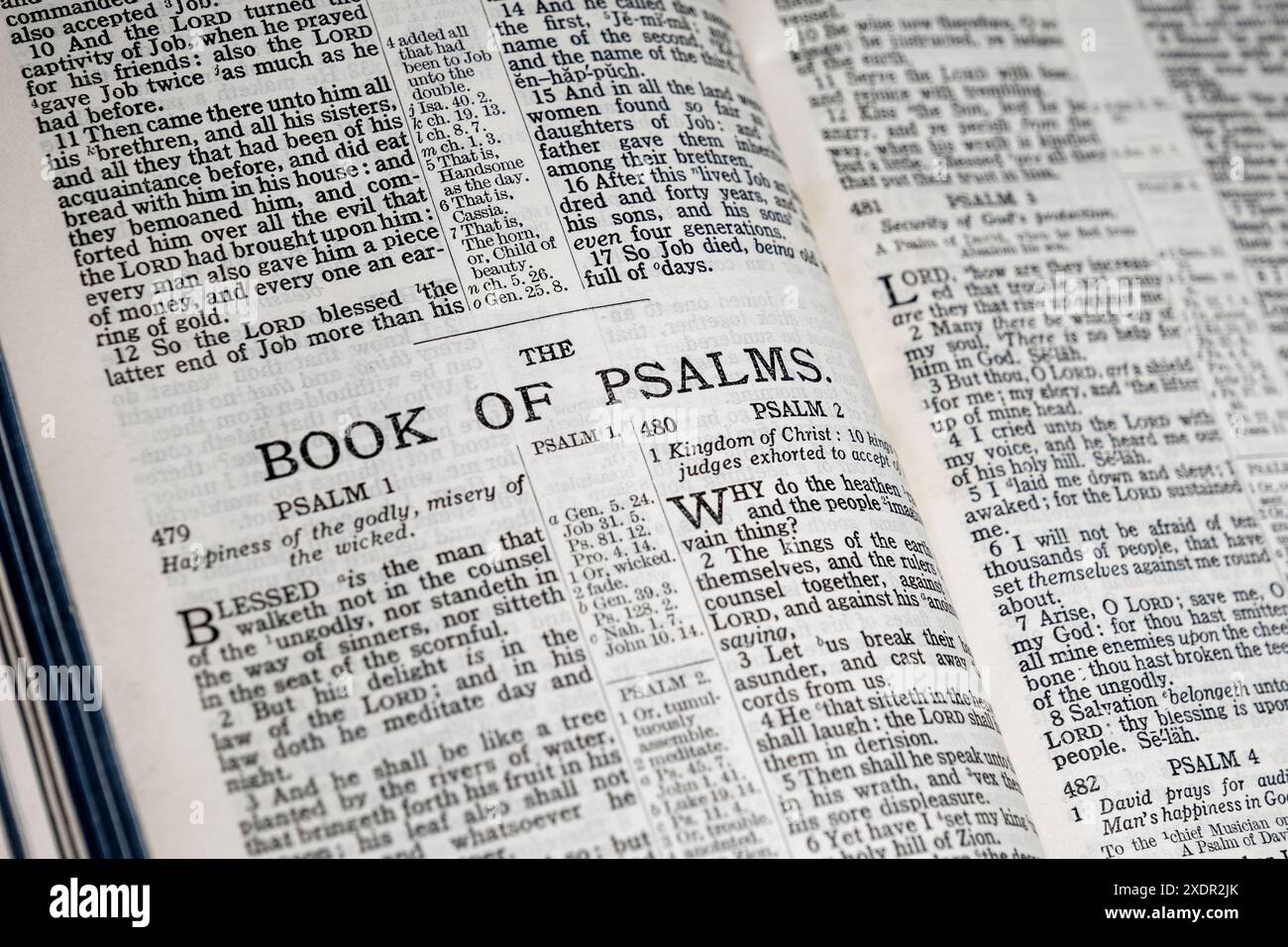
The standard abbreviation for a single Psalm in the Bible is Ps. (or Psa.), while the abbreviation for multiple Psalms is Pss. Academic style manuals, such as the Society of Biblical Literature (SBL) Handbook of Style, omit the period and use Ps for singular and Pss for plural citations within scholarly references.
Primary Abbreviations for Psalms: Singular vs. Plural
When citing the Book of Psalms—the long collection of sacred songs, prayers, and poems in the Hebrew Bible and Christian Old Testament—selecting the correct abbreviation depends on whether you refer to a single psalm, multiple psalms, or the biblical book as a whole.
Understanding the distinction between singular and plural forms prevents citation errors in theological writing, academic papers, and church publications.
Singular Reference (One Psalm): Ps. or Ps (or Psa.) Plural Reference (Multiple): Pss. or Pss
Singular Abbreviations: Ps. and Psa.
The most common singular abbreviation is Ps. (capitalized, followed by a period). This form is recognized across general literature, major style guides, and church hymnals.
An alternative abbreviation, Psa., appears frequently in older theological works, Protestant commentaries (such as Matthew Henry's commentary), and specific Bible software databases like Logos or Accordance. However, contemporary citation standards prefer Ps. over Psa. to maintain consistency with shorter two-letter biblical abbreviations.
In scholarly publishing that follows the Society of Biblical Literature (SBL) guidelines, the period is dropped entirely, resulting in Ps.
- Standard/General: Ps. 23
- Academic (SBL): Ps 23
- Alternative/Legacy: Psa. 23
Plural Abbreviations: Pss. and Pss
When referring to more than one psalm, the standard abbreviation is Pss. (or Pss without a period in SBL style). Adding the second "s" indicates plurality, following a Latin-derived linguistic pattern similar to "p." (page) becoming "pp." (pages), or "v." (verse) becoming "vv." (verses).
Using Pss. is required when referencing a range of individual psalms or discussing multiple distinct compositions within the Psalter.
- Single Psalm: "As written in Ps. 23:1..."
- Multiple Psalms: "Compare the royal themes in Pss. 2 and 110..."
- Range of Psalms: "The Penitential Psalms include Pss. 6, 32, 38, 51, 102, 130, and 143."
Psalm Abbreviations Across Major Style Guides
Different academic disciplines and publishing standards enforce specific rules regarding capitalization, punctuation, and placement. Choosing the appropriate abbreviation requires knowing which style manual governs your document.
1. The SBL Handbook of Style (Society of Biblical Literature)
The SBL Handbook of Style is the definitive authority for biblical studies, theology, and ancient Near Eastern studies. SBL uses a standardized list of abbreviations without internal or trailing punctuation for parenthetical citations and footnotes.
- Singular:
Ps - Plural:
Pss - Parenthetical Citation Example:
(Ps 23:1–4) - Multiple Psalms Example:
(Pss 42–43)
According to SBL rules, abbreviations should only be used in parenthetical references, footnotes, tables, and parenthetical lists. If the name of the book occurs at the start of a sentence or within the primary flow of text, it must be fully written out (e.g., "In Psalm 23, David describes...").
2. The Chicago Manual of Style (CMOS)
The Chicago Manual of Style (17th and 18th editions) offers two abbreviation formats: traditional (which uses periods) and concise/NRSV style (which omits periods).
- Traditional Chicago Style:
Ps.(singular) /Pss.(plural) - Concise/SBL-aligned Chicago Style:
Ps(singular) /Pss(plural) - Citation Example:
Ps. 119:105orPs 119:105
CMOS specifies that biblical abbreviations should be used in parenthetical citations, notes, and bibliography entries, while main text body sentences should spell out "Psalm" or "Psalms".
3. MLA (Modern Language Association)
MLA style, common in literature and humanities research, relies on clear parenthetical references to point readers to exact cited text passages.
- Singular:
Ps. - Plural:
Pss. - Format: MLA permits either a colon or a period between chapter and verse, though a colon is preferred in modern editions.
- Citation Example:
(Ps. 23.1-4)or(Ps. 23:1-4)
4. APA (American Psychological Association)
APA style does not maintain its own independent list of biblical abbreviations. Instead, it instructs writers to use standard, clear abbreviations within parenthetical text and to spell out names in the narrative.
- Singular:
Ps. - Plural:
Pss. - Citation Example:
(Ps. 46:1-3)
5. OSCOLA (Oxford University Standard for Citation of Legal Authorities)
In legal scholarship discussing canon law, ecclesiastical history, or statutory history referencing scripture, OSCOLA recommends unpunctuated biblical abbreviations.
- Singular:
Ps - Plural:
Pss - Citation Example:
Ps 82:6
Comparison Table of Style Standards for Psalms
The following table summarizes how different style manuals, tradition systems, and software platforms format abbreviations for the Book of Psalms.
| Style Manual / Tradition | Singular Abbreviation | Plural Abbreviation | Chapter/Verse Separator | Punctuation Rule | Example Citation |
|---|---|---|---|---|---|
| SBL Handbook of Style | Ps | Pss | Colon (:) |
No period | Ps 23:1–4 |
| Chicago Manual (Traditional) | Ps. | Pss. | Colon (:) |
Trailing period | Ps. 23:1–4 |
| Chicago Manual (Concise) | Ps | Pss | Colon (:) |
No period | Ps 23:1–4 |
| MLA Style | Ps. | Pss. | Colon (:) or Dot (.) |
Trailing period | (Ps. 23:1–4) |
| APA Style | Ps. | Pss. | Colon (:) |
Trailing period | (Ps. 46:1–3) |
| Catholic / NABRE / CBQ | Ps | Pss | Colon (:) or Comma (,) |
No period | Ps 23:1 |
| Legacy / Protestant Commentary | Psa. | Pss. | Colon (:) |
Trailing period | Psa. 119:11 |
| OSCOLA (Legal) | Ps | Pss | Colon (:) |
No period | Ps 82:6 |
Rules for Formatting Psalm Citations
Citing Psalms requires attention to detail beyond choosing between Ps. and Ps. Because the Book of Psalms consists of 150 individual chapters (each called a "Psalm"), citation structures differ slightly from standard multi-chapter narrative books like Genesis or Romans.
Chapter and Verse Mechanics
In biblical citations, the first number following the abbreviation represents the chapter (the specific Psalm number), and the numbers following the colon indicate the verse numbers.
- Single Verse:
Ps. 23:1(Psalm 23, verse 1) - Continuous Verse Range:
Ps. 23:1–4(Psalm 23, verses 1 through 4—use an en-dash rather than a hyphen in formal typesetting). - Non-Continuous Verses:
Ps. 23:1, 4, 6(Psalm 23, verses 1, 4, and 6). - Multiple Chapters/Psalms:
Pss. 23; 24; 46(Use semicolons to separate different chapters).
Structure: [Abbreviation] [Psalm Number] : [Verse Range] Example: Ps. 23 : 1–6
Addressing Septuagint (LXX) vs. Masoretic Text (MT) Numbering Differences
A major technical challenge in citing Psalms arises from numbering discrepancies between traditions:
- Masoretic Text (MT): Used in Protestant and modern Hebrew Bibles (150 Psalms).
- Septuagint (LXX) / Vulgate: Used in Greek Orthodox, traditional Catholic, and historical Latin texts.
In the Septuagint and Vulgate, Psalms 10 through 148 are numbered differently because certain psalms are combined or split. For example, Psalm 9 and 10 in the Hebrew tradition are combined into Psalm 9 in the Septuagint. Consequently, Psalm 23 in the Protestant/Hebrew text is Psalm 22 in the Septuagint.
When writing scholarly work that compares these traditions, indicate both numbers using brackets or parentheses.
- SBL Format for Dual Numbering:
Ps 23 [LXX 22]:1orPs 23 (22):1 - Catholic Biblical Quarterly (CBQ) Format:
Ps 23 [22]:1
Citing Psalm Superscriptions (Titles)
Many psalms include introductory superscriptions or headings (e.g., "A Psalm of David when he fled from Absalom his son"). In Hebrew manuscripts (MT), these titles are often counted as verse 1 (or verses 1–2), whereas modern English translations place the superscription above verse 1 without assigning it a standard verse number.
When citing an introductory title in academic papers:
- Use verse
0or add a designation likesuperscriptionorheading. - SBL Recommendation:
Ps 3:1 [MT 3:2]orPs 3:title(depending on whether the superscription itself is the subject of analysis).
When to Abbreviate and When to Spell Out
Knowing when to use an abbreviation is as important as using the correct letters. Publishing houses, universities, and style guides follow consistent contextual rules.
1. In Narrative Sentence Text
Rule: Never abbreviate "Psalm" or "Psalms" when it forms part of a sentence in the main body of your text.
- Incorrect: "In Ps. 23, David writes about the Good Shepherd."
- Correct: "In Psalm 23, David writes about the Good Shepherd."
- Incorrect: "Many Pss. deal with communal lament."
- Correct: "Many Psalms deal with communal lament."
2. In Parenthetical References and Footnotes
Rule: Always abbreviate when the citation is enclosed in parentheses or located within a footnote, endnote, or reference list table.
- Correct (Main Text with Parenthetical): "God is described as a refuge and strength in times of trouble (Ps. 46:1)."
- Correct (Footnote):
1. For a detailed study on covenant theology, see Ps 89:1–4.
3. Capitalization Rules for "Psalm"
- Capitalize "Psalm" when referring to a specific numbered psalm: "Read Psalm 121 before leaving."
- Lowercase "psalm" when using it as a generic common noun: "The congregation sang a psalm of thanksgiving."
- Capitalize "Psalms" or "the Book of Psalms" when referring to the entire canonical book: "The Book of Psalms contains 150 individual poems."
Common Mistakes in Psalm Abbreviations
To maintain editorial quality, avoid these common formatting and grammatical errors:
Mistake 1: Using "Ps." for Plural Psalms
Using Ps. 2 and 110 implies that both references belong to a single psalm. Always use Pss. (or Pss) when referring to multiple individual psalms.
- Incorrect:
Ps. 42-43 are attributed to the Sons of Korah. - Correct:
Pss. 42–43 are attributed to the Sons of Korah.
Mistake 2: Writing "Psalms" Followed by a Single Number
Referring to "Psalms 23" is grammatically incorrect because chapter 23 is one individual psalm.
- Incorrect: "I love reading Psalms 23."
- Correct: "I love reading Psalm 23."
- Correct (Plural): "I love reading Psalms 22 and 23."
Mistake 3: Mixing Style Guide Rules
Do not combine punctuated abbreviations with SBL-style citations in the same document. Maintain consistency throughout your writing.
- Inconsistent:
(Ps. 23:1) ... later in (Ps 46:1) - Consistent (Standard/Chicago):
(Ps. 23:1) ... later in (Ps. 46:1) - Consistent (SBL):
(Ps 23:1) ... later in (Ps 46:1)
Practical Examples Across Writing Contexts
Academic Thesis / Exegetical Paper (SBL Style)
"The structural integrity of the Psalter has been widely debated. While Ps 1 serves as an introduction to the entire collection, Ps 2 introduces the messianic motif that reemerges in Pss 72 and 89. Modern scholars frequently analyze Pss 120–134 as an independent literary unit known as the Songs of Ascents (see Ps 121:1–2 for thematic parallels)."
Formal Church Bulletin / Devotional Document (Chicago/Standard Style)
"Welcome to our morning worship service. Today's scripture reading is taken from Psalm 95:1–7. Please turn in your Bibles to Ps. 95 as we read together. For personal reflection this week, meditate on the comfort found in Pss. 23 and 91."
Literary Analysis or General Humanities Paper (MLA Style)
"Milton's poetic imagery draws heavily upon Old Testament hymnody (Ps. 19.1-6). In his sonnets, references to divine judgment mirror the language found throughout the canonical collection (Pss. 50 and 82)."
Frequently Asked Questions
What is the correct abbreviation for a single Psalm?
The standard abbreviation for a single psalm is Ps. (with a period) in general writing and Chicago/MLA styles, or Ps (without a period) in SBL academic style. An older alternative, Psa., is less common in modern publications.
What is the abbreviation for multiple Psalms?
The abbreviation for multiple Psalms is Pss. (or Pss in SBL style). The double "s" signifies plurality, following traditional abbreviation conventions.
Should I write "Ps." or "Psa." in Bible study notes?
Both are understandable, but Ps. is preferred by modern style guides, publishers, and Bible translation committees. Using Ps. ensures consistency across formal and informal writing.
Do you abbreviate Psalm at the start of a sentence?
No. Never abbreviate "Psalm" or "Psalms" at the beginning of a sentence or within regular running narrative text. Reserve abbreviations for parenthetical references, footnotes, tables, and citation lists.
Why do some Bibles have different Psalm numbers?
Discrepancies in Psalm numbers stem from differences between the Hebrew Masoretic Text (MT) and the Greek Septuagint (LXX). Modern Protestant Bibles follow the Hebrew numbering, while Catholic and Orthodox Bibles historically aligned with the Septuagint numbering. In academic citations, this is represented by listing both numbers, such as Ps 23 [22].
Is it "Psalm 23" or "Psalms 23"?
It is Psalm 23 when referring to the single 23rd chapter. Use Psalms only when referring to multiple chapters (e.g., "Psalms 22 and 23") or when naming the entire book ("The Book of Psalms").
Summary and Recommended Next Steps
Selecting the correct abbreviation for Psalms depends on whether your reference is singular or plural, and which style manual governs your manuscript.
- Use Ps. (or Ps) for a single psalm citation.
- Use Pss. (or Pss) when referencing multiple psalms.
- Keep full words ("Psalm" / "Psalms") in main narrative sentences, reserving abbreviations for parenthetical references and footnotes.
- Adhere strictly to your publication's designated style manual (e.g., SBL for biblical theology, Chicago for general history/publishing, or MLA for literature).
For formal manuscript preparation, consult the latest editions of The SBL Handbook of Style or The Chicago Manual of Style to ensure all biblical citations comply with publisher standards.