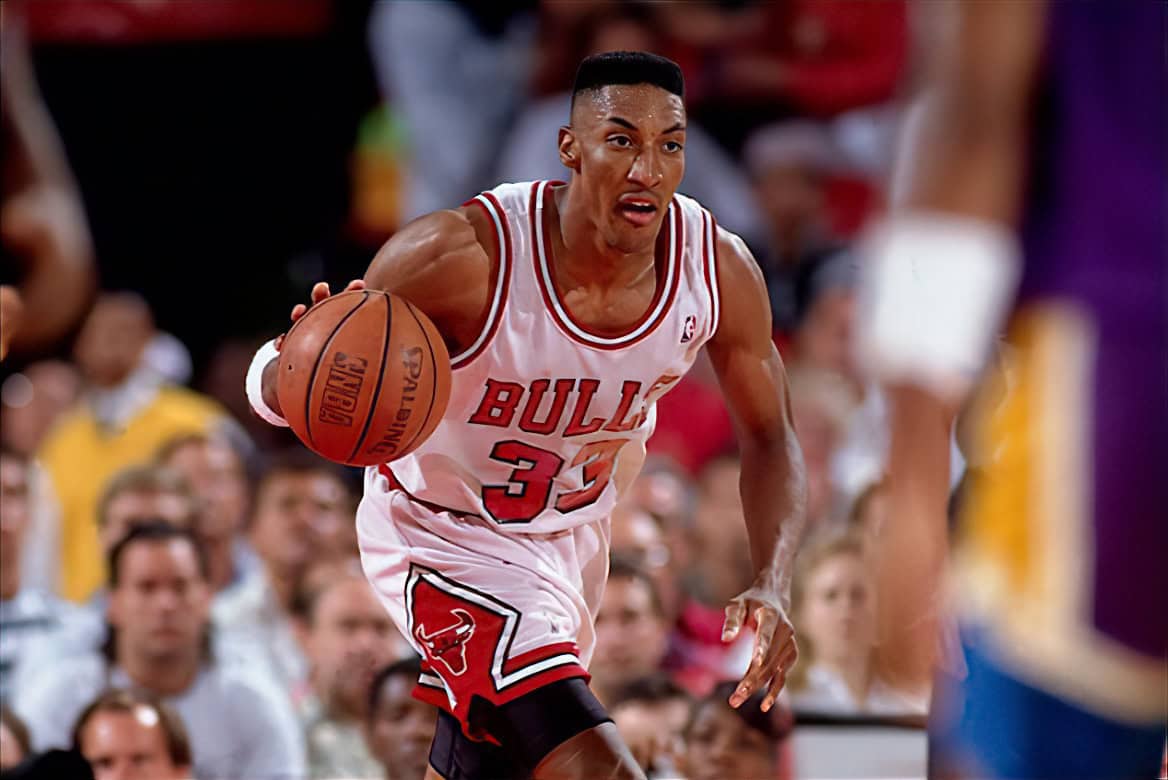
Scottie Pippen's reported $20 million net worth around 2017 and Michael Jordan's $3 billion net worth achieved by 2023 highlight one of the most stark financial disparities in sports history. Despite being co-stars on the dominant Chicago Bulls championship teams of the 1990s, their post-playing career wealth trajectories diverged dramatically due to contract structures, business acumen, ownership opportunities, and strategic brand partnerships.
Introduction to the Financial Divergence in Basketball Legacies
The financial evolution of professional basketball players over the last three decades has undergone a radical transformation. When Scottie Pippen and Michael Jordan dominated the NBA hardwood for the Chicago Bulls during the 1990s, the economic landscape of professional sports was vastly different from the multi-billion-dollar media rights and player contract eras of the 2020s.
Yet, even within the context of their own era, Pippen and Jordan amassed wealth on completely different scales. Around 2017, public financial estimates placed Scottie Pippen’s net worth at approximately $20 million. Conversely, by 2023, Michael Jordan’s net worth crossed the historic $3 billion threshold, largely propelled by his astute acquisition and eventual sale of the Charlotte Hornets, alongside his unprecedented partnership with Nike.
Examining the figures of 20m vs 3b pippen 2017 and jordan 2023 net worth offers a compelling lens through which to analyze the mechanics of athlete wealth creation. This comparison is not merely a study of numbers; it is a masterclass in equity, timing, brand capitalization, and the structural limitations placed on 1990s-era NBA contracts.
The 1990s NBA Economic Landscape: Contracts and Compensation
To understand how Scottie Pippen accumulated an estimated $20 million by 2017—a substantial sum by general standards, but a fraction of a superstar's earnings today—one must examine the salary cap environment of the mid-1990s.
Scottie Pippen’s Contract Miscalculation
In 1991, seeking financial security for his family and protection against potential career-ending injuries, Scottie Pippen signed a seven-year, $18 million contract extension with the Chicago Bulls. At the time of signing, this was a reasonable deal that guaranteed long-term financial stability. However, as the NBA experienced an explosive growth in revenue driven by the global popularity of the league, television contracts, and rising salary caps, Pippen’s contract quickly became one of the most underpaid bargains in professional sports.
By the mid-1990s, players of Pippen’s caliber—multiple-time All-Stars, All-Defensive First Team selections, and Olympic gold medalists—were commanding annual salaries that eclipsed the total value of Pippen's multi-year agreement. Because max-contract rules and collective bargaining agreements restricted immediate restructuring, Pippen played through the remainder of the decade significantly under-marketed relative to his on-court value. His career NBA salary earnings totaled roughly $109 million over his entire 17-season career, but a significant portion of those earnings came toward the twilight of his career with Houston and Portland rather than his peak years in Chicago.
Michael Jordan’s Salary Anomalies
Michael Jordan, while also bound by 1990s salary structures for much of his career, navigated the system differently due to his singular leverage. In the 1995-96 and 1996-97 seasons, Jordan signed single-season contracts with the Chicago Bulls worth $30.14 million and $33.14 million, respectively. To put this in perspective, Jordan's salary for those two seasons alone exceeded Pippen's cumulative career earnings up to that point.
When accounting for total career playing salary, Jordan earned approximately $90 million in NBA salary, less than Pippen's career total. However, salary was never the primary engine of Jordan's financial empire; it was merely the ignition source.
Comparative Breakdown: Pippen (2017) vs. Jordan (2023)
A direct comparative analysis underscores the structural differences between traditional career earnings and equity-driven enterprise building.
| Financial Metric | Scottie Pippen (~2017 Estimate) | Michael Jordan (~2023 Estimate) |
|---|---|---|
| Estimated Net Worth | ~$20 Million | ~$3 Billion |
| Primary Wealth Driver | NBA salary, endorsements, real estate | Jordan Brand (Nike), Charlotte Hornets sale |
| Peak Playing Salary (Single Season) | ~$11 Million (Portland, 2002-03) | $33.14 Million (Chicago, 1996-97) |
| Major Equity Holdings | Limited private investments, memoir ventures | Majority-to-minority team ownership, venture capital |
| Endorsement Strategy | Traditional appearance and sneaker deals | Co-branding, revenue-sharing royalties |
The Jordan Brand Phenomenon: Transforming Endorsements into Equity
The single most influential factor separating Michael Jordan’s net worth from his peers, including Pippen, is the creation and evolution of the Jordan Brand under Nike.
The 1984 Genesis
When Nike signed rookie Michael Jordan in 1984 to a rookie shoe deal worth $500,000 annually plus royalties, it was a high-risk gamble for both parties. Traditional athletic endorsements of the era involved flat fees for wearing a brand's footwear. Jordan's agent, David Falk, negotiated a revenue-sharing model tied directly to the sales of the Air Jordan line.
Exponential Scaling
The Air Jordan sneaker line shattered retail expectations immediately, generating $126 million in sales within its first year alone, against initial projections of $3 million over three years. Over the decades, Jordan Brand evolved from a subsidiary sneaker line into a standalone cultural empire within Nike.
By the 2020s, Jordan Brand was generating billions of dollars in annual revenue for Nike. Under his royalty agreement, Michael Jordan collects a percentage of these global sales annually. In recent fiscal years, Jordan’s annual payout from Nike routinely exceeded his entire cumulative NBA playing career earnings. This cash flow provided the liquid capital necessary to make high-net-worth investments elsewhere, systematically compounding his wealth far beyond the reach of traditional athlete portfolios.
Team Ownership: The Billion-Dollar Catalyst
While endorsement royalties provided immense cash flow, the catalyst that propelled Michael Jordan into the multi-billionaire bracket by 2023 was professional sports franchise ownership.
Acquiring the Charlotte Hornets
In 2010, Jordan purchased a controlling stake in the Charlotte Bobcats (later rebranded as the Hornets) for approximately $275 million, assuming a franchise that carried substantial debt and middling on-court performance. While running an NBA franchise presented operational challenges, the macro economics of sports team valuations worked entirely in Jordan's favor.
The 2023 Majority Stake Sale
Throughout the 2010s and early 2020s, NBA franchise valuations skyrocketed due to lucrative national media rights deals, international expansion of the game, and private equity investment inflows into sports leagues. In August 2023, Jordan finalized a deal to sell his majority stake in the Charlotte Hornets to a group led by Gabe Plotkin and Rick Schnall at a staggering valuation of $3 billion.
Selling his majority share transformed paper wealth into realized liquid capital, officially solidifying his status as a sports billionaire and securing the milestone reflected in the 2023 net worth valuations.
Scottie Pippen’s Wealth Portfolio and Post-Playing Ventures
Evaluating Scottie Pippen’s reported $20 million net worth around 2017 requires examining his post-playing career activities, real estate holdings, and business ventures.
Real Estate and Portfolio Management
Following his retirement in 2004, Pippen engaged in various real estate ventures, including the development and sale of luxury properties in areas such as Highland Park, Illinois, and Fort Lauderdale, Florida. While real estate appreciation contributed to his net worth, high maintenance costs, market fluctuations, and specific property liquidations absorbed portions of his capital over the years.
Media, Consulting, and Memoirs
Pippen maintained an active presence in the basketball ecosystem through television analyst roles, speaking engagements, and brand partnerships. In 2021, he released his memoir, Ungarded, which provided his perspective on his career with the Chicago Bulls, his contract disputes, and his relationship with Jordan. Sales from the memoir and associated media appearances contributed to his ongoing revenue streams, maintaining a stable, affluent lifestyle characteristic of elite former athletes, even if it operated on a completely different financial tier than Jordan's billionaire status.
Common Misconceptions Regarding Athlete Wealth
When analyzing the financial disparities between athletes from the same era, several common misconceptions often cloud public perception.
- Misconception 1: Equal On-Court Success Guarantees Equal Financial Success. Pippen was a vital component of six NBA championships, yet team success does not automatically translate to equal commercial marketability or equity opportunities. Jordan possessed a unique global cultural footprint that few athletes in history could match.
- Misconception 2: Player Salaries Tell the Whole Financial Story. While salary caps dictate baseline earnings, long-term wealth is almost exclusively generated through equity ownership, intellectual property rights, and compounding investments rather than W-2 salary income.
- Misconception 3: Endorsements Always Equal Equity. Standard endorsement deals provide short-term cash but little long-term appreciation. Jordan’s early insistence on a royalty structure fundamentally altered his financial trajectory compared to athletes who signed flat-fee endorsement contracts.
Frequently Asked Questions
Why was Scottie Pippen's contract with the Chicago Bulls considered so restrictive?
Pippen signed a seven-year, $18 million extension in 1991 to secure generational financial security early in his career. However, as the NBA's television revenues and salary caps exploded in the mid-1990s, player salaries rose exponentially. Pippen's fixed salary left him severely underpaid relative to market value during his peak championship years.
How much did Michael Jordan earn in total NBA salary?
Over his 15-season NBA career with the Chicago Bulls and Washington Wizards, Michael Jordan earned approximately $90 million in total playing salary. The vast majority of his multi-billion-dollar net worth comes from business ventures, Nike royalties, and sports franchise ownership.
What caused Michael Jordan's net worth to reach $3 billion by 2023?
Jordan's net worth reached $3 billion primarily due to two factors: the continuous global growth and royalty payouts of the Jordan Brand with Nike, and his 2023 sale of a majority stake in the Charlotte Hornets at a $3 billion franchise valuation.
Did Scottie Pippen own a stake in the Jordan Brand?
No. Scottie Pippen had his own signature sneaker lines with Nike during the 1990s, such as the Nike Air Pippen series, but these were traditional endorsement and signature shoe contracts rather than equity-sharing partnerships on the scale of the Jordan Brand.
How do modern NBA player contracts compare to 1990s salaries?
Modern NBA contracts routinely exceed $50 million to $60 million per season under current collective bargaining agreements and massive media rights deals. This modern economic structure allows contemporary stars to accumulate playing salaries in a few seasons that dwarf the career earnings of 1990s legends.
Practical Next Actions and Financial Lessons
For observers analyzing sports economics and personal wealth management, the contrast between Pippen and Jordan offers enduring lessons. Securing long-term financial security requires looking beyond active employment income and prioritizing equity, intellectual property, and scalable business assets. Athletes, entrepreneurs, and investors alike can apply these principles by negotiating for ownership stakes rather than flat compensation, diversifying into appreciating asset classes, and leveraging personal brand equity into sustainable commercial enterprises.