You are generally not supposed to stretch whitening strips. Most manufacturers design these strips to be applied as they come out of the package; stretching the material can disrupt the uniformity of the bleaching agent, cause the strip to lose its adhesive properties, or lead to uneven whitening results across your dental arch.
Understanding the Mechanics of Whitening Strips
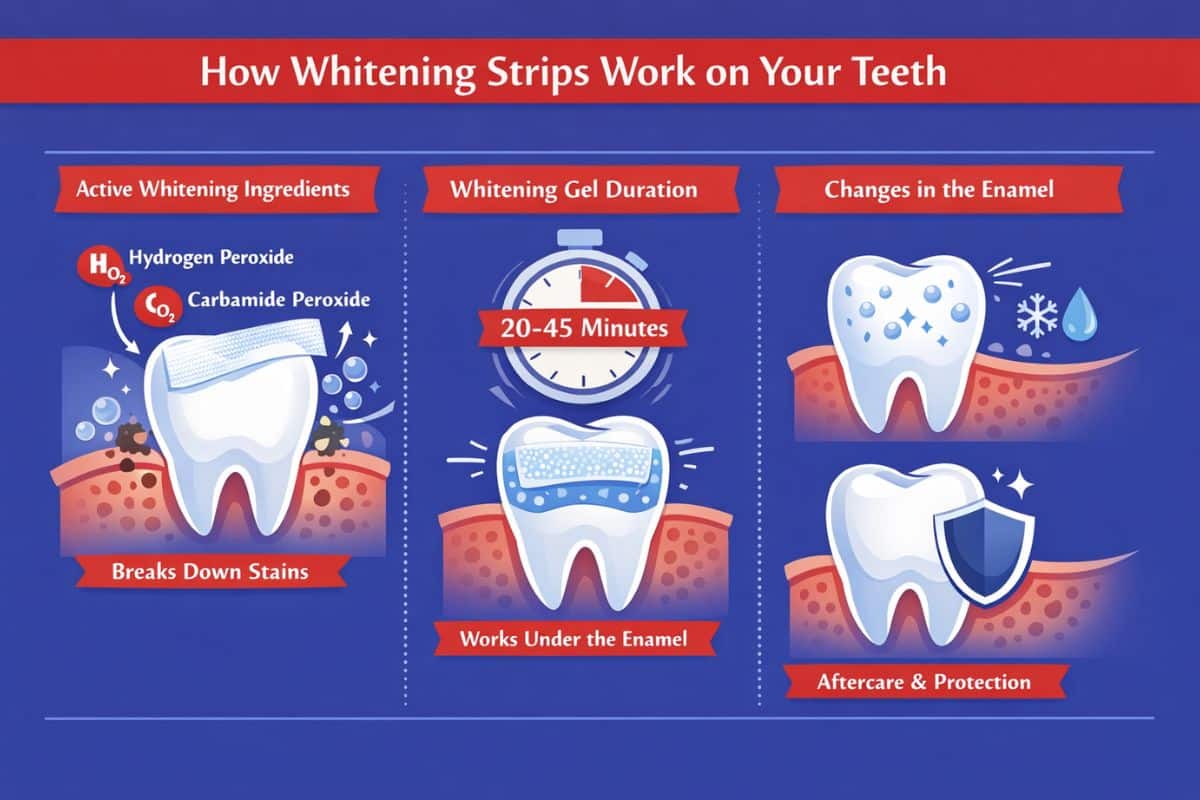
To understand why stretching is typically discouraged, one must first consider the design of modern teeth-whitening strips. These products are composed of a thin, flexible polyethylene film coated with a thin layer of a peroxide-based gel—typically hydrogen peroxide or carbamide peroxide. This gel is formulated to stay in place once pressed against the enamel.
When you remove a strip from its protective backing, it is sized to cover the front surface of the teeth, usually spanning from the central incisors to the premolars. The material is manufactured to be malleable enough to fold over the biting edges of the teeth without needing to be physically pulled or elongated. Stretching the strip alters its structural integrity. Because the bleaching gel is applied in a specific concentration and thickness during the manufacturing process, pulling the film can create "thin spots" where the gel density is reduced, leading to inconsistent whitening.
Furthermore, stretching the film often compromises the adhesive bond. These strips rely on a balance between the viscosity of the gel and the tension of the plastic film. If you stretch the film, it naturally wants to retract to its original shape. This "elastic memory" exerts force against the adhesive bond, causing the strip to slide out of position, peel away from the gum line, or fold onto itself—a phenomenon often observed when users attempt to force a strip to cover a wider area than it was designed for.
Why Users Consider Stretching Strips
The impulse to stretch whitening strips usually stems from a misunderstanding of how they are meant to interact with your mouth. Many users feel that if they stretch the strip, they can cover more teeth, specifically the molars or the far corners of the smile. However, dental anatomy dictates that the "smile zone"—the teeth visible when you speak or smile—is rarely wide enough to require extra length.
Another common reason for stretching is the belief that a tighter fit will deliver better results. While a tight, conforming fit is indeed important for isolating the whitening agent against the enamel, this should be achieved through firm, gentle pressure rather than mechanical elongation. Stretching the strip can cause it to become thinner, which may increase the risk of the hydrogen peroxide gel leaking onto the gingival (gum) tissue. This is a significant concern, as prolonged exposure of the gums to peroxide can lead to chemical irritation, transient blanching of the gum tissue, or increased sensitivity.
Correct Application Techniques
Rather than attempting to stretch the strip, focus on proper application techniques that ensure maximum contact between the bleaching agent and your tooth enamel. Achieving a professional-grade result at home is more about precision and consistency than coverage area.
- Preparation: Brush your teeth gently about 30 minutes before application. Do not over-brush or use an abrasive toothpaste immediately before, as this can increase tooth sensitivity. Ensure your teeth are relatively dry; wiping the surface of your teeth with a tissue before applying the strip helps the adhesive bond more effectively.
- Alignment: Identify the strip for the upper arch and the lower arch. Peel the strip from the backing and center the middle of the strip on your front teeth.
- Application: Apply the gel-coated side to the front of your teeth. Use your index fingers to press the strip firmly against the tooth surface, working from the gum line down toward the biting edge.
- Folding: Gently fold the excess length of the strip over the biting edges of your teeth and onto the back of the teeth. This helps secure the strip in place and ensures that the contact points between teeth are also exposed to the whitening agent.
- Smoothing: Run your finger along the strip once more to ensure there are no air bubbles. Air bubbles prevent the gel from touching the enamel, which can result in spotty or uneven whitening.
Managing Variations in Mouth Size
It is a common misconception that one-size-fits-all products are physically identical for every user. While manufacturers use a standard size, mouths vary significantly in width. If a strip feels too short, do not stretch it. Instead, focus the strip on the most visible teeth. If you have a particularly wide dental arch, the manufacturer’s design for that specific strip is likely intended to cover the "social six" (the front six teeth), which is generally considered sufficient for cosmetic improvement.
Attempting to stretch the strip to cover an extra molar often results in poor contact at the edges where the strip begins to lift, which wastes the product and risks gum irritation. If you find that your current whitening strips consistently fail to cover your visible smile, consider consulting a dental professional for custom-fitted whitening trays. These are fabricated based on an impression of your teeth and provide uniform coverage that no over-the-counter strip can replicate.
Comparison of Whitening Methods
| Feature | Whitening Strips | Custom Trays | LED Whitening Kits |
|---|---|---|---|
| Application | Adhesive film | Custom molded tray | Gel + light catalyst |
| Coverage | Front teeth only | Full arch coverage | Varies by design |
| Flexibility | Fixed size (do not stretch) | Rigid/Custom fit | Varies |
| Gum Safety | Risk of leakage | High protection | Risk of gel overflow |
| Best For | Convenience/Cost | Long-term results | Accelerated session |
Potential Risks of Improper Application
Misusing whitening strips by stretching them or failing to apply them securely can lead to several undesirable outcomes. The primary concern is chemical sensitivity. When the gel, which is formulated to be held in a controlled environment against the enamel, migrates to the gums, it can cause "gum burn." This is a reversible but painful condition where the gingiva becomes white, inflamed, or sensitive to touch.
Another risk is uneven whitening, or "patchiness." If the strip is stretched, the concentration of the peroxide becomes irregular. You may find that some areas of the tooth whiten significantly while others remain discolored. Additionally, if the strip fails to stay in place due to the tension caused by stretching, it may fall off during the treatment time, leading to wasted product and interrupted sessions, which reduces the efficacy of the overall regimen.
Frequently Asked Questions
Does stretching the strip make it stay on longer? No. Stretching the strip creates tension that causes it to peel away from your teeth. The adhesive is designed to work when the plastic film is in its neutral, relaxed state.
Should I cut the strips if they are too long? Yes, if the strips are too long and overlap significantly onto your gums, it is safer to trim them with clean scissors. Trimming the ends ensures the gel stays on your teeth and off your sensitive gum tissue.
Why do my teeth hurt after I apply the strips? Sensitivity is a common side effect of peroxide-based whitening. If you feel pain, ensure the gel is not touching your gums. If sensitivity persists, consider using a lower-concentration strip or taking a day off between applications.
Is it okay to use the same strip twice? No. Whitening strips are designed for single use. The concentration of the whitening agent is depleted after the recommended wear time, and the adhesive will not be effective for a second application.
How do I know if I have the strip on the right side? Most packages include clear instructions for identifying the upper and lower strips. The upper strip is typically longer, while the lower strip is often smaller and shaped specifically for the narrower lower arch.
Next Steps for Success
To achieve the best results with whitening strips, prioritize a consistent, gentle approach. Follow the manufacturer’s instructions regarding wear time strictly—leaving them on longer than recommended will not provide faster results and will likely increase tooth sensitivity. If you experience persistent discomfort, stop the treatment and consult your dentist.
For the most effective whitening, ensure your teeth are clean and dry before each application, press firmly to eliminate air bubbles, and resist the urge to stretch the material. If these products do not meet your expectations, your next step should be a professional dental consultation to assess whether in-office whitening or custom trays are a more suitable option for your unique dental structure.