Audiobooks and traditional text-based reading are distinct methods of consuming narrative and informational content, involving different sensory pathways and cognitive processes. While both facilitate language comprehension and intellectual engagement, audiobooks rely on auditory processing and neural pathways associated with listening, whereas reading involves visual decoding and complex orthographic recognition.
The Cognitive Distinction Between Listening and Reading
At the core of the debate regarding whether audiobooks equate to reading lies the biological reality of how the brain processes information. Reading is an active, learned skill that requires the brain to convert visual symbols—graphemes—into phonemes, which are then synthesized into meaningful language. This process requires sustained attention and engages areas of the brain associated with visual processing, such as the occipital lobe, alongside the language centers in the left hemisphere.
In contrast, listening to an audiobook relies on the auditory system. The brain processes sequential sound waves, converting them into auditory signals that the temporal lobe decodes. Because humans are naturally predisposed to process spoken language through evolution, listening is often perceived as "easier" or more passive. However, this is a nuance rather than a limitation. Research indicates that when listening to high-quality prose, the brain activates many of the same semantic networks used during reading. Whether you are reading a printed page or listening to a professional narrator, your brain is performing the work of constructing a mental model of the narrative or the argument presented.
Sensory Input and Retention
One primary argument against audiobooks being "the same" as reading is the difference in retention and focus. When you read, you have the ability to physically backtrack, re-read a complex sentence, or linger on a specific paragraph to internalize a concept. This self-paced nature of reading often facilitates deeper analytical processing. Audiobooks, by their nature, move at a speed determined by the narrator. While modern digital players allow for playback speed adjustments, the listener lacks the same tactile control over the text structure that a reader possesses.
However, modern psychological studies suggest that for narrative-driven content, the retention gap between listening and reading is often statistically negligible for the average user. In 2026, with the advancement of high-fidelity spatial audio and professional narration, the cognitive load required to track a plot is well-supported by audio formats. The trade-off is often one of multi-tasking. Readers tend to engage in deep reading—a state of focused, solitary immersion—while audiobook listeners often consume content while performing other tasks. While this increases the accessibility of literature, it can lead to "divided attention," where the listener may miss subtle linguistic nuances that a reader would catch through visual repetition.
Technical Accessibility and Utility
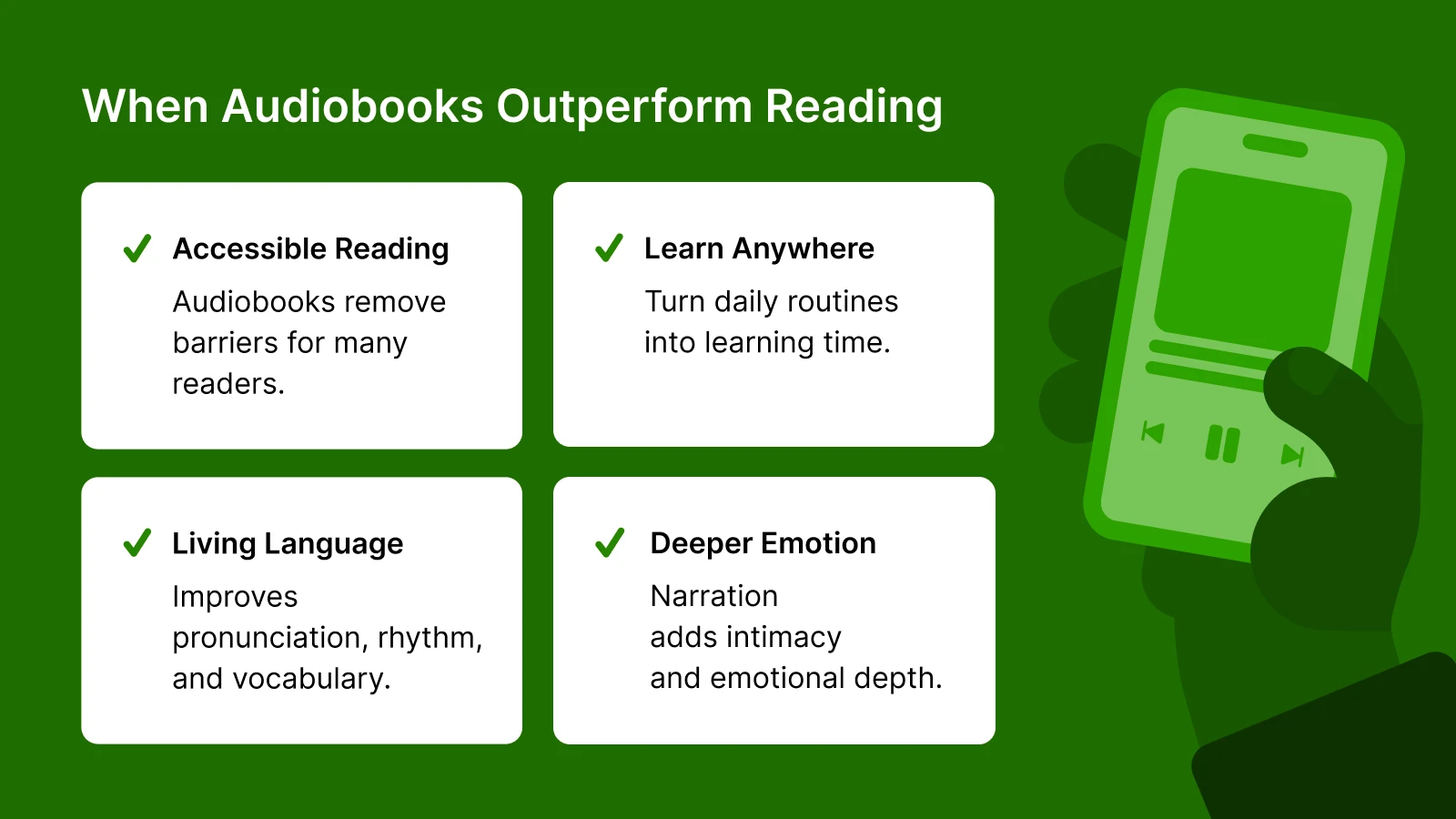
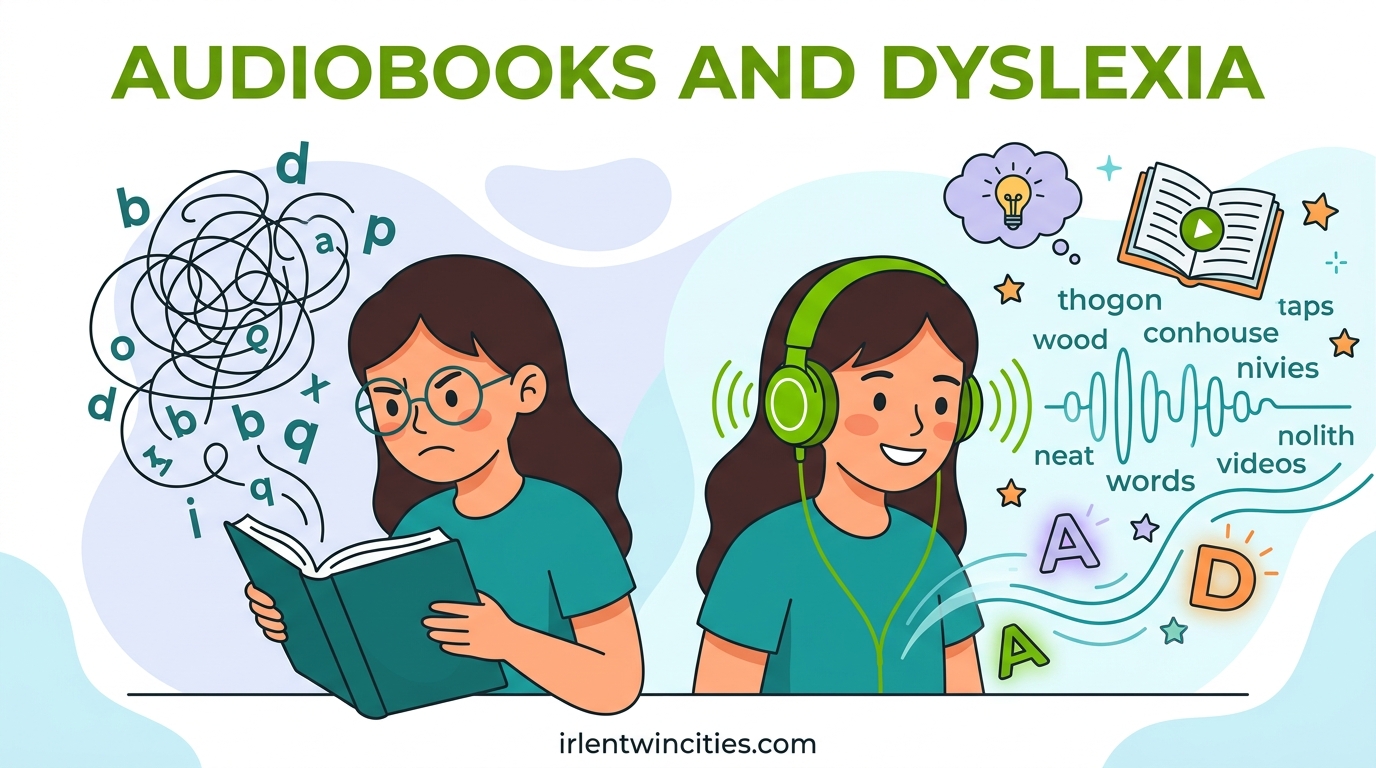
The utility of audiobooks often eclipses the question of whether they are "the same" as reading, particularly for individuals with specific needs or lifestyles. For those with visual impairments, dyslexia, or other print disabilities, audiobooks serve as an essential assistive technology rather than a mere substitute. They remove the barriers imposed by orthography, allowing individuals to engage with complex literature that might otherwise be inaccessible.
From an educational standpoint, audiobooks are frequently used to improve vocabulary and comprehension in students who struggle with decoding text. By bridging the gap between the speed of thought and the mechanical struggle of reading, audiobooks can foster a love for storytelling that eventually translates into better reading habits.
| Feature | Reading (Text) | Audiobooks |
|---|---|---|
| Primary Sense | Visual | Auditory |
| Cognitive Load | High (Decoding required) | Moderate (Processing required) |
| Pacing | Self-determined | Narrator-determined |
| Multitasking | Difficult/Impossible | Highly compatible |
| Accessibility | Requires visual acuity | High (assistive tech) |
| Spatial Awareness | High (Page/Location recall) | Low (Chronological recall) |
The Role of Prosody and Interpretation
A significant difference between the two formats is the role of the narrator. When you read, you serve as the director, the casting agent, and the composer of the book’s soundtrack. You assign voices, paces, and emotional registers to the characters based entirely on your own imagination.
In an audiobook, the narrator acts as a mediator. A skilled narrator brings a unique interpretation to the text through prosody—the rhythm, stress, and intonation of speech. This can clarify ambiguous dialogue or add emotional depth that the reader might have overlooked. Conversely, a poor narration can detract from the source material, potentially biasing the listener's understanding of the narrative tone. Therefore, listening to an audiobook is a collaborative experience between the author and the narrator, whereas reading is a singular collaboration between the author and the reader.
Can Audiobooks Improve Literacy?
There is a growing body of evidence suggesting that audiobooks can be a powerful tool for literacy development. The "Matthew Effect" in reading—where those who read more continue to improve at a faster rate than those who read less—can be mitigated by audiobooks. By exposing listeners to complex sentence structures, diverse vocabulary, and advanced thematic content that they might not yet have the decoding skills to tackle, audiobooks help expand the "listening vocabulary."
As a listener encounters sophisticated language in an audiobook, they build a mental bank of words and structures. When these individuals later encounter these terms in print, they are more likely to recognize them because they already have an established auditory memory. In this sense, audiobooks are not just a separate activity; they are a precursor and a partner to traditional literacy.
Navigating the "Deep Reading" Challenge
If you are a professional or student looking to retain dense, technical, or highly academic information, the distinction becomes more relevant. Research consistently shows that for non-fiction, data-heavy content, physical or digital text is generally superior to audio for information retrieval. The ability to skim, scan, and look back at a table or a footnote is critical for dense material.
If your goal is to consume high-level academic theory or complex technical manuals, reading is likely the superior choice. If, however, your goal is to maintain a consistent habit of consuming literature, biographies, or general knowledge, audiobooks are an efficient and valid way to achieve that goal. The "best" method is the one that fits the specific objective of the material you are engaging with.
Frequently Asked Questions
Does listening to a book count as reading for professional development? Yes, in terms of intellectual growth and knowledge acquisition, listening is highly effective. While it may not count toward traditional academic "reading" requirements that test decoding skills, it provides identical access to the informational content and thematic depth of the material.
Is it easier to get distracted while listening to an audiobook? Yes, because audiobooks are often consumed alongside other tasks. The "split-attention effect" can lead to reduced comprehension. To mitigate this, consider active listening—where you refrain from other high-focus tasks while the book is playing—or use speed control features to keep your engagement level high.
Can I learn a new language better by reading or listening? Both are necessary. Listening helps with phonetics, pronunciation, and flow (prosody), while reading helps with grammar, spelling, and vocabulary acquisition. A balanced approach using both is the most effective strategy for language mastery.
Do audiobooks help with dyslexia? Yes. Audiobooks allow users to bypass the phonological processing hurdles that characterize dyslexia. This allows learners to engage with high-level narratives without being hindered by the mechanical aspects of word decoding, fostering greater confidence and comprehension.
Does the speed of the narrator change my ability to retain information? Research suggests there is a "sweet spot" for information processing. If the narration is too slow, the mind wanders; if it is too fast, the brain cannot encode the information into long-term memory. Most users find that 1.25x or 1.5x speed is the optimal balance for comprehension and efficiency in 2026.
Conclusion and Next Steps
The question of whether audiobooks are the same as reading is ultimately a matter of definition rather than a binary choice between "better" or "worse." If your definition of reading is the mechanical act of decoding visual text, then audiobooks are fundamentally different. If your definition of reading is the acquisition of knowledge, engagement with narratives, and the expansion of one's worldview, then audiobooks are a legitimate and effective equivalent.
To maximize your learning, you should adopt a hybrid approach:
- Identify the goal: If you need to study or memorize data, use text. If you want to consume stories or general knowledge, audiobooks are an excellent tool.
- Practice active listening: If you find your mind wandering, increase the playback speed slightly or engage in a low-intensity task (like walking or cleaning) to keep your brain alert.
- Audit your retention: Periodically check your understanding by summarizing a chapter after you finish it, regardless of the format you chose.
By integrating both methods into your daily routine, you can increase the total volume of content you consume while tailoring the method to the complexity of the material.