An architect expert witness is a licensed professional who provides specialized technical knowledge to legal proceedings regarding design, construction, and the standard of professional care. These experts analyze complex building failures, interpret architectural contracts, and provide testimony in depositions or trials to help triers of fact understand technical nuances in construction litigation.
In the complex landscape of 2026 construction law, the role of an architect expert witness has become indispensable. As building codes evolve to address climate resilience and high-performance materials, and as Building Information Modeling (BIM) becomes the universal standard for project delivery, the potential for disputes regarding design errors, omissions, and professional negligence has grown. An architect expert witness serves as a bridge between the highly technical world of architectural practice and the rigorous requirements of the legal system.
The Necessity of Architectural Expertise in Modern Litigation
Litigation involving the built environment rarely centers on simple "yes or no" questions. Instead, disputes often hinge on whether an architect met their professional obligations under a specific set of circumstances. Because the average judge or juror does not possess a deep understanding of structural loads, waterproofing systems, or the nuances of the American Institute of Architects (AIA) contract documents, an expert is required to translate these concepts.
The primary driver for hiring an architect expert witness is the allegation of professional negligence. In a legal context, negligence is not defined by the mere occurrence of a mistake, but by a failure to adhere to the "Standard of Care." Architects are not expected to be perfect, nor are they expected to provide a "guarantee" of a building's performance unless specifically contracted to do so. They are, however, required to perform their services with the same degree of skill and care ordinarily exercised by other qualified architects practicing in the same locality under similar circumstances.
Beyond negligence, architect experts are frequently called upon in cases involving:
- Construction Defects: Determining if a building failure—such as water intrusion or structural settlement—resulted from a design flaw, a manufacturing defect in materials, or poor workmanship by the contractor.
- Building Code Compliance: Analyzing whether a structure meets local, state, and federal mandates, including the International Building Code (IBC) and accessibility requirements.
- Delay Claims: Evaluating how design changes or late responses to Requests for Information (RFIs) impacted a project's timeline and budget.
- Copyright Infringement: Determining if one party has unlawfully misappropriated the "original work of authorship" embodied in another architect’s plans or three-dimensional designs.
The Core Responsibilities of an Architect Expert Witness
The engagement of an architect expert witness typically follows a structured progression, beginning with a preliminary investigation and culminating in formal testimony. Each phase requires a different set of skills, ranging from forensic field work to persuasive public speaking.
1. Preliminary Investigation and Forensic Analysis
Before an expert can form an opinion, they must conduct a deep dive into the project's history. This often involves "forensic architecture," where the expert visits the site to observe the physical conditions of the building. In 2026, this process frequently utilizes advanced technologies such as 3D laser scanning (LiDAR), drone-based thermal imaging to detect heat loss or moisture, and digital "clash detection" within BIM models to see where systems may have conflicted during construction.
The expert reviews the "as-built" conditions against the original construction documents. They examine the specifications, shop drawings, and change orders to create a comprehensive timeline of the project. This phase is critical because an expert’s opinion is only as strong as the evidence supporting it.
2. Expert Report Preparation
Once the investigation is complete, the architect must draft a formal expert report. Under most jurisdictional rules, including the Federal Rules of Civil Procedure Rule 26, this report must contain a complete statement of all opinions the witness will express and the basis and reasons for them.
Writing a report requires a balance of technical precision and accessibility. The architect must explain why a certain detail failed without relying solely on jargon. For instance, instead of merely stating there was a "failure in the building envelope's flashing," the expert must explain how the specific geometry of the flashing allowed hydrostatic pressure to drive water into the wall cavity, leading to rot.
3. Deposition and Trial Testimony
If the case does not settle based on the expert reports, the architect will likely be deposed. A deposition is an out-of-court session where the opposing counsel asks the expert questions under oath. This is often the most grueling part of the process, as the expert's qualifications, methodology, and conclusions are scrutinized for any potential weakness.
At trial, the architect expert witness serves a pedagogical role. They are there to educate the jury. They must remain calm, objective, and authoritative, even under aggressive cross-examination. Their goal is to maintain credibility; if an expert appears biased toward the party paying their fees, their testimony is often discounted by the court.
Understanding the Standard of Care
The "Standard of Care" is the most misunderstood concept in architectural litigation. It is not a fixed list of rules, but a shifting benchmark based on professional consensus. An architect expert witness must be able to articulate what the standard was at the time the services were rendered.
For example, the standard of care for energy efficiency in 2010 was significantly lower than it is in 2026. An expert cannot retroactively apply modern green-building standards to a project designed two decades ago. They must look at what was "reasonable" at the time. This often requires the expert to reference contemporary peer-reviewed journals, NCARB (National Council of Architectural Registration Boards) guidelines, and the specific codes in effect during the design phase.
The expert must also consider the "locality rule," which suggests that an architect in a rural setting might be held to a different standard than one designing a high-tech skyscraper in a major metropolitan hub. However, in the modern era of national architectural firms and digital collaboration, the locality rule has weakened, and many courts now lean toward a national standard of care for specialized architectural services.
Specialized Areas of Architectural Expertise
Not every architect is suited for every case. The field is highly specialized, and a "generalist" may find themselves outmatched by an expert who spends their entire career focused on a specific niche. Common areas of specialization include:
- ADA and Accessibility: Experts who focus on the Americans with Disabilities Act (ADA) and the Fair Housing Act. These cases involve minute measurements—the slope of a ramp, the height of a counter, or the width of a doorway.
- The Building Envelope: Experts who specialize in the "skin" of the building. This is the most common area for litigation, as water intrusion remains the leading cause of construction-related insurance claims.
- Standard of Care for Large-Scale Infrastructure: Specialization in airports, hospitals, or transit hubs, where the complexity of life-safety systems and public egress is paramount.
- Contract Administration: Experts who focus on the "paper trail"—RFIs, Submittals, and Pay Applications. These experts help determine who was responsible for a delay or a budget overrun based on the contractual obligations defined in documents like the AIA A201 (General Conditions).
Selection Criteria: How to Identify a Qualified Expert
Choosing the right architect expert witness can determine the outcome of a multi-million dollar dispute. Attorneys and insurance adjusters typically look for several key indicators of a high-quality expert:
| Feature | Requirement | Why It Matters |
|---|---|---|
| Licensure | Active license in the relevant jurisdiction | Ensures the expert is legally recognized as a professional. |
| Experience | 15+ years of practical design/construction | Practical experience carries more weight than purely academic knowledge. |
| Testimony History | Balanced record for both plaintiffs and defendants | Prevents the expert from being labeled as a "hired gun" for one side. |
| Communication | Ability to simplify complex topics | If a jury cannot understand the expert, the technical knowledge is useless. |
| Methodology | Adherence to the Daubert or Frye standards | Ensures the expert's opinions are based on scientific/technical reliability. |
| Availability | Sufficient time for site visits and depositions | Expert work is time-intensive; a distracted expert is a liability. |
Fee Structures and Engagement Costs
Hiring an architect expert witness is a significant financial investment. In 2026, fee structures have become increasingly standardized but remain high due to the specialized nature of the work.
Experts typically charge by the hour. Rates for a junior-to-mid-level architect acting as a consultant might range from $250 to $350 per hour. However, a seasoned principal architect with extensive trial experience often commands between $450 and $700 per hour.
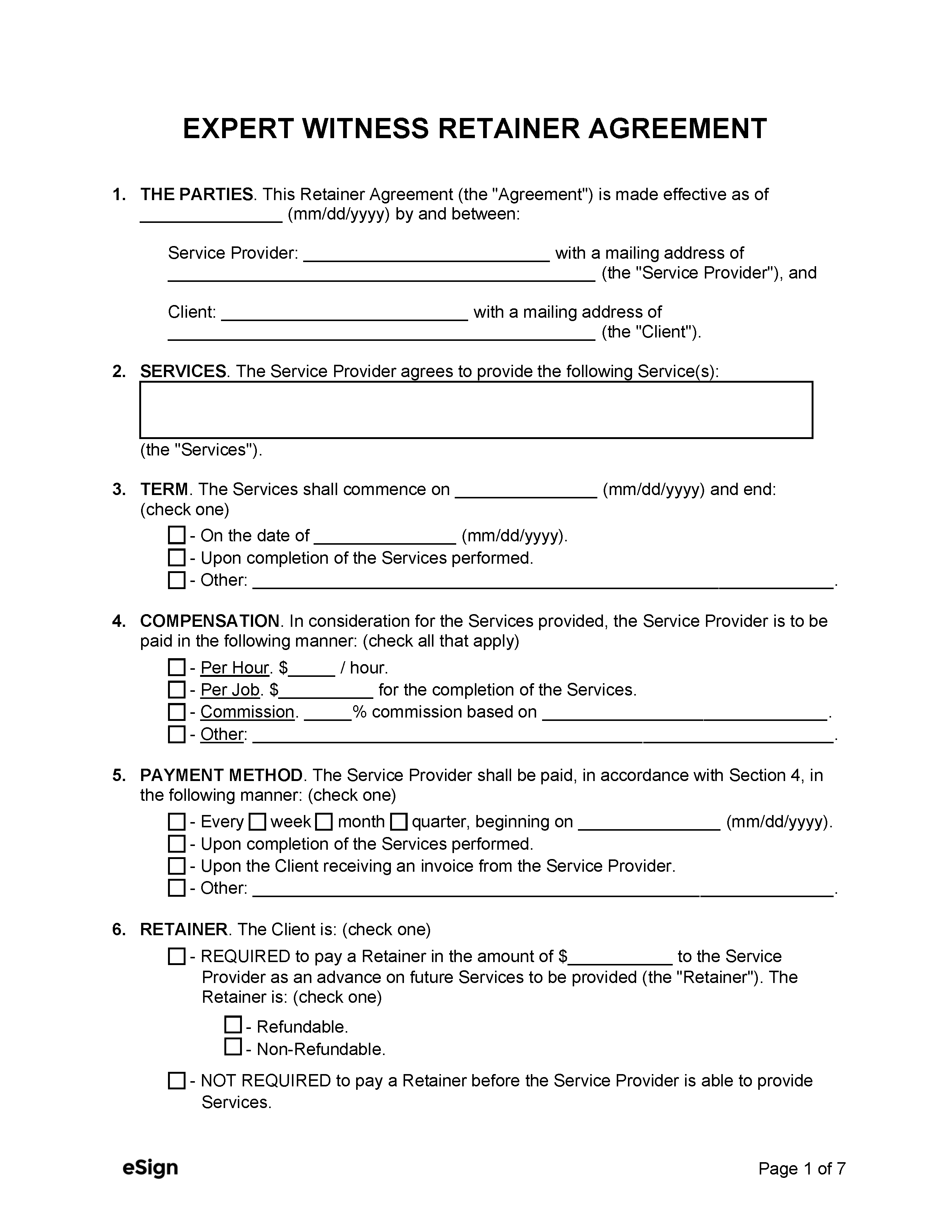
Most experts require an initial retainer, which can range from $5,000 to $15,000, depending on the complexity of the case. This retainer is an advance against future billable hours. It is also common for experts to charge a premium for "standby time" during a trial or a higher hourly rate for the actual time spent testifying under oath. Expenses such as travel, specialized testing equipment, and laboratory fees for material analysis are billed separately.
It is important to note that expert witnesses cannot work on a contingency fee basis (where they are paid only if the client wins). This is an ethical violation that would immediately disqualify the expert, as it creates an inherent bias in their testimony.
Ethical Obligations and the Daubert Standard
The integrity of an architect expert witness is governed by both professional ethical codes and legal standards. The American Institute of Architects (AIA) Code of Ethics requires architects to be impartial when acting as an arbitrator or interpreter of contract performance.
In the courtroom, the "Daubert Standard" (derived from Daubert v. Merrell Dow Pharmaceuticals, Inc.) is the benchmark used by federal courts and many state courts to determine the admissibility of expert testimony. To pass the Daubert challenge, an architect’s testimony must be:
- Based on sufficient facts or data.
- The product of reliable principles and methods.
- The result of reliably applying those principles and methods to the facts of the case.
If an architect relies on "junk science" or subjective feelings rather than established architectural principles, the judge may "strike" the expert, meaning they are barred from testifying, often dealing a fatal blow to the client's case.
Comparing Expert Witnesses and Fact Witnesses
It is essential to distinguish between these two types of witnesses, as their roles and the rules governing them differ substantially.
| Aspect | Fact Witness (e.g., Project Architect) | Expert Witness (Retained Specialist) |
|---|---|---|
| Personal Knowledge | Must have first-hand knowledge of the project. | Does not need prior involvement with the project. |
| Opinions | Generally limited to perceptions, not technical opinions. | Specifically hired to provide technical and professional opinions. |
| Compensation | Usually only reimbursed for travel/lost wages. | Paid professional fees for their time and expertise. |
| Standard of Testimony | Relates what happened ("I saw the leak"). | Explains why it happened ("The leak occurred because..."). |
| Discovery Rules | Communications are often not privileged. | Preliminary communications may be protected (work product). |
Common Mistakes in Engaging an Architect Expert
One of the most frequent errors in litigation is waiting too long to engage an expert. Often, an attorney will wait until the "discovery" phase is nearly over before looking for an architect. This is problematic because the expert may discover that the evidence (such as a failed building component) has already been repaired or discarded, making a thorough forensic analysis impossible.
Another mistake is hiring an expert who is "too academic." While a professor of architecture may have impressive credentials, they may lack the "boots on the ground" experience of how a construction site actually operates. Jurors tend to trust experts who have spent years in the field, dealing with contractors and building inspectors, rather than those who only understand architecture in theory.
Finally, failing to vet the expert for "conflicts of interest" can derail a case. In 2026, the consolidation of architectural firms means that an expert’s firm might have a hidden business relationship with the opposing party, which could lead to disqualification mid-litigation.
FAQs about Architect Expert Witnesses
What is the difference between a forensic architect and an expert witness?
A forensic architect is a specialist who focuses on investigating building failures and determining their causes. While many forensic architects serve as expert witnesses, "forensic" refers to the investigative methodology, whereas "expert witness" refers to the legal role of providing testimony in court.
Can an architect be an expert witness if they aren't licensed in the state where the building is located?
In many cases, yes. While a license is required to practice architecture (design buildings) in a specific state, courts often allow experts licensed in other jurisdictions to testify if they can demonstrate that the standard of care or the building codes involved are substantially similar or national in scope. However, local licensing is always a preferred credential.
Does the expert witness work for the attorney or the client?
Technically, the expert is usually retained by the attorney on behalf of the client. This arrangement is designed to protect the "attorney work product" privilege. However, the expert’s ultimate duty of truthfulness is to the court, not to the party that pays their fees.
How do I verify an architect’s history as an expert witness?
Attorneys often use specialized databases like Daubert Tracker or LexisNexis to see if an expert’s testimony has ever been excluded by a judge. You can also request a "Rule 26" list from the expert, which lists all cases in which they have testified in the previous four years.
What role does BIM play in an architect's expert testimony in 2026?
By 2026, BIM (Building Information Modeling) is central to most construction disputes. An expert witness uses BIM to perform "4D" simulations (adding the element of time) to show exactly when a design error impacted the construction schedule. They also use it to demonstrate spatial conflicts that are not visible on 2D paper drawings.
Can an architect expert witness help avoid a trial?
Yes. Often, a well-reasoned, evidence-backed expert report is enough to convince the opposing side that their position is weak. This leads to more favorable settlements during mediation or arbitration, saving all parties the massive expense of a full trial.
Practical Recommendation for Next Actions
If you are involved in a construction dispute or anticipate litigation involving architectural services, your first step should be a "preliminary merit review." Before fully retaining an expert for trial, hire an architect for a limited-scope engagement to review the key documents and the site. This initial assessment will tell you if your case has technical merit.
Ensure that your chosen expert is not only technically proficient but also has a "clean" history regarding Daubert challenges. Finally, prioritize experts who are familiar with the specific project delivery method used—whether it was Design-Bid-Build, Design-Build, or Integrated Project Delivery (IPD)—as the professional responsibilities of the architect change significantly between these models.