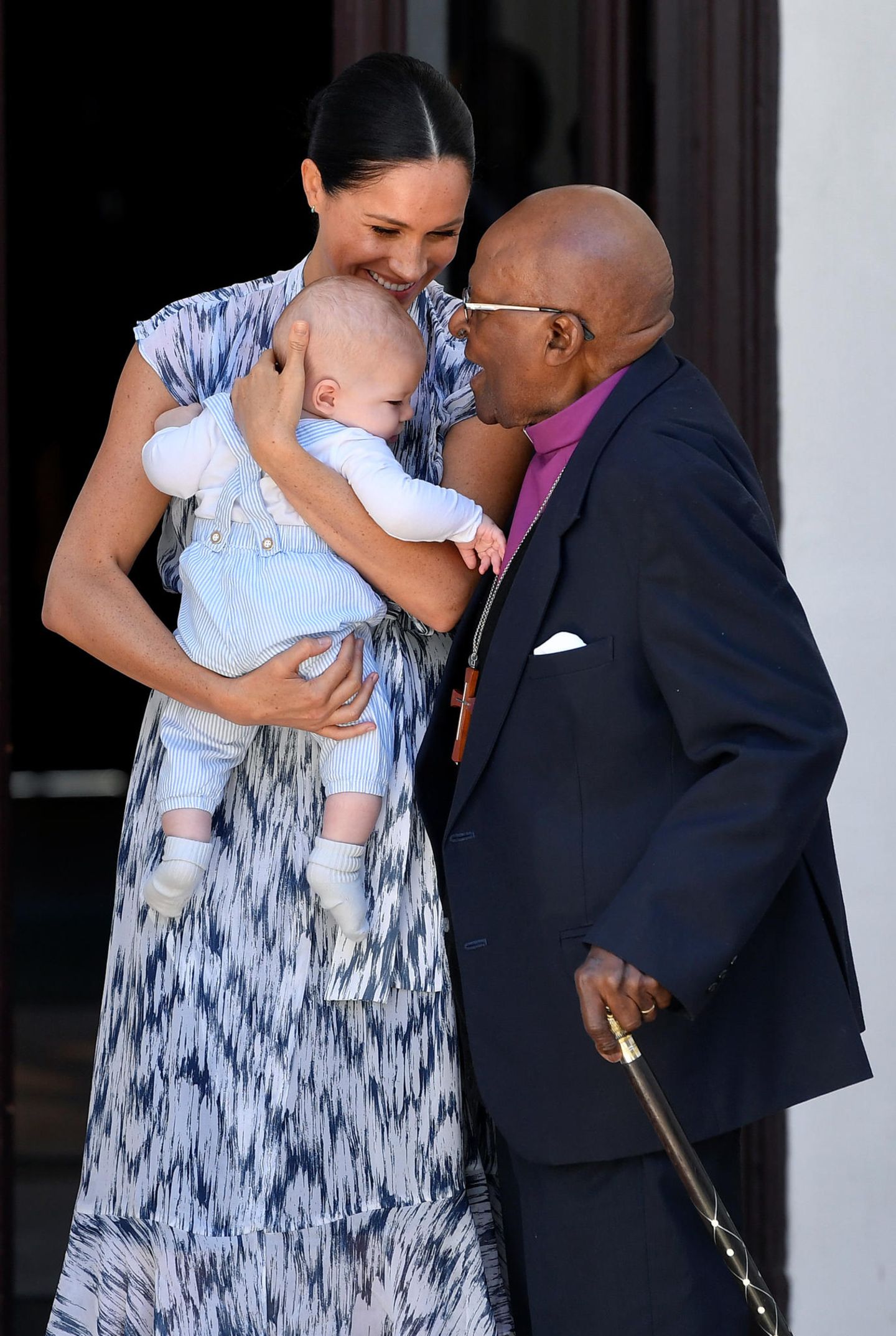
Public interest in Archie Harrison Mountbatten-Windsor often includes questions about his physical appearance, specifically rumors regarding him being cross-eyed. While early infant photos sparked social media speculation, there is no official medical evidence suggesting a permanent condition. Most instances of apparent misalignment in infants are attributed to normal development or pseudostrabismus, which typically resolves as the child grows.
The fascination with the health and development of royal children is a long-standing tradition, but in the case of Prince Archie, the son of Prince Harry and Meghan Markle, this scrutiny has often centered on his early developmental milestones. Among the most frequent search queries is the question of whether Archie is "cross-eyed." As of 2026, looking back at his growth from his birth in 2019 through his early school years, it is essential to distinguish between tabloid-driven speculation and the clinical realities of pediatric ophthalmology.
The Context of Public Speculation and Royal Privacy
Since his birth, Archie has been shielded from the relentless gaze of the paparazzi, with the Duke and Duchess of Sussex choosing to release only select images and video footage. This scarcity of visual data often leads the public and various commentators to over-analyze every pixel of the photos that are available. In several early photographs, some observers claimed to see a misalignment in Archie’s eyes, a condition known clinically as strabismus.
However, it is crucial to recognize that the Sussexes have been vocal about their children's right to privacy. Unlike the "goldfish bowl" environment of the working royal family in London, Archie’s life in California has allowed him to grow up away from constant documentation. Therefore, any "diagnosis" made by social media users based on a handful of grainy or candid shots is inherently unreliable. Medical professionals emphasize that identifying eye conditions requires in-person clinical examinations, not photographic analysis of a moving toddler.
The Science of Infant Vision: Why Babies Often Appear Cross-Eyed
To understand why speculation about Archie’s eyes surfaced, one must first understand how infant vision develops. It is entirely common—and often expected—for newborns and young infants to appear cross-eyed (esotropia) or have eyes that wander outward (exotropia) during their first few months of life.
The Development of Binocular Vision
In the early stages of life, the brain is still learning how to coordinate the muscles of the eyes. This process, known as binocular vision, allows the brain to merge the two separate images from each eye into a single 3D image. Until the age of four to six months, an infant's eyes may move independently because the neurological pathways required for perfect alignment are not yet fully matured.
Strengthening Extraocular Muscles
The six muscles that control each eye must learn to work in perfect synchronicity. In a growing child like Archie was in those early publicized photos, these muscles are frequently "testing" their range of motion. Most pediatricians advise parents not to worry about occasional eye crossing until the child is older than six months. If the crossing persisted beyond that point in Archie’s case, it would have been a matter for a private pediatric ophthalmologist, not the public record.
Understanding Pseudostrabismus
One of the most likely explanations for the rumors surrounding Archie is a condition called pseudostrabismus. This is not a medical "condition" in the sense of a disability, but rather an optical illusion caused by the physical structure of a child’s face.
The Role of the Epicanthal Fold
Many infants have a wide, flat bridge of the nose and small folds of skin on the inner corners of the eyes, known as epicanthal folds. These folds can cover the white part (sclera) of the eye nearest the nose, especially when the child looks to the side. This creates the appearance that the eye is turned inward, even when the pupils are actually perfectly aligned.
As a child grows and the bridge of their nose becomes more prominent and narrow, these skin folds are pulled away from the eyes, and the "cross-eyed" appearance disappears. Given that more recent footage of Archie from 2024 through 2026 shows a well-defined facial structure and clear eye alignment, pseudostrabismus remains the most scientifically plausible explanation for early observations.
Clinical Strabismus: When Misalignment is Real
While the evidence suggests Archie’s development has been typical, it is helpful to understand what true strabismus entails for those who may be concerned about similar signs in their own children. Strabismus occurs when the eyes do not align simultaneously under normal viewing conditions.
Types of Strabismus
- Esotropia: One or both eyes turn inward toward the nose.
- Exotropia: One or both eyes turn outward toward the ear.
- Hypertropia: One eye turns upward.
- Hypotropia: One eye turns downward.
If a child does have true strabismus, it is rarely just an aesthetic issue. If left untreated, the brain may begin to ignore the signals from the misaligned eye to avoid double vision. This can lead to amblyopia, commonly known as "lazy eye," where the vision in one eye fails to develop properly, potentially leading to permanent vision loss in that eye.
Comparing Pseudostrabismus and True Strabismus
For parents and observers trying to distinguish between a temporary developmental phase and a clinical condition, the following table outlines the key differences:
| Feature | Pseudostrabismus | True Strabismus (Esotropia/Exotropia) |
|---|---|---|
| Eye Alignment | Eyes are actually straight and aligned. | Eyes are physically misaligned. |
| Light Reflex | The light reflection (Hirschberg test) is centered in both pupils. | The light reflection is off-center in one eye. |
| Cause | Facial structure (wide nose bridge, skin folds). | Muscle weakness or neurological signaling issues. |
| Development | Improves as the child’s face matures. | Does not improve without medical intervention. |
| Treatment | No treatment required. | Glasses, patching, or surgical correction. |
| Risk of Vision Loss | None. | High risk of amblyopia if untreated. |
Observations of Archie’s Development (2019–2026)
Since the Duke and Duchess of Sussex moved to Montecito, California, the world has seen Archie in various high-profile settings, including the Harry & Meghan docuseries and various holiday cards. In these appearances, particularly as he reached ages five, six, and now seven in 2026, there has been no visible evidence of a visual impairment.
Observers noted that in the high-definition footage released in recent years, Archie’s visual tracking—his ability to follow moving objects or look directly at the camera—appears robust and symmetrical. This suggests that if there were any early developmental alignment issues, they were either the aforementioned pseudostrabismus or were addressed through standard pediatric care, which is the private medical business of the family.
The Role of Media Narratives in Royal Health Speculation
The narrative that a royal child has a "health secret" is a common trope in tabloid journalism. By focusing on a specific physical trait like being "cross-eyed," publications generate clicks and engagement. In the case of Archie, this speculation is often tinged with the broader polarized discourse surrounding his parents.
It is important for readers to distinguish between objective health reporting and speculative "diagnosis" from non-experts. In the world of 2026, digital manipulation and "deepfake" technology also mean that static images found on social media may not always be accurate representations of a person’s true appearance. Reliable information regarding the health of the Sussex children would only come from official spokespeople or the parents themselves.
Guidance for Parents: Identifying Pediatric Eye Issues
While the focus here is on Archie, the search for "Archie Mountbatten-Windsor cross eyed" often comes from parents who notice similar traits in their own children. If you are concerned about a child’s eye alignment, the following steps are recommended by the American Academy of Ophthalmology:
- The Light Reflex Test: Shine a small penlight gently toward the child's eyes from about two feet away. Look at where the light reflects on the surface of the eye. If the reflection is in the same spot (usually the center) of both pupils, the eyes are likely aligned.
- Monitor Fatigue: Does the eye crossing only happen when the child is tired or ill? Intermittent crossing is common in toddlers but should still be evaluated if it persists past age two.
- Check for Squinting: Does the child tilt their head or squint one eye when trying to focus on a distant object? This can be a sign of refractive errors or misalignment.
- Professional Screening: Ensure the child receives a comprehensive vision screening by a pediatrician or a pediatric ophthalmologist by age three.
Frequently Asked Questions
Has Prince Harry or Meghan Markle ever addressed Archie's eye health?
No. The Duke and Duchess of Sussex have never made a public statement regarding Archie having any eye conditions. They have maintained a strict policy of medical privacy for both of their children, Archie and Lilibet.
Is it common for Royal family members to have eye conditions?
Historically, several members of the British Royal Family have dealt with vision issues. Most notably, Lady Louise Windsor (daughter of Prince Edward) was born with esotropia and underwent successful procedures to correct it. Her transparency about the condition helped raise awareness for pediatric eye health, though this has no bearing on Archie’s health status.
At what age should a child's eyes be perfectly straight?
In most cases, an infant's eyes should be consistently aligned by the age of four to six months. While occasional "wandering" may occur during periods of extreme fatigue in toddlers, any constant or frequent misalignment after six months warrants a visit to a specialist.
Can "cross-eyed" conditions be cured?
Yes. Modern pediatric ophthalmology has a very high success rate in treating strabismus. Treatments range from corrective lenses and eye patches (to strengthen the weaker eye) to minor surgical adjustments of the eye muscles. When caught early, these treatments usually prevent any long-term impact on vision.
Is there a link between Archie's ethnicity and pseudostrabismus?
Pseudostrabismus is common across all ethnicities, but it is particularly frequent in children with a wider nasal bridge or prominent epicanthal folds. As Archie is of mixed-race heritage, his unique facial features during infancy may have contributed to the optical illusion that his eyes were misaligned.
Recommendations for Moving Forward
When encountering rumors or discussions regarding "Archie Mountbatten-Windsor cross eyed," the most practical approach is to rely on recent, high-quality visual evidence and official communications. As of 2026, Archie appears to be a healthy, developing young boy with no indications of the visual impairments suggested by early tabloid speculation.
For those concerned about pediatric vision in their own families, the best course of action is early screening. Visual development is most plastic during the first few years of life, and early intervention is the key to ensuring lifelong ocular health. Rather than fueling speculation about public figures, these moments serve as a valuable reminder of the importance of routine eye care for all children.