Apple's primary East Coast data center in Maiden, North Carolina, serves as a cornerstone of the tech giant's global cloud computing infrastructure. Spanning hundreds of acres and backed by multi-billion-dollar cumulative investments, the facility powers global services including iCloud, Apple Music, Siri, and artificial intelligence processing, while operating on 100% renewable energy through dedicated solar arrays and biogas fuel cells.
Located in Catawba County, the Maiden facility transformed a rural agricultural parcel into one of the world's highest-capacity, environmentally sustainable hyper-scale data centers. Since its initial announcement in 2009 and opening in 2010, the campus has continuously expanded to accommodate growing cloud storage requirements, high-definition media delivery, and complex machine learning workloads.
History and Development of the Maiden Campus
Apple’s decision to select Maiden, North Carolina, for its initial East Coast hyper-scale data center came after an extensive multi-state site selection process in 2009. State and local government officials worked to attract the project by crafting economic development packages. The North Carolina General Assembly passed targeted tax exemptions on data center electricity and equipment, while Catawba County and the Town of Maiden provided real estate and personal property tax incentives.
| Year | Apple Maiden Data Center Evolution |
|---|---|
| 2009 | Site Selection & Initial $1 Billion Investment Announcement |
| 2010–2011 | Phase 1 Flagship Facility Built (500,000+ sq. ft.) |
| 2012–2013 | 100% Renewable Transition (Solar Arrays + Fuel Cell Park) |
| 2015–2020 | Modular Data Building Expansions & Server Density Upgrades |
| 2021–2026 | Infrastructure Integration for AI & Private Cloud Compute |
Initial Construction and Site Selection Factors
Several key geographical and logistical factors made Maiden an ideal location for a data center:
- Robust Fiber-Optic Connectivity: Access to major telecommunication trunk lines running along the Interstate 40 corridor provided low-latency networking across the eastern United States.
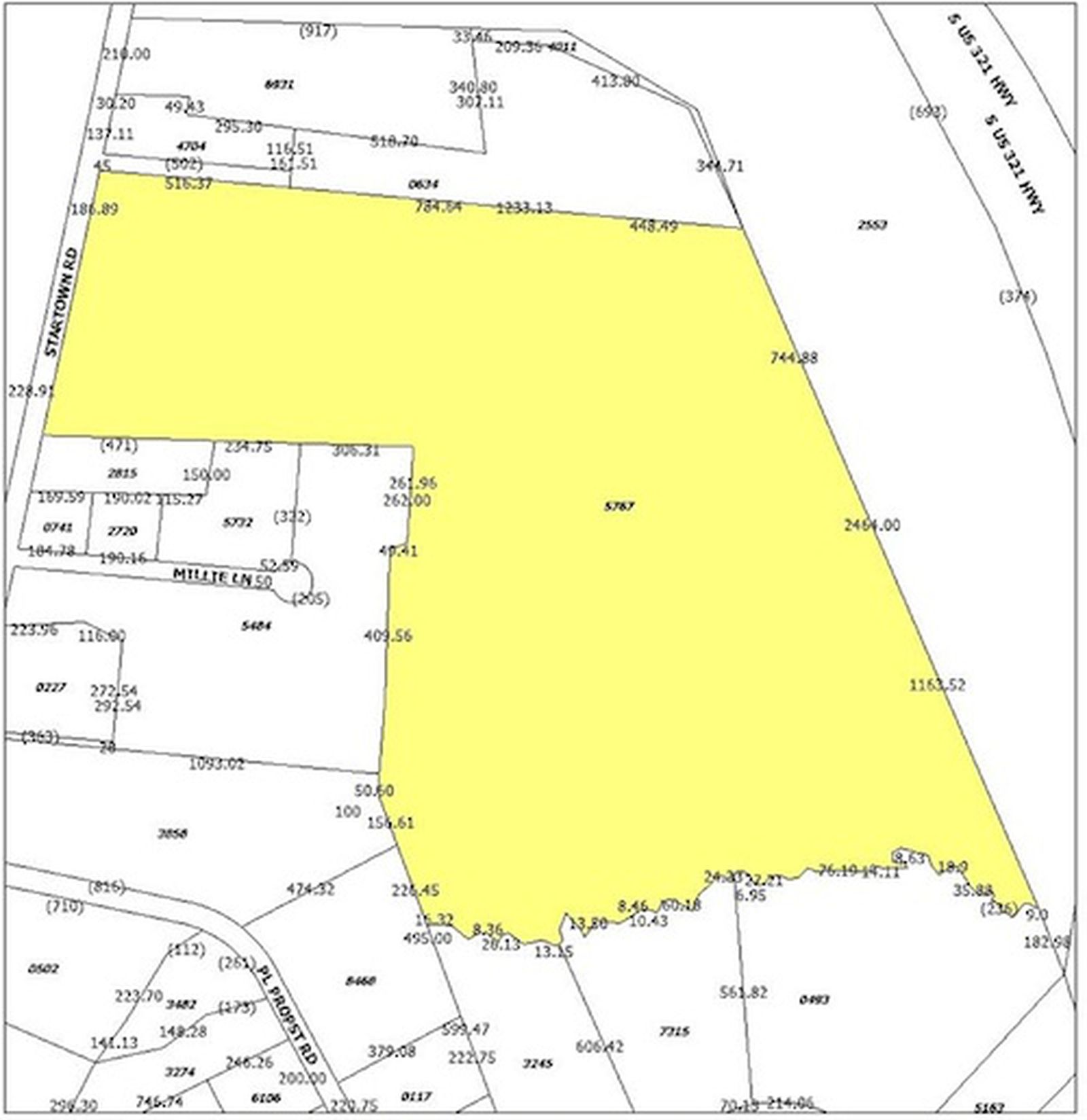
- Abundant Land: Broad expanses of flat, undeveloped land allowed Apple to purchase over 180 acres for the initial campus, with additional land set aside for energy production.
- Reliable Power Infrastructure: Proximity to primary regional transmission lines operated by Duke Energy ensured consistent utility interconnectivity.
- Favorable Operating Environment: Moderate risk for major natural disasters compared to coastal hurricane zones or earthquake-prone western fault lines.
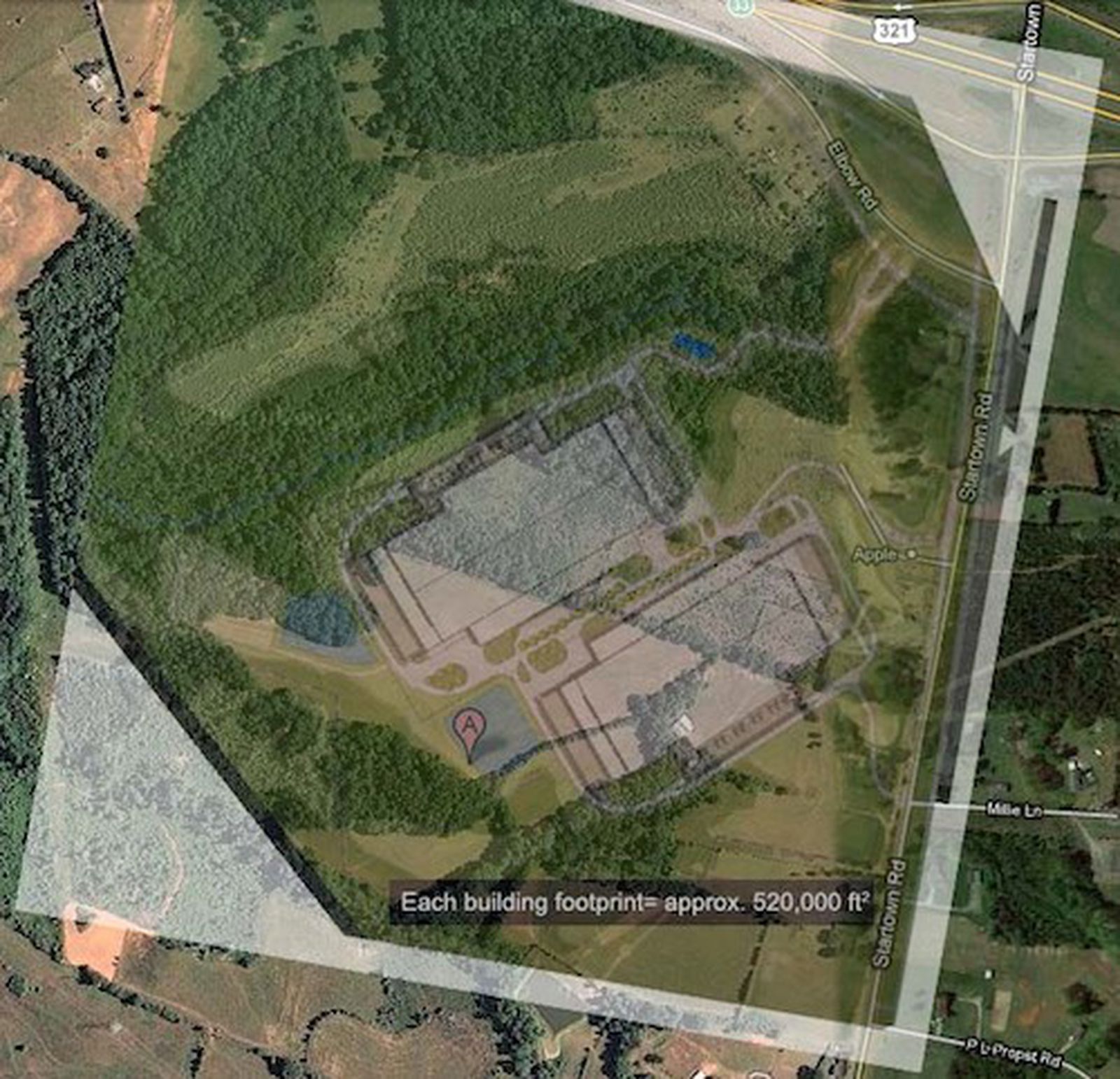
Construction began in late 2009 on the initial flagship building, a single-story structure spanning approximately 500,000 square feet. This single building matched the square footage of roughly nine football fields and represented an initial capital expenditure exceeding $1 billion for site prep, physical structure, specialized cooling systems, and server deployment.
Subsequent Expansion Phases
As global demand for digital services accelerated, Apple expanded the Maiden campus beyond the original footprint. The expansion strategy evolved through distinct phases:
- Tactical Data Response Units: To add rapid compute capacity without building massive physical structures, Apple deployed specialized, high-density modular data structures on the campus perimeter.
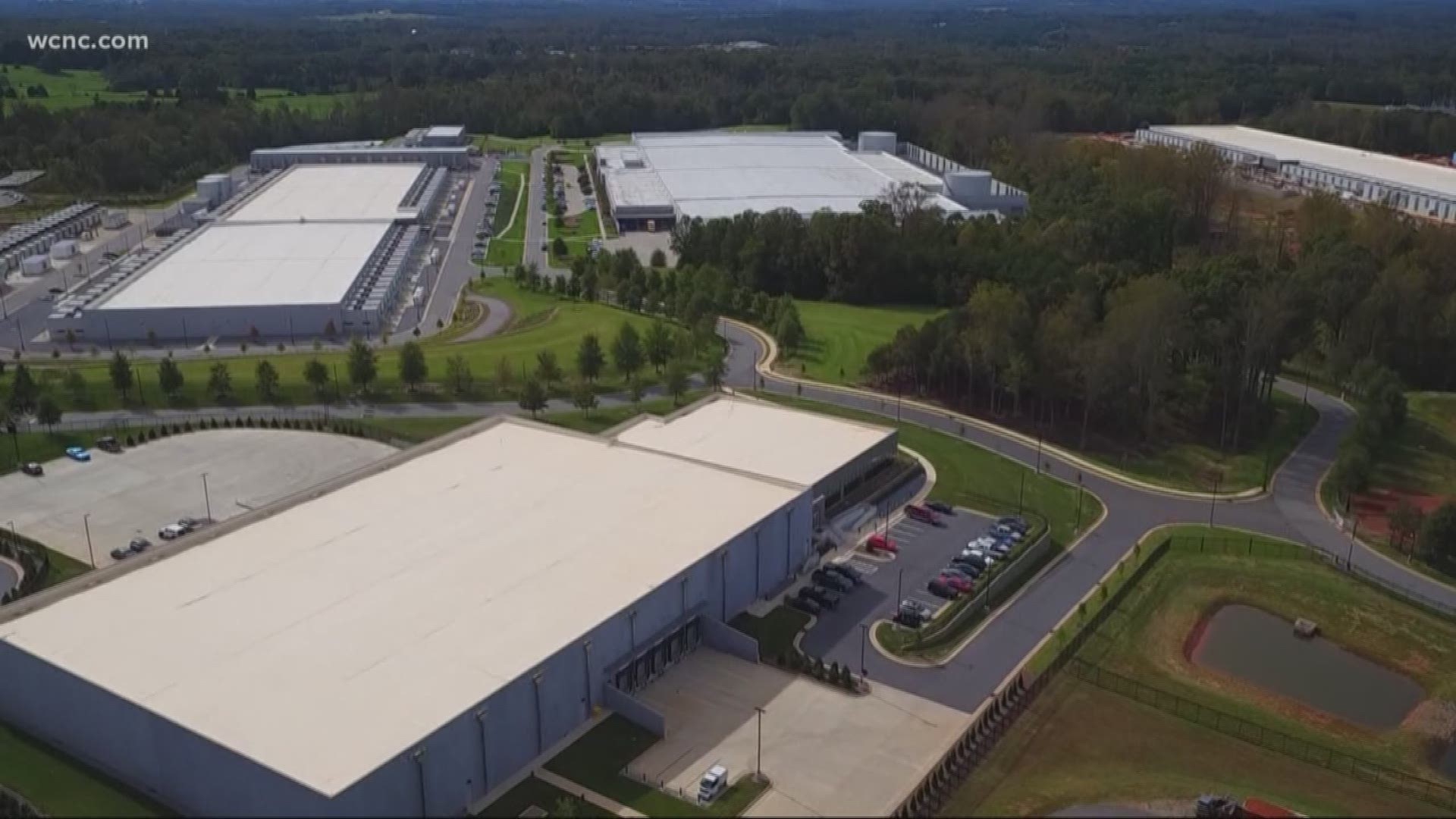
- Secondary Data Halls: Apple constructed additional permanent buildings, adding hundreds of thousands of square feet of dedicated hall space to house specialized server racks and storage arrays.
- Land Acquisition for Renewable Generation: Apple acquired thousands of acres of surrounding land across Catawba and Alexander counties to build off-grid and grid-interconnected solar generation facilities.
Over more than a decade of operation, Apple’s total investment in the Maiden site has expanded significantly beyond the original $1 billion, establishing the location as a key pillar in the company's global physical real estate portfolio.
Strategic Role in Apple’s Global Cloud Architecture
The Maiden facility functions as a central engine for Apple’s global services network. Rather than operating merely as a cold-storage backup repository, the data center hosts active compute clusters that process real-time transactions and high-bandwidth content delivery across the globe.
Hosted Services and Workloads
Every device interaction within the Apple ecosystem relies on backend server networks. The Maiden facility handles heavy operational volumes across critical product categories:
- iCloud Services: Syncing user photos, video libraries, document files, device backups, and application state across hundreds of millions of active iPhones, iPads, and Mac computers.
- App Store and iTunes Operations: Hosting app binaries, managing payment transaction validations, organizing content distribution, and pushing software updates worldwide.
- Real-Time Communications and Streaming: Supporting message routing through iMessage, FaceTime signaling, and low-latency audio/video delivery for Apple Music and Apple TV+.
- Siri and Speech Processing: Processing natural language processing (NLP) requests, voice identification routines, and machine translation models.
Artificial Intelligence and Private Cloud Compute Integration
As Apple expanded its computational footprint to include generative AI features, server infrastructure requirements shifted toward higher thermal densities and specialized hardware processing. The Maiden campus plays an integral role in hosting hardware dedicated to Apple's Private Cloud Compute (PCC) architecture.
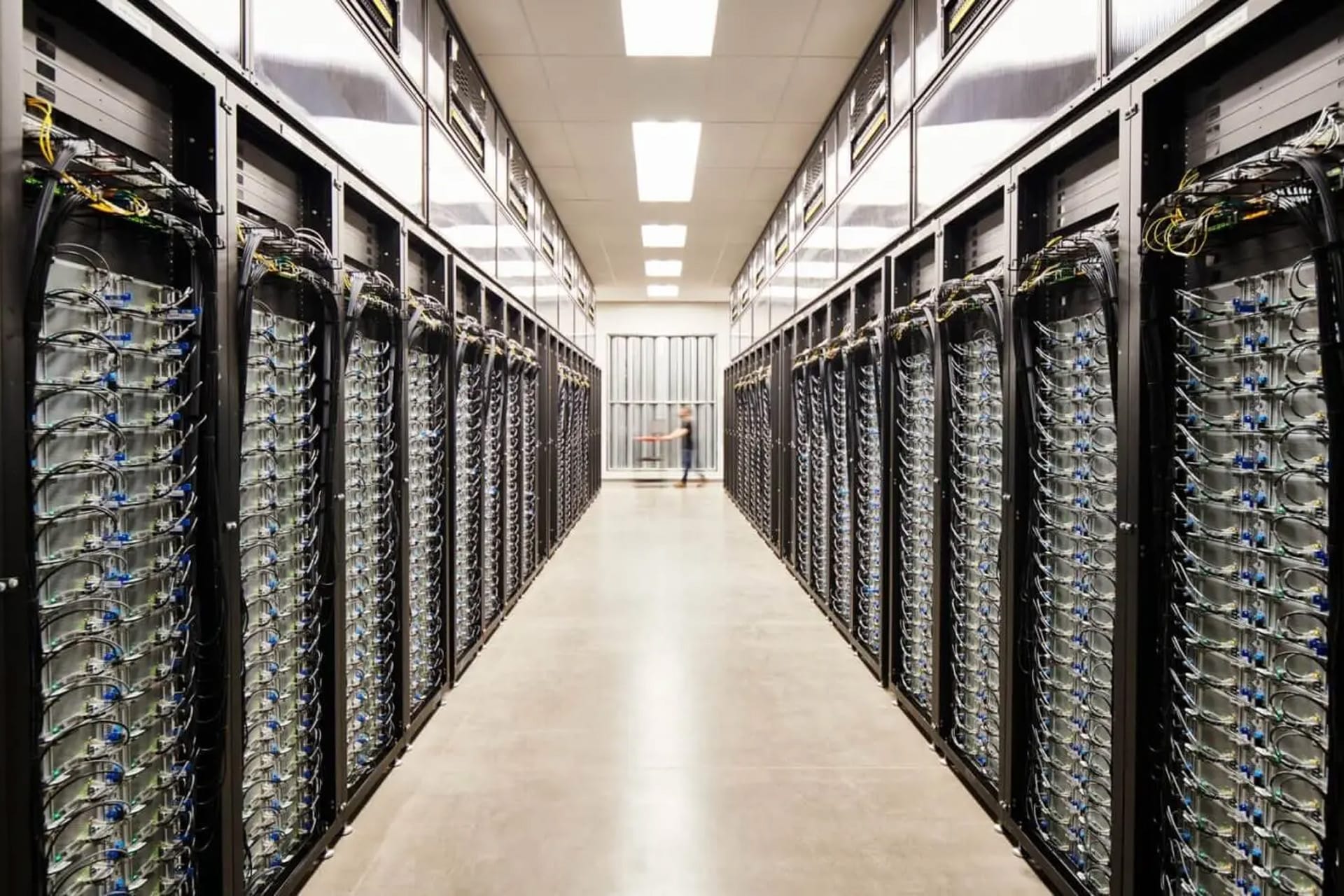
PCC extends the security protections of on-device processing into the cloud. The servers deployed within Maiden for these operations are built on custom Apple Silicon server architecture, utilizing secure boot hardware, end-to-end data isolation, and cryptographic attestation. These hardware configurations require unique rack power densities, refined network interconnects, and strict environmental controls to execute intensive AI inference workloads without bottlenecking performance.
Multi-Region Network Topology
The North Carolina facility operates as a core East Coast hub alongside Apple's other primary domestic data center facilities located in:
- Prineville, Oregon: Primary West Coast computing hub with extensive regional solar and wind integration.
- Reno (Viking Way), Nevada: Key central-western data node optimized for solar-powered enterprise workloads.
- Mesa, Arizona: Global command center and massive server storage footprint.
By routing traffic dynamically between Maiden, these regional domestic facilities, and international sites in Europe and Asia, Apple maintains high uptime, geographic redundancy, and protection against local network disruptions.
Renewable Energy Innovations and Sustainability Standards
When Apple announced its target to power all its data centers with 100% renewable energy, the Maiden campus became the central testing ground for large-scale corporate clean energy deployment. The high power draw of a multi-building data facility typically requires constant draw from regional electrical grids, which traditionally rely on fossil fuels. Apple engineered a multi-pronged microgrid strategy to offset 100% of the facility's power footprint with clean generation.
Maiden Clean Energy Ecosystem:
- Solar PV Arrays (Maiden Solar 1 & 2): Daytime Generation to Data Center (100% Renewable Operations)
- Biogas Fuel Cells (Bloom Energy Park): 24/7 Base-load Power to Data Center (100% Renewable Operations)
- Utility Grid (Duke Energy Network): Green Tariff Support / Renewable Offsets to Data Center (100% Renewable Operations)
On-Site and Regional Solar Photovoltaic (PV) Farms
To generate clean electricity directly on location, Apple cleared acreage adjacent to the data center to build Maiden Solar 1, followed by Maiden Solar 2 nearby.
- Single-Axis Tracking Systems: The solar installations utilize automated tracking mounts that rotate photovoltaic panels east-to-west throughout the day to track the sun's trajectory, maximizing total energy capture compared to fixed-tilt panels.
- Land Management and Biodiversity: Apple implemented low-impact vegetation management under the solar panels, incorporating sheep grazing to manage ground cover naturally without chemical herbicides or engine exhaust from mowing equipment.
- Peak Generation Capacity: Combined, the local dedicated solar installations generate tens of millions of kilowatt-hours (kWh) annually, supplying clean energy directly to the regional utility grid to offset the data center's electrical consumption.
Bloom Energy Fuel Cell Infrastructure
Solar power is inherently variable, generating energy only during daylight hours. To achieve consistent baseload clean energy, Apple constructed one of the largest non-utility-owned fuel cell installations in the United States on the Maiden campus.
The installation uses solid oxide fuel cell technology supplied by Bloom Energy. Rather than burning natural gas, the system utilizes directed biogas (methane captured from municipal landfills and agricultural waste facilities). The methane is purified, injected into the regional pipeline network, and directed to the Maiden fuel cells.
Through an electrochemical process without combustion, the fuel cells convert the biogas into high-efficiency direct current (DC) electricity, producing minimal non-recycled carbon output while supplying continuous, non-intermittent power day and night.
Energy Efficiency and PUE Engineering
Generating clean energy addresses only half of the environmental equation; reducing total power usage per unit of computation is equally vital. The Maiden data center uses specialized environmental engineering to achieve an exceptionally low Power Usage Effectiveness (PUE) rating.
PUE Ratio Formula = Total Facility Energy Input / IT Equipment Energy Consumption
While traditional data center builds historically operated at PUE ratios of 1.8 to 2.0 (meaning nearly half the power was spent on cooling and power distribution overhead), the Maiden facility targets PUE levels between 1.1 and 1.2 through key design choices:
- Air-Side Economization: During cooler autumn, winter, and spring months in Western North Carolina, the facility draws outside air through filter banks to cool the server rooms, turning off energy-intensive mechanical chillers for thousands of hours each year.
- Hot/Cold Aisle Isolation: Server racks are housed in enclosed containment corridors. Cold air is directed into the front of the server chassis, while hot air exhausted from the rear is captured immediately and evacuated, preventing thermal mixing.
- Variable-Speed Fan Walls: Chilled air delivery is modulated dynamically based on real-time server temperatures, reducing fan energy draw during low-activity operating windows.
Water Resource Management
Data center cooling systems can consume large quantities of fresh water through evaporative cooling towers. At the Maiden site, Apple integrated closed-loop cooling systems that recirculate treated water continuously, limiting evaporation loss. The site also incorporates natural stormwater retention ponds that capture rainfall, preventing runoff erosion while mitigating thermal stress on local watershed systems.
Economic and Community Impact on Catawba County
The establishment of Apple’s data center initiated a broader economic shift across Western North Carolina's Unifour region (comprising Catawba, Alexander, Burke, and Caldwell counties). Historically reliant on traditional furniture manufacturing and textile production—industries that faced sharp overseas declines in the late 20th and early 21st centuries—the area repurposed its regional industrial capacity toward technological infrastructure, transforming into part of the regional "Data Center Corridor."
Regional Economic Multipliers:
- Corporate Investment
- Tax Base Expansion (Funds Schools & Infrastructure)
- Municipal Utility Upgrades (Water & Electrical)
- Educational Grants & Regional STEM Funding
- Direct & Subcontractor Employment Creation
Local Tax Revenue and Public Infrastructure
Although state and local incentive packages reduced tax rates during initial development phases, the absolute scale of the property and equipment investments resulted in substantial revenue growth for Catawba County and the Town of Maiden:
- Property Tax Base Expansion: Capital improvements significantly increased the municipal tax base, providing sustained revenues that helped fund local fire departments, public safety upgrades, and municipal infrastructure projects.
- Water Utility Upgrades: Apple partnered with local utility providers to fund upgrades to water main capacity, modernizing municipal pump stations and treatment facilities that benefit both corporate and residential users.
Direct and Indirect Employment Dynamics
Data centers are capital-intensive rather than labor-intensive infrastructure projects. While construction phases required thousands of specialized tradespeople, electricians, pipefitters, and heavy equipment operators, ongoing campus operations employ a specialized, direct workforce alongside contracted staff.
- Direct Technical Roles: Operations require permanent site reliability engineers, network control specialists, systems administrators, electrical engineers, and high-voltage technicians.
- Contracted Services: Daily campus management relies on ongoing local contracts for physical security personnel, facilities maintenance, groundskeeping, specialized HVAC servicing, and environmental compliance monitoring.
- Construction Multiplier: Continuous campus modernizations, solar array maintenance, and periodic server rack retrofits provide steady employment for regional contractor pools.
Educational Partnerships and Community Investments
Apple has invested directly in regional educational institutions to build a pipeline for technical skills within Catawba County:
- Grants for Local School Districts: Funding STEM programs, robotics clubs, and digital literacy tools across Catawba County Schools and Maiden-area primary and secondary facilities.
- Community College Technical Programs: Collaborating with regional institutions such as Catawba Valley Community College (CVCC) to help shape curricula in electrical systems technology, computer engineering, and sustainability management.
- Community Solar Initiatives: Supporting regional clean energy programs that lower operational costs for local educational facilities and public non-profit organizations.
Technical Overview of Apple's Maiden Data Center Campus
The following table summarizes the verified operational parameters, architectural scale, and sustainability systems of Apple’s Maiden, North Carolina facility:
| Operational Dimension | Technical Parameter / Specification | Strategic Function & Purpose |
|---|---|---|
| Primary Location | Maiden, Catawba County, NC | Strategic low-latency East Coast computing hub |
| Campus Size | 180+ developed acres (1,000+ total including solar arrays) | Houses server halls, power substations, and microgrids |
| Main Building Area | 500,000+ sq. ft. (Primary Hall) plus secondary buildings | High-density rack space for active computing servers |
| Operational Energy Mix | 100% Renewable (Solar PV + Biogas Fuel Cells + Grid Tariffs) | Zero-carbon corporate operation compliance |
| Solar PV Capacity | 100+ Megawatts (MW) across combined regional installations | Offsets grid draw during peak daytime demand windows |
| Fuel Cell Generation | 10+ Megawatt continuous output (Bloom Energy biogas cells) | Provides clean, non-intermittent base-load electricity |
| Cooling Methodology | Air-side economizers & closed-loop evaporative cooling | Reduces power consumed by mechanical refrigeration |
| Target PUE Range | Approximately 1.10 – 1.20 | Minimizes non-IT power overhead |
| Supported Workloads | iCloud, Siri, Apple Music, App Store, Private Cloud Compute | Powers global consumer applications & cloud AI routines |
Key Challenges and Future Outlook for North Carolina Infrastructure
As cloud workloads evolve toward higher-density computations, maintaining large-scale facilities like the Maiden campus introduces ongoing technical, environmental, and grid challenges.
Future Infrastructure Challenges:
- Thermal & Density Demands (Liquid Cooling Retrofits for AI Systems)
- Regional Grid Integration (Balancing Intermittent Renewable Output)
- Water Conservation (Closed-Loop Upgrades for Climate Resilience)
- Physical & Cyber Hardening (Defending Critical Cloud Infrastructure)
Thermal and Density Demands of AI Computing
Traditional enterprise server racks draw between 5 to 10 kilowatts (kW) of power per rack cabinet. Next-generation server infrastructure used for generative AI training and complex inference tasks requires significantly higher power densities, often exceeding 40 to 100 kW per rack cabinet.
Managing these intense thermal loads requires updating environmental controls inside data halls:
- Liquid-to-Chip Cooling: Retrofitting server racks with direct-to-processor liquid cooling loops to dissipate heat more efficiently than forced air alone can accomplish.
- Power Distribution Upgrades: Upgrading internal busway architectures and uninterruptible power supply (UPS) modules to distribute high-amperage current safely across compute bays.
Regional Grid Integration and Decarbonization
While Apple generates clean energy to match 100% of its electricity consumption on an annual accounting basis, maintaining operational uptime requires continuous connection to the regional electrical grid. During prolonged cloudy periods or overnight operational spikes, the campus relies on grid power supplied by Duke Energy.
Apple continues to work alongside utility regulators and regional power providers to support grid-wide decarbonization. This includes advocating for expanded green tariff structures, supporting regional battery energy storage system (BESS) projects, and encouraging the retirement of fossil-fuel plants across the Southeast energy market.
Physical Security and Resilience Planning
As a component of national critical technological infrastructure, high-density data centers require strict security management. The Maiden site features multiple layers of security protocols:
- Perimeter Controls: Multi-stage fencing, vehicular barriers, thermal imaging systems, and continuous perimeter surveillance.
- Access Verification: Multi-factor identity checks, biometric scanners, and strict visitor control measures protecting server hall entryways.
- Disaster Recovery: Redundant utility feeds, dual fiber ingress routes, on-site fuel storage for standby backup generators, and real-time data replication across secondary geographic locations.
Frequently Asked Questions
Where exactly is Apple’s data center located in North Carolina?
Apple's primary East Coast data center is located in Maiden, North Carolina, a town situated in Catawba County approximately 45 miles northwest of Charlotte. The campus sits near the Interstate 40 corridor, placing it within the regional technology area known as the "Data Center Corridor."
What specific consumer services rely on the Maiden data center?
The Maiden data center hosts backend infrastructure supporting virtually all major Apple digital services. This includes iCloud photo and file storage, iMessage routing, FaceTime connections, Apple Music streaming, App Store transactions, Apple TV+ video caching, Siri voice processing, and secure cloud AI operations executed through Private Cloud Compute.
How does Apple power the North Carolina data center with 100% renewable energy?
Apple achieves 100% renewable energy operations at the site through a combination of clean generation sources. The company constructed multi-acre solar photovoltaic tracking arrays adjacent to the campus and nearby, built a massive Bloom Energy fuel cell facility running on directed biogas, and participates in renewable green tariff agreements with local utility provider Duke Energy to ensure all consumed electricity is offset by clean power.
Does the Maiden data center offer tours or public access?
No. The Maiden facility is a secure, private enterprise infrastructure site. Public access, walk-in tours, and unscheduled visits are strictly prohibited due to physical security standards, data privacy protocols, and user safety regulations.
What is Power Usage Effectiveness (PUE) and why is it important for this site?
Power Usage Effectiveness (PUE) is a standard efficiency metric calculated by dividing the total power entering a data center by the power delivered directly to IT computing equipment. A lower score closer to 1.0 indicates higher efficiency. The Maiden facility uses outdoor air cooling and hot/cold aisle isolation to achieve an efficient PUE of approximately 1.1 to 1.2, vastly outperforming legacy data center designs.
Strategic Summary for Infrastructure Observers
Apple’s data center in Maiden, North Carolina, illustrates how hyper-scale digital infrastructure can expand while maintaining rigorous environmental standards. For technology analysts, corporate sustainability officers, and regional economic developers, the facility offers clear operational model insights:
- Integrate Diversified On-Site Clean Generation: Relying on a single renewable source is rarely sufficient for continuous 24/7 data center operations. Combining solar arrays for daytime peak coverage with biogas fuel cells for continuous baseload power creates a resilient, zero-carbon corporate power profile.
- Design for Thermal Adaptability: Implementing flexible cooling systems—such as air-side economizers combined with closed-loop fluid loops—enables data centers to accommodate changing hardware power densities without wasting water or electricity.
- Build Strategic Regional Partnerships: Corporate investments deliver the highest long-term returns when paired with community utility infrastructure upgrades, localized workforce training programs, and regional environmental conservation efforts.
Through continuous capital updates, environmental engineering, and network integration, the Maiden campus remains a vital component of global internet infrastructure and corporate clean energy design.