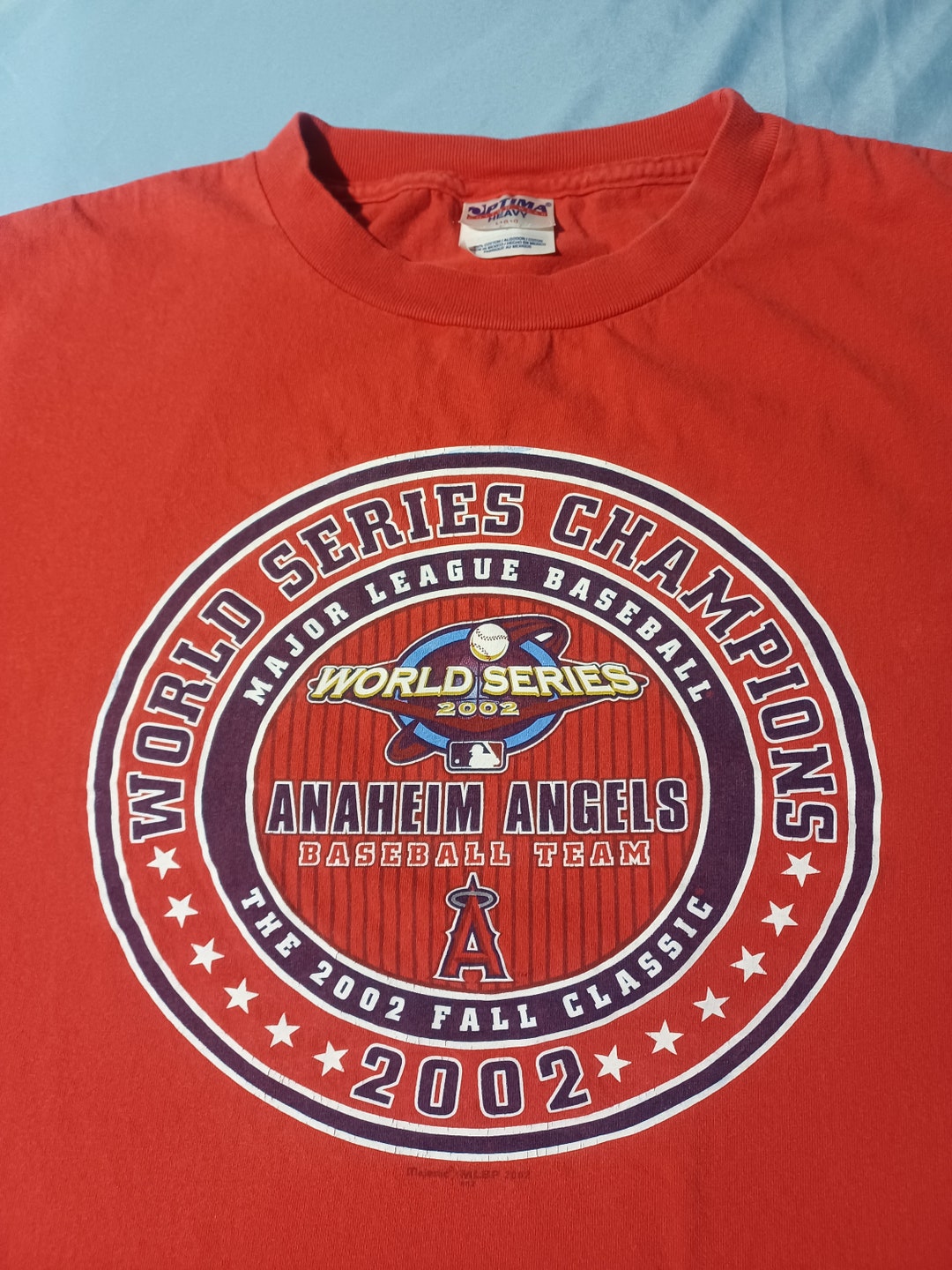
The Los Angeles Angels have won one World Series championship in their franchise history, securing the title in 2002. They defeated the San Francisco Giants in a dramatic seven-game series, famously fueled by the "Rally Monkey" and a powerhouse lineup featuring Troy Glaus, Tim Salmon, and Garret Anderson.
Since their inception as an expansion team in 1961, the Angels have navigated through various eras, name changes, and ownership shifts. While they have enjoyed periods of sustained regular-season dominance, particularly during the 2000s, the 2002 trophy remains the singular pinnacle of the organization’s achievement in Major League Baseball (MLB). As of 2026, the franchise continues its pursuit of a second title, leaning on a legacy of elite individual talent and a dedicated fanbase in Orange County.
The Foundation of the Franchise (1961–1985)
To understand the weight of the 2002 championship, one must first look at the decades of frustration and building that preceded it. The Angels entered the American League in 1961 as the first expansion team of the era. Founded by "Singing Cowboy" Gene Autry, the team originally played at Wrigley Field in Los Angeles before moving to Dodger Stadium (as tenants) and finally to Anaheim in 1966.
For the first twenty years, the Angels were often a middle-of-the-pack team. They didn't reach the postseason until 1979, led by the legendary Nolan Ryan and Don Baylor, who won the AL MVP that year. They lost the American League Championship Series (ALCS) to the Baltimore Orioles, but it served as the first proof that the "Halos" could compete at the highest level.
Early success was fleeting. The team reached the ALCS again in 1982 but fell to the Milwaukee Brewers. These early attempts established a pattern of "close but not enough," setting the stage for one of the most painful moments in sports history four years later.
The Heartbreak of 1986: A Catalyst for Change
The 1986 ALCS remains a defining moment for the franchise's older generation of fans. The Angels were a single strike away from reaching their first World Series. Leading the Boston Red Sox 3 games to 1 and holding a lead in the ninth inning of Game 5, the Angels surrendered a home run to Dave Henderson. The Red Sox went on to win that game and the next two, eliminating the Angels.
This loss cast a long shadow over the organization. It wasn't just a defeat; it felt like a curse. For the next fifteen years, the team struggled with inconsistency, tragedy, and the retirement of franchise icons. It wasn't until the turn of the millennium, under new management and a fresh tactical approach, that the team finally broke through.
The 2002 World Series: The "Wild Card" Miracle
The 2002 season did not begin like a championship campaign. The Angels started the year 6–14, looking like a team destined for another losing season. However, under manager Mike Scioscia, the team pivoted to a high-contact, aggressive "small ball" strategy that emphasized situational hitting and lockdown relief pitching.
The Regular Season and the Wild Card
The Angels finished the 2002 regular season with a 99–63 record. In most years, this would be enough to win the division, but the Oakland Athletics’ historic 20-game winning streak forced the Angels into the Wild Card spot. This was the era before the expanded Wild Card format, meaning they had to face the perennial powerhouse New York Yankees in the American League Division Series (ALDS).
After defeating the Yankees 3 games to 1 and taking down the Minnesota Twins in the ALCS, the Angels advanced to their first-ever World Series to face their cross-state rivals, the San Francisco Giants, led by Barry Bonds.
Breakdown of the 2002 World Series Games
The 2002 World Series is often cited as one of the most exciting in baseball history due to the high offensive output and the dramatic comeback in Game 6.
| Game | Result | Score | Key Highlight |
|---|---|---|---|
| Game 1 | Loss | 4–3 | Barry Bonds hits a home run in his first World Series at-bat. |
| Game 2 | Win | 11–10 | A high-scoring slugfest at Edison Field; Tim Salmon hits two homers. |
| Game 3 | Win | 10–4 | The Angels’ offense explodes in San Francisco. |
| Game 4 | Loss | 4–3 | A tight defensive battle ends in a Giants victory. |
| Game 5 | Loss | 16–4 | A blowout loss leaves the Angels on the brink of elimination. |
| Game 6 | Win | 6–5 | The greatest comeback in franchise history; Scott Spiezio hits a 3-run HR. |
| Game 7 | Win | 4–1 | John Lackey becomes the first rookie in 93 years to win a World Series Game 7. |
The Turning Point: Game 6
In Game 6, the Angels trailed 5–0 in the bottom of the seventh inning. The Giants were only eight outs away from the championship. The "Rally Monkey" video played on the scoreboard, and the Anaheim crowd went into a frenzy. Scott Spiezio’s three-run home run narrowed the gap, and Darin Erstad’s solo shot in the eighth, followed by a Troy Glaus two-run double, completed the miracle. This momentum carried directly into Game 7, where a young John Lackey and a dominant bullpen secured the 4–1 win.
Key Figures in the Angels’ Championship Legacy
The 2002 title was the result of a perfectly constructed roster that blended veteran leadership with emerging superstars. Several individuals stand out as the architects of this success.
Troy Glaus (Third Base)
Glaus was the offensive engine of the postseason. He won the World Series MVP award after hitting .385 with three home runs and eight RBIs in the seven-game stretch. His ability to hit for power in high-leverage situations made him one of the most feared hitters in the American League during that window.
Mike Scioscia (Manager)
Hired in 2000, Scioscia brought a "Dodger Way" mentality to Anaheim but adapted it to the talent on his roster. He prioritized defense, baserunning, and a deep bullpen. Scioscia would go on to lead the Angels for 19 seasons, becoming the winningest manager in franchise history.
Francisco "K-Rod" Rodriguez (Pitcher)
In 2002, Rodriguez was a 20-year-old rookie with a devastating "slurve." He was called up late in the season and became a postseason revelation. He tied a record by winning five games in a single postseason as a reliever. His presence allowed Scioscia to shorten games, effectively making them six-inning affairs for the opposition.
Tim Salmon and Darin Erstad
Tim Salmon, known as "Mr. Angel," had spent his entire career with the team and was the emotional heart of the roster. Darin Erstad, the gritty center fielder, was the team's catalyst, recording 240 hits during the regular season and catching the final out of the World Series.
The Post-Championship Era (2003–2010)
Following the 2002 victory, the Angels transitioned into their most consistent period of success. Under the ownership of Arte Moreno, who purchased the team in 2003, the franchise rebranded as the "Los Angeles Angels of Anaheim" and invested heavily in free agency.
Between 2004 and 2009, the Angels won the American League West five times. This era featured stars like Vladimir Guerrero, who won the AL MVP in 2004, and dominant pitchers like Jered Weaver and Kelvim Escobar. Despite the regular-season excellence, the team struggled to replicate their 2002 postseason magic. They reached the ALCS in 2005 and 2009 but were eliminated by the Chicago White Sox and New York Yankees, respectively.
The Mike Trout and Shohei Ohtani Era (2011–2024)
The last decade of Angels baseball has been defined by a paradox: possessing the greatest individual talents in the sport while failing to achieve team success in the playoffs.
Mike Trout, widely considered one of the greatest players in baseball history, debuted in 2011. He has won three AL MVP awards and has been the face of the franchise for over a decade. In 2018, the team signed Shohei Ohtani, a once-in-a-century "two-way" player who excelled as both a pitcher and a hitter.
Despite having two generational talents on the same roster, the Angels only made the postseason once during this span (2014), where they were swept by the Kansas City Royals. The inability to build a competent pitching staff and depth around Trout and Ohtani led to a period of stagnation that saw Ohtani depart for the Los Angeles Dodgers in free agency following the 2023 season.
Comparing the Angels to Other MLB Expansion Teams
The Angels’ single championship puts them in the middle of the pack when compared to other expansion teams founded after 1960.
- Toronto Blue Jays: 2 World Series titles (1992, 1993).
- Florida/Miami Marlins: 2 World Series titles (1997, 2003).
- Kansas City Royals: 2 World Series titles (1985, 2015).
- Arizona Diamondbacks: 1 World Series title (2001).
- Los Angeles Angels: 1 World Series title (2002).
- Texas Rangers: 1 World Series title (2023).
The Angels have historically been more successful in terms of winning percentage and division titles than many of their expansion peers, but the "World Series or bust" mentality of the modern era has put pressure on the front office to secure a second ring.
Statistical Summary of Angels Postseason History
The franchise has a rich history of postseason appearances, even if they have only converted one into a championship.
| Category | Total |
|---|---|
| World Series Titles | 1 (2002) |
| American League Pennants | 1 (2002) |
| Division Titles (AL West) | 9 (1979, 1982, 1986, 2004, 2005, 2007, 2008, 2009, 2014) |
| Wild Card Berths | 1 (2002) |
| All-Time Postseason Record | 27–37 (.422) |
Data sourced from Baseball-Reference.
Current Status and Future Outlook (2026)
As of 2026, the Los Angeles Angels are in a period of transition. The focus has shifted toward rebuilding the farm system and finding a new identity in a post-Ohtani landscape. Mike Trout remains the veteran anchor of the team, though injuries have hampered his recent seasons.
The organization's primary challenge remains the same as it was in the late 1990s: developing a consistent starting pitching rotation. While the Houston Astros and Texas Rangers have dominated the AL West in recent years, the Angels have invested in young scouting and player development to shorten their "retooling" phase. The goal remains to return to the October stage and prove that 2002 was not a one-time anomaly, but a standard they can reach again.
Frequently Asked Questions
How many World Series have the Angels won?
The Angels have won one World Series title. It happened in 2002 when they defeated the San Francisco Giants in seven games. This remains their only championship since joining the league in 1961.
Who was the MVP of the Angels' World Series?
Troy Glaus was named the 2002 World Series MVP. He provided critical power hitting throughout the series, including a massive two-run double in the late stages of Game 6 that helped seal the Angels' comeback.
What is the "Rally Monkey"?
The Rally Monkey is a mascot that originated in 2000 but became a cultural phenomenon during the 2002 World Series. When the Angels were trailing in the late innings, the scoreboard would show a clip of a monkey jumping to the song "Jump Around," signaling to the fans to cheer for a comeback.
Have the Angels ever won the World Series as the "Los Angeles Angels of Anaheim"?
No. Their only World Series win in 2002 occurred when they were known as the "Anaheim Angels." The name change to "Los Angeles Angels of Anaheim" happened in 2005, and they reverted to "Los Angeles Angels" in 2016.
Who was the manager when the Angels won the World Series?
Mike Scioscia was the manager. He led the team from 2000 to 2018, making him the most successful and longest-tenured manager in the history of the franchise.
Final Recommendation for Fans and Historians
For those looking to relive the Angels' championship glory, the definitive resource is the official 2002 World Series film produced by Major League Baseball. Additionally, fans should monitor the MLB Official Website for updates on team Hall of Fame inductions and anniversary celebrations, which often feature "where are they now" segments on the 2002 roster. Understanding the 2002 run provides the necessary context for the team's current trajectory and the high expectations placed on future rosters in Anaheim.