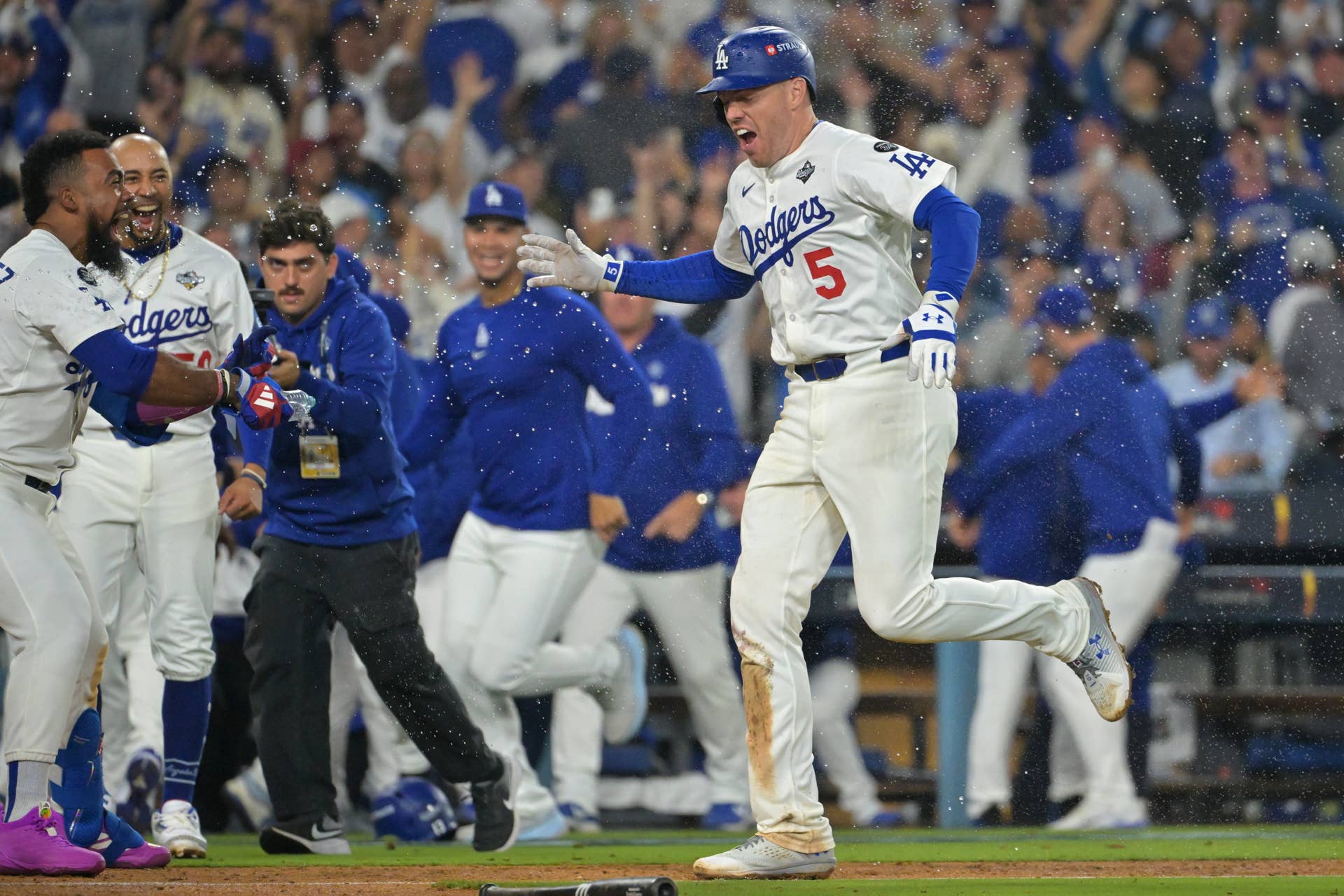
The World Series remains the ultimate stage in professional baseball, serving as the championship culmination of the Major League Baseball (MLB) season since 1903. This all-time world series records overview tracks the historic achievements of the most successful franchises, such as the New York Yankees, and legendary individuals like Yogi Berra and Whitey Ford who defined the "Fall Classic."
The World Series is a best-of-seven playoff between the champions of the American League (AL) and the National League (NL). Over more than a century of competition, records have been established that reflect eras of dominance, individual brilliance, and the evolving nature of the game. As of the 2026 season, these records serve as the definitive benchmark for greatness in the sport, documenting everything from the most career home runs to the lowest earned run averages in championship history.
Historical Context and Team Dominance
To understand World Series records, one must first recognize the sheer weight of the New York Yankees' influence on the record books. Since the inception of the modern World Series in 1903, the Yankees have functioned as the primary architect of championship history. Their 27 World Series titles are more than double the amount held by the next closest team, the St. Louis Cardinals.
The evolution of the series has seen various shifts in power. The early 20th century was defined by "Dead Ball" era tactics, where small ball and pitching dominated. The mid-century was the era of the dynasty, primarily led by the Yankees but challenged by the Brooklyn/Los Angeles Dodgers and the St. Louis Cardinals. In the modern era, parity has become more common, with fewer teams winning consecutive titles, making the long-standing records of the 1930s through the 1960s appear increasingly untouchable.
Most World Series Titles by Franchise
Franchise success is the most cited metric in any all-time world series records overview. The gap between the first and second place is the largest in any major North American professional sport.
- New York Yankees (27 Titles): Their dominance spans decades, with significant clusters of wins in the 1920s, 30s, 40s, 50s, and late 90s.
- St. Louis Cardinals (11 Titles): The premier National League franchise in terms of championships, known for the "Gashouse Gang" and the consistent success of the modern era.
- Oakland Athletics (9 Titles): This includes their time in Philadelphia, where they were a powerhouse in the early 20th century, and their three-peat in the 1970s.
- Boston Red Sox (9 Titles): A franchise of two halves: five titles between 1903 and 1918, followed by an 86-year drought, and four titles in the 21st century.
- San Francisco/New York Giants (8 Titles): Their history is split between the Polo Grounds in New York and their modern dynasty in San Francisco during the early 2010s.
- Los Angeles/Brooklyn Dodgers (8 Titles): Recent victories in 2020 and 2024 have solidified their place among the elite, moving them up the all-time list.
Total Appearances and Winning Percentages
Appearances often tell a deeper story of consistency. While the Yankees lead with 40 appearances, the Dodgers have frequently reached the final stage (22 times) but have also suffered more losses than any other franchise. This creates a fascinating statistical divide between teams that are "efficient" in the World Series and those that simply reach it through sheer volume.
For instance, the Toronto Blue Jays and the Florida/Miami Marlins held perfect records in their first two appearances, winning every World Series they entered. Conversely, franchises like the Texas Rangers (until 2023) and the San Diego Padres have struggled to convert appearances into rings.
Individual Batting Records
When examining individual batting records in the World Series, the list is heavily populated by players from the Yankee dynasties of the mid-20th century. Because the World Series was the only round of the postseason until 1969, players who reached it frequently had more opportunities to accumulate stats than modern players who must navigate three or four rounds of playoffs.
Career Games and At-Bats
Yogi Berra holds the record for the most World Series games played at 75. This record is widely considered unbreakable. For a modern player to reach 75 games, they would need to play in approximately 11 to 13 World Series, assuming each went six or seven games. Berra’s presence in 14 World Series over an 18-year span is a testament to the Yankees' mid-century hegemony.
Following Berra are teammates Mickey Mantle (65 games) and Elston Howard (54 games). These players saw more Fall Classic action than many Hall of Famers saw total postseason action in the current era.
Home Runs and Power Statistics
Mickey Mantle is the undisputed king of World Series power. He holds the record for the most career home runs in the World Series with 18. To put this in perspective, the next closest players are Babe Ruth with 15 and Yogi Berra with 12.
Mantle also holds records for:
- Most Runs Batted In (RBIs): 40
- Most Runs Scored: 42
- Most Total Bases: 123
- Most Walks: 43
The power records of the "Bronx Bombers" are particularly impressive because they were set against the best pitching of the National League without the benefit of the designated hitter for most of that history.
Batting Average and Hits
While Mantle and Ruth provided the power, Lou Gehrig provided the consistency. Gehrig’s World Series statistics are staggering: a .361 batting average, a .483 on-base percentage, and a .731 slugging percentage over 34 games.
The record for the most total hits in World Series history belongs to Yogi Berra, who tallied 71 hits. This is followed by Mickey Mantle (59) and Frankie Frisch (58). In the modern era, Derek Jeter is the only player to significantly threaten these career accumulation totals, finishing with 50 World Series hits and a .321 average in the championship round.
Individual Pitching Records
Pitching in the World Series carries a unique pressure. The records in this category are a blend of incredible single-game performances and career-long reliability.
Career Wins and Strikeouts
Whitey Ford, known as the "Chairman of the Board," holds nearly every major career pitching record for the World Series. His longevity during the Yankees' peak years allowed him to amass totals that are unlikely to be surpassed:
- Most Wins: 10
- Most Losses: 8 (A byproduct of pitching in 22 games)
- Most Games Started: 22
- Most Innings Pitched: 146.0
- Most Strikeouts: 94
The record for strikeouts in a career was long held by Ford until the expansion of the postseason, but strictly within the World Series, his 94 remains the gold standard. In the modern era, pitchers like Andy Pettitte and Justin Verlander have climbed the charts, but usually with fewer World Series-specific wins due to the difficulty of reaching the final round repeatedly.
The Greatness of Bob Gibson and Christy Mathewson
While Ford has the quantity, Bob Gibson and Christy Mathewson arguably hold the records for the most dominant quality.
Bob Gibson’s 1968 performance remains the stuff of legend. In Game 1 of the 1968 World Series, Gibson struck out 17 Detroit Tigers, a single-game record that still stands in 2026. Gibson also holds the record for consecutive complete games in the World Series with eight.
Christy Mathewson holds a record from the 1905 World Series that will almost certainly never be broken: three complete-game shutouts in a single five-game series. In the modern era of pitch counts and specialized bullpens, a pitcher throwing three complete games in one series—let alone three shutouts—is functionally impossible.
Reliever Records: The Mariano Rivera Era
The "Core Four" era of the Yankees introduced the greatest relief records in history. Mariano Rivera holds the record for the most appearances (24) and the most saves (11) in World Series history. Perhaps more impressively, his career World Series ERA is a minuscule 0.99 over 36.1 innings. Rivera’s ability to shut down opponents in the 9th inning was a primary driver of the Yankees' five titles between 1996 and 2009.
Comparison of Top Franchise Records
The following table compares the top performing franchises in World Series history as of 2026. This data includes total championships, the number of appearances, and the year of their most recent title to provide a snapshot of both historical and recent success.
| Franchise | World Series Titles | Total Appearances | Last Title Year | Win Percentage |
|---|---|---|---|---|
| New York Yankees | 27 | 40 | 2009 | .675 |
| St. Louis Cardinals | 11 | 19 | 2011 | .579 |
| Oakland Athletics | 9 | 14 | 1989 | .643 |
| Boston Red Sox | 9 | 13 | 2018 | .692 |
| Los Angeles Dodgers | 8 | 22 | 2024 | .364 |
| San Francisco Giants | 8 | 20 | 2014 | .400 |
| Cincinnati Reds | 5 | 9 | 1990 | .556 |
| Pittsburgh Pirates | 5 | 7 | 1979 | .714 |
Notable Single-Series Records
Beyond career totals, individual series performances often define a player's legacy. These "short-burst" records highlight players who reached a peak level of performance at exactly the right time.
The Most Home Runs in a Single Series
The record for the most home runs in a single World Series is five, shared by Reggie Jackson (1977), Chase Utley (2009), and George Springer (2017). Jackson’s performance earned him the nickname "Mr. October," particularly after he hit three home runs on three consecutive pitches from three different pitchers in the clinching Game 6 of the 1977 series.
Pitching Efficiency: Madison Bumgarner (2014)
In the modern era, Madison Bumgarner's 2014 performance is statistically the most dominant. He pitched 21.0 innings in the series, including a shutout in Game 5 and a legendary five-inning save on two days' rest in Game 7. His series ERA was 0.43. While he doesn't hold the career wins record, his single-series workload is the modern benchmark for "carrying" a team to a title.
Highest Batting Average in a Series
For a minimum of 20 plate appearances, the record for the highest batting average in a single World Series belongs to Billy Hatcher, who hit .750 (9-for-12) for the Cincinnati Reds in 1990. Hatcher reached base in seven consecutive plate appearances, breaking a record previously held by Babe Ruth. This kind of statistical anomaly usually occurs in a four-game sweep, as it did in 1990.
Unbreakable World Series Records
As the game of baseball changes, certain records move from "difficult to beat" to "statistically impossible." Several factors contribute to this, including changes in pitching philosophy, the expansion of the playoff bracket, and the increased parity in the league.
- Christy Mathewson’s 3 Shutouts in One Series (1905): In 2026, pitchers rarely throw three shutouts in an entire season, let alone in six days.
- Whitey Ford’s 33.2 Consecutive Scoreless Innings: Stretching from 1960 to 1962, Ford surpassed Babe Ruth’s old record of 29.2 innings. With the way lineups are constructed today, keeping a World Series opponent scoreless for nearly four full games worth of innings is highly improbable.
- Yogi Berra’s 10 World Series Rings as a Player: Since the free agency era began in 1976, no player has come close to this. The most rings for a non-Yankee is five, held by several players like Jack Morris and Luis Polonnia (though through different teams). Berra’s 10 rings are a product of a specific time and team that likely will never be replicated.
Impact of Postseason Expansion on Records
It is important for readers of an all-time world series records overview to distinguish between "Postseason Records" and "World Series Records."
Before 1969, there were no playoffs; the teams with the best record in each league went straight to the World Series. Today, a team must win the Wild Card Series (if applicable), the Division Series (LDS), and the League Championship Series (LCS) just to reach the World Series.
While this means modern players like Corey Seager or Mookie Betts play more playoff games than Babe Ruth ever did, they do not necessarily play more World Series games. In fact, the physical and mental toll of the expanded playoffs often makes it harder for a single team or player to reach the World Series consistently enough to challenge the career records of the 1950s Yankees.
Frequently Asked Questions
Which player has the most World Series rings in history?
Yogi Berra holds the record for the most World Series championships won as a player, with 10 rings. All of his titles were won as a member of the New York Yankees between 1947 and 1962. If you include coaching and managing, Frankie Crosetti holds the overall record with 17 rings (8 as a player and 9 as a coach).
What is the longest World Series game ever played?
In terms of innings, Game 3 of the 2018 World Series between the Los Angeles Dodgers and the Boston Red Sox lasted 18 innings. The game took 7 hours and 20 minutes to complete, ending with a walk-off home run by Max Muncy. This stands as the record for both time and innings.
Has any team ever come back from a 3-0 deficit in the World Series?
As of 2026, no team has ever come back from a 3-0 deficit to win the World Series. In fact, very few teams have even forced a Game 7 after trailing 3-0. The only team in MLB history to overcome a 3-0 deficit in any postseason round was the 2004 Boston Red Sox, but that occurred in the American League Championship Series (ALCS), not the World Series.
Who has the highest career batting average in World Series history?
Among players with at least 50 plate appearances, Lou Gehrig holds the highest career batting average at .361. If you lower the plate appearance requirement, several players have higher marks, but Gehrig’s sustained excellence over seven different World Series is considered the standard for hitting greatness in the championship.
Which pitcher has the most strikeouts in a single World Series game?
Bob Gibson holds the record with 17 strikeouts, achieved in Game 1 of the 1968 World Series for the St. Louis Cardinals against the Detroit Tigers. This performance is widely regarded as one of the most dominant pitching displays in the history of the sport.
Expert Guidance for Further Research
To stay updated on World Series records, it is recommended to consult official MLB databases or the National Baseball Hall of Fame's digital archives. For those interested in advanced metrics, platforms like Baseball-Reference provide "Neutralized Stats" that help compare players from different eras by accounting for changes in league-wide scoring and ballpark dimensions. When analyzing these records, always distinguish between "Postseason" (all rounds) and "World Series" (the final round only) to ensure historical accuracy.